
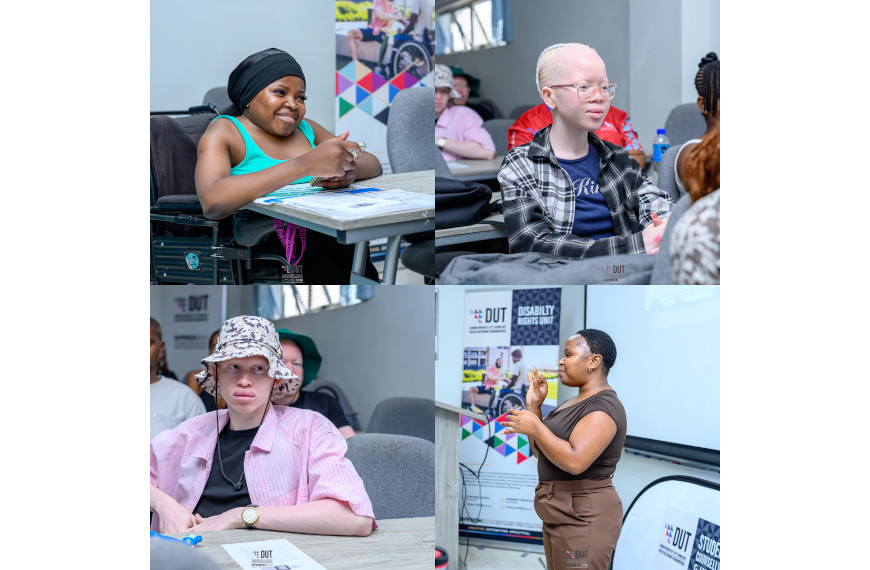
The Durban University of Technology (DUT) reinforced its commitment to inclusivity by hosting the Adapt and Connect Programme, a two-day initiative organised by the Disability Rights Unit (DRU) to empower students with disabilities and connect them with key support services across the university.
The programme took place on Thursday, 5 March at the Institute for Water and Wastewater Technology boardroom at the Steve Biko Campus in Durban and continued on 6 March at the Riverside Campus in Pietermaritzburg. It was designed for students with disabilities from both campuses, ensuring equal access to essential information, services and support structures.
The initiative aimed to provide students with uninterrupted access to institutional services while raising awareness across university units about the importance of comprehensive support. The event offered a platform for students to engage with key departments and gain insight into the resources available to help them succeed academically and personally.
The Disability Officer, Ms Gugu Khuluse, welcomed the students and guests and expressed appreciation to colleagues from various university units who continue to support the programme each year. She highlighted the importance of collaboration in creating an inclusive learning environment and extended a special welcome to first-year students, encouraging them to embrace university life while making use of the available support structures.
“Welcome to DUT and thank you for choosing this university as your family. University life may feel overwhelming at first, but we are here to support you throughout your journey. Please listen carefully to the information shared today and remember that the Disability Rights Unit is here to assist and support you during your time at the university,” she said.
The Interim Director of the Student Counselling and Health Unit, Mr Sihle Mbanjwa, explained the purpose of the programme and emphasised DUT’s commitment to inclusivity. He noted that disability should not only be understood in terms of visible physical conditions but also includes invisible disabilities such as learning difficulties, neurological conditions and psychological challenges.
“Disability is broader than what we can physically see. Some students may have invisible disabilities that affect their learning and daily functioning. It is therefore important for students to disclose their conditions so that the university can provide appropriate support,” he explained.
Mr Mbanjwa encouraged students to engage with the Disability Rights Unit and make use of available services. He also highlighted the social model of disability, which focuses on removing barriers within environments rather than viewing disability as a limitation of the individual. He stressed that the institution has a responsibility to create an environment that accommodates students’ needs and that the focus should always be on students’ abilities rather than their disabilities.
The Student Representative Council Social and Welfare Officer, Ms Sibongile Ndlovu, assured students that the SRC works closely with the DRU to advocate for students with disabilities and ensure they receive the necessary support. She encouraged students to believe in their abilities and seek help whenever they encounter challenges.
Chairperson of the Students with Disabilities Association, Ms Siphokazi Mbili, also urged students to connect with the association and the DRU for assistance. She emphasised that the association collaborates with the DRU to advocate for students and ensure their voices are heard.
“We are here to support you throughout your academic journey. If you face any challenges or need guidance, please reach out to us. It is important that students become aware of the services available to them early so that we can assist before challenges become bigger problems,” she said.
The programme featured presentations from several university units that support the DRU, including Financial Aid, Student Housing and Residence Life, Sports Administration, the Library, the Writing Centre, the Legal Unit, Isolempilo Clinic and the Centre for Excellence in Learning and Teaching. These units provided students with informative insights, enriching their understanding of available resources.
Delivering the vote of thanks, Dean of Students, Dr Clement Moreku, commended the organisers for bringing together different university departments to support students with disabilities. He highlighted that collaboration among university units plays a vital role in ensuring that all students have equal opportunities to succeed.
Dr Moreku emphasised that student success depends on collective effort, noting that access must be accompanied by support. “For our students to succeed, we must work together to ensure access with success. Compassion and professionalism are important in ensuring that every student receives the support they need,” he added.
He encouraged students to make use of the services available to them and to report any challenges so that the university can provide the necessary assistance.
Pictured: Students with disabilities at the Adapt and Connect Programme.
Photographer: Khulasande Tshayile
Sinamile Sithole


