
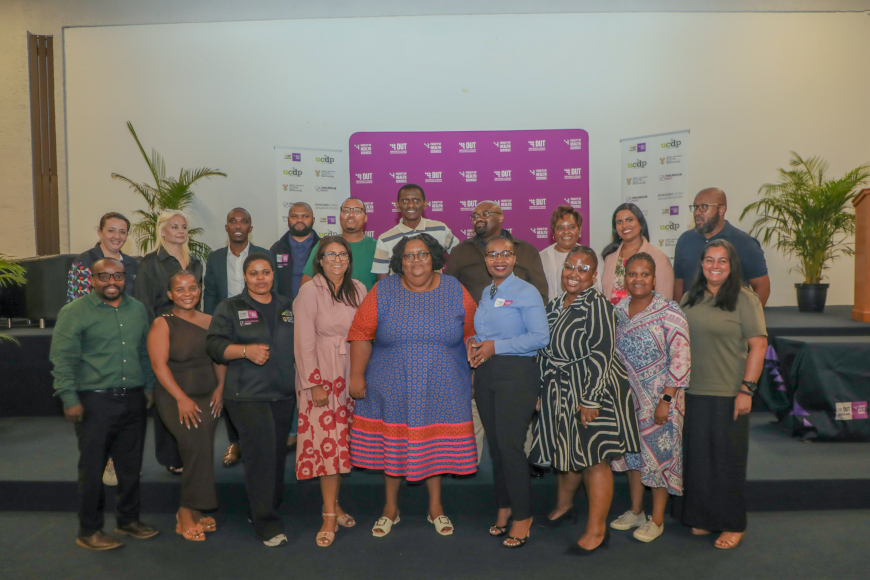
The Faculty of Health Sciences at the Durban University of Technology recently hosted a Translingual Symposium on Teaching and Learning for university lecturers at Mansfield Hall. The event brought together academics, researchers and lecturers to engage in dialogue on translanguaging and inclusive pedagogies in higher education. It provided a space for reflection on how multilingual realities within South African universities can be embraced to strengthen teaching, learning and student success.
The symposium formed part of ongoing efforts to explore innovative approaches to curriculum development and classroom practice in linguistically diverse academic environments. Universities across the country continue to work towards ensuring that teaching practices are inclusive, responsive and supportive of students from diverse linguistic and cultural backgrounds.
The symposium began with a welcome address by Dr Khosi Mpofana, who highlighted the strategic importance of multilingualism in advancing institutional transformation and fostering inclusive education. She noted the alignment of translingual practices with DUT’s ENVISION2030 strategy, particularly its commitments to student centredness, transformation, internationalisation and socially responsive education.
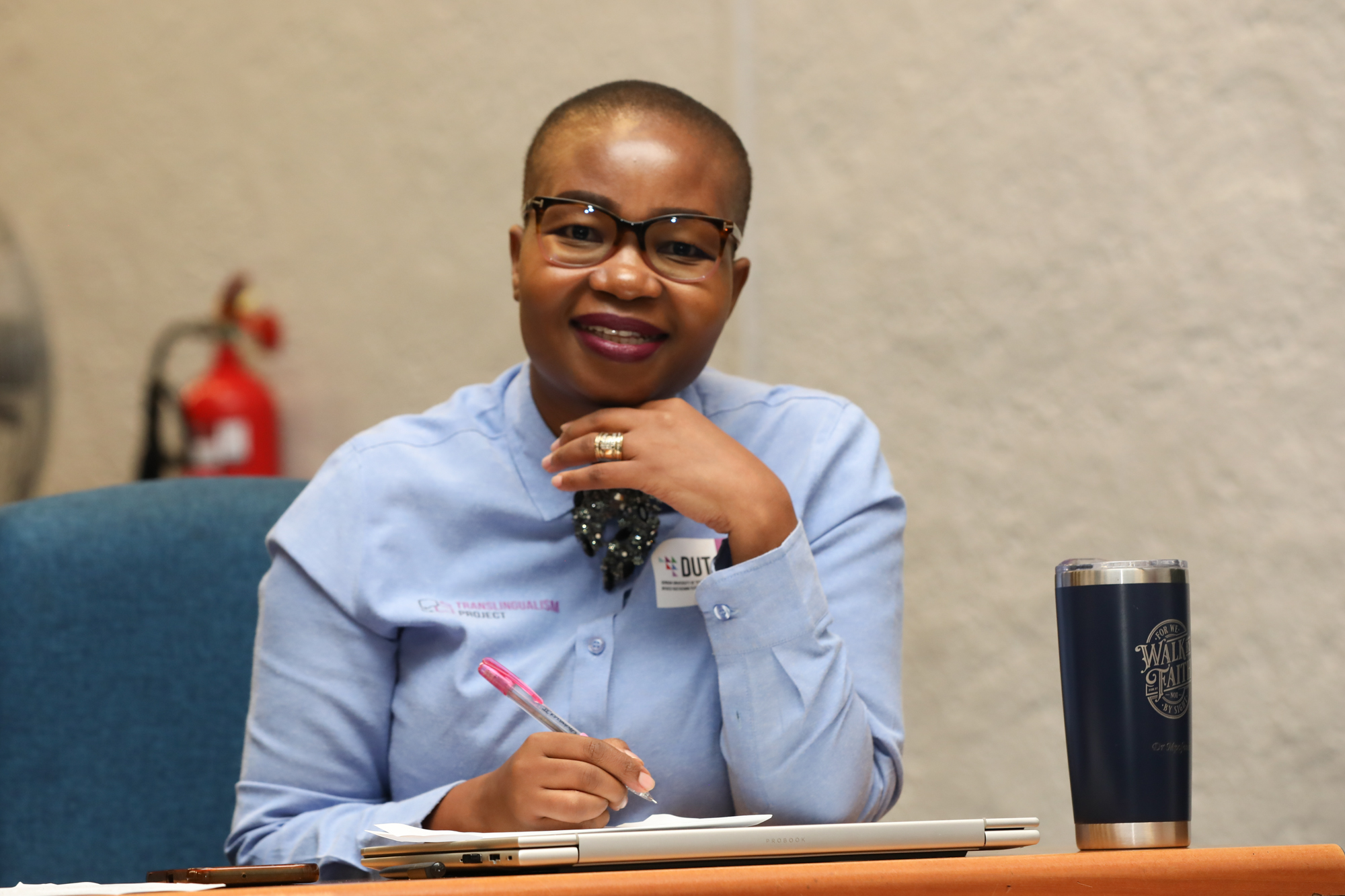 While the symposium coincided with Mother Tongue Month celebrations in March, the focus extended beyond celebration to exploring how translingual principles can be embedded in curriculum design, teaching, assessment and clinical training. Dr Mpofana stressed that within the Faculty of Health Sciences, translingual competence is essential for preparing graduates to communicate effectively in multilingual healthcare settings, thereby strengthening patient care and community engagement. She encouraged participants to view translingualism not only as a pedagogical approach but also as a strategic institutional priority that supports equitable access and student success.
The event was formally opened by Professor Pavitra Pillay, Deputy Dean of the Faculty of Health Sciences, who framed translingualism as both a teaching approach and a strategic priority aligned with DUT’s ENVISION2030 goals. Prof Pillay emphasised that communication is a critical clinical outcome for Health Sciences graduates. She noted that multilingualism should be viewed not as a barrier to learning but as a valuable resource that enriches academic engagement and patient care, and called for a rethinking of traditional teaching approaches to better respond to linguistic diversity.
The keynote presentation, titled Translanguaging and Inclusive Pedagogies in Higher Education, was delivered by Ms Nobuhle Luphondo from the Cape Peninsula University of Technology. She highlighted that recognising and integrating the languages students bring into the learning environment creates opportunities for deeper understanding, critical thinking and meaningful participation.
Following the keynote address, participants engaged in a panel discussion on integrating translingual and multilingual teaching strategies into curriculum design and classroom practice. The panel featured Mrs Dorinda Borg, Ms Nobuhle Luphondo, Ms Litakazi Tekula, Dr Gokool and Dr Mthobisi Ntuli. Panellists emphasised that incorporating translanguaging practices helps students connect theoretical concepts to their lived experiences, strengthening understanding and engagement.
Dr Ntuli shared his experience in Mathematics A, where he translates isiZulu questions into English during lectures for inclusivity while using isiZulu during one-on-one tutorials. He noted that this multilingual approach encourages greater student participation.
Mrs Borg highlighted the importance of adopting a translingual approach to bridge linguistic gaps in the classroom. She utilises isiZulu speaking student mentors to support peer learning and assist with interpretation during discussions, fostering collaboration. She also noted that students are encouraged to include cultural remedies and traditions supported by scientific evidence to expand knowledge.
Ms Tekula presented a near-peer model, pairing students to bridge language gaps and enhance communication with patients, ensuring they are heard, understood and treated with dignity.
The symposium continued with an interactive session led by Dr Gokool from the University of KwaZulu-Natal, titled Sharing Challenges and Success Stories from University Classrooms: A UKZN Health Sciences Experience.The session encouraged participants to reflect on their teaching contexts and share effective strategies. Speakers highlighted that embracing multilingualism contributes to inclusive learning environments, improved participation and better academic outcomes.
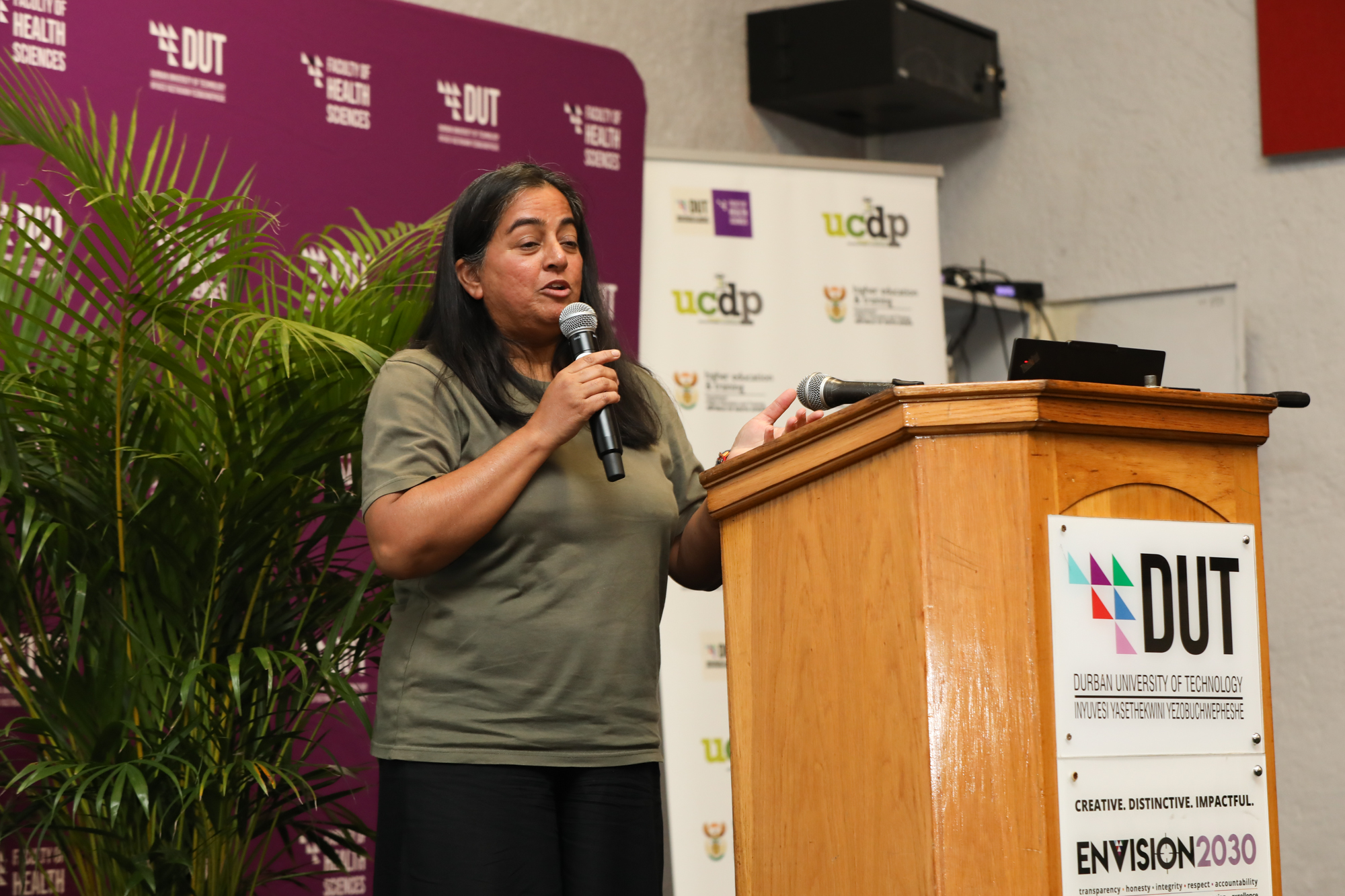 In the closing session, Dr Anusha Sewchurran encouraged the faculty to move beyond the dominance of English and work towards a future where scientific knowledge can be communicated across South Africa’s twelve official languages. She also called for the establishment of a community of practice among lecturers to document experiences, share strategies and advance linguistically inclusive teaching.
Closing remarks were delivered by Professor Thando Khoza, who reflected on the significance of the discussions. He expressed appreciation to all speakers and noted that the symposium had opened an important conversation on the role of language in teaching and learning. He further expressed hope that DUT will continue to build on this momentum and strengthen its institutional engagement with translanguaging.
Overall, the Translingual Symposium served as an important platform for knowledge sharing, collaboration and reflection among academics committed to transforming teaching and learning in higher education. The discussions reinforced the understanding that multilingualism is not a limitation but a powerful academic resource that enriches learning, supports student engagement and contributes to more inclusive university environments.
Pictured: Attendees at the Translingual Symposium on Teaching and Learning for university lecturers at Mansfield Hall.
Story: Supplied


