
The recent launch of eight new Research Chairs at the Durban University of Technology (DUT) forms part of the expansion of research capacity across South Africa’s higher education sector.
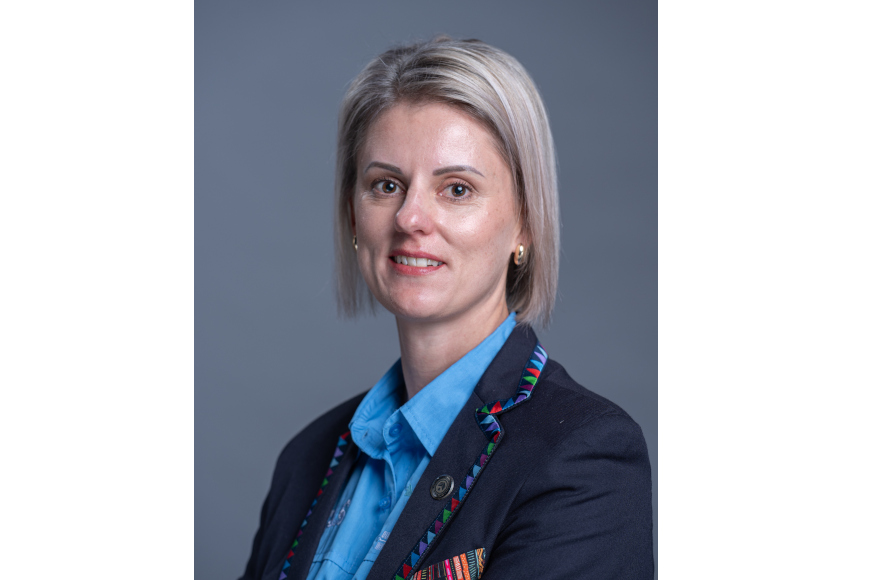
Professor Olive Stumke, an Associate Professor, is one of the recipients of the NRF SARChI Research Chair in Digital Transformation in the Faculty of Accounting and Informatics at DUT.
Deputy Vice-Chancellor: Research, Innovation and Engagement at DUT, Professor Fulufhelo Nemavhola, emphasised that the appointment of the Research Chairs marks a significant achievement for DUT and reflects the institution’s growing research excellence and commitment to addressing societal challenges through impactful research, in line with the university’s ENVISION2030 strategy.
Sharing her research journey, Prof Stumke explained that it began with a fundamental question of how adequately prepared DUT graduates are for a workplace increasingly driven by technology. This led to her doctoral research, which developed an ICT competency framework for accountancy professionals, forming the foundation of her subsequent work.
“Through that work, I identified a critical disconnect. While auditing and taxation professions have never required a Master’s or PhD as a condition for practice, the absence of advanced research in this space has left us without the knowledge base needed to navigate the Fourth Industrial Revolution,” she shared.
At DUT, Prof Stumke has expanded her research from ICT competencies into areas including AI in auditing, virtual reality as a teaching tool, fraud detection frameworks, predictive modelling for SME loan defaults, and digital transformation of governance.
“I have published in journals including the South African Journal of Economic and Management Sciences, the Southern African Journal of Accountability and Auditing Research, and the International Journal of Advanced Computer Science and Applications. I also have a chapter on AI in auditing and compliance submitted for final editing with Routledge,” she explained.
Beyond research outputs, she has secured FASSET funding for student development and currently convenes the DUT Artificial Intelligence Policy Task Force.
Internationally, Prof Stumke has driven MOUs with CHRIST University in India, the European Taxation Academic Network (ETAIN), the Chartered Institute of Business Accountants (CIBA), and maintains a collaborative partnership with the British Council.
“What led me to this focus area is personal conviction. I believe technology is no longer optional, it is essential. My mantra, ‘work smarter, not harder,’ reflects my research philosophy. It is not about turning graduates into IT specialists, but equipping them with practical, tech-driven skills that improve processes, strengthen compliance, and add value to organisations and communities,” she said.
For Prof Stumke, this appointment is a meaningful milestone.
“To receive this recognition from the NRF affirms that this work matters, not only within academia but also for the broader socio-economic development of our country. Professionally, it expands the scale of what is possible,” she said.
The SARChI Chair enables her to dedicate more time to research, supervise postgraduate students, appoint postdoctoral fellows, build international collaborations, and develop digital tools and frameworks aligned to her research agenda.
Her research chair is structured around four interconnected themes.
Theme one focuses on the enablers of digital transformation, including human capital, infrastructure, international partnerships, and investment. Theme two explores digital governance in the public sector, examining how AI-driven decision-support tools can strengthen governance and improve service delivery in municipalities.
Theme three addresses small businesses and entrepreneurs by developing accessible digital toolkits to improve compliance, productivity, and resilience.
Theme four focuses on future-proofing education by embedding data analytics, AI, and digital tools into curricula to prepare graduates for the 5th Industrial Revolution.
Prof Stumke will also support master’s students, PhD candidates, and postdoctoral fellows throughout the five-year programme.
“Students and fellows will be embedded in interdisciplinary research projects within the EPIP Research Group. They will receive structured supervision, access to research infrastructure, funding for conferences, and opportunities for international benchmarking,” she explained.
She emphasised her commitment to mentoring the next generation of researchers, particularly from underrepresented backgrounds.
“Mentoring is central to this programme. I am committed to gender equity and to recruiting researchers from historically disadvantaged institutions, with targeted outreach to support female researchers and their advancement into academic leadership,” she said.
A succession plan has also been established, identifying a young female researcher to be developed for future leadership.
“My mentoring approach is student-centred and hands-on. The EPIP model fosters peer learning where established researchers, emerging academics, and interns collaborate on shared projects,” she said.
She added that all projects under the chair have practical application and potential for real-world impact.
“We will explore commercialisation through professional certification courses and licensing of digital tools developed in the programme. Innovation is embedded in the EPIP Research Group, an interdisciplinary model that produces both academic and commercial value, and which received the Excellence in Engineering Practice Innovation Project award in 2025,” she said.
By 2030, Prof Stumke envisions DUT as a leading institution in interdisciplinary digital transformation research.
“Our international and industry collaborations will embed DUT within global research networks beyond the funding period. DUT’s ENVISION2030 strategy commits to producing graduates and researchers who drive innovation and contribute to socio-economic progress. This programme is designed to deliver on that commitment, positioning DUT as a university that not only teaches about the next industrial revolution but actively shapes it,” she concluded.
Pictured: Professor Olive Stumke
Waheeda Peters


