
What will the accounting profession look like in the next five years, and are universities preparing graduates for that future?
These were some of the questions raised at the 2026 Southern African Accounting Association (SAAA) KwaZulu Natal Regional Conference, hosted by the Durban University of Technology’s (DUT) Department of Auditing and Taxation, under the Faculty of Accounting and Informatics (FAI).
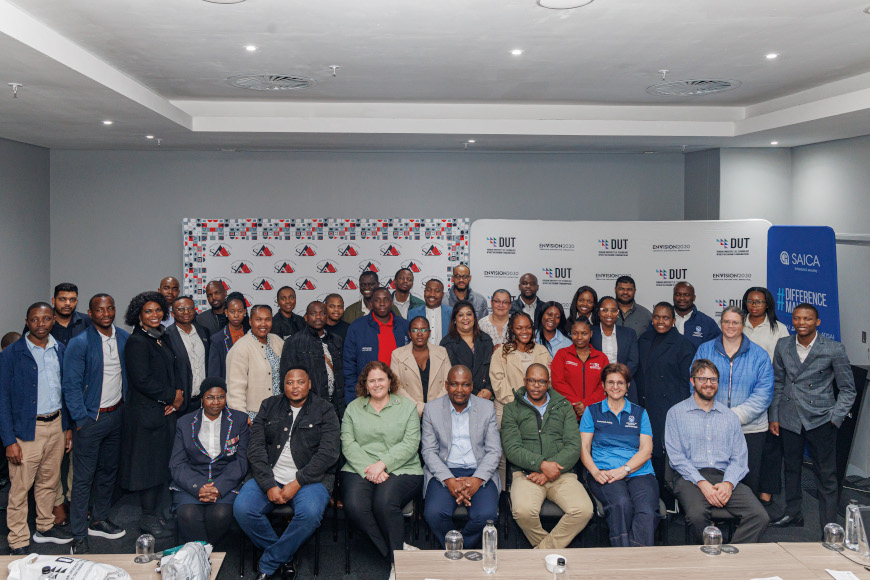
Held at The Capital Pearls in Umhlanga, Durban, on Friday, 18 September 2026, the conference brought together academics, researchers, students, professional bodies and industry partners to share research, exchange ideas and discuss developments shaping accounting education and the profession.
The conference was hosted in collaboration with the University of KwaZulu Natal (UKZN), University of Zululand (UNIZULU) and Mangosuthu University of Technology (MUT).
Held under the theme, Accounting Horizons: Integrating Practice, Research and Education for a Changing World, the conference created a space for discussion between academia, industry and the professional sector, while giving emerging researchers an opportunity to present their work and receive feedback.
Opening the conference, Anne Soldat, CA(SA), Deputy Chairperson of the SAAA KwaZulu Natal Regional Committee from the University of Zululand, welcomed delegates and emphasised the importance of creating a supportive environment for researchers, particularly those presenting their work for the first time.
Soldat encouraged delegates to see the conference as more than a platform for presenting research. She said it was also an opportunity to learn from others, receive constructive feedback and contribute to a stronger research community.
“Research is not always an easy journey, especially when you are starting out,” said Soldat, encouraging researchers to use the conference to share their work, engage with others and grow.
Delivering the official welcome on behalf of DUT, FAI Deputy Dean Professor Simangele Moyane turned attention to the changing nature of the accounting profession and the role research can play in responding to these changes.
She highlighted the growing influence of technology and artificial intelligence and challenged delegates to consider whether future accountants would simply respond to changes in the profession or play an active role in shaping them.
“The world of accounting is changing, and technology and artificial intelligence are changing the way we work. The question is whether we will lead that change or simply account for what has already changed,” said Prof Moyane.
She also challenged delegates to rethink the relationship between accounting and research, pointing out that research is already part of the work carried out by accounting professionals.
“Accountants are already researchers because we investigate, analyse evidence, identify inconsistencies, interrogate explanations and reach conclusions. The real world problems we encounter are research questions, and our responsibility is to turn those questions into knowledge and solutions,” she said.
Prof Moyane encouraged researchers to use the conference to build relationships and explore collaborations that could lead to publications, curriculum development and practical solutions for industry and society.
The keynote address was delivered by Lebogang Matlala, CA(SA), MBL, Chief Financial Officer of the Finance and Accounting Services Sector Education and Training Authority (FASSET).
Matlala focused on the future readiness, professionalisation and transformation of the accounting and finance sector, warning that the profession graduates are preparing to enter in the coming years will look very different from the one that exists today.
“The finance and accounting profession that our graduates will practise in five years is not the profession we know today. The tools, expectations and pace of change have shifted, and we need to make sure that we are not preparing people for a world that no longer exists,” she said.
She noted that automation, data analytics and artificial intelligence are increasingly changing the way accounting and auditing work is performed, while employers are also looking for broader capabilities from graduates.
According to Matlala, technical knowledge remains important, but future professionals will also need digital fluency, ethical judgement, critical thinking, adaptability and the ability to communicate with people outside the financial field.
“Technical grounding remains the foundation, but future readiness adds digital fluency, ethical judgement and adaptive thinking. Our graduates need to be able to work across disciplines, communicate with non financial stakeholders and adapt as the profession continues to evolve,” she explained.
Matlala also highlighted the need for stronger links between higher education and the workplace. She called for greater industry involvement in curriculum development, beyond occasional guest lectures, while encouraging employers to view internships, placements and work based learning as important pathways for developing future talent.
She further highlighted FASSET’s role in identifying skills gaps, supporting work based learning and strengthening partnerships between education institutions, employers and professional bodies.
The conference then moved into breakaway sessions, where emerging researchers presented their work and engaged with academics and fellow researchers. The sessions provided an opportunity for participants to receive feedback while exploring how research can contribute to developments within the accounting profession.
The conference concluded with closing remarks and a vote of thanks from Dr Amos Zungu, Lecturer in the Department of Auditing and Taxation at DUT and Chairperson of the SAAA KwaZulu Natal Regional Committee.
Dr Zungu acknowledged the contribution of the collaborating institutions, speakers, sponsors, researchers, presenters and organising committee in making the conference possible.
The programme concluded with a networking session, allowing delegates to continue conversations, build professional connections and explore opportunities for future collaboration.
The 2026 SAAA KwaZulu Natal Regional Conference highlighted the value of bringing academia, professional bodies and industry into the same conversation at a time when the accounting profession is changing rapidly. The discussions also reinforced the role of research and education in preparing graduates to navigate and contribute to that changing landscape.
Caption: Academics, researchers, students, professional bodies and industry partners at the 2026 SAAA KwaZulu Natal Regional Conference.
Photographer: Mandisi Mvunelo
Sinamile Sithole


