The Durban University of Technology (DUT) has improved its global standing for Clean Water and Sanitation, moving from the 401–600 band in 2025 to the 301–400 band in the 2026 Times Higher Education (THE) Sustainability Impact Rankings.
The result reflects DUT’s contribution to Sustainable Development Goal 6 (SDG 6), which aims to ensure the availability and sustainable management of water and sanitation for all. Through research, technology development and community engagement, the University is working to address water and wastewater challenges in South Africa and other water-stressed regions.
A key part of this work takes place at DUT’s Institute for Water and Wastewater Technology (IWWT), which has spent more than three decades building partnerships with municipalities, water utilities, industry, government and civil society.
Professor Faizal Bux, Director of IWWT, said clean water and safe sanitation underpin public health, dignity, economic development and environmental protection. South Africa’s limited water resources are under increasing pressure from population growth, urbanisation, pollution, ageing infrastructure and increasingly variable rainfall.
“Climate change compounds these risks by intensifying both droughts and floods, making reliable services harder to sustain and increasing the vulnerability of underserved communities. Progress on SDG 6 is therefore not only an environmental imperative; it is essential to social stability, food security, education and inclusive economic growth,” said Prof Bux.
DUT researchers work across the water cycle, from drinking-water quality and waterborne health risks to municipal and industrial wastewater treatment and resource recovery. Their work includes developing and optimising treatment processes, addressing challenges in full-scale treatment plants, advancing bioremediation, wastewater-based epidemiology and algal biotechnology, and investigating chemicals of emerging concern.
“The emphasis is on solutions that are affordable, resilient and suited to South African conditions,” said Prof Bux.
One of IWWT’s research priorities is finding ways to make better use of wastewater. Projects being tested at demonstration scale include producing biodiesel from microalgae grown in wastewater and evaluating microalgal systems for tertiary wastewater treatment. Both explore opportunities to improve treatment while recovering useful resources.
The Institute has also conducted pilot-scale research on partial nitritation–anammox treatment for high-ammonia wastewater in collaboration with municipal and international partners. This approach offers an alternative method of nitrogen removal that could inform wastewater-treatment solutions suited to local conditions.
Other research areas include biological nutrient removal, advanced treatment of emerging contaminants and microplastics, and resource recovery from wastewater and sludge.
Prof Bux said wastewater should be viewed as a resource that can help reduce pressure on freshwater supplies. Depending on the treatment level and intended application, treated wastewater can be reused for industrial purposes, irrigation and environmental flows. Advanced treatment and rigorous assurance systems can also enable potable reuse.
“Reuse reduces pressure on freshwater sources, limits pollution discharged into rivers and enables the recovery of energy, nutrients and other valuable products. Success depends on matching treated water quality to the intended use and building public confidence through transparent monitoring and sound governance,” he said.
IWWT’s work also contributes to public health. During the COVID-19 pandemic, the Institute co-led research using wastewater-based epidemiology to monitor the progression of the disease in communities, working closely with public health authorities. The research demonstrated how wastewater analysis can support public health surveillance.
The University also tests tap-water and beach-water quality in Durban and provides appropriate advice, linking scientific expertise to water-quality concerns affecting residents and beach users.
“The connection is immediate and practical: water research ultimately concerns people’s health, dignity, livelihoods and environment,” said Prof Bux. “A treatment process that removes pathogens more reliably, consumes less energy or makes reuse safer can improve service delivery while reducing costs.”
Collaboration between universities, municipalities and other water-sector partners is important in translating research into practical solutions. Universities can test technologies at laboratory and pilot scale, assess their costs and performance, strengthen monitoring and help municipalities identify options suited to local needs. Innovation can also support predictive maintenance, decentralised systems, real-time water-quality surveillance and lower-energy treatment.
According to Prof Bux, these partnerships also build technical capacity among students, municipal practitioners and communities, helping promising solutions progress from research to implementation.
In KwaZulu-Natal, water scarcity, unequal access to services, deteriorating infrastructure, high levels of non-revenue water, river and coastal pollution, and exposure to floods and droughts remain pressing challenges. Rapid urban growth and the expansion of informal settlements add further pressure to sanitation and stormwater systems.
Prof Bux identified catchment protection, municipal infrastructure maintenance, improved wastewater-treatment compliance and climate-resilient planning as priorities. He also highlighted the need for service models that can reach communities where conventional centralised infrastructure is difficult to provide.
The work of IWWT forms part of DUT’s broader research and innovation effort, which brings together specialised expertise, postgraduate training and external partnerships to address societal challenges. Under Professor Fulufhelo Nemavhola’s research, innovation and engagement leadership, this work contributes to the University’s wider development priorities. The SDG 6 result recognises the contribution of researchers, staff, students and partners working to advance water security and sustainable sanitation.
Looking ahead, Prof Bux said DUT could strengthen its contribution to SDG 6 by expanding pilot and demonstration projects, deepening partnerships with municipalities and water-sector institutions, and accelerating the translation of research into technologies and policy guidance.
Opportunities include digital water monitoring, climate-resilient sanitation, water reuse, circular-economy approaches and skills development.
“By integrating research, postgraduate training, innovation and community engagement, DUT can serve as a living laboratory for solutions relevant to KwaZulu-Natal, South Africa and other water-stressed regions,” he said.
DUT’s improved standing in the 2026 THE Sustainability Impact Rankings highlights the relevance of its water and wastewater research. Through IWWT and its partnerships, the University continues to develop knowledge and explore practical approaches to improving water quality, wastewater management and access to sustainable services.
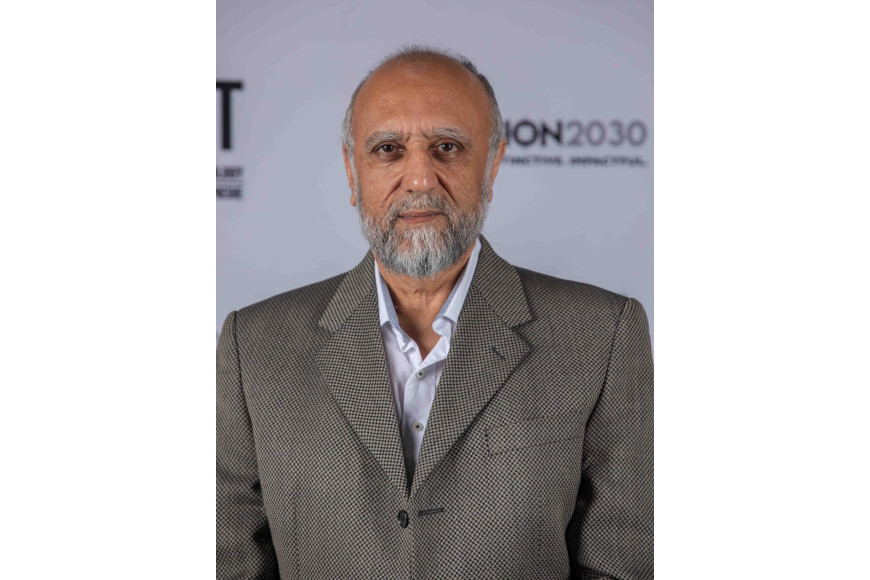
Pictured: IWWT Director, Professor Faizal Bux.
Tiyani Mboweni


