The Durban University of Technology (DUT) hosted an Indigenous Knowledge Systems (IKS) Chapter Launch on 22 and 23 October 2026 at Mansfield Hall on the Ritson Campus. The two-day programme brought together academics, government representatives, industry stakeholders, traditional knowledge holders, and students to recognise the importance of Indigenous Knowledge Systems.
The launch of the DUT IKS Chapter aimed to strengthen collaboration between academia, government, and traditional communities, particularly in advancing the recognition, preservation, and responsible integration of Indigenous Knowledge Systems.
Opening the event, Dr Mthombeni, Director of Research and Postgraduate Support, welcomed attendees and highlighted the importance of recognising cultural identity and preserving indigenous knowledge. She acknowledged the role of elders and custodians of traditional knowledge and emphasised the richness of South Africa’s indigenous heritage. Dr Mthombeni also stressed the importance of documenting and preserving these practices for future generations.
The programme featured several speakers who explored various aspects of Indigenous Knowledge Systems, including traditional medicine, indigenous foods, and the commercialisation and marketing of traditional knowledge and innovation.
Delivering the keynote presentation on The Value of Indigenous Knowledge in South Africa’s Innovation Ecosystem, Professor Nceba Gqaleni, Research Professor in Traditional Medicine at the University of KwaZulu-Natal, reflected on the origins of the collective initiative to celebrate Traditional Medicine Month in August. He explained that three years ago, traditional healers from eThekwini called for a more unified approach to the celebrations.
Professor Gqaleni congratulated DUT on launching its Indigenous Knowledge Systems Chapter and encouraged the university to take the lead in hosting the KwaZulu-Natal Regional Symposium on Traditional Medicine next year. He also pledged support from partner institutions and emphasised that indigenous knowledge extends far beyond traditional medicine.
“It is very important to collaborate with other people who have advanced indigenous knowledge and who are ambitious in advancing traditional medicine,” he said.
Professor Saheed Sabiu, a lecturer in DUT’s Department of Biotechnology and Food Science, discussed the role of systems biology in advancing African innovation. He highlighted how scientific research can complement traditional knowledge of medicinal plants. Through visual demonstrations, he explained that traditional medical knowledge extends beyond plants and that scientific research can help identify compounds that are not visible to the naked eye.
“There are so many things that we, as ordinary people, cannot see in plants. That’s where science comes in,” he explained.
Professor Eric Amonsou of DUT explored the topic From Indigenous Food Knowledge to Innovation. He highlighted the importance of indigenous foods in addressing modern nutritional challenges, emphasising that they should not merely be viewed as cultural heritage to be preserved, but as valuable resources for innovation, health, and nutritional security.
He further explained that scientific research can help establish the nutritional benefits of indigenous foods while supporting their processing, preservation, packaging, and commercialisation.
“The challenge is to use science to package the food, commercialise it, and bring it to market to create awareness, generate job opportunities, and boost the economy,” he said.
Addressing the commercialisation of Indigenous Knowledge Systems and the link between indigenous knowledge, markets, and innovation were Professor Ashwell Ndhlala, Associate Professor in Bioeconomy Development at the University of Limpopo, and Dr Nokuthula Myeza, Senior Manager at Dube TradePort AgriZone. Both speakers highlighted the importance of integrating traditional knowledge with modern science to develop products that address societal needs.
Professor Ndhlala explained that Southern Africa’s unique plant species present significant opportunities for innovation, improved health, and food security. He noted that these resources could be utilised to develop products that benefit local communities. Using rooibos as an example of an indigenous resource that has gained global recognition, he emphasised the need to translate research into practical solutions.
“People are already using these resources. It is not about convincing people, but about trying to come up with what is acceptable,” he said, highlighting the importance of developing products that meet community needs while complying with regulatory requirements.
Dr Myeza emphasised the importance of preserving indigenous plants and the traditional knowledge associated with them. She reflected on her grandparents’ experiences and how their use of indigenous resources helped sustain their livelihoods. She also challenged attendees to consider the consequences of losing plant species that embody generations of traditional knowledge.
“What happens when a plant that carries generations of traditional knowledge, cultural heritage, and potential future value becomes difficult to find? Or, even worse, what if that plant disappears from its natural environment?” she asked.
Other speakers included Mr Patrick Nzuza from eThekwini Municipality, who discussed the role of municipalities in supporting Indigenous Knowledge Systems.
Panel discussions also provided a platform for further engagement on issues surrounding Indigenous Knowledge Systems. These discussions highlighted the importance of collaboration in advancing IKS through research, innovation, and partnerships. A question-and-answer session followed, giving attendees an opportunity to engage directly with the presenters.
The programme concluded with a vote of thanks and closing remarks by Dr Ntola, who thanked attendees and guests for their participation. He described the launch as a success and commended the active engagement throughout the event, highlighting the importance of creating platforms for dialogue and knowledge-sharing on Indigenous Knowledge Systems.
The second day of the programme featured an indigenous forest visit, providing participants with an opportunity to engage further with Indigenous Knowledge Systems in a natural environment.
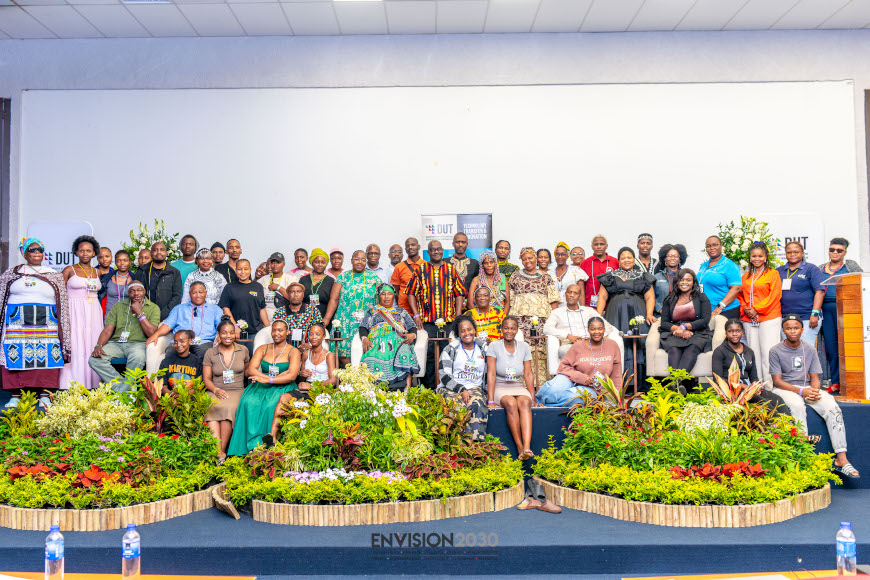
Pictured: Attendees at the Indigenous Knowledge Systems (IKS) Chapter Launch.
Photographer: Sifundo Thwala
Luyanda Mlaba


