
RESEARCH
ADVANCEMENT

SDG 16: Peace, Justice and Strong Institutions


2026

RESEARCH NEWS: DR SHAMAINE GOVENDER HONOURED FOR UPHOLDING THE HIGHEST ETHICAL STANDARDS IN RESEARCH


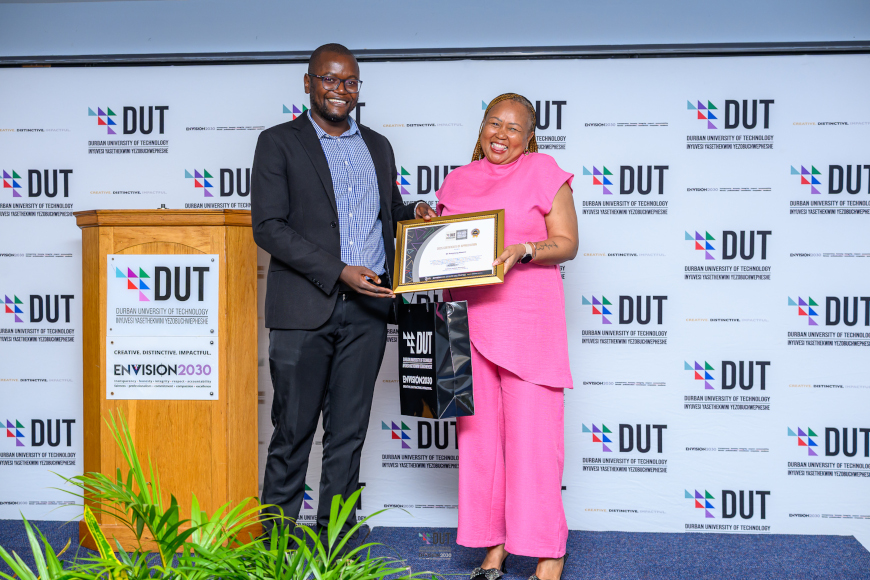
The Institutional Research Ethics Committee (IREC) at the Durban University of Technology (DUT) recently recognised Dr Shamaine Govender as the IREC Best Reviewer for 2025. Thanks to her consistent participation, reliable turnaround, and active engagement, she emerged as one of the committee’s top reviewers.


Sharing her excitement on receiving the award, Dr Govender said, “I was genuinely surprised and deeply humbled. I had not expected such an honour, as my work in IREC is something I do purely out of a sense of responsibility and commitment. To be recognised for it, especially by my peers and the institution, was incredibly affirming. It serves as a powerful motivator to continue striving for excellence in all my academic and service roles, and I am truly grateful for this recognition.”


Dr Govender is a lecturer in the Department of Clinical Technology and is part of the New Generation of Academic Professionals programme in the Faculty of Health Sciences. Her work focuses on conducting impactful research and mentoring the next generation of healthcare professionals and academics. She is driven by a commitment to excellence, innovation, and community engagement.


She was appointed as a lecturer in February 2020, but her connection to DUT goes much further, as she is an alumna, having completed her National Diploma, BTech, Master’s, and PhD degrees at the institution. For Dr Govender, it has been truly inspiring to contribute to the university that shaped her own academic and professional path.


Dr Govender joined IREC in 2021, motivated by her belief in upholding the highest ethical standards in research. Given her background in clinical technology and active involvement in research, she felt compelled to contribute to ensuring that all studies conducted under DUT’s purview are ethically sound and protect the rights and well-being of participants.


Describing her responsibilities as a research reviewer for the Faculty of Health Sciences, Dr Govender said, “My primary duty is to meticulously evaluate research proposals submitted by DUT researchers. This involves assessing the ethical implications of the methodology, ensuring informed consent processes are robust, evaluating participant safety and confidentiality protocols, scrutinising potential conflicts of interest, and ensuring the overall integrity and scientific merit of the study from an ethical standpoint. It is about asking critical questions to safeguard both the participants and the university’s research integrity.”


Balancing her academic duties, which include lecturing, research, and postgraduate supervision, with her IREC responsibilities requires careful time management and a structured approach. She integrates IREC review slots into her weekly schedule, treating them with the same priority as her other academic commitments.


One of the main challenges she faced last year was the volume and complexity of proposals. Each submission demanded significant attention to detail, and many involved highly specialised areas, requiring a broad understanding of ethical principles across disciplines. Time management was another challenge, particularly when handling multiple reviews alongside her academic responsibilities. She considers being an IREC reviewer a quiet but profoundly impactful way to contribute to the quality and integrity of research at DUT and beyond.


Her research focuses on improving health outcomes, particularly concerning chronic diseases such as Chronic Kidney Disease, and advancing health sciences education. Her work on the identification of medicinal plants used for chronic kidney disease explores culturally relevant and accessible interventions, which can have a direct impact on communities with limited access to conventional healthcare. Similarly, her research on pain management for patients with chronic renal failure aims to enhance the quality of life for a vulnerable patient population, potentially influencing clinical guidelines and patient care strategies. Her interdisciplinary collaborations, such as on “The Skin: A Critical Window into Chronic Kidney Disease”, open avenues for holistic understanding and innovative diagnostic or therapeutic approaches. Ultimately, her research strives to generate knowledge that translates into tangible benefits for patients and strengthens healthcare practices and education within South Africa.


Dr Govender advises DUT researchers submitting their work to IREC to be thorough and clear, anticipate ethical questions, and engage constructively by viewing feedback as an opportunity to strengthen the integrity and impact of their work rather than as criticism.


She is currently pursuing a Postgraduate Diploma in Higher Education and is committed to not only contributing to research excellence but also actively mentoring and supporting emerging scholars in navigating the complexities of ethical research and academic growth.


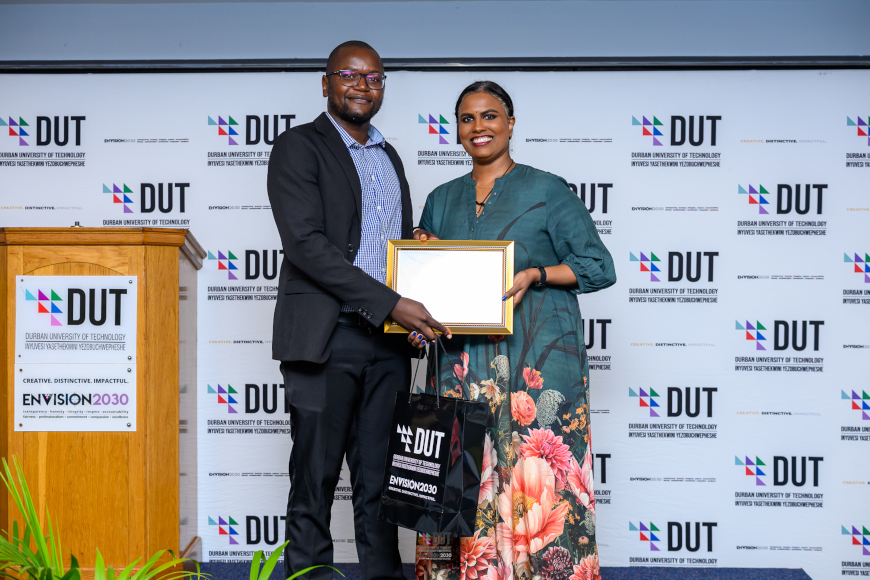
Pictured: The IREC Chairperson, Professor Pfano Mashau, and Dr Shamaine Govender when recognised as the IREC Best Reviewer.


Photographer: Khulasande Tshayile

Simangele Zuma
https://www.dut.ac.za/research-news-dr-shamaine-govender-honoured-for-upholding-the-highest-ethical-standards-in-research/


STRENGTHENING STUDENT GOVERNANCE: DUT REGISTRAR MEETS NEW SRC

Jan 29, 2026

Dr Maditsane Nkonoane, the Institutional Registrar at the Durban University of Technology (DUT) met with the newly elected Student Representative Council (SRC) for the 2025-2027 term. This strategic engagement aimed at strengthening student governance and fostering collaborative leadership was held at the Open House Boardroom on Tuesday, 27 January 2026.


It was facilitated by the Student Governance and Development unit with the support of the Dean of Students, Dr Clement Moreku.


In his opening remarks, Mr Masiza Ngculu, Student Governance and Development Manager commended Dr Nkonoane for making a special appeal to meet with the new SRC. He extended his appreciation to Dr Nkonoane for making time for this engagement despite his busy schedule, especially during this period of registration.


The Dean of Students, Dr Clement Moreku emphasized the importance of the engagement to the SRC. He shared that the Registrar plays a pivotal role in the governance and administration of DUT, serving as the custodian of academic integrity, institutional policies and statutory compliance.
In addition, Dr Moreku indicated that the Registrar oversees critical student-related functions, including registration, graduations and student governance support, which helps him to create a stable, efficient and student-centred academic environment.


Presenting the new SRC leadership to Dr Nkonoane was the SRC President, Sihle Nkosi. He followed by the SRC Secretary-General, Samkelo Ngubo who highlighted SRC programmes and their alignment to the ENVISION2030.


Ngubo began by expressing the SRC’s appreciation to the Registrar for affording them the opportunity to engage with him. He indicated that this engagement showcased DUT Executive Management’s commitment to fostering effective communication. Through this engagement he was certain that Dr Nkonoane was going to share his wisdom and extensive experience with them to help shape their ideas to becoming impactful projects.
Ngubo unpacked their projects based on the ENVISION2030 strategic objective, pledging their support to the implementation of the strategy. He emphasised that as the SRC they plan to complement projects of the university as they do not operate isolated from the university. Some of their programmes include increasing the throughput rate of the university, establish an SRC Engagement Forum to bridge the gap between the student body and SRC. They also plan to host a DUT Festival to promote the DUT living values to new students as well as a Cultural Festival to embrace diversity within the institution.


Addressing the SRC, the Registrar applauded the members for being the first SRC to unpack ENVISION2030. He said he was certain that they will go down as game changers.


“Welcome to this journey. We are currently in the Upended period of ENVISION2030, as the university community we must upend or ship out. There will be people not supportive to your course, forge ahead because at the end of your term you want to leave a legacy. You have demonstrated high ethical standards. Your President will be the first SRC President in the history of DUT to graduate Cum Laude. This is an achievement worth celebrating and emulating. I am aware that the Secretary-General will soon enrol for his Master’s degree,” shared Dr Nkonoane.


He advised them to always guard their actions as through them DUT will have order and stability. To earn the respect of the Vice-Chancellor and Principal, Professor thandwa Mthembu and the DUT community, Dr Nkonoane encouraged the SRC to talk sense and the truth at all times.
In closing, the Student Development Officer, Ms Thokozani Sibiya she extended her sincere appreciation to Dr Nkonoane for taking the time to meet with the SRC. She shared that the engagement reinforced the importance of collaboration, ethical leadership and open communication between students and University management. She applauded the SRC for an impressive start of term of office, encouraging them to not dampen their efforts over time. Sibiya advised the SRC to work smart and take care of their mental and physical wellbeing throughout their term.


Pictured: DUT Dean of Students, Dr Clement Moreku and Registrar, Dr Maditsane Nkonoane with the newly elected SRC.


Photographer: Khulasande Tshayile.
Simangele Zuma


DUT LIBRARY LAUNCHES INAUGURAL ARCHIVAL COLLECTION HONOURING STRUGGLE STALWART BILLY NAIR


To preserve the legacy of South Africa’s struggle stalwart, Mr Billy Nair, the Durban University of Technology Library proudly hosted the launch of the Billy Nair Archive Collection at the ML Sultan Campus Library in Durban on Wednesday, 15 April 2026.


This archival collection, housed in the ML Sultan Library’s Archives and Special Collections, highlights the legacy of a committed struggle stalwart who dedicated his life to justice, equality, and community activism. It has been curated from documents, books, and artefacts donated to the DUT Library by the Billy and Elsie Nair Trust, serving as a vital scholarly resource for researchers, students, and the wider community exploring South Africa’s democratic history and liberation narratives.


Facilitating the event, Ms Phumzile Xulu, Engagement Practitioner at DUT, shared that Mr Billy Nair and his wife, Mrs Elsie Nair, lived a humble life and dedicated their savings to the Billy and Elsie Nair Trust, which supports the education of disadvantaged learners. She noted that the archive is a partnership project between the Trust and DUT aimed at preserving legacy and inspiring future generations.


In his opening remarks, Executive Dean of the Faculty of Accounting and Informatics, Professor Oludayo Olugbara, emphasised the importance of the collection as both an academic resource and a tribute to a life of service. He noted that the archive will support interdisciplinary research, inspire students, and preserve national memory.


Distinguished guests  at the launch of the Billy Nair Archive Collection.

Director of DUT Library Services, Dr Malefetjane Phaladi, described the launch as a significant milestone in preserving South Africa’s heritage. He highlighted DUT’s commitment to innovative curricula, impactful research, and meaningful societal engagement, noting that heritage preservation strengthens identity and supports education, tourism, and economic development.


Delivering the keynote address, Mr Mac Maharaj, struggle stalwart and former presidential spokesperson, commended DUT for ensuring access to Mr Nair’s archive. He reflected on Mr Nair’s contribution to South Africa’s liberation movement through organisations such as SACTU, the SACP, NIC, uMkhonto weSizwe, the UDF, and the ANC.


His address, titled Freedom is Indivisible, reflected on the Freedom Charter and the Constitution, urging the importance of defending constitutional democracy while distinguishing constructive criticism from efforts to undermine it.


Human rights lawyer Mr Krish Govender, who served as attorney to Mr and Mrs Nair, described the initiative as an important step in preserving and teaching South Africa’s history. Former DUT Library Director Mr Roy Raju also expressed pride in seeing the project come to fruition.


Closing the event, DUT Library Manager Mr Sagren Moodley thanked all stakeholders, including the Billy and Elsie Nair Trust, and reaffirmed DUT’s commitment to preserving South Africa’s heritage and inspiring future generations through stories of courage, resilience, and leadership.


Pictured: Mr Mac Maharaj delivering a keynote address at the Billy Nair Archive Collection launch.


Photographer: Vukani Langa.

Simangele Zuma

https://www.dut.ac.za/dut-library-launches-inaugural-archival-collection-honouring-struggle-stalwart-billy-nair/


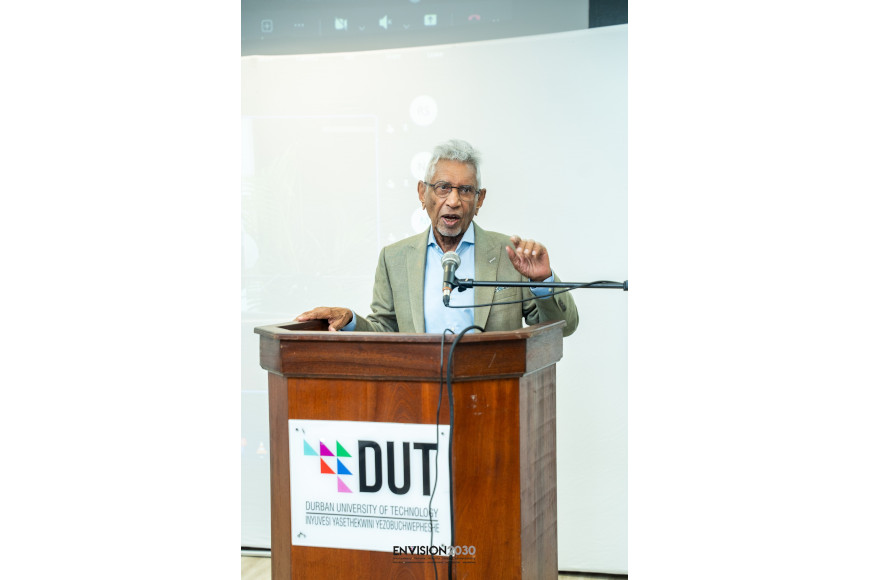
PROFESSOR NDUMISO ‘DALUXOLO’ NGIDI ADVOCATES FOR PEACEBUILDING AT DUT


The Durban University of Technology (DUT) continues to strengthen its commitment to social justice, peacebuilding, and transformative education under the leadership of Professor Ndumiso Daluxolo Ngidi, the newly appointed Director of the International Centre of Nonviolence (ICON).


Professor Ngidi, an Associate Professor within the Faculty of Management Sciences, is among the youngest professors at DUT. He brings a wealth of academic expertise and community-based experience to his role. He is a respected scholar and advocate for social change. His work is rooted in advancing nonviolence, addressing inequality, and empowering communities through education and research.


Originally from KwaMashu and Umlazi townships in Durban, Professor Ngidi holds a PhD in Education and Development from the University of KwaZulu-Natal. His academic focus spans a range of critical areas, including the sociology and psychology of education, gender and sexuality in childhood and youth, youth and children’s geographies, gender-based violence, youth development, childhood studies, and the geographies of violence and inequality. His interdisciplinary approach positions him as a leading voice in understanding and addressing complex social challenges in South Africa and beyond.


At ICON, Professor Ngidi provides strategic direction to a centre dedicated to fostering peaceful and just societies. The Centre plays a vital role in promoting research and community-led solutions to violence while offering postgraduate programmes that equip students with the knowledge and skills to become agents of change. Through its work, ICON contributes meaningfully to both national development priorities and global frameworks such as the United Nations Sustainable Development Goals.


According to Professor Ngidi, working for ICON at DUT has always been his dream, as he was among the first volunteers for the centre when it was established about ten years ago.


“I have come full circle back to DUT. I joined the DUT community in 2013 as a Project Officer under the HIV/AIDS Centre and served in that role for about two years. I then moved to the Student Governance and Development unit, where I worked as a Student Development Practitioner for three years. I left DUT after obtaining a scholarship to pursue my PhD at UKZN. After DUT, I worked at the Human Sciences Research Council as a researcher and later joined UKZN, first as a lecturer and later as a senior lecturer within the School of Education. I then accepted an Associate Professor position at the University of Fort Hare, which I held for six months before DUT called me to take on my current role as Director of ICON,” said Professor Ngidi.


DUT providing him with the opportunity to serve as the ICON Director has been a blessing for Professor Ngidi. He is happy to be back at DUT and in his hometown of Durban, closer to his loved ones. He shared his excitement about ICON’s progress and accomplishments over the years, evolving from a small centre to a reputable international centre that has produced remarkable researchers.


Professor Ngidi revealed that when he previously worked at DUT, he also volunteered at ICON, helping to design and teach the Cornerstone module. Little did he know he would return in the future as the leader of the same centre.


The key pillars of Professor Ngidi’s leadership are trauma-informed, transformative teaching and learning, research, and community engagement for positive social change. He has worked extensively with young people in township and rural contexts, developing programmes that address pressing issues such as HIV, gender-based violence, and social inequality. His use of participatory and creative methodologies has helped amplify the voices of marginalised communities and foster meaningful dialogue around social transformation.


Professor Ngidi’s contributions to research and innovation have earned him international recognition. Among his accolades are the prestigious Harry Frank Guggenheim Young African Scholars Award and recognition from the World Bank in partnership with the Sexual Violence Research Initiative for his work in gender-based violence prevention.


Beyond his academic achievements, Professor Ngidi is widely regarded as a transformative educator whose work is deeply informed by lived experience. His personal journey has shaped his commitment to creating inclusive spaces for learning, reflection, and empowerment.


As DUT continues to position itself as a leader in impactful research and community engagement, Professor Ngidi’s leadership at ICON underscores the University’s vision of advancing knowledge that serves society. Through his work, he is not only shaping academic discourse but also contributing to building a more just, peaceful, and equitable world.


Pictured: ICON Director at DUT, Professor Ndumiso Daluxolo Ngidi.


Simangele Zuma

https://www.dut.ac.za/professor-ndumiso-daluxolo-ngidi-advocates-for-peacebuilding-at-dut/


PUBLIC PROTECTOR ADVOCATE KHOLEKA GCALEKA TO ADDRESS DUT STUDENT LEADERS AT THIRD ANNUAL STUDENT LEADERSHIP WEEK


The Durban University of Technology’s (DUT) Student Governance and Development Unit will host its third annual Student Leadership Week (SLW) from Monday, 21 September to Friday, 25 September 2026, under the theme: “Purposeful Leadership: Impact Beyond the Title.”


The week will bring together DUT student leaders and distinguished speakers for a programme focused on leadership, integrity, innovation, diversity, inclusion and social impact.


Among the prominent speakers is Public Protector Advocate Kholeka Gcaleka, who will deliver the keynote address at the closing ceremony on Friday, 25 September 2026, at the Indian Cane Growers Hall, ML Sultan Campus.


Her address, titled “Leading with Integrity: Building Trust, Accountability, and Excellence,” will explore the importance of ethical leadership, accountability and trust in building stronger institutions and communities.


Advocate Gcaleka is a jurist and public servant with more than two decades of experience across the criminal justice system, government and oversight institutions. Her career has been characterised by a commitment to justice, good governance, accountability and the fight against corruption.


Her leadership extends beyond South Africa. She was recently elected Second Vice-President of the International Ombudsman Institute (IOI), following her tenure as President of the IOI African Region. She also serves as Chairperson of the African Ombudsman Research Centre (AORC) and is a member of the United Nations Working Group of the IOI.


Through these roles, Advocate Gcaleka has contributed to international discussions on integrity, accountability and good governance, while promoting the African continent’s voice in the global anti-corruption discourse.


She is also the first Black female National Chairperson of the Society of State Advocates and continues to champion ethical governance, effective oversight and the protection of citizens’ rights.


DUT Student Governance and Development Manager, Mr Masiza Ngculu, said Student Leadership Week is aimed at equipping student leaders with the knowledge, skills and experiences needed to become effective and purposeful leaders.


“The programme will provide a platform for student leaders to engage with key leadership principles while developing their sense of belonging, creativity, innovation, entrepreneurship and leadership acumen,” said Ngculu.


He said the initiative supports DUT’s ENVISION2030 strategy and its commitment to producing adaptive graduates who are able to respond effectively to the changing needs of society.


DUT Dean of Students, Dr Clement Moreku, said the University remains committed to developing graduates who are creative, innovative and adaptive, while encouraging them to contribute positively to society.


“Through initiatives such as Student Leadership Week, we continue to invest in the intellectual, social and ethical development of our student leaders, recognising that today’s student leaders are tomorrow’s custodians of our institutions, industries and democratic society,” said Dr Moreku.


DUT Student Representative Council (SRC) President, Mr Sihle Nkosi, said the vision for Student Leadership Week is rooted in the work of the VUNA Leadership Academy and one of the strategic objectives adopted by the SRC in alignment with ENVISION2030.


“As student leaders, we have identified the need to deliberately invest in leadership capacity development by creating platforms that encourage meaningful conversations, critical thinking and leadership that leaves a lasting impact beyond individual terms of office,” said Nkosi.


The week will officially open on Monday, 21 September, with a keynote address by DUT Vice-Chancellor and Principal, Professor Thandwa Mthembu, titled “Shaping the Future: Student Leadership as a Catalyst for Social Change and Transformation.”


The opening ceremony will also mark three years of Student Leadership Week and its contribution to developing and empowering DUT student leaders.


Day Two will focus on creativity, innovation and entrepreneurship, with renowned businessman and philanthropist Mr Moses Tembe delivering a keynote address titled “From Vision to Reality: The Power of Innovation in Leadership.”


On Day Three, Professor Ndumiso Ngidi, Director of the International Centre for Non-Violence (ICON) at DUT, will deliver a keynote address titled “Beyond Diversity: Cultivating Identity, Belonging and Inclusive Leadership.” The day will focus on the theme “Diversity, Identity and Belonging: Becoming vs Being.”


Day Four, Thursday, 24 September, will coincide with Heritage Day and will be commemorated through a Cultural Festival at DUT’s Indumiso Campus in Pietermaritzburg.


Student Leadership Week will conclude on Friday, 25 September, with the closing ceremony and keynote address by Public Protector Advocate Kholeka Gcaleka.


The programme will bring together the week’s key themes of purposeful, ethical and impactful leadership, while providing student leaders with an opportunity to reflect on their role in shaping DUT and society beyond their terms of office.


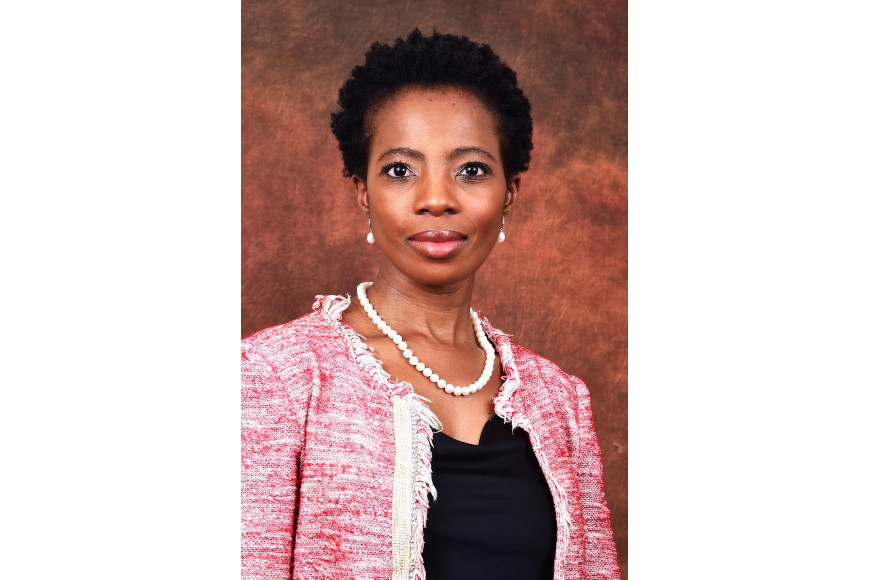
Pictured: Public Protector Advocate Kholeka Gcaleka, who will deliver the keynote address at DUT’s Student Leadership Week closing ceremony on Friday, 25 September 2026.


Picture: Supplied.

Simangele Zuma

https://www.dut.ac.za/public-protector-advocate-kholeka-gcaleka-to-address-dut-student-leaders-at-third-annual-student-leadership-week/


IREC REVIEWERS RECOGNISED FOR STRENGTHENING DUT’S RESEARCH CREDIBILITY


The Research and Postgraduate Support Unit at the Durban University of Technology (DUT) proudly hosted the Institutional Research Ethics Committee (IREC) Reviewers Awards Ceremony, celebrating peer reviewers who uphold research excellence and ethical integrity. The event was held at the DUT Hotel School Conference Centre, Ritson Campus, Durban, on Tuesday, 17 February 2026.


In his welcome remarks, IREC Chairperson and DUT Business School Director, Professor Pfano Mashau, highlighted that last year the committee received a large volume of applications, with the number tripling compared to 2024.


“There is a clear message from the university community: researchers now feel confident engaging with the committee. Our improved turnaround times reflect this trust, and it is exciting to see more people actively involved in research. It is important to start the year by celebrating last year’s achievements,” said Prof Mashau, extending his appreciation to all IREC members. He added that by December 2025, all proposals had been reviewed and shared plans to recruit more members and host Peer Review Workshops to further improve review turnaround times.


Distinguished guests at the IREC Reviewers Awards Ceremony.

The Interim Director: Research and Postgraduate Support, Dr Nomcebo Mthombeni, commended the reviewers for their often unseen yet essential work. She noted that their meticulous assessments strengthen the quality of academic research and reinforce DUT’s commitment to responsible innovation and societal impact in alignment with the ENVISION2030 strategy.


“Thank you for ensuring that the entire research ecosystem operates smoothly. Your commitment is evident in your turnaround times and reflects DUT’s core values. We hope your dedication inspires others. Change is never easy, but this committee has embraced it, demonstrating the excellence we can all aspire to,” said Dr Mthombeni.


The Deputy Chairperson of IREC and Head of the Department of Radiography, Prof Thandokuhle Khoza, shared that in 2025, IREC reviewed 767 proposals, a significant increase from 330 in 2024 and 247 in 2023. By the third and fourth quarters, backlogs had been cleared. Strengthened governance and process optimisation led to faster decisions, higher completion rates, and improved compliance. Challenges included increased submission volumes and varying review availability across faculties, but IREC staff demonstrated strong adaptability and commitment.


“To address these challenges, we plan to strengthen administrative capacity, recruit additional reviewers per faculty, and host Reviewer Training Workshops to improve consistency and quality. Structured mechanisms will streamline workflow and turnaround times, and all meetings in 2026 will be in-person to enhance engagement and effectiveness,” explained Prof Khoza.


Sharing her excitement as the IREC Top Reviewer, Dr Itumeleng Maome, lecturer in the Department of Entrepreneurial Studies and Management, said: “I never anticipated receiving this recognition. It required sacrifices, including early mornings to review proposals, but I am grateful for the acknowledgement of my efforts.” In addition to supervising Master’s and PhD students, Dr Maome remains committed to contributing to IREC.


In closing, Prof Mashau applauded all reviewers and committee members for their outstanding contributions. He noted that although his personal publication count has decreased since taking office, it gives him great satisfaction to see DUT researchers thriving and making a meaningful societal impact through their research.


The awards ceremony served as a celebration of dedication and a reaffirmation of DUT’s research culture, grounded in accountability, transparency, and academic excellence. By recognising IREC reviewers, DUT continues to foster a research ecosystem built on integrity and societal impact.


Pictured: IREC Chairperson and DUT Business School Director, Professor Pfano Mashau with the IREC Top Reviewer, Dr Itumeleng Maome, who is a lecturer in the Department of Entrepreneurial Studies and Management.


Photographer: Khulasande Tshayile.

Simangele Zuma

https://www.dut.ac.za/irec-reviewers-recognised-for-strengthening-duts-research-credibility/


BHEKA NTOMBELA IS TURNING STUDENT VOICES INTO ACTION


Meet Bheka Ntombela, one of the Durban University of Technology (DUT) Student Representative Council (SRC) members, serving as Deputy Secretary-General. He is Currently a third-year Marketing student in the Faculty of Management Sciences, he brings a sharp analytical mind, strategic insight and strong communication skills to student leadership. His academic grounding equips him to innovate thoughtfully, collaborate effectively and lead with purpose in institutional spaces that demand clarity and conviction.


Born and raised in Mthwalume, KwaZulu-Natal, Ntombela describes himself in three words: disciplined, dedicated and People-Centred. These qualities are rooted in an upbringing that instilled integrity, resilience and a deep responsibility to uplift the Black child. Guided by these values, Bheka’s leadership is both principled and purposeful.


Ntombela believes the 2025 SRC, a collective of vibrant and forward-thinking young leaders, carries a clear mission: to amplify student voices, advocate for meaningful change and ensure that every DUT student is represented with dignity and resolve. Central to this mission is his focus on strengthening communication across the university, ensuring that student concerns are not only heard but addressed with emergency and intention.


As Deputy Secretary General, Ntombela is committed to transparent coordination, effective communication and building an SRC that remains accessible to every student. His leadership vision prioritises accountability, proactive engagement and a governance culture rooted in service and integrity.


“For me, leadership is not about the position you hold, but the difference you make. Every student deserves to be seen, heard and represented. I am here to turn their voices into action,” said Ntombela.


Congratulations, Bheka Ntombela. Your passion, discipline and student-centred vision continue to inspire the DUT community. Your leadership promises a revitalised, inclusive and action-driven SRC.


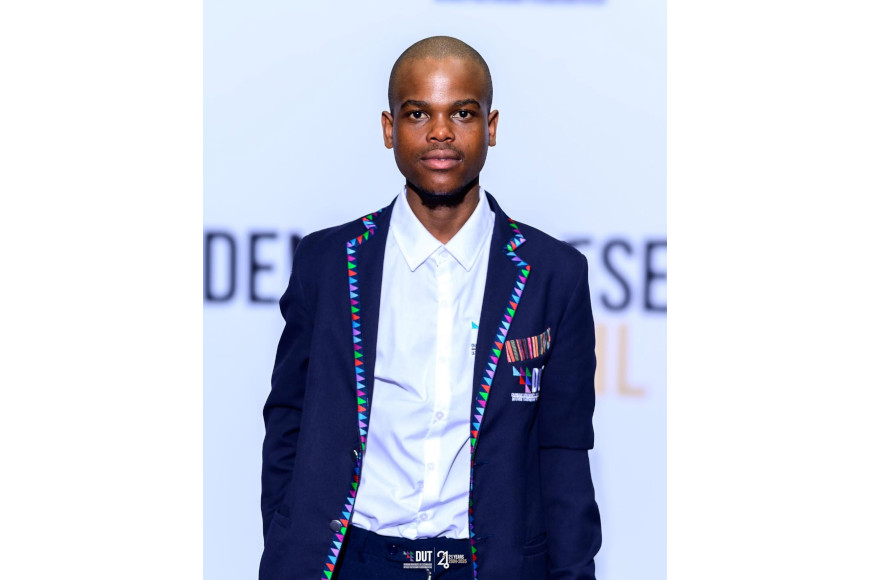
Pictured: DUT SRC Deputy Secretary-General, Bheka Ntombela.


Photographer: Khulasande Tshayile.

Tiyani Mboweni

https://www.dut.ac.za/bheka-ntombela-is-turning-student-voices-into-action/


DUT LECTURER ADELE ROBINSON CHAMPIONS RESILIENCE AND ETHICAL LEADERSHIP AMONG YOUNG PROFESSIONALS


Durban University of Technology (DUT) lecturer Adele Robinson recently moderated a panel discussion at the South African Institute of Professional Accountants (SAIPA) eThekwini Young Professional Connect, held at The Edward Hotel in Durban.


The panel discussion, themed “Resilient Young Professionals: Leading with Purpose, Influence and Impact”, featured technology entrepreneur Praneetha Aniruth, alongside Standard Bank representatives Imraan Adams and Nikhailyn Rambali. The discussion explored the changing world of work, the growing influence of artificial intelligence (AI), financial wellbeing and the qualities needed to build sustainable professional careers.


During the discussion, Robinson encouraged young professionals to embrace technology, uphold ethical standards and lead with purpose as they navigate an increasingly complex and competitive workplace.


The event brought together students, graduates and young professionals with leaders from government, business and the finance sector. The programme also included a keynote address by KwaZulu-Natal MEC for Finance, the Honourable Francois Rodgers, who spoke about the role of professionalism in the economy.


Reflecting on the discussion, Robinson highlighted three key messages: embracing technology and AI while remaining accountable for one’s work; establishing strong financial foundations through early saving and wise investment; and leading through purpose and character rather than titles.


“Technology does not carry our responsibility for us. We must embrace innovation while retaining our professional judgement, accountability and integrity,” she emphasised.


For Robinson, the opportunity to moderate the discussion was particularly meaningful given her own academic and professional journey at DUT. She completed her National Diploma in Cost and Management Accounting (Cum Laude), followed by a BTech in Cost and Management Accounting and a Master of Accounting. She is currently pursuing a PhD in Accounting.


She is also a Professional Accountant (SA) and Professional Tax Practitioner (SA), registered with SAIPA. Having progressed through the same academic environment as many of the students attending the event, she understands the challenges and opportunities facing aspiring accounting professionals.


Since 2024, Robinson has been on full-time study leave to pursue her doctoral studies, supported by the National Research Foundation’s (NRF) Black Academics Advancement Programme (BAAP), in partnership with the FirstRand Foundation.


She believes resilience is particularly important for young professionals as AI transforms routine tasks, economic pressures intensify and competition for employment increases. In the accounting profession, this also means maintaining ethical standards and making sound decisions, even under pressure.


“Resilience allows young professionals to adapt, recover from setbacks and continue growing. In accounting, it also means holding on to your ethics under pressure,” she said.


Robinson also highlighted the responsibility of universities to ensure that graduates are prepared for the realities of the workplace. She advocates for integrating technology, data analytics and AI into academic programmes while equipping students to critically evaluate the information and outputs generated by these tools.


She further emphasised the importance of work-integrated learning, industry partnerships and developing professional competencies such as communication, ethical decision-making and adaptability.


“Universities should prepare graduates not only with technical knowledge but also with the ability to communicate effectively, exercise professional judgement and demonstrate resilience. Encouraging students to join professional bodies early also helps them develop their professional identity and remain relevant in the market,” she explained.


Offering advice to DUT students and graduates, Robinson encouraged them to take responsibility for their professional development by seeking mentorship, building meaningful networks and committing to lifelong learning.


“Be patient with yourself but never stop learning. Your early setbacks do not define your career. Build relationships with mentors and professional bodies, and keep your ethics non-negotiable. Accounting is about building trust. Lead with purpose and integrity, and the impact will follow,” she concluded.


Through her academic journey, professional involvement and engagement with industry, Robinson continues to demonstrate the importance of connecting higher education with professional practice, while encouraging the next generation of graduates to become responsible, resilient and influential professionals.


Pictured: DUT lecturer in the Department of Financial Accounting, Adele Robinson, after moderating a panel discussion at SAIPA’s eThekwini Young Professional Connect.


Picture: Supplied

Simangele Zuma

https://www.dut.ac.za/dut-lecturer-adele-robinson-champions-resilience-and-ethical-leadership-among-young-professionals/