
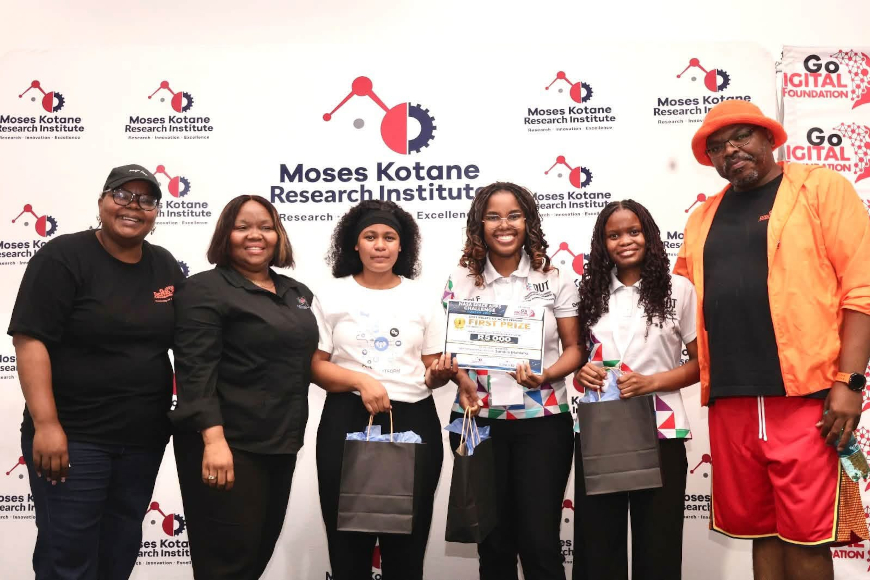
Three students from the Durban University of Technology’s (DUT) Faculty of Accounting and Informatics have demonstrated their innovation and technical expertise by securing first place at the 2026 NASA Space Apps Challenge in Durban. Competing as DUT ARM Coders, the team impressed the judges with Field Shift, an intelligent crop-rotation decision-support platform that combines artificial intelligence (AI), deep learning, Internet of Things (IoT) technology and NASA Earth observation data to support sustainable farming practices.
The winning team comprised Lindokuhle Mnguni, a Master’s student in ICT; Nomfundo Manyoni, who is pursuing an Advanced Diploma in ICT; and Queen Hadede, a Master’s student. Their achievement earned them a R5 000 cash prize and certificates of achievement at the international hackathon, held on 14 and 15 November 2026 at the Moses Kotane Research Institute (MKRI) Conference Centre in Durban.
The Durban edition of the NASA Space Apps Challenge was hosted by the Moses Kotane Research Institute in partnership with the GoDigital SA Foundation and Science CEO. It brought together aspiring innovators to develop technology-driven solutions to real-world challenges using NASA’s open data.
Recognised as the world’s largest annual global hackathon, the NASA Space Apps Challenge brings together students, developers, scientists, researchers and innovators to address challenges facing Earth and space. Participants are tasked with identifying real-world problems, developing innovative solutions, building working prototypes and presenting their projects to a panel of judges, with opportunities for international recognition.
From 14 available challenges, DUT ARM Coders selected Field Shift: Adapting Farms with NASA Data, which focused on using Earth observation data to support agricultural decision-making.
Their solution, Field Shift, is an intelligent crop-rotation decision-support platform designed to help farmers make informed and sustainable agricultural decisions. It integrates NASA Earth observation data with information collected through IoT devices, local soil conditions, crop characteristics and farmers’ preferences. By analysing environmental changes across different regions, the platform helps identify what is changing, where changes are occurring and the extent of those changes. It then generates and compares sustainable crop-rotation strategies to assist farmers in making informed decisions.
What distinguished the team’s approach was its decision to go beyond relying exclusively on available satellite data. Recognising that certain information required for their solution could not readily be obtained through satellite observations, the students developed their own IoT-based system using sensors to collect additional environmental data. This enabled them to combine satellite information with locally generated data, strengthening the platform’s information base and enhancing its potential to support more informed agricultural decision-making.
The students spent the night developing, testing and refining their solution while consulting experts for guidance. They also drew on knowledge acquired through their studies at DUT, particularly deep learning concepts covered in their Machine Learning module. This enabled them to translate theoretical knowledge into practical application while developing a technology-driven response to a real-world challenge.
After refining their prototype, the team focused on preparing for the final presentation. With only five minutes allocated, they carefully structured their pitch to communicate the problem, their proposed solution, the technologies used and the potential impact of Field Shift.
Their efforts paid off when DUT ARM Coders secured first place, receiving a R5 000 cash prize and certificates in recognition of their achievement.
Reflecting on the experience, Mnguni said the team was excited and proud of what they had accomplished, particularly because their hard work and sacrifices had resulted in a solution they could confidently present.
“The experience strengthened our presentation skills and taught us how to explore scientific information, particularly NASA’s open data, and apply it to practical challenges,” she said.
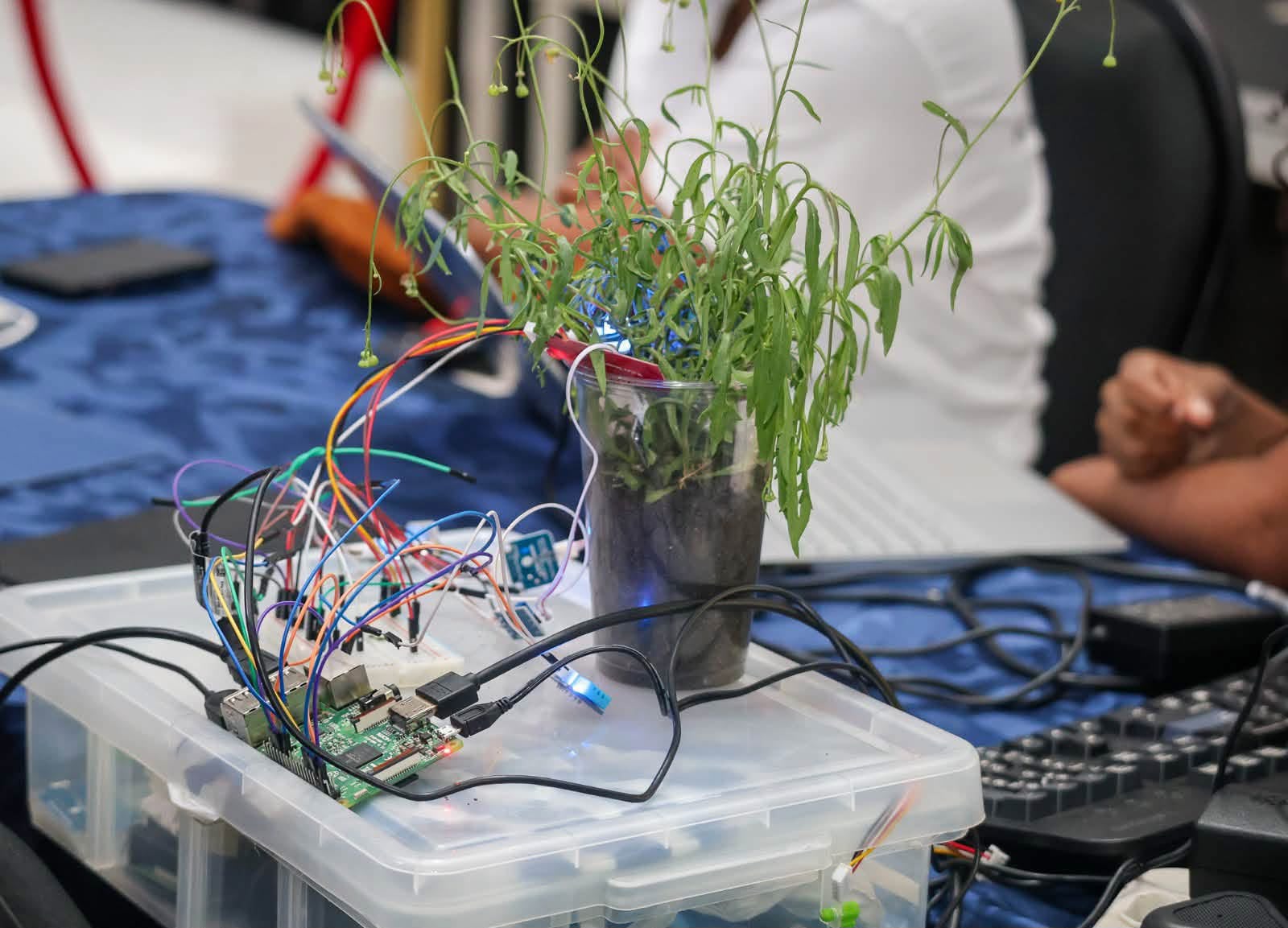 For the students, participating in the international hackathon was about more than developing a prototype. It demonstrated the importance of looking beyond existing information, experimenting with different technologies and working collaboratively to develop innovative solutions. Their decision to integrate sensor-generated data with NASA’s satellite information reflected their ability to identify limitations and find creative ways to overcome them.
Mnguni encouraged other students not to underestimate their ideas or allow a perceived lack of experience to prevent them from participating in innovation competitions.
“Do not be afraid to participate, even if you feel you do not have enough experience. Hackathons are opportunities to learn, challenge yourself and discover what you are capable of. You do not need to know everything before entering. Be willing to research, experiment, collaborate and learn from others,” she advised.
Looking ahead, DUT ARM Coders intend to continue developing Field Shift, improve its features and explore opportunities to transform the platform into a practical solution that can benefit farmers. The team also hopes to participate in more innovation competitions, expand its technical knowledge and collaborate with other innovators to develop technology-driven solutions that make a positive contribution to communities.
Congratulating the students, Executive Dean Prof Oludayo Olugbara said their success reflected the Faculty’s commitment to developing graduates equipped with technical expertise and workplace-ready skills. He noted that the achievement demonstrated the positive impact of the Faculty’s Experiential Problem-Induced Pedagogy (EPIP) approach, which encourages students to apply their knowledge to solving real-world challenges.
“I am really proud of what the students have achieved. Their success demonstrates the value of innovation, teamwork and skills development, while also showcasing the DUT brand on an international platform. This achievement is evidence that our students can compete with the best and develop solutions that address real-world challenges. They have ended 2026 on a high note for the Faculty, and I congratulate Lindokuhle, Nomfundo and Queen on this remarkable accomplishment,” said Prof Olugbara.
Their first-place achievement at the NASA Space Apps Challenge 2026 highlights the talent, innovation and problem-solving capabilities of students within the DUT Faculty of Accounting and Informatics. Through Field Shift, DUT ARM Coders have demonstrated how collaboration, creativity and technological expertise can be harnessed to address real-world challenges, while showcasing the value of experiential learning beyond the classroom.
The experience has also strengthened the team’s confidence and commitment to innovation, demonstrating how ideas can be transformed into meaningful solutions when individuals are willing to learn, collaborate and challenge themselves.
Pictured: Proud moment for the Faculty of Accounting Students Lindokuhle Mnguni, Nomfundo Manyoni and Queen Hadede secured first place at the 2026 NASA Space Apps Challenge after impressing judges with their award-winning Field Shift solution.
Picture: Supplied
Sinamile Sithole


