
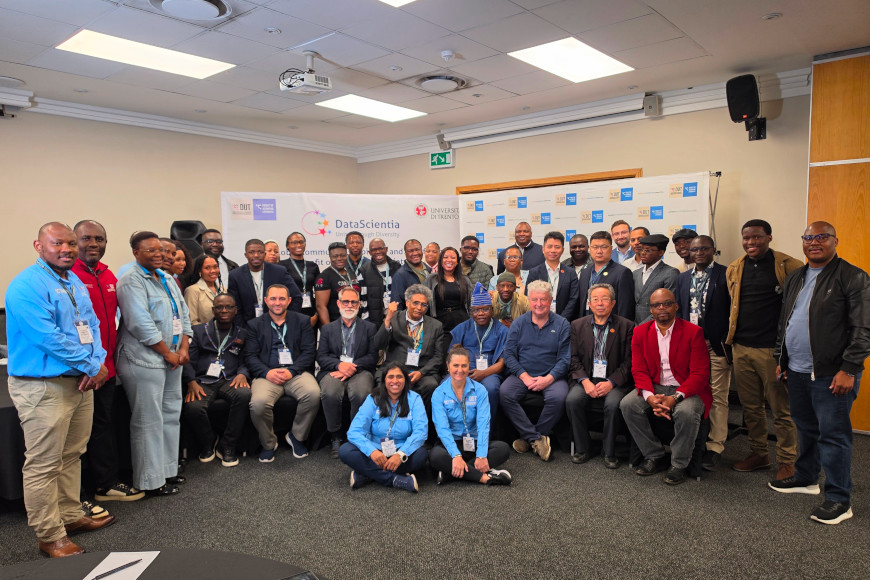
The Durban University of Technology (DUT) has successfully hosted the inaugural African edition of the DataScientia Symposium 2026, bringing together leading researchers, policymakers, industry experts and international partners to advance Diversity-aware Sovereign Artificial Intelligence (AI) and strengthen global collaboration, innovation and knowledge exchange.
Hosted over four days, the symposium welcomed delegates from across Africa, Europe and Asia, marking a significant milestone for both the University and the continent. As the first DataScientia Symposium to be held in Africa, the event positioned DUT as a leading contributor to international conversations on ethical, inclusive and context-aware AI, while reinforcing the University’s growing reputation for research excellence, innovation and global partnerships.
The symposium reflected DUT’s commitment to driving research that responds to African realities while contributing to global scientific advancement. By convening world-renowned experts from academia, government and industry, the University created a platform for meaningful dialogue on developing AI systems that are inclusive, culturally responsive and capable of addressing the diverse needs of societies across Africa and beyond.
Addressing delegates during the symposium, Chair of DataScientia Africa and Director of the Centre for Artificial Intelligence Research at DUT, Professor Oludayo Olugbara, said the gathering represented far more than an academic conference.
“DataScientia is a collaborative movement that brings together researchers, educators, policymakers and industry partners to develop Diversity-aware Sovereign AI that responds to local realities while contributing to global knowledge. Hosting the first African edition at DUT demonstrates our collective commitment to ensuring that Africa plays a leading role in shaping the future of ethical and inclusive artificial intelligence.”
Throughout the symposium, delegates explored how Diversity-aware Sovereign AI can respond to Africa’s unique social, cultural and linguistic contexts while promoting ethical AI development, open collaboration and knowledge sharing. Discussions reinforced the importance of building AI technologies that advance scientific discovery while protecting cultural diversity, supporting sustainable development and empowering communities.
Across the four-day programme, the symposium progressed from thought-provoking keynote addresses and cutting-edge research presentations to technical workshops, policy discussions and strategic planning sessions. The final collaborative engagements focused on strengthening partnerships, expanding the DataScientia Initiative and identifying practical pathways for its long-term sustainability.
The programme showcased progress achieved over the past year across DataScientia’s four strategic pillars: Knowledge Commons, Education, Research and Innovation. Delegates examined the collaboration models and digital infrastructure supporting these pillars while identifying opportunities for new institutions, researchers and industry partners to contribute to the initiative.
Discussions also centred on fundraising, sustainability strategies and strengthening collaboration across institutions, sectors and regions. Through presentations, interactive discussions and a concluding panel session, participants identified key priorities for the years ahead and explored practical pathways for advancing Diversity-aware Sovereign AI in Africa and beyond.
Reflecting on the success of the symposium, DataScientia Co-Chair Professor Sunday Ojo thanked delegates, speakers and sponsors for their commitment to the initiative and expressed confidence in its future.
“We are very excited to see the success of DataScientia 2026 here at the Durban University of Technology. Thank you to all the speakers and everyone who contributed throughout the symposium. We hope this will not be the end of DataScientia, but that it will continue to grow and make an impact for many years to come,” said Prof Ojo.
He said the symposium had laid a strong foundation for future international collaboration.
“We thank all our sponsors, every member of the local organising team and our colleagues from around the world, including those who joined us online and those who were unable to attend. Your support has made this event a great success, and we look forward to building on this momentum when the symposium continues next year in China,” he said.
Closing the symposium, Dr Robyn Thompson encouraged delegates to ensure that the conversations and ideas shared throughout the week translated into meaningful collaboration and impactful research.
“The success of this symposium is not only measured by the discussions we have had this week, but by what we do next. We encourage everyone to take the knowledge, partnerships and ideas developed here and continue working together to strengthen the DataScientia Initiative and advance Diversity-aware Sovereign AI,” said Dr Thompson.
Beyond the academic programme, delegates participated in an Ubuntu-themed networking gala dinner celebrating the rich cultural diversity represented throughout the symposium. Guests dressed in traditional attire, creating a vibrant atmosphere that reflected the values of unity, inclusion and shared identity.
The evening featured a colourful programme of cultural performances, beginning with a traditional Indian dance. DUT’s acclaimed cultural ensemble, Othulamsindo, captivated delegates with an energetic Zulu dance performance, while traditional Nigerian and Ethiopian dances, poetry recitals and musical performances showcased the diversity of cultures represented at the symposium. More than an evening of celebration, the gala dinner strengthened international relationships and demonstrated how cultural exchange complements scientific collaboration.
On the fourth and final day, delegates experienced some of KwaZulu-Natal’s historical and natural landmarks, offering international visitors a deeper appreciation of South Africa’s rich heritage.
The group visited the KwaZulu-Natal Museum in Pietermaritzburg, where they explored exhibitions highlighting the province’s natural history, archaeology and cultural heritage. Delegates also travelled to the iconic Howick Falls, reflecting on the partnerships, knowledge exchange and friendships developed throughout the symposium while experiencing one of KwaZulu-Natal’s most celebrated natural attractions.
One of the organisers, Ugeshni Moodley, extended her sincere appreciation to everyone who contributed to the successful planning and delivery of the DataScientia Symposium 2026.
Special recognition was given to the organising committee comprising Professor Oludayo Olugbara, Professor Sunday Ojo, Professor Fausto Giunchiglia, Dr Mayukh Bagchi, Dr Oyeniyi Alimi, Dr Robyn Thompson, Ali Hamza, Sisekelo Msthali, Freedom Khubisa, Lin Wu, Lindelweyizizwe Manqele, Fanie Ndlovu, Rishan Govender, Keith Kenneth, Nonzuzo Ngcobo, Siyanda Magubane, Sinamile Sithole, Kwanele Mazibuko, Wanga Majali, Mandisi Mvunelo and Kwanele Chonco, whose dedication and collaborative efforts ensured the symposium’s success.
As delegates departed, the symposium concluded not as the end of a conference, but as the beginning of new international partnerships and collaborative research initiatives. With the next edition set to take place in China, the relationships forged at DUT are expected to strengthen global cooperation in Diversity-aware Sovereign AI while further cementing the University’s position as a leading institution for research, innovation and international engagement.
Pictured: International delegates and researchers gathered at the Durban University of Technology during the inaugural African edition of the DataScientia Symposium 2026.
Photographer: Keith Kenneth.
Sinamile Sithole


