
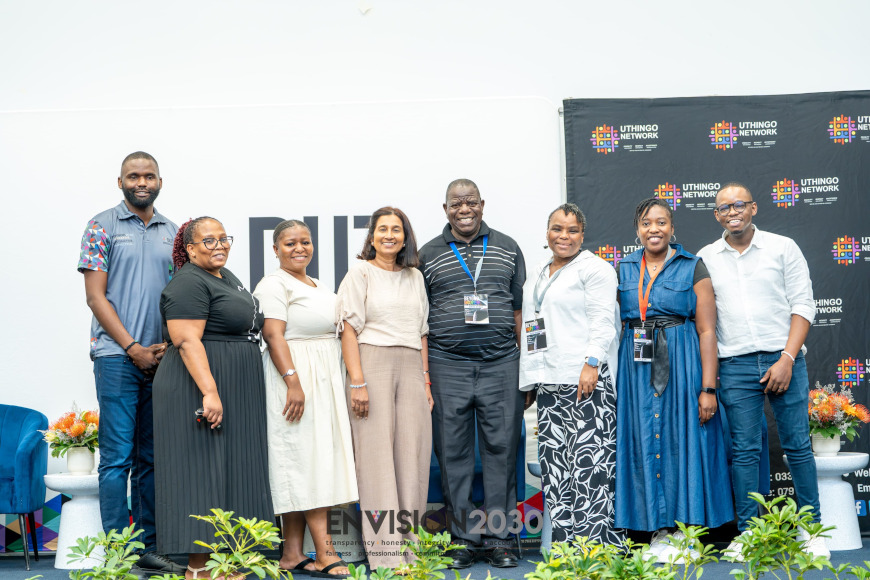
The International Centre of Nonviolence (ICON) at the Durban University of Technology; in collaboration with Uthingo Network, hosted the two-day Beyond Inclusion Symposium under the theme, “Confronting Anti-LGBTQI+ Violence and Discrimination in the South African Education System” ,at Mansfield Hall, Ritson Campus, from 21 to 22 September 2026.
The symposium brought together high school and primary school learners, university students, parents, activists, researchers, academics, civil society representatives and policymakers to discuss the experiences of LGBTQI+ youth and explore approaches to creating more inclusive educational environments.
In her opening remarks, S’thembile Mjadu, Acting Director of Student Counselling and Development, framed inclusion as both a constitutional and moral obligation. She highlighted the need for institutions to move beyond broad commitments to inclusion by strengthening anti-discrimination measures, reporting pathways, healing curricula, safe residences, affirming services and meaningful support for LGBTQI+ students and learners.
Professor Relebohile Moletsane’s keynote address brought the discussion into focus through the story of Thando, a composite representation of patterns emerging from research and lived experiences. Thando’s school day demonstrated how discrimination does not always take the form of a dramatic or reportable incident. Instead, it can involve the constant calculation of how to walk, speak, dress, sit and behave in order to remain safe.
The first day featured a panel discussion titled “Speaking to Our Lived Educational Experiences” ,facilitated by Brian Sibeko, Director of Uthingo Network. The panel included Olwethu Masuku, a learner and representative from Uthingo Network Support Group; Sbusiso Mahlinza, a student from the University of KwaZulu-Natal and representative of the Queer Alliance; Qiniso Gumede, a DUT student and representative of the Rainbow Alliance; and Nhlanhla Myeza, a learner from Nonhlevu Secondary School.
This was followed by a panel discussion facilitated by Dr Ruth Nyamadzawo, a Postdoctoral Fellow at ICON, DUT. Titled “What is the Research Telling Us?”, the discussion brought together Nkonzo Mkhize, Researcher and PhD candidate at the University of the Witwatersrand; Dr Dudu Shabane, Lecturer at ICON, DUT; and Melicia Khasa, educator at KwaMakhutha Comprehensive High School. The panellists reported on their research studies that explored the experiences of LGBTQI+ youth and how they experience violence, discrimination and inclusion within educational settings.
The final panel discussion of the day, titled “Voices of Adults: Challenging the Systems That Shape Young People’s Experiences” ,focused on the role of adults and institutions in shaping young people’s experiences. The panel included Zanele Mnyandu, Principal of Tinley Manor High School; Cynthia Myeni, parent of a queer learner; and Virginia Magwaza, Founder and Managing Director of Parents, Families & Friends of South African Queers (PFSAQ).
Adding a creative dimension to the programme, attendees were treated to a poetry performance by Thola Mhlongo and a drama performance by students from DUT’s Department of Drama and Production Studies.
The second and final day of the Beyond Inclusion Symposium was anchored on the theme, “Imagining Inclusive Education” ,continuing the discussions and reflections from the first day.
The first panel discussion, titled “Reimagining Inclusive Education” ,was facilitated by Professor Tabitha Murekedzi, SARChI Chair in Education, Social Justice and Society at DUT. The panel included Professor Phumlani Myende from the University of KwaZulu-Natal School of Education; Tandile Mbatsha, Education Officer at Gender Dynamix; Nonhlanhla Mkhize, Executive Director at the Durban Lesbian, Gay, and Community Health Centre; and Dr Zakhele Nzuza, Senior Lecturer and Head of Department in Inclusive Education at the University of Fort Hare.
The discussion examined approaches to creating educational environments that respond to the diverse experiences of learners and students.
“For me, the concept of inclusion is too broad yet very simple. For the longest time, sometimes we understood it to mean fixing things and systems, and so on. My basic meaning of inclusion and inclusive education is about one key concept, which is care. All the other concepts that relate to care, or that are part of inclusive education, are centred around what care means,” said Professor Myende.
Tandile Mbatsha further explored the concept of care in relation to inclusive education, emphasising the importance of allowing learners and students to exercise autonomy in determining their identity and being accepted within educational environments.
“Care comes from seeing an individual for who they are, and as they are telling you who they are. It is around self-determination, and making sure that the policies are conducive for an individual to thrive in the school,” said Mbatsha.
The importance of understanding also emerged from the discussion, with panellists highlighting the need for educators to understand their learners and students in order to support their development and participation.
“As an educator, you are not going to get to the learner if you do not understand the learner. Inclusive education means to be respected, valued, and above all, free from discrimination. Ultimately, it means creating a sense of belonging where everyone can learn, be taught, and participate without fear,” said Dr Nzuza.
The final panel discussion of the symposium, titled “From Policy to Practice: Conversation with Policymakers” , was facilitated by Professor Cheryl Potgieter, a South African academic and psychologist. The discussion focused on moving from awareness of anti-LGBTQI+ violence and discrimination towards accountability and practical change.
The panel included Zanele Ncwane, KwaZulu-Natal Provincial Manager for the Commission for Gender Equality; Phumlani Ndlovu, representative of the School Governing Body Governance for Ilembe District under the Department of Basic Education; Nkonzo Mkhize, Researcher and PhD candidate at the University of the Witwatersrand; and Brian Sibeko, Director of Uthingo Network.
The discussion explored practical ways in which policy can be translated into practice, as well as the relationship between policy and the everyday experiences of the LGBTQI+ community in educational settings. Panellists also considered possible responses to the challenges faced by LGBTQI+ learners and students.
The symposium concluded with closing remarks from Programme Director Professor Ndumiso Daluxolo Ngidi, Director of ICON and Associate Professor at DUT. He expressed his gratitude to the attendees and reflected on the productive engagement throughout the two days.
Professor Ngidi emphasised that transformation cannot take place within one institution alone and requires a collective commitment from different stakeholders.
The Beyond Inclusion Symposium highlighted the importance of collaborative engagement between DUT’s Faculty of Management Sciences, ICON and Uthingo Network in creating spaces for dialogue on inclusive education and the experiences of LGBTQI+ youth.
Pictured: DUT ICON representatives.
Photographer: Sifundo Thwala
Sompisi Ntuli


