
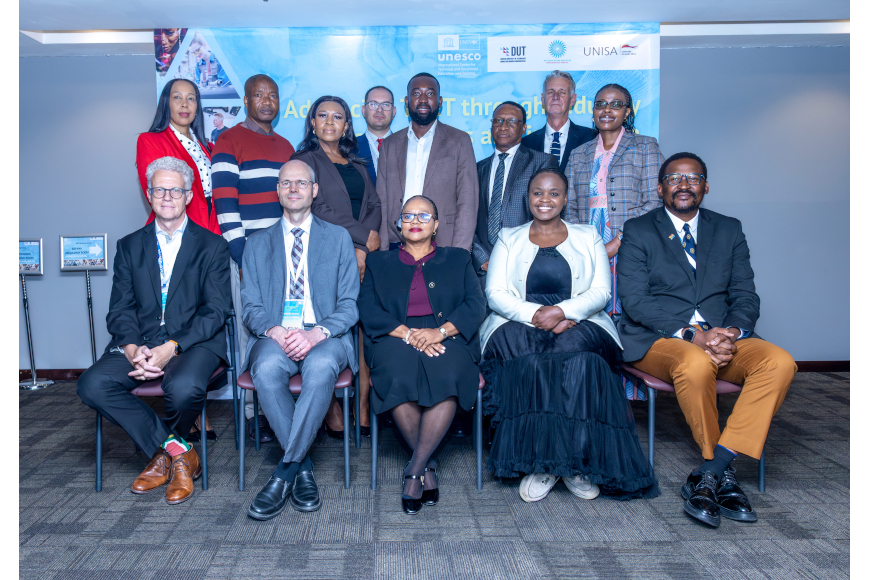
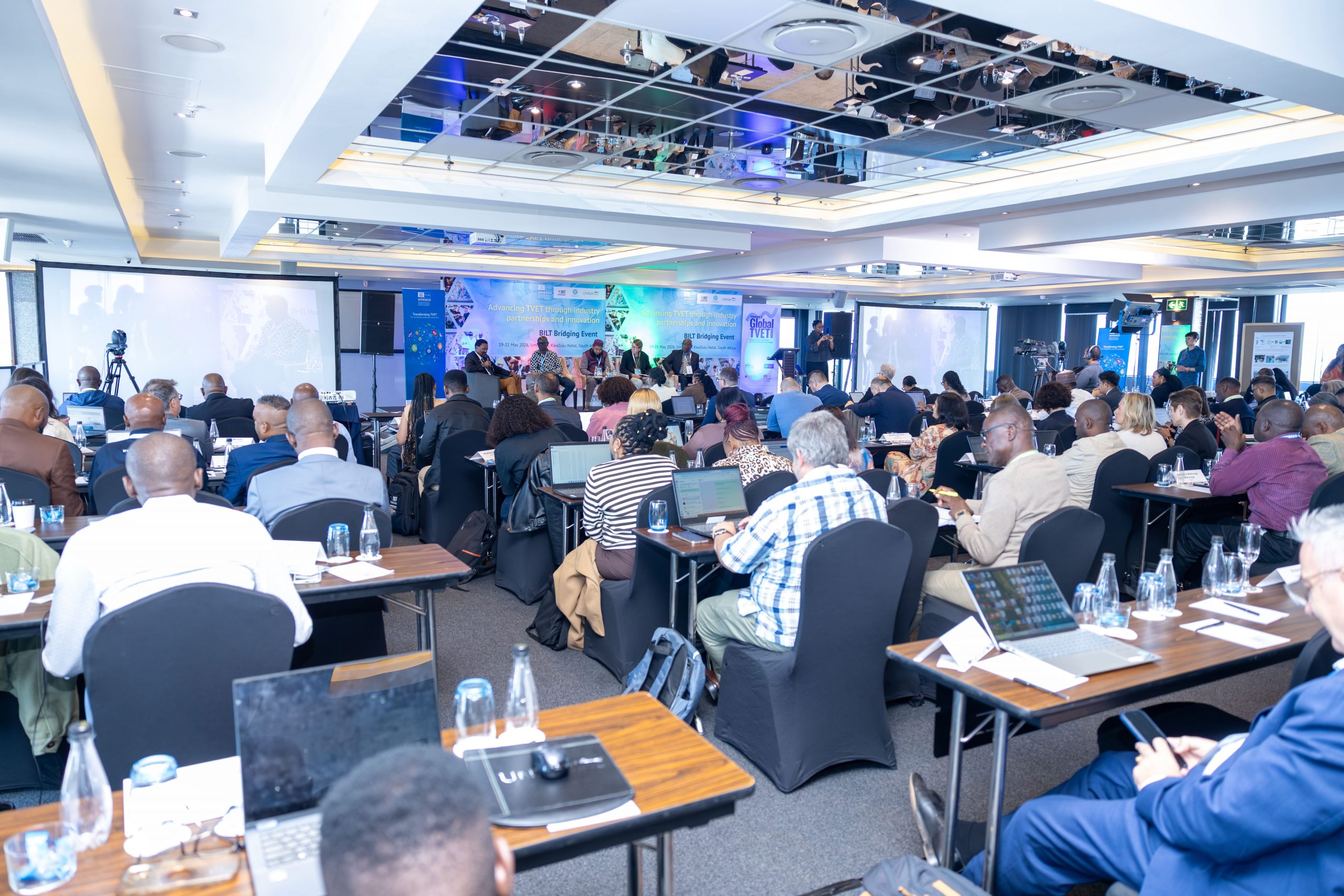
The Durban University of Technology (DUT), in collaboration with UNESCO UNEVOC, the University of South Africa (UNISA) and JET Education Services, recently co-hosted the UNESCO UNEVOC BILT Bridging Event under the theme, Advancing TVET Through Industry Partnerships and Innovation.
The event brought together regional and international stakeholders to explore how sustainable partnerships between education institutions and industry can strengthen high quality, work based and innovation driven Technical and Vocational Education and Training (TVET) programmes.
Against the backdrop of rapidly evolving labour markets shaped by technological advancement, digital transformation, changing industry demands and emerging qualification frameworks, delegates engaged in meaningful discussions on strengthening industry collaboration and integrating future focused skills into TVET systems across Africa.
Discussions centred on designing, delivering and expanding work based and innovation driven TVET programmes through meaningful partnerships with industry. Delegates shared experiences, exchanged best practices and explored innovative approaches to skills development, including micro credential pathways, artificial intelligence enabled teaching and learning, and emerging partnership models. These discussions aligned with the African Continental TVET Strategy 2025 to 2034 and the UNESCO Strategy for TVET 2022 to 2029.
The programme provided a platform for dialogue and knowledge sharing while examining the conditions required to build sustainable partnerships between TVET institutions and industry. Participants also explored effective models for co designing and delivering programmes with employers, strengthening collaboration among UNEVOC Centres and expanding cooperation with industry, regulators, social partners, digital ecosystem partners and international organisations. The discussions will contribute to the development of a discussion paper featuring case studies, insights and recommendations for innovative TVET programme design and delivery.
Delivering the keynote address on behalf of DUT, Dr Nomcebo Mthombeni described the event as an important platform for advancing Technical and Vocational Education and Training. She acknowledged the contributions of UNESCO UNEVOC, partner institutions and DUT leadership in promoting innovation, collaboration and societal impact.
Dr Mthombeni described KwaZulu Natal as a province rich in resilience, innovation, culture and human potential while recognising ongoing challenges such as youth unemployment, inequality, changing industries and the growing demand for future oriented skills.
She said TVET should create pathways to dignity and opportunity through employment, entrepreneurship and sustainable livelihoods while empowering communities and supporting inclusive development. She further emphasised that conferences should move beyond identifying challenges and instead drive practical solutions through responsive policies, effective implementation strategies and stronger partnerships between higher education institutions, industry and government.
Reflecting on the future of education, Dr Mthombeni encouraged delegates to consider whether current education and partnership models remain fit for purpose in a world shaped by artificial intelligence, digital transformation, green economies and rapidly changing labour markets.
She also highlighted the importance of Recognition of Prior Learning and the inclusion of indigenous knowledge systems, noting that valuable knowledge and expertise often remain under recognised within traditional academic pathways.
Concluding her address, Dr Mthombeni encouraged delegates to ensure that the event serves as a bridge between policy and implementation, local realities and global knowledge, and education and economic development. She said the ultimate goal should be to build meaningful partnerships, develop innovative models and drive transformative action for the future of TVET.
 Delegates also visited eThekwini, Elangeni and Coastal TVET Colleges, where they observed best practices in TVET delivery and industry engagement. Through interactions with educators, students and institutional leaders, they gained valuable insights into work based learning, digital transformation, entrepreneurship development, green skills training and inclusive education initiatives.
The visits demonstrated the important role of collaboration between industry, government and educational institutions in preparing graduates with the skills required for an evolving world of work.
The UNESCO UNEVOC BILT Bridging Event provided a valuable platform for dialogue, knowledge sharing and collaboration among TVET stakeholders from across Africa and beyond. Through engaging discussions, practical case studies and institutional visits, participants reaffirmed the importance of industry partnerships in developing responsive, innovative and future ready TVET systems.
The outcomes of the event are expected to strengthen TVET policy and practice, foster new partnerships and advance sustainable skills development initiatives that contribute to economic growth, social inclusion and workforce readiness.
Pictured: Attendees at the UNESCO UNEVOC BILT Bridging event.
Basanda Sithole


