
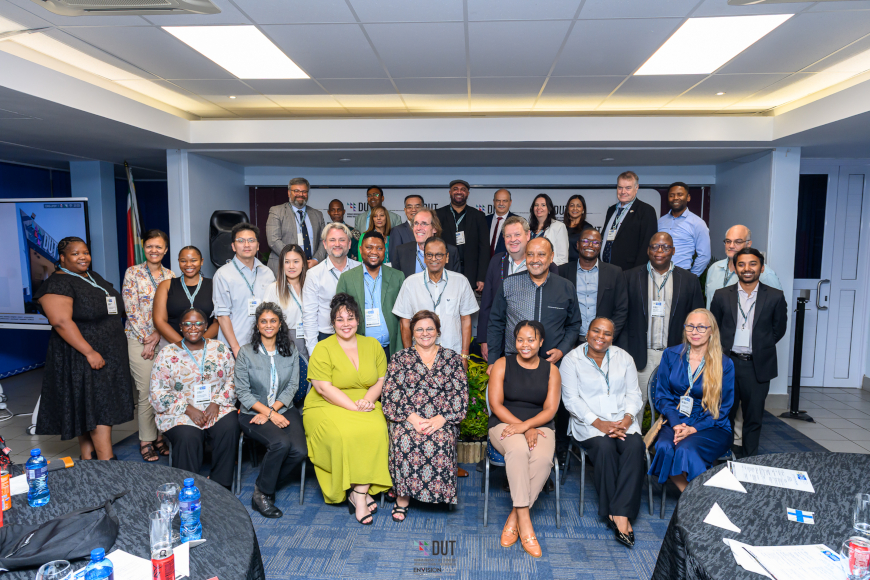
On Wednesday, 4 March 2026, the Durban University of Technology (DUT) welcomed representatives from 11 nations and the KwaZulu-Natal Diplomatic Corps to the DUT Hotel School for a landmark engagement, co-developing a practical roadmap for international collaboration aligned with DUT’s ENVISION2030 strategy.
Building Partnerships Across Borders
Prof Pfano Mashau, Director of the DUT Business School, welcomed delegates, emphasising that internationalisation is central to DUT’s mission. “Knowledge, innovation, and talent must move across borders to address shared developmental priorities,” he said. “This engagement is more than networking; it is a platform to deepen dialogue and contribute to sustainable development, skills advancement, and innovation-driven growth.”
Prof Mashau highlighted DUT’s Quad Helix approach, linking academia, industry, government, and civil society to develop connected solutions. He noted that DUT’s growing international footprint demonstrates the value of mutually beneficial, development-focused partnerships.
KZN’s Diplomatic Community: Eleven Consulates, One Agenda
The event was coordinated in partnership with Alain Pierre Gringoire, Dean of the KwaZulu-Natal Diplomatic Corps and Honorary Consul of Belgium, who helped convene diplomatic representation across the province. “KwaZulu-Natal is not only a hub for trade, tourism, and strategic ports; it is also a centre of knowledge, innovation and global engagement,” he said. “It connects the province to the world, and brings the world to KwaZulu-Natal.”
Of the 34 consulates based in KwaZulu-Natal, 11 sent representatives from Africa, Europe, and Asia, including the Consul-Generals of India and China, and representatives from Chile, Ethiopia, Mozambique, Finland, Switzerland, Italy, France, and Germany. Each outlined their role in facilitating collaboration between local institutions and international partners.
DUT’s Internationalisation Strategy: From Curriculum to the World
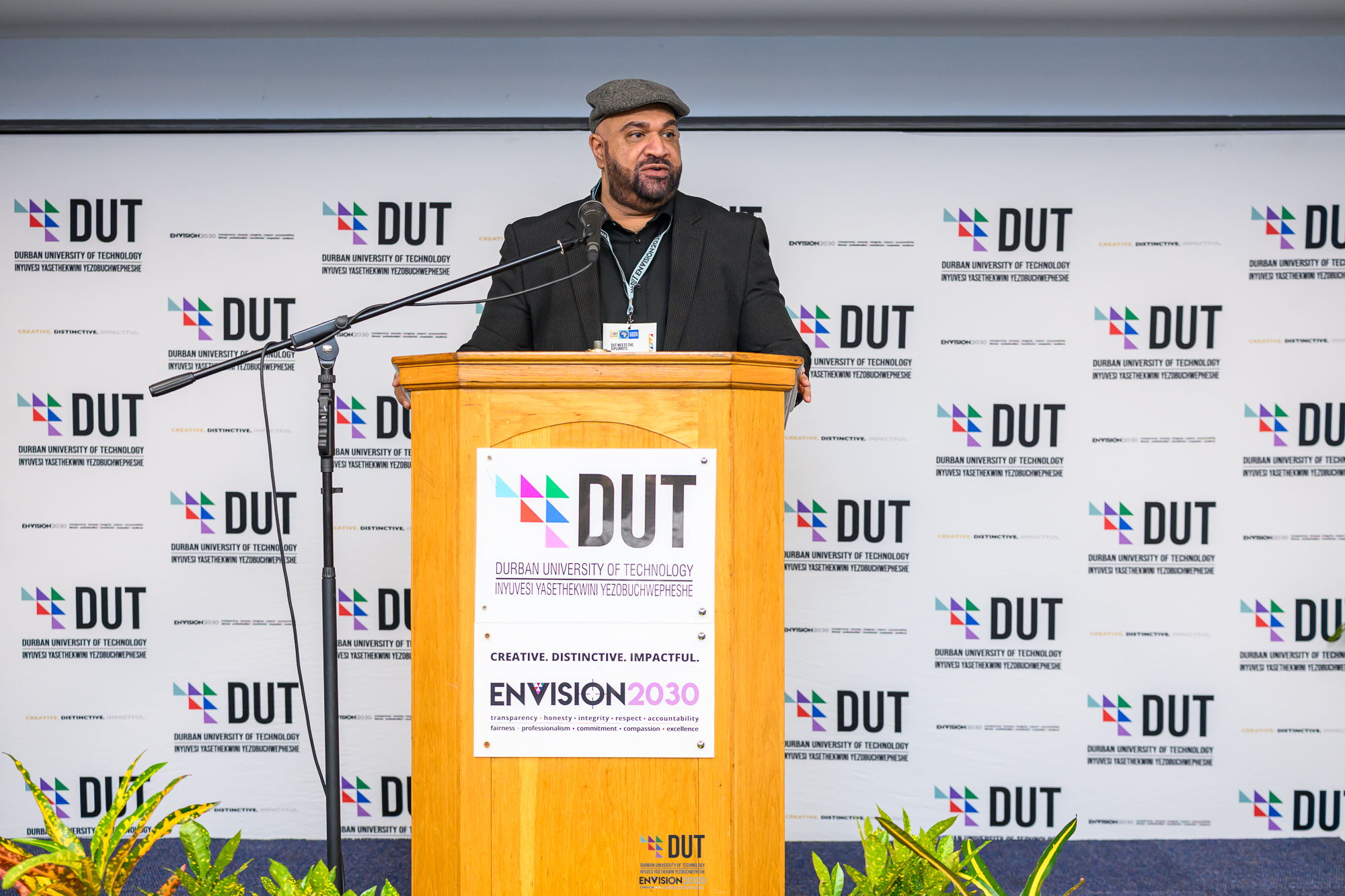 Dr Lavern Samuels, Director of International Education and Partnerships (IEP), presented DUT’s internationalisation strategy, highlighting five priorities: curriculum transformation and internationalisation at home; the Quad Helix partnership model; removing mobility barriers via funding and visa facilitation; investing in scholarships and diplomatic partnerships; and strengthening formal communication with international counterparts.
A key initiative is Collaborative Online International Learning (COIL), introduced at DUT over a decade ago. COIL enables global engagement without the financial and logistical barriers of travel. Today, more than 200 active COIL projects connect DUT students with peers worldwide, making international learning accessible to all.
“Beyond academic partnerships, COIL projects provide collaborative, project-based learning with international peers,” said Dr Samuels. DUT has also advised the Association of Commonwealth Universities (ACU) in developing a virtual exchange toolkit now used across its 600 member universities. In 2021, DUT received the AIEA Award for Excellence and Innovation in Internationalisation in recognition of this work.
From Dialogue to Commitment: The Roadmap Session
A moderated dialogue led by Eric Apelgren of Mkhongi Circle focused on translating goodwill into formal commitments, emphasising the importance of Memoranda of Understanding (MoUs) between DUT and diplomatic missions.
Networking discussions explored student and staff exchanges, investment in the province, bilateral scholarship opportunities, and expansion of existing initiatives, such as the Confucius Institute at DUT, which offers Mandarin language and vocational programmes. The session concluded with a commitment to review all active MoUs with High Commissions in Durban, establishing a clear picture of existing partnerships and future pathways for collaboration.
Next Steps
Closing the event, Dr Samuels expressed optimism about the relationships formed and outlined plans for diplomatic campus visits and continued engagement through DUT’s International Week, Africa Food Festival, and Diversity Day.
“We need to drive the evolution of education in socioeconomic development, change the world, and make a lasting impact,” he said.
Pictured: Representatives of 11 nations, IEP staff, and the KwaZulu-Natal Diplomatic Corps at DUT Hotel School.
Waheeda Peters


