
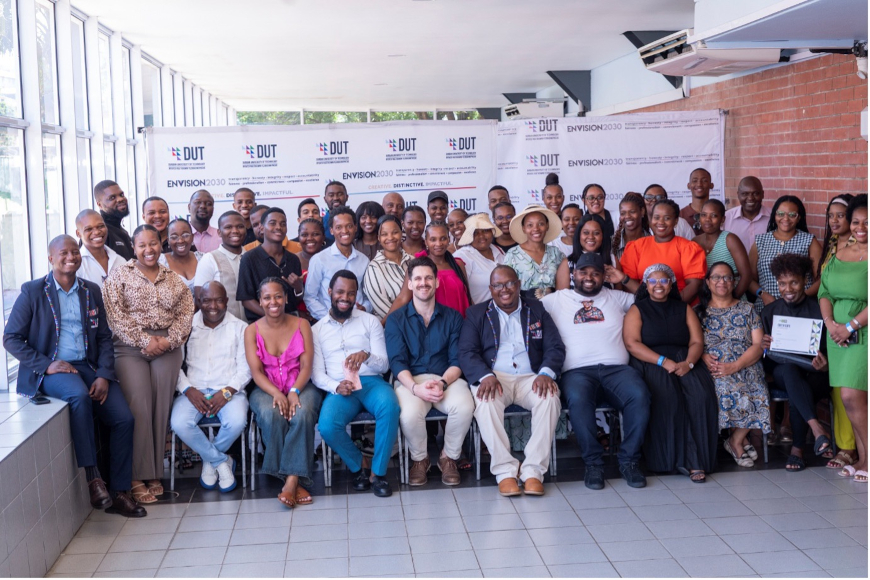
The Centre for Social Entrepreneurship Rapid Incubator (CSERI) recently hosted a Financial Management Workshop for its 2025 cohort of entrepreneurs at the DUT Hotel School. The session formed part of the Centre’s ongoing commitment to enhancing financial literacy among incubated entrepreneurs, equipping them with the practical skills required to manage and sustain their businesses effectively.
The workshop adopted a collaborative, peer-learning approach, featuring presentations by Faculty of Accounting and Informatics students under the Department of Auditing and Taxation. This platform allowed theory to intersect with practice, enabling students to share academic insights while engaging with entrepreneurs navigating real-world business challenges.
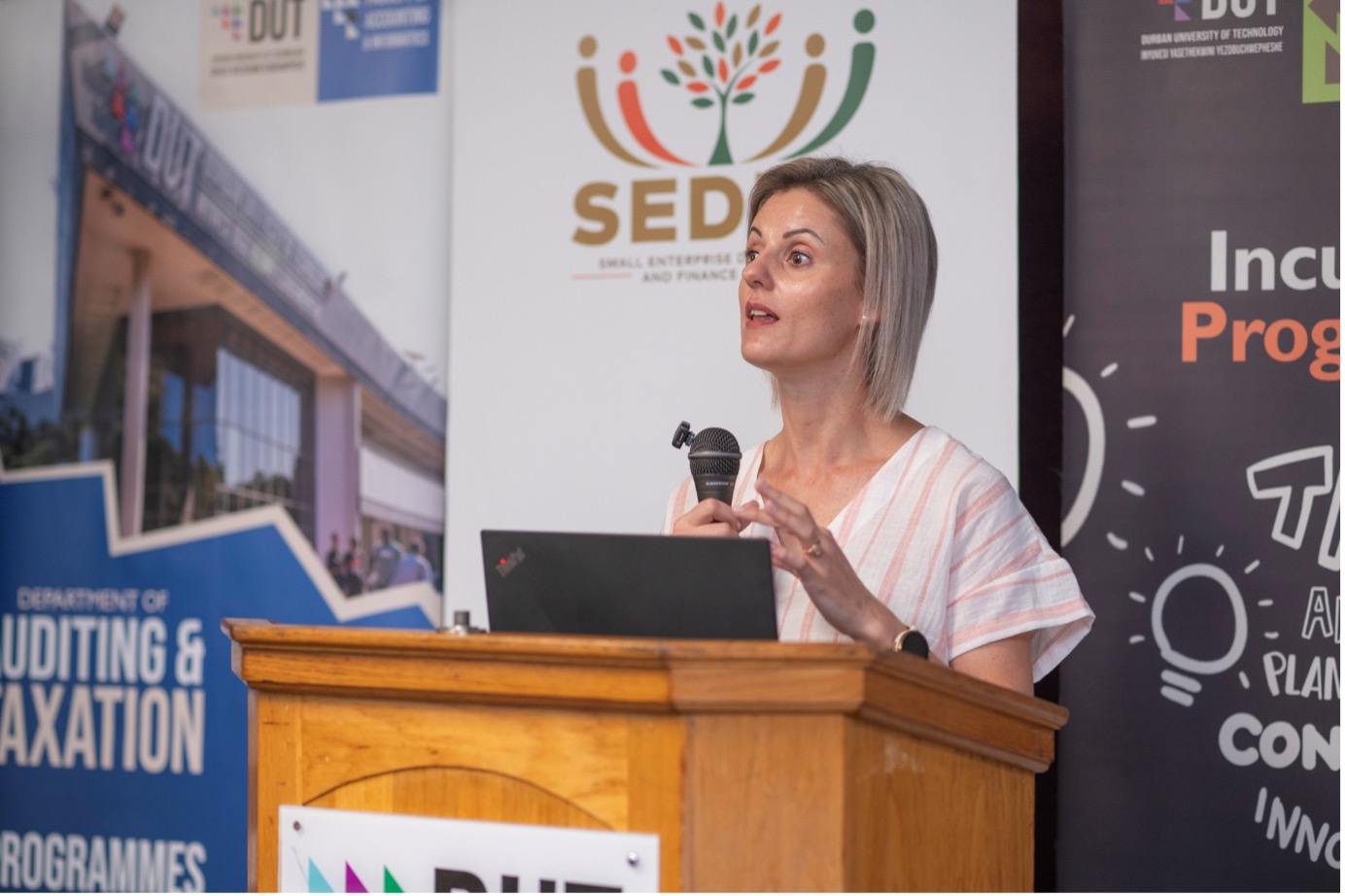
Head of Department (HOD): Prof Olive Stumke.
The session was officially opened by Programme Director, Ms Nontando Gumede, followed by a welcome address from Professor Olive Stumke, Head of Department, who emphasised the importance of bridging the gap between academia and entrepreneurship to drive innovation and economic growth. Mr Solomon Nyamurima, Director of CSERI, highlighted the Centre’s dedication to empowering entrepreneurs with critical financial management skills, ensuring that their ventures remain compliant, sustainable, and growth-oriented, aligning with DUT’s vision of producing graduates who are globally competitive and socially responsible.
Presentations covered essential financial topics including taxation, taxpayer rights and responsibilities, record keeping, government initiatives, internal control systems, and risk management, with students guided by academic staff to ensure practical relevance and accuracy. A highlight of the workshop was the question and answer session, where entrepreneurs engaged actively, discussing real-world challenges related to compliance, financial reporting, and risk management. This dialogue reinforced the value of academic-industry collaboration: students gained exposure to SME operational realities, while entrepreneurs received actionable insights to strengthen their businesses.
The workshop concluded with words from Mr Nyamurima, who commended both students and entrepreneurs for their active participation. A networking session followed, providing opportunities for relationship-building and further knowledge exchange.
Through initiatives like this, the Centre for Social Entrepreneurship continues to foster a culture of knowledge sharing, innovation, and capacity building, aligned with DUT’s mission to advance society through applied research, entrepreneurship, and social innovation. We extend a special thanks to the Department of Auditing and Taxation for their invaluable support in making this collaboration possible.
Pictured: CSERI entrepreneurs and Auditing staff and students at the event.
Snelisiwe Hlongwane


