
Exciting student exhibitions, practical environmental action and thought-provoking discussions marked the Durban University of Technology’s (DUT) Department of Ecotourism’s annual Ecotourism Indaba, recently held at the Riverside Campus in the Midlands.
Held in commemoration of Tourism Month under the theme, Research into Action: Reimagining Ecotourism for a Resilient Future, the three-day programme brought together DUT students and staff, high school learners and teachers, industry partners, advisory board members, external assessors, local and international academics, government representatives and other stakeholders.
The Indaba created a platform to explore the relationship between tourism education, research, policy and industry practice, while highlighting how knowledge can be translated into practical action and meaningful societal impact.
The programme opened with a student exhibition and high school competition involving DUT Ecotourism students and learners and teachers from Siyanda Secondary School, Sikhululiwe Secondary School, Ngcedomhlophe High School, Kuhlekonke High School and Kwamncane High School.
Delivering the welcome address, Head of Department Dr Nsizwazikhona Chilli said the Department sought to highlight the opportunities presented by tourism, particularly ecotourism, while showcasing the expertise and capabilities within the field.
Ecotourism Lecturer Dr Sandile Myeni provided an overview of the three-day programme, unpacked the theme and emphasised the importance of connecting the University with the communities and sectors it serves.
“The purpose of the Indaba is to bring together the University, industry, schools and other stakeholders, and to create opportunities for us to translate what we teach and research into meaningful action,” said Myeni.
The exhibition and school competition gave DUT students an opportunity to present their work to industry professionals and external assessors, while introducing high school learners to the university environment and opportunities in tourism and ecotourism.
For DUT students, the engagement also provided an opportunity to move beyond classroom-based learning and demonstrate how their knowledge and ideas could be applied in real-world tourism and ecotourism contexts. Feedback from industry professionals provided further insight into industry expectations and the practical application of their studies.
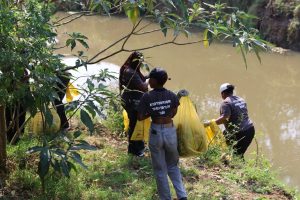
DUT students during the Msunduzi River Clean-Up Campaign.
Day two shifted the focus from learning to environmental action through the Msunduzi River Clean-Up Campaign.
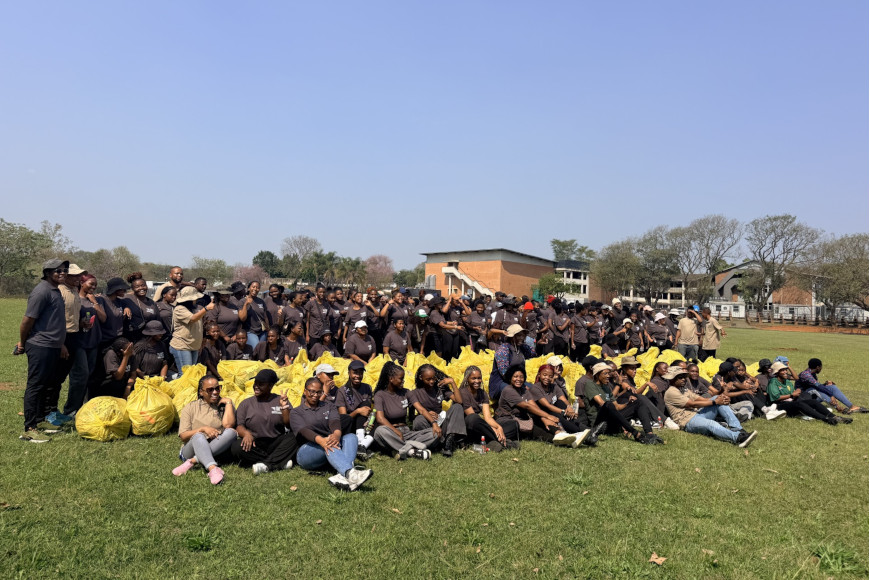
First-year Tourism students, staff and external partners worked together to remove litter along the banks of the Msunduzi River, putting into practice principles of sustainable tourism and environmental responsibility. The campaign collected approximately 300 bags of litter, demonstrating how tourism education can contribute to environmental sustainability and community well-being.
The three-day programme concluded with an international webinar titled, We Have the Research. Why Are the Problems Still Here? What Needs to Change in the Tourism Research Ecosystem?
Facilitated by Dr Myeni, the webinar brought together local and international academics, government representatives, industry and other stakeholders to examine how tourism research can be better connected to policy, industry practice and societal needs.
The discussion featured Prof Ermias Kifle Gedecho from the Macau University of Science and Technology in Macau, China; Dr Henrique Fátima Boyol Ngan from the Macau University of Tourism in Macau, China; Prof Elmarie Slabbert from North-West University; and Dr Felix Mthimkhulu, Senior Manager: Information and Research, Economic Research, Strategy and Innovation, at the eThekwini Municipality Economic Development Unit.
The panellists highlighted several challenges within the tourism research ecosystem, including limited interdisciplinary collaboration, gaps between research, policy and practice, and geographic and epistemic imbalances in tourism knowledge production.
The discussion also considered how tourism research can become more responsive to contemporary and emerging societal challenges. Participants called for a shift from reactive to anticipatory research, from disciplinary silos to interdisciplinary collaboration, and from researching communities to co-creating knowledge with them.
The webinar further emphasised the need to move from evidence to action and from broad recommendations to practical, implementable solutions. Participants also highlighted the importance of sustained dialogue between academia, policymakers, industry and communities, alongside the responsible adoption of emerging technologies such as artificial intelligence.
The Ecotourism Indaba demonstrated the Department’s commitment to connecting education, research and practical action, while creating opportunities for students and stakeholders to contribute to conversations shaping the future of tourism and ecotourism.
Pictured: Ecotourism Indaba attendees after embarking on the Msunduzi River Clean-Up Campaign.
Dr Sandile Myeni/Thula


