
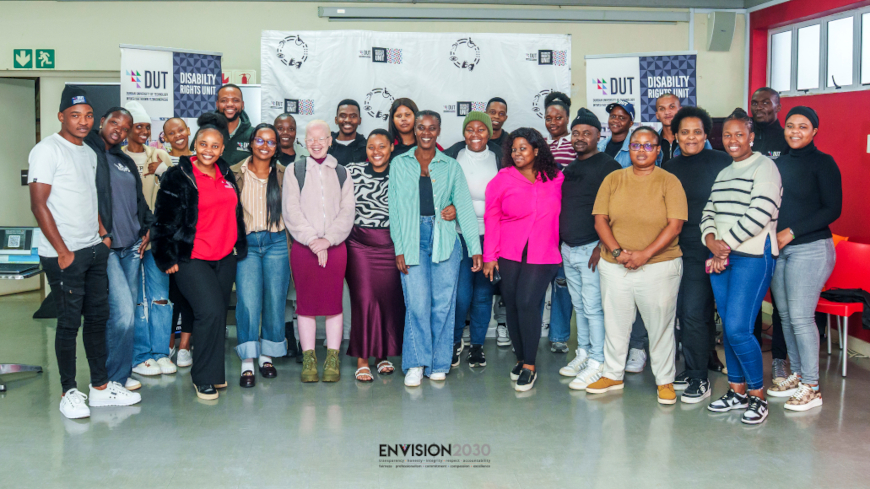
The Disability Rights Unit (DRU) at the Durban University of Technology (DUT) hosted a Disability Support Staff Induction Programme at Walsingham Residence. The programme aimed to equip 25 newly appointed tutors and scribes with the knowledge and skills required to effectively support students with disabilities while promoting inclusivity and student wellbeing across the institution.
During the session, support staff were introduced to the DRU’s approach to disability support and gained insight into the different types of disabilities accommodated by the unit, as well as the specific needs associated with each.
The session was facilitated by Talent Cele, who outlined key protocols and procedures for delivering effective and ethical support. The training reinforced the importance of professionalism, empathy and consistency in enhancing the academic experience of students with disabilities at DUT.
Nico Siga from DRU explained the purpose and importance of the induction programme, emphasising how it prepares tutors and scribes for their roles and responsibilities.
He also provided a comprehensive overview of the duties of tutors and scribes, highlighting the importance of offering academic guidance, practical assistance, professionalism, confidentiality, effective communication and continuous support to ensure that students receive the necessary help to succeed in their studies.
Sihle Mbanjwa, Interim Director for Student Counselling and Health, opened the session by welcoming attendees and acknowledging the Disability Rights Unit (DRU) for organising the event.
He highlighted that tutors and scribes play different but closely connected roles in helping students succeed academically. Tutors are responsible for helping students understand their academic work, dedicating time to engage with them, identify their challenges and support their learning process.
He emphasised that while tutors assist students, students must also actively participate in their own learning.
Sihle further discussed the responsibilities of scribes, stressing the importance of academic integrity and fairness during assessments. He explained that scribes act only as the “hand” of the student by accurately writing or typing exactly what the student communicates without correcting, changing or influencing answers.
“The role of the scribe is to remove barriers for students who cannot write due to permanent or temporary disabilities while ensuring that assessments remain fair and reflect the student’s true knowledge and abilities. The scribes had to familiarise themselves with students’ communication styles and needs before assessments to build effective working relationships,” he added.
Odwa Mahlungulu and Ayanda Nsele, both Administrative Assistants in the Disability Rights Unit, discussed the responsibilities and ethical conduct expected from scribes and tutors who assist students with disabilities.
They explained that scribes must write exactly what the student says during exams without correcting grammar, changing wording or giving hints and answers. They are also required to read responses back to students to ensure accuracy.
They emphasised the importance of professionalism, fairness and maintaining academic integrity while supporting students.
They further explained that assistants support students by attending classes, taking notes, recording lectures, assisting during exams and, in some instances, helping with administrative tasks.
“The aim of these services is to provide equal learning opportunities and improve the educational experience of students with disabilities. The DRU monitors the work of tutors and scribes through systems that ensure that students receive proper and effective support,” she explained.
Siphokazi Mbili, a third-year Industrial Engineering student and Chairperson of the Students with Disability Association (SWDA), emphasised that academic support goes beyond the curriculum and focuses on creating inclusive learning environments for students with disabilities.
She explained that tutors and scribes play an important role in reducing barriers to learning by supporting students in ways that respect their individual learning styles and independence.
She highlighted three key principles for their work: promoting student autonomy, showing empathy and commitment to inclusion, and maintaining professionalism and confidentiality.
Nokwanda Malinga from the Student Housing and Residence Life Unit, Ayanda Nsele from DRU Midlands, Sphesihle Ngubo from the HIV/AIDS Centre and Phumzile Monageng from Student Counselling also provided training to the support staff, guiding them on expectations, responsibilities and professional conduct when working with students with disabilities.
Viwe Makwabasa, a student with disability (SWD) and now a scribe, provided entertainment during the programme.
In her closing remarks, Disability Rights Unit Officer Gugu Khuluse extended her heartfelt gratitude to all attendees for their participation.
She also expressed appreciation to colleagues who attended and presented at the induction programme, acknowledging their commitment to supporting students with disabilities.
She further thanked the tutors and scribes for their willingness to support students with disabilities.
Pictured: The attendees of the scribes and tutors induction with the DRU staff.
S’bonelo Dlamini
Phiwayinkosi Sibiya


