
Durban University of Technology (DUT) recently took part in the Times Higher Education (THE) Africa Universities Summit in Nairobi, engaging with higher education leaders to explore how universities can drive inclusive, impact-focused growth, innovation, and societal development across Africa.
DUT’s participation reflects the institution’s ENVISION2030 strategy, which positions internationalisation, research, and innovation as key enablers of social and economic transformation at local, regional, and continental levels. This commitment was particularly evident through DUT’s leadership of a featured thematic panel on the opening day of the Summit, which highlighted the distinctive contribution of Universities of Technology to Africa’s development agenda.
The panel, titled “Universities of Technology Driving Prosperity: Applying Research, Innovation, and Impact to Advance the African Union’s Agenda 2063,” examined how applied research, practice-oriented education, and industry-linked innovation can translate into tangible social and economic outcomes. The discussion reinforced the role of universities of technology in aligning academic missions with development priorities, including skills development, sustainability, and inclusive growth.
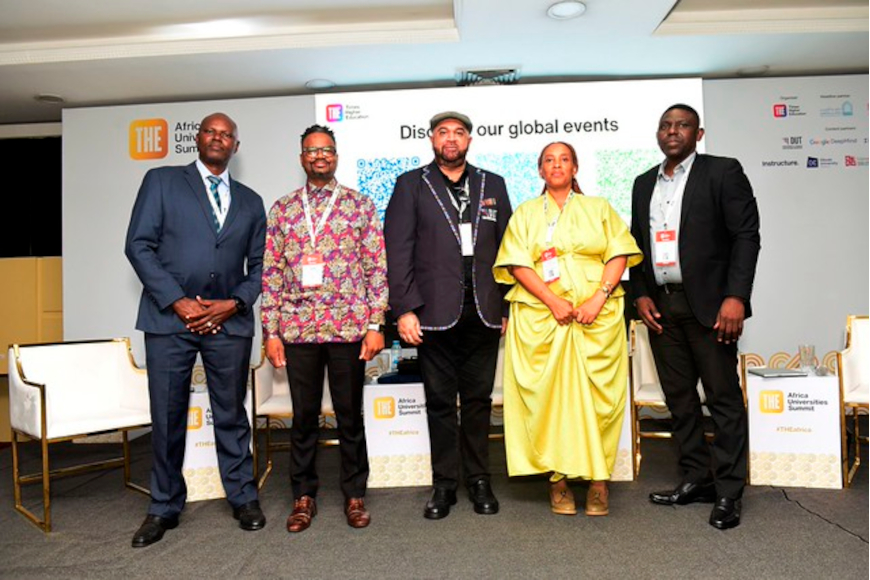
Senior academic leaders and research experts from Kenya, Namibia, and South Africa participated in the panel, reflecting a shared commitment to collaboration and applied impact. The discussion was moderated by Professor Eric Oscar Amonsou, Associate Professor of Food Technology at DUT, who guided a focused, practice-oriented exchange emphasising the collective responsibility of Universities of Technology in translating knowledge into meaningful impact.
Representing DUT, Dr Lavern Samuels, Director of International Education and Partnerships, and Dr Nomcebo Mthombeni, Interim Director of Research and Postgraduate Support, shared insights into DUT’s integrated approach to internationalisation, postgraduate development, and impact-focused research aligned with continental priorities. Their contributions highlighted the importance of embedding international partnerships and research development within a coherent institutional framework that responds directly to societal needs.
From a regional perspective, Professor Maina Mwangi, Executive Dean of the School of Agriculture and Environmental Sciences at Kenyatta University, provided sector-specific insights from agriculture and environmental sciences. Professor Colin Stanley, Deputy Vice-Chancellor for Research, Innovation, and Partnerships at the Namibia University of Science and Technology, shared strategies for strengthening research-driven innovation and institutional partnerships.
Building on the themes discussed during the panel, the DUT delegation also engaged with current and prospective institutional partners throughout the Summit to explore opportunities for collaboration aligned with DUT’s internationalisation strategy. Discussions focused on strengthening digital and blended learning ecosystems, expanding Collaborative Online International Learning initiatives, and developing joint research projects in areas such as food security, green energy, and sustainable development.
Further engagements explored student and staff mobility and exchange pathways designed to enhance learning experiences, foster global citizenship, and ensure that teaching and research remain responsive to societal and development priorities.
DUT’s participation in the THE Africa Universities Summit reinforces the institution’s role as a collaborative, impact-driven University of Technology, actively contributing to Africa’s higher education, research, and innovation agenda through leadership, partnership, and knowledge exchange.
Pictured: Senior academic leaders and research experts from Kenya, Namibia, and South Africa participate in the Times Higher Education (THE) Africa Universities Summit in Nairobi.
Photography: Supplied
Serisha Letchmiah-Venter/Dr Buyisile Kholisa


