As antimicrobial resistance continues to threaten the effective treatment of bacterial infections worldwide, Durban University of Technology (DUT) PhD researcher Oladunni Mary Ayodele is investigating how naturally occurring compounds could contribute to the search for future antibacterial treatments.
Based in the Department of Biotechnology and Food Science, Ayodele is a member of DUT’s Computational and Systems Biology Research Group, led by Professor Saheed Sabiu. The group combines computational biology, bioinformatics, molecular modelling and experimental biotechnology to investigate biological systems and explore potential solutions to real-world challenges.
Her doctoral research focuses on antimicrobial resistance, a growing global health concern in which bacteria develop the ability to survive antibiotics that were previously effective against them. As infections become increasingly difficult to treat, identifying potential alternatives to existing antibacterial treatments has become an important area of scientific investigation.
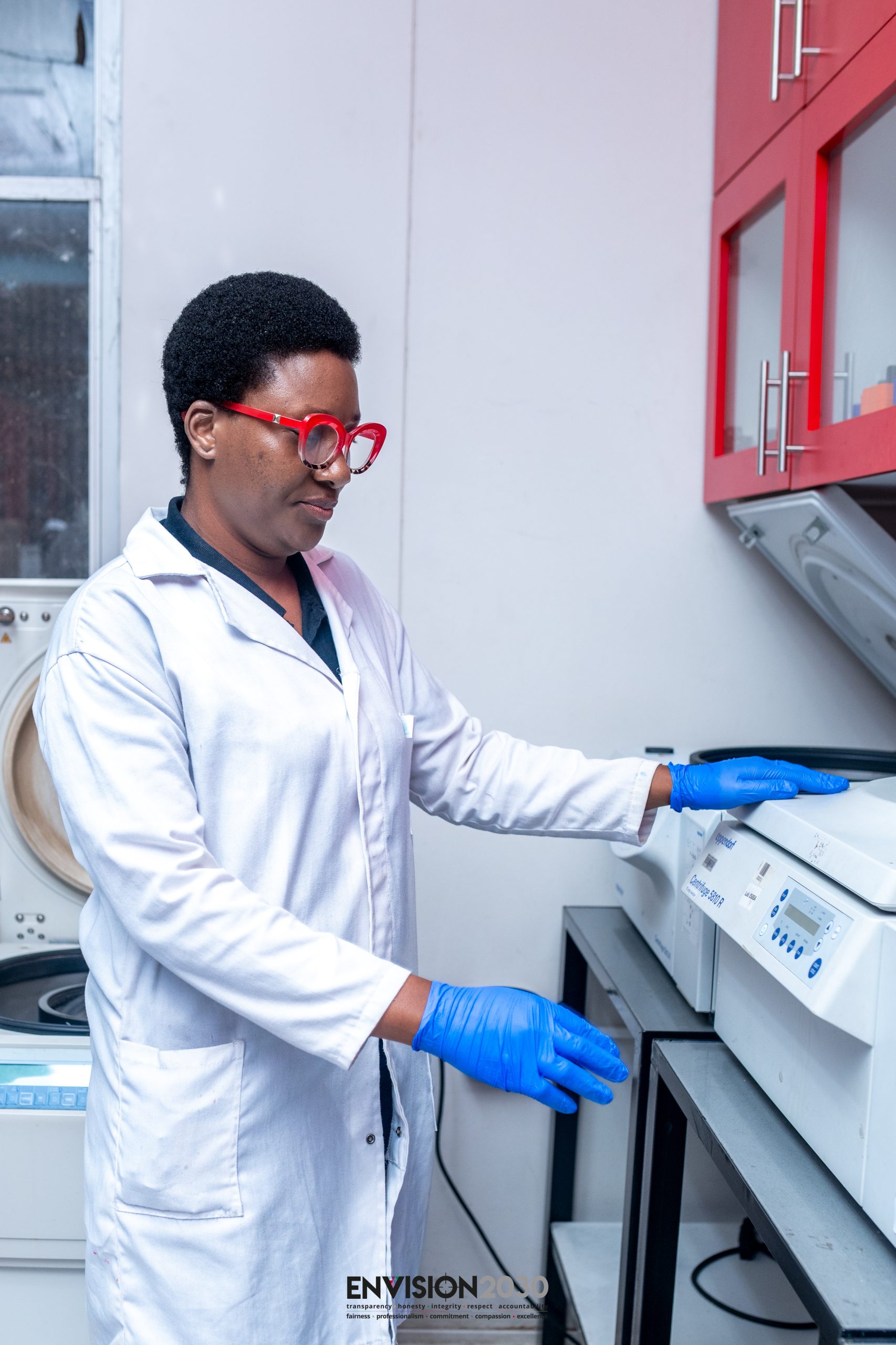 Ayodele’s research explores whether naturally occurring compounds could offer promising starting points for future antibacterial drug discovery. Using computational tools, she screens large collections of chemical compounds to identify those that could interfere with proteins essential to bacterial survival. Promising candidates are then investigated through laboratory experiments to establish their antibacterial activity and possible mechanisms of action.
In one phase of the study, she computationally screened 1,555 compounds, identifying six promising phenolic compounds for further investigation. Preliminary laboratory findings have provided encouraging indications of their potential effects on bacterial cell-wall proteins. Although these findings do not yet establish the discovery of a new antibiotic, they offer a scientific foundation for further research into the antibacterial potential of the compounds.
For Ayodele, what makes this area of research particularly exciting is the opportunity to connect nature’s chemical diversity with advances in computational science and laboratory investigation.
“Nature provides us with extraordinary chemical diversity, while computational science helps us identify promising possibilities. Various laboratory assays then help us investigate whether those possibilities could become meaningful discoveries,” she explained.
She highlighted the importance of the interdisciplinary approach adopted by the research group, where computational predictions and experimental investigations complement one another. Under Professor Sabiu’s leadership, the group provides an environment in which different scientific approaches are brought together to investigate complex biological challenges.
The significance of this work extends beyond the laboratory. Antimicrobial resistance affects individuals, communities and healthcare systems, as infections that no longer respond to commonly used antibiotics become more difficult to treat. Research into potential new antibacterial compounds is therefore an important part of the broader scientific effort to address this challenge.
For Ayodele, identifying even one promising molecule that could contribute to the development of future antibacterial treatments would represent a meaningful contribution to this effort.
She also believes that Africa has considerable scientific potential to contribute to solutions for global health challenges. With appropriate mentorship, research collaboration and access to advanced technologies, African researchers can play an increasingly important role in advancing scientific knowledge and innovation.
Through her doctoral research, Ayodele demonstrates how interdisciplinary science, nature-inspired investigation and computational innovation can work together in the search for potential solutions to antimicrobial resistance. Her work reflects the value of research that not only advances scientific understanding but also explores possibilities for addressing challenges affecting communities locally and around the world.
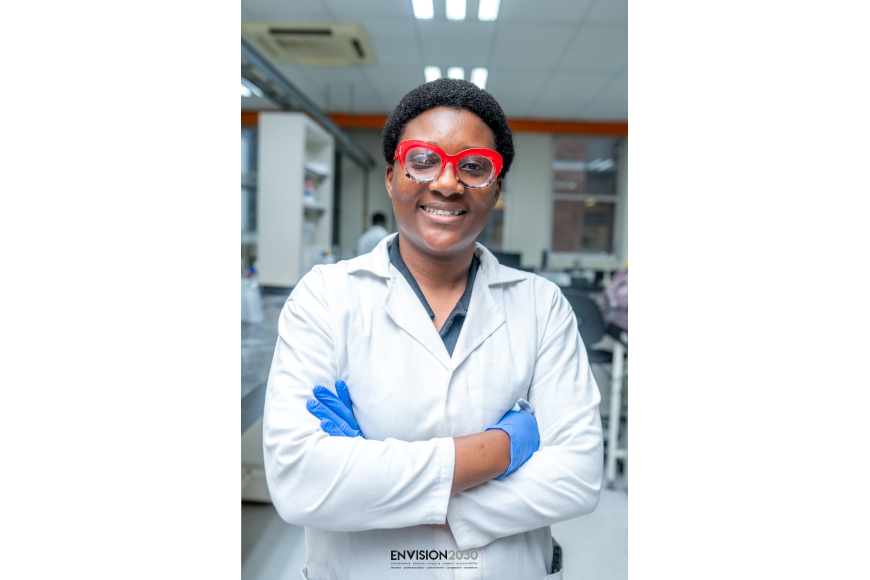
Pictured: PhD researcher Oladunni Mary Ayodele.
Tiyani Mboweni


