
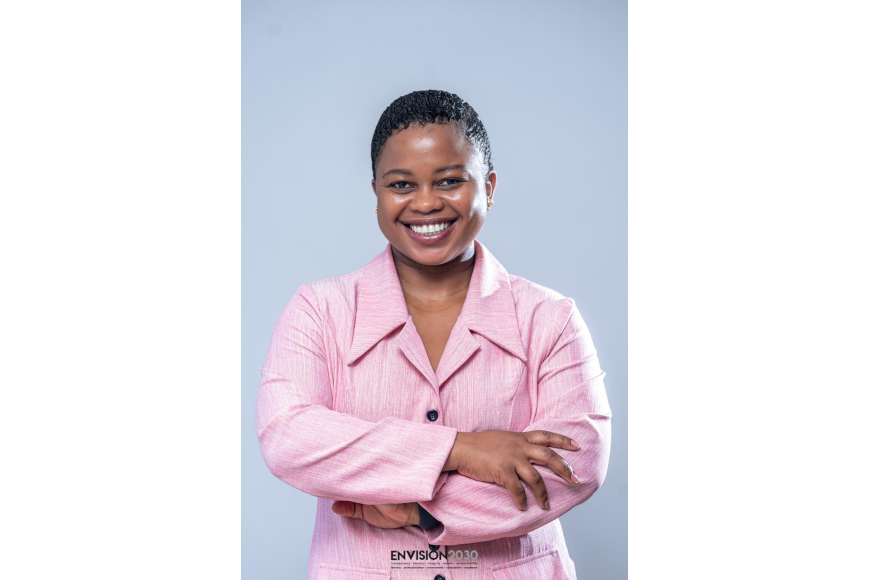
Xoliswa Nombuso Madela, a Campus Spatial Planner at Durban University of Technology (DUT), has been recognised by the South African Council for Planners (SACPLAN) for her contribution to the Outstanding Community Planning category, affirming the value of people-centred planning in shaping sustainable and inclusive communities.
A proud DUT alumna, Madela obtained her first qualification in Town and Regional Planning from the University in 2012. Her professional journey has been driven by a passion for creating spaces that serve people effectively while responding to the evolving needs of communities.
Reflecting on the recognition, Madela described the achievement as both encouraging and validating.
“Receiving this recognition from the body that governs urban planning in the country is energising,” she said. “Spatial planning is often a long-term discipline where tangible results can take years to materialise, so an award of this nature validates that people-centred planning makes a measurable difference.”
Among the projects she considers most significant is the proposed purchase of a portion of Steve Biko Road. DUT currently has an active application with the eThekwini Metropolitan Municipality regarding the acquisition, which is aimed at enhancing safety within the DUT precinct.
Madela noted that the project presents an exciting opportunity to improve the campus environment while supporting the University’s broader development goals.
Central to her planning philosophy is meaningful stakeholder engagement and participation. She believes that successful planning cannot happen in isolation and that the people who use spaces daily are best positioned to inform how those spaces should function.
“As a planner, I may be knowledgeable in planning, but the end-user departments that form the DUT community have individual accreditation needs that ought to shape the spatial form of the University. The DUT community is the true expert of its own lived environments, and collaboration is therefore a non-negotiable pillar of successful community planning,” she explained.
Madela also highlighted the critical role universities play in addressing broader societal challenges. She views higher education institutions as powerful agents of change that can contribute to economic development, sustainability, and urban regeneration.
“Universities, as anchors of intellectual influence, serve as living laboratories that solve real-world community challenges,” she said. “Through campus master planning, they can stimulate economic growth within surrounding precincts, model green infrastructure, and prioritise safe and creative spaces.”
She emphasised that strong partnerships with municipalities are essential in achieving these outcomes. By aligning institutional spatial plans with municipal spatial development frameworks, universities can act as catalysts for long-term urban renewal and community development.
Having transitioned from local government to higher education, Madela describes the experience as a rewarding evolution in her career. While municipal planning focused largely on immediate regulatory compliance, campus planning requires a longer-term vision that considers the future needs of the institution and its stakeholders.
“I believe my municipal background provides practical regulatory grounding that helps DUT navigate complex statutory approval processes and collaborate seamlessly with city authorities,” she said.
Looking ahead, Madela hopes to inspire members of the DUT community to take an active role in shaping their environments.
“Every space we inhabit, whether a lecture hall, creative space, or walkway, shapes how we learn, work, connect, and belong,” she said. “I encourage staff, students, and partners to view themselves as active co-creators and co-designers of our campuses and host cities. Great communities are built when every member of the institution takes pride in, protects, and contributes to an inclusive and sustainable environment.”
Through her commitment to collaboration, innovation, and community-centred planning, Madela continues to make a meaningful contribution to DUT’s vision of creating safe, sustainable, and people-focused spaces for future generations.
Pictured: Xoliswa Nombuso Madela
Nikiwe Sukazi


