The Durban University of Technology (DUT) has demonstrated its commitment to research excellence, innovation and interdisciplinary collaboration by hosting two pre-congress workshops ahead of the 3rd International Congress of the African Phytomedicine Scientific Society (APSS 2026).
The congress brings together researchers, traditional health practitioners, industry experts, policymakers and students from Africa and beyond to advance phytomedicine research, promote knowledge exchange and strengthen collaborations. It also provides a platform to explore sustainable healthcare solutions derived from medicinal plants and Indigenous Knowledge Systems.
As a Board Member of the African Phytomedicine Scientific Society and a member of the APSS 2026 Local Organising Committee, Dr Nomakhosi (Khosi) Mpofana was tasked with leading and organising the pre-congress formulation workshop at DUT. Recognising the opportunity to showcase the university and its Department of Somatology on an international platform, Dr Mpofana secured support from the Technology Transfer and Innovation (TTI) Directorate and the Corporate Affairs and Marketing Division to facilitate the workshops.
Hosted at the DUT Hotel School and Chemistry laboratories, the workshops attracted delegates from national and international institutions, including the University of KwaZulu-Natal, Makerere University, the University of Pretoria, Cape Peninsula University of Technology, the University of Mpumalanga, the University of the Western Cape, the African College of Naturopathy, Walter Sisulu University, the University of Fort Hare, the University of Limpopo, Vaal University of Technology, the University of South Africa, Université de La Réunion, North-West University, Saadu Zungur University and the Agricultural Research Council, alongside other research and industry stakeholders.
Designed to complement the main congress programme, the workshops offered practical exposure to product development and advanced computational approaches used in phytomedicine and natural product research. They also created opportunities for learning, networking, mentorship and interdisciplinary engagement, highlighting how scientific discoveries can be translated into products and solutions with potential benefits for communities.
The Product Formulation Workshop, held in the Wet Chemistry Laboratory, focused on developing and formulating soaps and lotions. It was facilitated by Dr Emmanuel Tetteh, Ms Cindy Saunders, a PhD candidate, Ms Sanelisiwe Dyani, a PhD candidate, and postgraduate students from the Department of Chemistry.
Delegates were introduced to formulation principles and practical techniques for transforming research findings into potential marketable products. The workshop demonstrated how medicinal plant research can support innovation, entrepreneurship and economic development through product development.
Running concurrently, the Computational Systems Biology Workshop, led by Prof Sheed Sabiu, introduced delegates to computational approaches for investigating the therapeutic potential of medicinal plants and natural products. Participants explored systems biology methodologies used to investigate biological pathways, identify therapeutic targets and improve understanding of complex disease mechanisms.
Delegates rotated between the two workshops to ensure that all participants benefited from both the practical aspects of product formulation and the computational approaches used in phytomedicine research.
The successful delivery of the workshops reflected multidisciplinary collaboration across DUT, bringing together expertise from the departments of Somatology, Chemistry and Chemical Engineering. The initiative highlighted the value of collaboration in advancing teaching, research and innovation while demonstrating the university’s capacity to host national and international academic engagements.
Welcoming delegates to DUT, Dr Nomcebo Mthombeni, Interim Director: Research and Postgraduate Support, emphasised the university’s commitment to collaborative research and knowledge exchange.
“DUT is committed to creating opportunities for interdisciplinary collaboration and knowledge exchange that contribute to African-led solutions for contemporary health challenges,” she said.
Professor Thandokuhle Emmanuel Khoza, Acting Head of Department: Radiography, delivered the closing remarks and thanked delegates for their participation. He also acknowledged Dr Mpofana and the organising team for coordinating the workshops and creating an engaging learning environment for participants from diverse academic and professional backgrounds. He commended the delegates for contributing to phytomedicine research and fostering partnerships across institutions and disciplines.
Beyond the pre-congress workshops, Dr Mpofana will participate as a panellist in the APSS 2026 Young Scientists Session, titled “Building Trust in African Phytomedicine: Ethics, Integrity and Sustainable Research Impact”.
The session will explore ethical research practices, scientific integrity, responsible innovation, the protection of Indigenous Knowledge, equitable partnerships and benefit-sharing in African phytomedicine research. These issues are increasingly important as the field develops and researchers seek to ensure that scientific advances remain rigorous, socially responsible and responsive to community needs.
The discussion will also provide a platform for mentoring emerging scholars and reflecting on the ethical responsibilities of researchers working with medicinal plants, traditional medicine and Indigenous Knowledge Systems. By promoting integrity, accountability, transparency and respect for knowledge holders, the session aims to strengthen public trust in phytomedicine research and encourage approaches that translate scientific advances into meaningful community benefits.
Ethical and sustainable research can contribute to improved healthcare outcomes, economic opportunities, skills development, innovation and stronger livelihoods across the African continent.
Reflecting on the workshops, Dr Mpofana expressed her appreciation for the collective effort that made the initiative possible. She acknowledged the support of Dr Pinkie Ntola, Director of the Technology Transfer and Innovation Directorate, and Ms Vasantha Govender, Manager of Corporate Affairs and Marketing. She also thanked her Head of Department, Mrs Dorinda Borg, for her guidance and support in hosting national and international delegates.
Dr Mpofana further recognised the contributions of the collaborating departments, facilitators, staff members and students whose efforts helped deliver the workshops.
The APSS 2026 pre-congress workshops and DUT academics’ participation in the main congress highlight the university’s engagement in phytomedicine, traditional medicine, Indigenous Knowledge Systems and interdisciplinary research. The initiative also reinforces DUT’s commitment to innovation, ethical scholarship, international collaboration and knowledge exchange.
Through practical training, interdisciplinary partnerships and engagement with emerging researchers, DUT continues to create opportunities to explore how responsible scientific research can support sustainable development, community empowerment and improved livelihoods, while contributing to the advancement of African phytomedicine research.
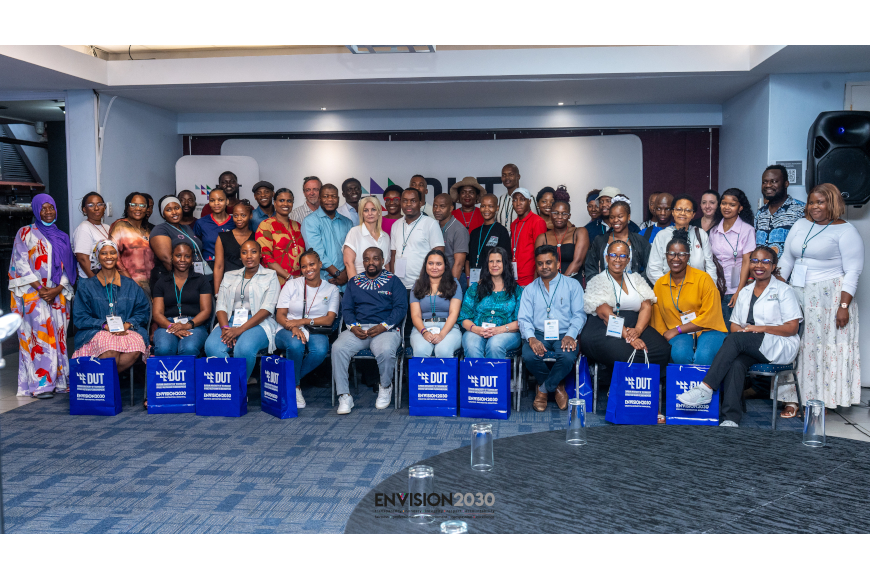
Pictured: Delegates in attendance at the APSS 2026 pre-congress workshops.
Dr Nomakhosi (Khosi) Mpofana


