
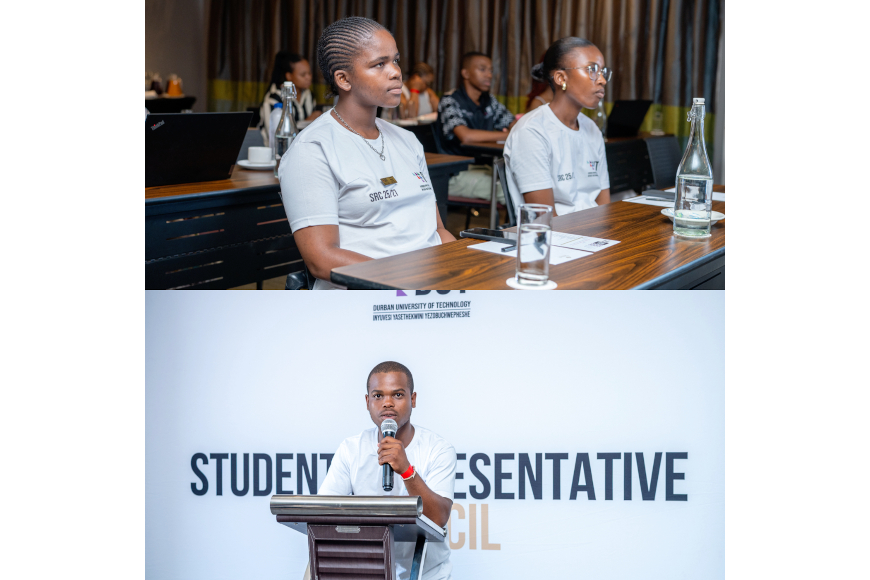
The Durban University of Technology (DUT) Student Representative Council (SRC) recently engaged with support services units in a warm and collaborative session aimed at fostering a shared sense of purpose. The event took place at Coastlands Hotel, Musgrave, on Friday, 30 January 2026.
The session promoted holistic student leadership that integrates academic excellence with service to the student community. Andiswa Mdunge, serving as programme director, outlined the objectives of the session.
In his opening remarks, Manager of Student Governance, Mr Masiza Ngculu, welcomed all guests and praised the immediate past SRC, noting that three members are set to graduate Cum Laude at the upcoming DUT Spring Graduation 2026.
Mr Ngculu highlighted the university’s ongoing efforts to strengthen SRC academic and leadership standards. In 2014, changes to the SRC constitution introduced minimum academic requirements for eligibility. While initially met with resistance, including opposition to the 65 per cent threshold, these measures ensure that student leaders are credible intellectual representatives. He noted that these policies have already yielded positive results, with the SRC demonstrating exceptional conduct, professionalism, and academic excellence compared to peer institutions.
“This success is underpinned by deliberate institutional investment in SRC development, prioritising academic support, mentorship, and postgraduate opportunities over material privileges, ensuring leadership excellence extends beyond a single term,” said Mr Ngculu.
Dr Andrea Alcock from the Writing Centre emphasised that writing is a process that requires feedback and engagement. She highlighted the Writing Centre as a space for discussing ideas, promoting creative writing, and encouraging students to book sessions and engage actively.
Dr Alcock also described higher education as both a personal and public good, transforming individuals and society through critical thinking and knowledge application. She identified artificial intelligence as a contemporary challenge and opportunity, cautioning against over-reliance while promoting ethical use, digital literacy, and adaptable institutional policies.
“Writing is a unique and essential mode of learning. It allows students to externalise, revisit, and deepen their thinking. Support systems like the Writing Centre are here to assist you. Writing is an ongoing process that fosters learning, intellectual growth, and engagement with knowledge, especially in today’s AI-driven world,” explained Dr Alcock.
Mr Khulasande Tshayile from the Communications Unit outlined DUT Communications’ role in managing the university’s reputation and messaging. The unit handles media relations, publications such as The Conduit and Edge, website updates, event support, and internal communication initiatives.
“SRC members must understand and adhere to the Media Policy, ensuring their online actions reflect positively on the university. Be mindful of your digital footprint,” Mr Tshayile advised.
The event also featured presentations from Mr Nhlanhla Nhleko of Library Services and Dr Mzwandile Khumalo of the Centre for Excellence in Learning and Teaching (CELT), highlighting the support these units provide to students and staff and the university’s commitment to academic excellence.
Mr Bheka Mfeka, Deputy Secretary of the SRC, emphasised the importance of the Writing Centre, Library Services, and CELT in enhancing teaching, learning, and academic development. He encouraged continued efforts to inform students about these services and praised Library Services for creating a student-focused learning environment.
Ms Mfeka expressed gratitude to the organisers, speakers, and attendees, thanking Dr Alcock, Mr Nhleko, and Mr Tshayile for their contributions. She also recognised the SRC’s commitment and the efforts of colleagues in Student Governance and Development.
Pictured: DUT SRC Academic Officer, Ms Zuziwe Mtshali; Organisation and Accommodation Officer (DBN), Ms Inam Mbizweni; and Deputy Secretary General, Mr Bheka Ntombela.
Photographers: Khulasande Tshayile, Phiwayinkosi Sibiya


