
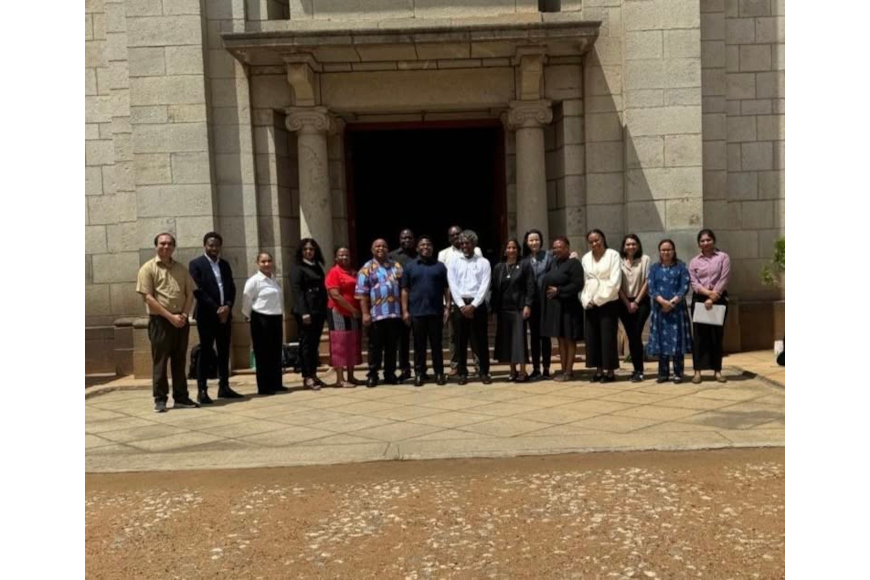
Durban University of Technology (DUT) is converting international engagement into institutional momentum as it deepens its research, innovation, entrepreneurship and technology transfer agenda.
DUT’s pursuit of becoming a creative, distinctive and impactful university received renewed impetus through its participation in the Technology Higher Education Network South Africa (THENSA) delegation visit to the Indian Institute of Science (IISc) in Bangalore, India.
The visit, which took place from 29 June to 3 July 2026, brought together senior leaders, researchers and innovation practitioners from South African universities of technology and partner institutions. DUT was represented by Professor Fulufhelo Nemavhola, Deputy Vice-Chancellor: Research, Innovation and Engagement and Professor Rendani Wilson Maladzhi, Head of Department and Associate Professor.
For DUT, the visit was far more than a ceremonial international engagement. It was a deliberate strategic learning mission aimed at examining how a globally respected science and technology institution integrates research excellence, postgraduate development, advanced infrastructure, entrepreneurship, industry partnerships, technology transfer and societal impact into a coherent, high-performing institutional ecosystem.
The engagement took place at a critical moment in DUT’s own institutional journey, as the University continues to advance ENVISION2030 and consolidate its identity as an engaged university of technology. It also came at a time when universities are increasingly expected to transcend conventional academic outputs and contribute more directly to economic development, social transformation, digital readiness, sustainability and the preparation of future-fit graduates.
Over the course of the week-long programme, the THENSA delegation engaged with a wide range of IISc platforms and research structures spanning international relations, advanced microscopy and microanalysis, energy research, design and manufacturing, sustainable technology, artificial intelligence, robotics, innovation and entrepreneurship, nanofabrication, supercomputing, cybersecurity, computational data sciences and water research.
These engagements offered DUT valuable insight into how a research-intensive science and technology institution builds purposeful bridges between knowledge creation and practical application.
IISc’s model demonstrated the value of shared research infrastructure, coordinated innovation systems, structured entrepreneurship support, strong postgraduate pipelines, industry-facing platforms and carefully cultivated institutional partnerships.
A central lesson for DUT was that research, innovation and entrepreneurship should not be treated as isolated institutional functions. For a university of technology, they must operate as an integrated value chain. Research must ignite innovation. Innovation must enable enterprise development. Enterprise development must contribute meaningfully to industry, communities and society. In this way, universities become engines of knowledge, creativity, inclusive development and measurable impact.
The engagements with the IISc Innovation Council and the Foundation for Science, Innovation and Development were particularly relevant to DUT’s expanding innovation and entrepreneurship agenda. They illustrated how universities can establish structured pathways through which ideas move from classrooms and laboratories into prototypes, intellectual property, startups, industry partnerships and market-ready solutions.
Professor Maladzhi’s participation was especially significant in this regard. As DUT advances entrepreneurship education, graduate enterprise development and innovation-led curricula, the visit offered practical lessons on how entrepreneurship can be embedded across institutional culture, academic programmes, incubation support, innovation infrastructure and student development. It also reinforced the importance of supporting students and academics not only as producers of knowledge, but as creators of technologies, enterprises, products and services.
The programme further exposed the delegation to cutting-edge work in artificial intelligence, robotics, computational data sciences, cybersecurity, supercomputing and AI-driven transformation in higher education. These fields are central to the future of universities, industries and societies. For DUT, they present significant opportunities to accelerate digital transformation, design future-oriented academic programmes, strengthen data-driven research and explore how artificial intelligence can enhance teaching, learning, research, administration and innovation.
The visit to ARTPARK at IISc and the engagement with the AI for Research and Engineering eXcellence research group were particularly instructive in demonstrating how artificial intelligence, robotics and advanced computational tools can be mobilised to address complex problems.
These insights align strongly with DUT’s ambitions in digital transformation, smart systems, applied research, technology-enabled innovation and the future of work.
Sustainability emerged as another defining theme of the visit. Engagements with the Centre for Sustainable Technology, the Interdisciplinary Centre for Energy Research and the Interdisciplinary Centre for Water Research highlighted the growing importance of energy, water resilience, climate-related research, sustainable infrastructure and community-responsive technologies. These areas resonate strongly with DUT’s ENVISION2030 perspectives of Stewardship, Systems and Processes, Sustainability and Society.
For DUT, as a university rooted in KwaZulu-Natal and deeply connected to the realities of South Africa and the African continent, these lessons are especially pertinent. The University has a timely opportunity to strengthen research and innovation in water security, wastewater treatment, renewable energy, sustainable manufacturing, climate adaptation, smart infrastructure, community-based technologies and inclusive innovation.
The visit also underscored the strategic importance of advanced research infrastructure. Facilities related to microscopy, microanalysis, nanofabrication, micro-nano characterisation and supercomputing demonstrated how shared high-end platforms can strengthen postgraduate training, interdisciplinary research, industry collaboration and technology development. This has direct implications for how DUT conceptualises future research infrastructure, shared laboratories, specialised equipment and institutional platforms that can serve multiple faculties and research domains.
Reflecting on the significance of the visit, Professor Nemavhola emphasised that international engagements must yield tangible institutional value.
“This visit provided important lessons for DUT on how research, innovation, entrepreneurship, technology transfer and international partnerships can be integrated more deliberately. As DUT, we must ensure that international engagements are not ceremonial. They must create opportunities for our academics, postgraduate students, innovators, entrepreneurs and communities. The real value of such visits lies in what we do afterwards,” said Professor Nemavhola.
He further noted that DUT must learn from globally leading institutions while remaining anchored in its own mandate and context as a South African university of technology.
“We are not seeking to copy the Indian Institute of Science. We are seeking to learn from its systems, discipline, infrastructure, partnerships and innovation culture so that DUT can strengthen its own model. Our responsibility is to build a university that responds to South Africa, the African continent and the Global South while remaining globally competitive,” he said.
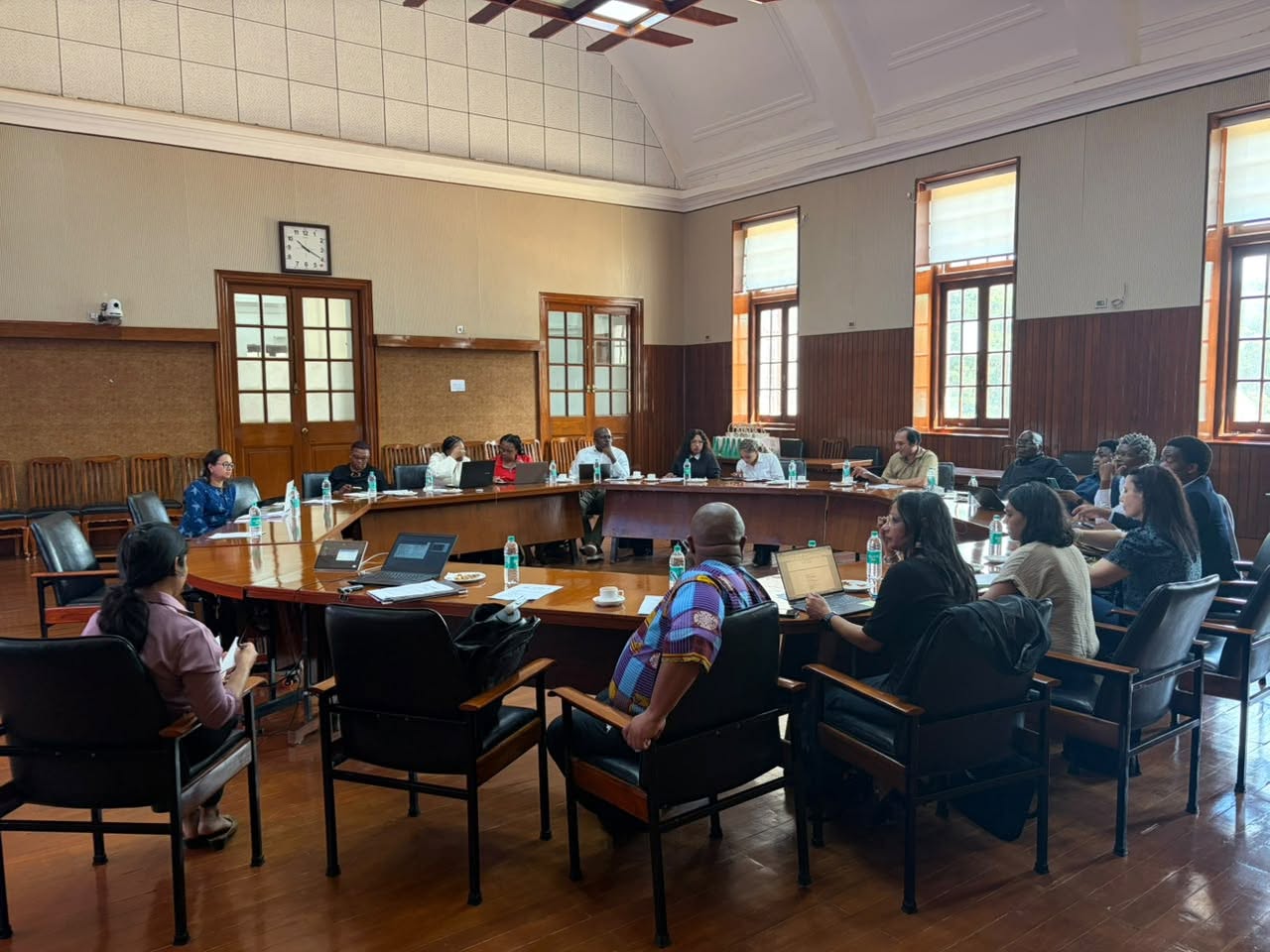 Following the visit, DUT will explore the development of a focused post-visit institutional action plan to translate the lessons from IISc into practical outcomes. This may include mapping potential areas of collaboration to relevant DUT faculties, research units, innovation structures and postgraduate programmes. Priority areas may include water research, sustainable technology, energy, smart manufacturing, artificial intelligence, robotics, computational data sciences, cybersecurity, technology transfer, innovation policy and entrepreneurship ecosystem development.
DUT will also consider how the insights gained from the Indian Institute of Science can inform institutional policy development, research collaboration, postgraduate support, innovation infrastructure, entrepreneurship programming and industry engagement. These lessons are expected to support ongoing efforts to strengthen DUT’s innovation pipeline, improve coordination between research and commercialisation structures and enhance the University’s contribution to industry, communities and society.
The THENSA platform remains a valuable mechanism for enabling universities of technology to collaborate, learn from one another and engage leading international institutions. Through THENSA, DUT is able to participate in strategic engagements that strengthen the national university of technology sector and position South African institutions within broader international knowledge and innovation networks.
As DUT advances ENVISION2030, the IISc visit serves as a timely reminder that the future of higher education belongs to institutions that can connect research with innovation, innovation with enterprise, and enterprise with societal impact. For DUT, this visit represented an important step in strengthening its journey towards becoming a globally connected, locally responsive and future-focused university of technology.
Pictured: The THENSA delegation visit to the Indian Institute of Science (IISc) in Bangalore, India.
Alan Khan


