
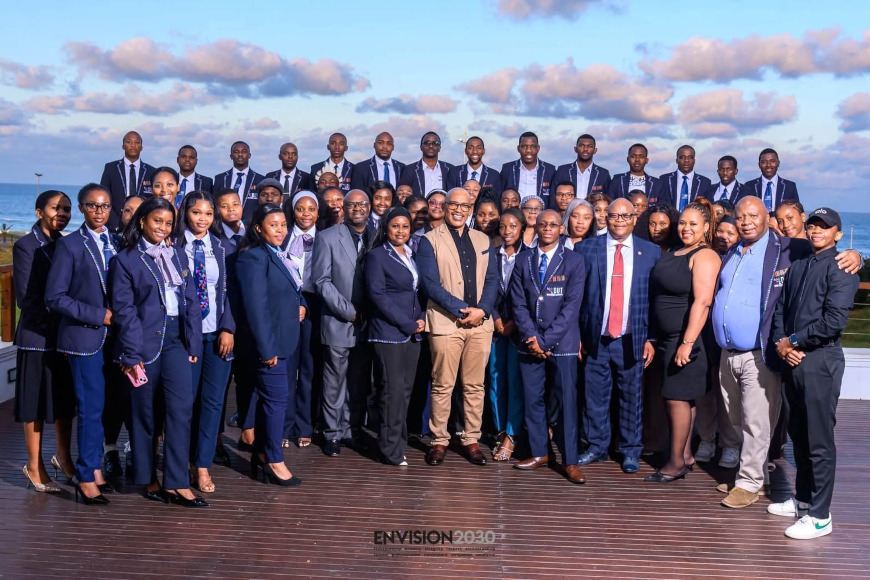
Student leaders at the Durban University of Technology (DUT) engaged with the University’s leadership on student leadership, distinctive education and their role in contributing to the development of the institution.
The engagement, held on 25 August 2026 at the Durban Country Club, brought together members of the Student Representative Council (SRC), Central Housing Executive (CHE), Student Parliament Executive, Champions of the Living Values Executive and ResLife Networks for the Vice-Chancellor’s Engagement with Student Leaders.
Led by Vice-Chancellor and Principal, Professor Thandwa Mthembu, the engagement provided an opportunity for student leaders to reflect on their leadership experiences, engage on the University’s Distinctive Education approach and discuss issues affecting students and the development of DUT.
Prof. Mthembu also reflected on themes from his Iminingo Vice-Chancellor’s Communiqué, highlighting that the university experience extends beyond attending lectures and earning a qualification to include the activities, experiences and relationships that shape students’ development.
The discussions further explored the importance of student participation, leadership, institutional values and constructive engagement in shaping the future of the University.
Programme Director, Mr Masiza Ngculu, said the main purpose of the engagement was to give student leaders an opportunity to learn from leaders who have been there before them.
Opening the engagement, Ms Sthembile Mjadu, Interim Director of Student Services, encouraged student leaders to make the most of the opportunity to engage with Professor Mthembu, describing the session as a chance to learn from an experienced leader. She also acknowledged the role student leaders have played in contributing to a relatively peaceful 2026 academic year.
“We are invested in your growth as students but also your growth as emerging leaders,” she said.
Speaking on behalf of the student leaders, SRC President, Sihle Nkosi, expressed his appreciation to Professor Mthembu for creating spaces for meaningful engagement. He reflected on the changing nature of student leadership and the relationship between students and the University, noting that student leaders now have more opportunities to engage with university leaders and contribute to discussions about the institution.
“Students are increasingly having more platforms where they are able to express their views and participate in the development of the institution,” he said.
During his presentation, Professor Mthembu emphasised the importance of equity rather than equality when considering the development of the University’s different campuses. Responding to questions about whether the Midlands campus in Pietermaritzburg could become as prominent as the Durban campuses, he explained that differences between cities and regions are shaped by historical, geographical and economic factors.
Prof. Mthembu also encouraged student leaders to use their university education to develop independent and critical thinking and to assess ideas against their own values and principles. He emphasised the importance of questioning, analysing and engaging with different perspectives as part of the university experience.
The engagement also prompted students to reflect positively on some of the ideas raised in Prof. Mthembu’s Iminingo Communiqué, particularly his discussion of disappointment, recovery and collective ambition. Student leaders noted that these ideas also speak to student leadership, entrepreneurship, community engagement, cultural activities and residence life, which form an important part of the university experience beyond the classroom.
A student leader also raised the issue of green campus initiatives, asking whether students could play a role in decisions around campus sustainability and contribute ideas about what could make DUT campuses greener.
In response, Prof. Mthembu affirmed that students have a role to play in shaping the University and encouraged student leaders to contribute their ideas and perspectives to institutional decision-making. His response reinforced the importance of student participation beyond academic matters, highlighting that students can contribute to conversations about the development and future of their campuses.
Addressing student leaders towards the close of the engagement, the Vice-Chancellor responded to a question from SRC Deputy President, Qhawe Mtengu, on how students should deal with misinformation on campus. He emphasised the importance of understanding and holding firmly to DUT’s values and principles, noting that these should guide students in how they think, act and respond to information and people who may not have the University’s best interests at heart.
He also encouraged students to approach information critically and to recognise the importance of their university education in shaping how they understand and engage with different perspectives.
Reflecting on the engagement, Rethabile Nyofane, CHE Project Officer, highlighted the importance of self-leadership and turning discussions into meaningful action. He said leadership begins with oneself, as student leaders must first take responsibility for their own actions, growth and decisions before they can effectively lead others.
He emphasised that leadership is not only about the positions students hold, but also about the discipline, principles and responsibility they demonstrate. He encouraged student leaders to take the lessons from the engagement beyond the room and turn them into meaningful action, stronger collaboration and improved student experiences.
In his closing remarks, Registrar Dr Maditsane Nkonoane commended the level of engagement and conduct throughout the discussions, describing the conversations as strategic. He also thanked Prof. Mthembu for making time to lead the engagement and assured him that the issues and ideas discussed would be translated into action.
Pictured: DUT student leaders during the Vice-Chancellor’s Engagement with Student Leaders.
Photographer: S’bonelo Dlamini
Luyanda Mlaba


