
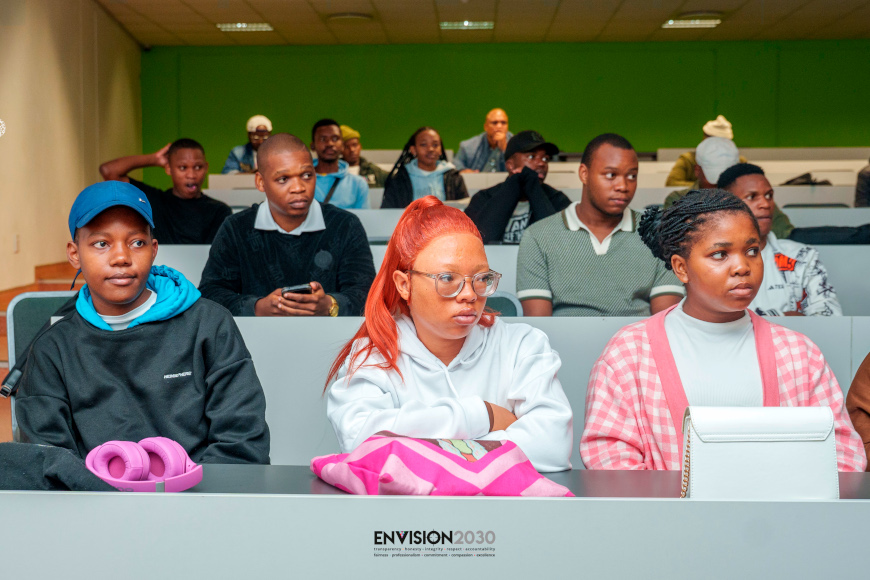
The Student Governance and Development Unit at the Durban University of Technology (DUT) hosted the DUT Way Lekgotla at the Riverside Campus on Friday, 24 April 2026. The Lekgotla aimed to promote transparency and accountability by addressing matters raised in previous engagements and identifying new challenges. It also reinforces the institution’s Living Values Framework and encourages students to play an active role in shaping a positive culture at the University.
Mr Masiza Ngculu, Manager of the Student Governance and Development Unit, opened the session by welcoming all attendees and thanking them for their participation. He noted that colleagues from other institutions often express admiration for DUT’s commitment to bringing students and staff together in meaningful dialogue.
“The purpose of the DUT Way Lekgotla Dialogue Series is to ensure that the university community remains in constant communication and engagement with one another,” said Ngculu.
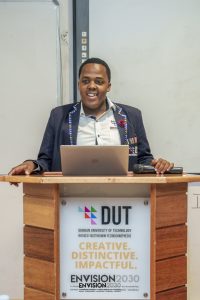
DUT SRC President, Sihle Nkosi addressing students.
He highlighted that these dialogue sessions create a platform where students and staff can better understand one another and work collaboratively towards solutions. He also expressed appreciation to the SRC for leading students in these engagements and for actively representing the student body.
The Head of the Department of Applied Management Sciences, Professor Bongani Dlamini, delivered a message of support, describing the occasion as both an honour and a significant moment for DUT.
Professor Dlamini highlighted the importance of the DUT Way Lekgotla as a platform for constructive engagement, describing dialogue as a sign of maturity and collaboration as a pathway to sustainable solutions.
“As student leaders, you have a responsibility as representatives and custodians of the student voice, and you must lead with integrity and purpose. Reflect on the kind of institution you want to build,” Prof Dlamini explained.
Ms S’thembile Mjadu, Interim Director of Student Services, emphasised that student well being and development remain a top priority, with counselling and student support services fully operational to provide holistic assistance, including academic, emotional, and personal support.
She highlighted that health clinics and student counselling services continue to play a vital role in ensuring access to essential healthcare and safe, well managed living environments.
“We are committed to creating a supportive and inclusive environment where all students are encouraged to seek help, build resilience, and develop healthy coping strategies. Through our Student Services and leadership structures, we promote a culture of responsibility, accountability, and care, empowering students to make positive choices while contributing to a safe and thriving university community,” Mjadu explained.
Various units shared presentations and reflected on their collaboration with the SRC, including the Manager of Financial Aid, Mr Absolom Manashe, Dr Ntombenhle Nombela Mseleku from Student Admissions, Ms Nobuhle Ngcobo from Real Estate, and the Director of Protection Services, Mr Charles Sehlogo.
Student leaders were highly engaged, not only raising issues but also proposing practical solutions in some cases. The session was marked by meaningful dialogue, creating an interactive and constructive environment that encouraged mutual understanding and active participation.
In his closing remarks, the Dean of Students, Dr Clement Moreku, reflected on the importance of engagement, debate, and discussion, noting that this approach aligns with the foundational principles of platforms such as the dialogue series. He emphasised that the institution is grounded in deliberative democracy, where decisions are guided by evidence, open communication, and meaningful engagement.
“Collaboration between students and staff is essential in building a transformed and supportive institutional environment. The contributions of the SRC and various university structures in supporting student success through initiatives such as financial aid and academic support are acknowledged and valued,” Dr Moreku added.
He concluded by emphasising stewardship, responsibility, and intergenerational equity, calling on all stakeholders to protect and strengthen the DUT brand as a foundation for student success and institutional sustainability.
Pictured: Students during the he DUT Way Lekgotla.
Photographer: S’bonelo Dlamini
Phiwayinkosi Sibiya


