
When the Civil Engineering Department at the Durban University of Technology (DUT) reflected on its Diploma in Civil Engineering Technology, one gap stood out: the absence of a Work-Integrated Learning (WIL) component. For many students, especially those from disadvantaged backgrounds, this meant that their studies offered limited exposure to real engineering environments.
In 2019, determined to change this, three dedicated lecturers in the Department of Civil Engineering – Dr Zesizwe Ngubane, Mr Shanley Hay, Dr Luvuno Jele, and Mr Jacob Adedeji; came together with a shared vision. They asked a simple but powerful question: What if students could learn by working directly with communities, solving real problems while building professional skills? From that idea, the Umbono Project was born.
Umbono, meaning vision or idea in isiZulu, has since grown into one of DUT’s most inspiring learning initiatives. It bridges the gap between theory and practice by using undergraduate research as a platform for hands-on, community-based learning. Through the project, students step outside the classroom to identify real challenges in nearby communities and design practical, sustainable engineering solutions.
“The moment they leave the classroom, you can see the transformation,” said Ngubane. “They start to understand that engineering is more than formulas and designs; it’s about people, purpose, and problem-solving.”
The Umbono Project has already made a meaningful impact through initiatives such as the Howick Bridge Project, where students assessed a deteriorating pedestrian bridge and proposed affordable, safe design improvements that caught the attention of local authorities. In another project, students collaborated with environmental mentors on the Greater Edendale Wetland Restoration, learning how hydrology, ecology, and community engagement come together to protect natural spaces.
For students, these experiences have been eye-opening. Theory came alive in the field, and for the first time, they understood what it means to work with the community; not just for them. Many have also expressed how the project built their confidence, teamwork, and communication skills, attributes that are essential in the engineering profession.
For lecturers, Umbono has redefined what teaching can be. Instead of simply delivering content, they now act as mentors and facilitators, guiding students through research and encouraging them to take ownership of their learning.
“When students are trusted to explore and solve problems, they surprise you,” said Ngubane. “They become thinkers, innovators, and collaborators.”
The project’s strength also lies in its partnerships. Industry mentors and community leaders contribute valuable insights, ensuring that the work students do is both technically sound and socially relevant. Despite challenges such as limited resources, tight semesters, and occasional campus disruptions, the Umbono team has remained committed to its mission.
The initiative reflects DUT’s commitment to engaged learning and innovation for community impact. It promotes adaptability, entrepreneurship, and social responsibility; all while giving students a chance to see the real-world significance of their studies.
Looking ahead, the Civil Engineering Department aims to formalize Umbono as a recognised component of the diploma, aligning it more closely with Work-Integrated Learning and DUT’s innovation hubs. Strengthening ties with municipalities, businesses, and community organisations is also a key goal to ensure long-term sustainability.
What began as a creative response to a curriculum gap has grown into a model for transformative education. The Umbono Project has shown that when students are given space to connect learning with life, everyone benefits; the students, the university, and the communities they serve.
“Our students have proven that innovation doesn’t depend on resources alone. It begins with curiosity, compassion, and courage. Through Umbono, we’re not just teaching engineering; we’re nurturing change-makers who build hope,” said Ngubane.
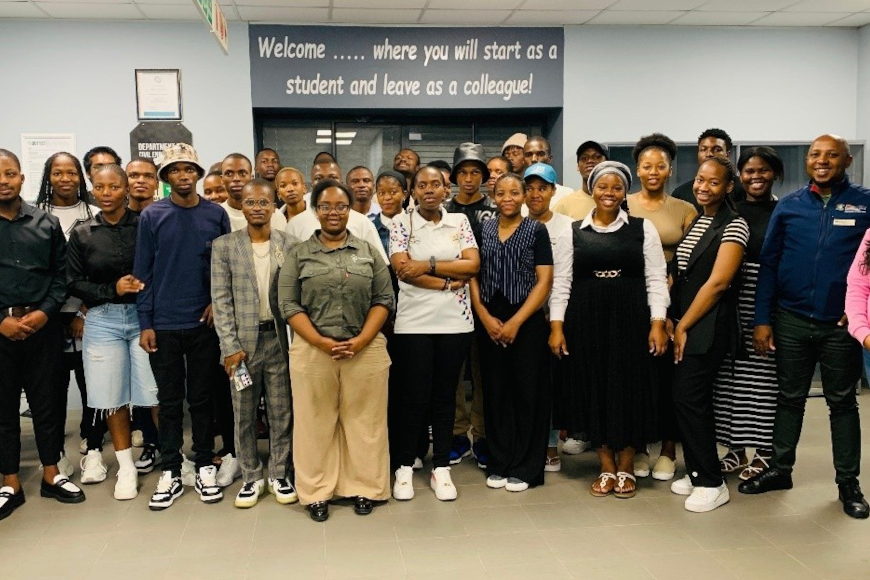
Pictured: The Umbono Project 2025 team, including industrial stakeholders: GroundTruth, EDTEA, and Edendale community representatives, and Water Engineering second year students.
Phumeza Msongelwa


