The Master the Art of Cooking Masterclass: Indigenous Foods and Sustainable Food Systems, hosted by the Centre for Excellence in Learning and Teaching (CELT) through the Epistemic Decolonisation UCDG Project 8, brought together academics, students, community partners and industry experts to explore the role of indigenous food knowledge in curriculum decolonisation, food security and sustainable food systems.
The workshop was delivered in partnership with Zandile Makhoba of Zandi The Chef International, the Department of Food and Nutrition Consumer Science, and the Department of Hospitality and Tourism. The partnership sought to demonstrate how decoloniality can be meaningfully embedded within higher education curricula through collaboration between academia and community-based partners. The participation of community practitioners, DUT students from the Department of Food and Nutrition Consumer Sciences and the Department of Hospitality and Tourism, Academic Development Practitioners from CELT, and academic staff created a space for engagement, dialogue and shared learning.
Day One focused on advancing indigenous food knowledge systems and food decolonisation. Facilitated by Zandile Makhoba, the sessions highlighted indigenous foods and community-based knowledge as important sources of learning, identity, health and sustainability. Dr Lisebo Mothepu further explored the role of food science in decolonisation, emphasising the importance of documenting indigenous food knowledge and acknowledging community practitioners as custodians of this knowledge.
On the second day, Dr Mheta from CELT welcomed participants and reflected on the goals and objectives of the Epistemic Decolonisation Project. In her address, she emphasised the importance of the collaboration between Zandi The Chef International, the Department of Food and Nutrition Consumer Science, the Department of Hospitality and Tourism, and CELT in demonstrating how decoloniality can be meaningfully integrated into the curriculum through collaborative teaching, learning and community engagement.
The day also featured presentations and panel discussions that examined the preservation of indigenous foods and the future of sustainable food systems. The panel comprised Dr Sthembile Ndwande, Mrs Seshini Gunpath, Mntwana Wiseman Zulu, Mphendulo Mbatha and Mbalentle Gwacela.
The discussions highlighted the importance of implementing Indigenous Knowledge Systems policies, preserving cultural heritage, supporting indigenous farming communities and ensuring that these communities share in the economic benefits generated from indigenous food resources. The sessions also emphasised the need to protect indigenous knowledge through appropriate documentation and language preservation.
Students from the Department of Food and Nutrition Consumer Science and the Department of Hospitality and Tourism, who had participated in the first day’s workshop, also took part in practical cooking activities. These activities demonstrated how indigenous ingredients can be incorporated into affordable, nutritious and sustainable everyday meals.
A major highlight was the presentation by Dr Lisebo Mothepu, titled Reclaiming the Kernel: Decolonial Paths in Cereal Science Pedagogy. Her presentation demonstrated how indigenous knowledge and climate-resilient African grains such as sorghum, teff, fonio and amaranth can contribute to more inclusive and transformative food science curricula. The workshop also showcased examples of curriculum innovation, including the annual African Food Festival presented by Dr Gangiah, which promotes African culinary heritage through experiential learning.
The workshop concluded with a graduation and pledge ceremony, reinforcing participants’ commitment to advancing indigenous food knowledge, sustainable food practices and curriculum transformation. Throughout the two-day event, participants were encouraged to recognise indigenous food systems as valuable sources of knowledge and innovation, while reflecting on their role in preserving African food heritage for future generations.
As emphasised by keynote speaker Zandile Makhoba, indigenous foods carry the stories, memories and identities of communities and should be documented, preserved and valued as an integral part of South Africa’s sustainable and inclusive future.
Ms Bwalya Lungu from the Centre for Excellence in Learning and Teaching (CELT) concluded the workshop by reflecting on the significance of strategic partnerships in advancing curriculum decolonisation. She emphasised that collaborations between academic institutions, communities and external stakeholders provide meaningful opportunities to integrate diverse knowledge systems into teaching and learning.
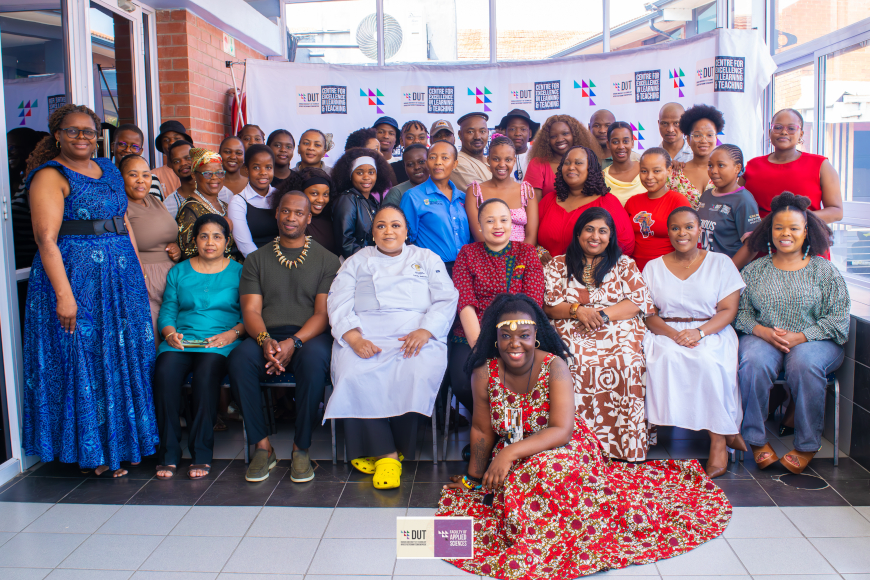
Pictured: Attendees at the event.
Sompisi Ntuli/Bwalya Nyangu Lungu/Waheeda Peters


