
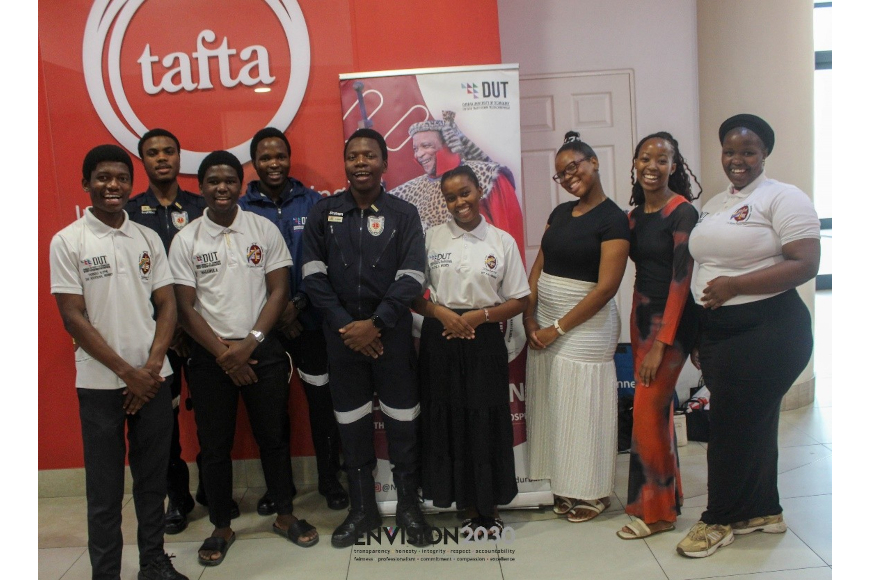
The Nazareth Tertiary Students’ Association (NaTeSA) Durban University of Technology (DUT) Branch recently hosted a Health for All Programme, providing health education, basic health screenings and compassionate support to elderly residents at John Conradie House, near Addington Hospital in Durban.
Established in 1998, NaTeSA is a non-profit, non-political student organisation that supports tertiary students, both within and beyond the Nazareth Baptist Church community. The organisation promotes academic excellence, spiritual well-being and social development while encouraging students to contribute meaningfully to their communities. The DUT Durban Branch currently has more than 120 registered members across various faculties.
The initiative formed part of NaTeSA’s commitment to community engagement and its mission to empower communities through knowledge, dignity and compassion. It also aligned with DUT’s ENVISION2030 strategy by creating opportunities for students to apply their knowledge and skills in responding to community needs.
During the outreach, residents received basic health screenings, including blood pressure and blood sugar checks, alongside health education focusing on hygiene, nutrition and chronic medication. Students also facilitated light exercises and provided personal grooming assistance, hygiene packs, cleaning support and companionship. Spiritual support was offered through prayer and hymns.
The programme was further strengthened through collaboration with DUT’s Department of Emergency Medical Care and Rescue (EMCR) and the Chiropractic Department, demonstrating the value of bringing together different areas of expertise in community engagement.
EMCR students provided cardiopulmonary resuscitation (CPR) education and practical training to nurses and social workers, while Chiropractic students conducted musculoskeletal assessments and back pain screenings and offered guidance on posture and mobility.
Through their engagement with residents at John Conradie House, NaTeSA members gained insight into some of the health and social challenges experienced by the elderly, including high blood pressure, diabetes, limited mobility and loneliness. These experiences highlighted the importance of continued health education, companionship and sustained community support in promoting the well-being and dignity of elderly residents.
Reflecting on the initiative, Mr Khuzwayo, a NaTeSA DUT Durban representative, emphasised the importance of using students’ knowledge and skills to make a meaningful difference in their communities.
“Beyond the screenings and health awareness, we wanted to restore dignity and hope and remind the residents that they are seen, valued and cared for. It was also important for us as young people to show that we care about our communities and that we can use the knowledge and skills we gain at DUT to make a meaningful difference. We hope the programme encouraged the residents to take greater care of their health and gave staff greater confidence in responding to medical emergencies,” said Khuzwayo.
The programme was positively received by residents and staff, with residents expressing appreciation for the care, companionship and interaction provided by the students.
The initiative builds on NaTeSA DUT Durban’s record of student leadership and community service. In 2023, the branch achieved second place nationally and provincially in NaTeSA’s Most Excelling Branch recognition, followed by first place at both levels in 2024. These achievements continue to motivate members to uphold the organisation’s commitment to academic excellence, community service and holistic student development.
Building on the outreach, NaTeSA plans to adopt John Conradie House as a long-term community engagement project, with monthly visits envisaged to provide continued support to residents. The initiative forms part of the branch’s broader community engagement activities, which include health awareness, women’s empowerment, career guidance, environmental initiatives and gender-based violence (GBV) awareness.
The Health for All Programme demonstrates the contribution of student-led community engagement in addressing community needs while creating opportunities for students to apply their knowledge, develop practical skills and strengthen their commitment to social responsibility. Through collaboration with academic departments and community partners, initiatives such as this contribute to DUT’s broader commitment to socially responsive education and sustained community engagement.
Pictured: NaTeSA DUT Durban Branch members.
Phumeza Msongelwa


