
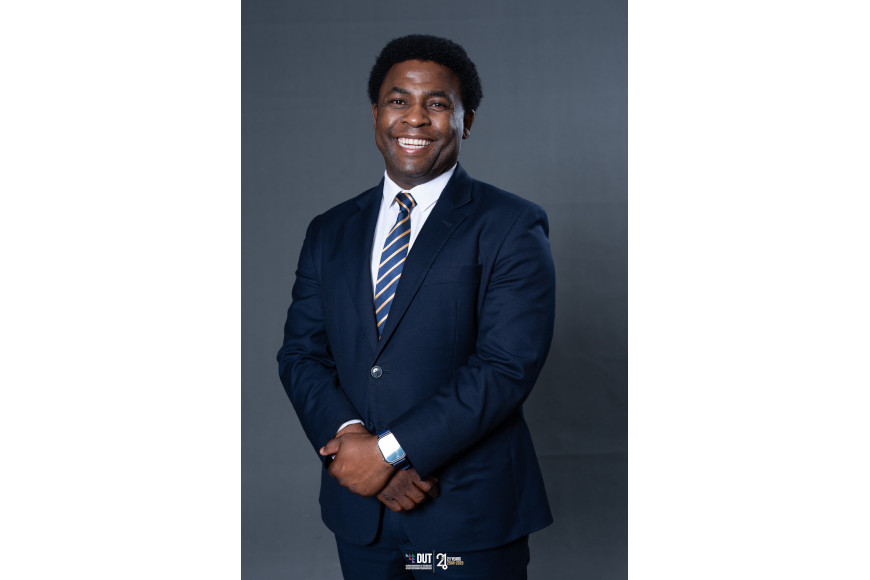
Professor Fulufhlelo Nemavhola
South Africa does not need to decommission the PhD. It needs to be re-engineered for the country, continent and future we are trying to build.
For generations, the doctorate has been treated as the highest expression of academic achievement. A candidate identifies a research problem, reviews the literature, designs a methodology, collects and analyses evidence, writes a thesis, defends an original contribution and, increasingly, publishes articles from the work.
This model has served universities well. It has produced scholars, scientists, public intellectuals and disciplinary experts. It remains essential to academic life.
But the world around the doctorate has changed. The PhD can no longer be imagined only as preparation for an academic career. In South Africa, as in much of the Global South, societies face urgent problems that require high-level knowledge to move beyond publication into practice: energy insecurity, water stress, weak industrialisation, public health pressures, technological dependency, climate vulnerability, youth unemployment, and fragile public institutions.
These are not only theoretical problems. They are engineering, policy, institutional, scientific, social, and technological problems. They require knowledge of thinking, designing, testing, validating, implementing, and scaling.
That is why the debate about the future of the PhD should not be reduced to whether countries produce enough doctorates. The deeper question is whether doctoral education is producing the kind of capability that societies now require.
Solving problems that matter
South Africa’s National Development Plan 2030 (NDP) sets an ambitious target of producing more than 100 doctoral graduates per million people per year by 2030. It also called for more than 75% of university academic staff to hold doctorates, and for postgraduate enrolments to constitute more than 25% of university enrolments.
The latest available figures show the scale of the challenge. South Africa produced 3,620 doctoral graduates in 2023, equivalent to 58 doctoral graduates per million of the total population. The proportion of academic staff with doctorates reached 52.7% in 2023, reflecting progress but still falling short of the NDP target.
These figures confirm that South Africa still needs more doctoral graduates. But numbers alone will not be enough. If doctoral education expands without redesign, countries may produce more PhDs without producing the capabilities needed to transform their economies, institutions and societies.
The old doctorate asked candidates to make an original contribution to knowledge. The future doctorate must still demand this, but it must go further. It must also ask whether that knowledge can strengthen systems, improve practice, generate technology, inform policy, support communities, create enterprises and solve problems that matter.
This is not a call to lower doctoral standards. It is a call to raise them.
Application and implementation
A future PhD should not be satisfied with publication alone when the field, itself, demands application, translation or implementation. In many disciplines, especially at universities of technology and applied institutions, doctoral work should produce patents, prototypes, software, technological standards, clinical tools, policy instruments, community interventions, industrial processes, and new enterprises.
These outputs should not be treated as secondary decorations added after the ‘real’ academic work has been completed. In appropriate fields, they should be recognised as legitimate doctoral outputs, provided they are original, rigorous, ethical, independently examined and intellectually defensible.
A patent without scholarship is not a PhD. A prototype without theory is not a PhD. A policy instrument without evidence is not a PhD. A community intervention without a method is not a PhD. But, equally, a thesis that produces articles without any pathway to social, technological, or professional usefulness should not automatically be treated as superior to a doctoral project that produces a validated medical device, a working software system, a tested governance model or an innovation that improves public service delivery.
Universities must stop treating usefulness as the enemy of rigour.
Skills revolution
This is particularly important for Africa. The African Union’s Agenda 2063, often called ‘The Africa We Want’, imagines a prosperous and self-confident continent built on inclusive growth, sustainable development, and technological capability. It calls for a skills revolution underpinned by science, technology and innovation (STI). It also speaks of transformed economies, STI-driven industrialisation, water security, climate resilience, renewable energy, and a stronger African role in global knowledge systems.
If Africa wants this future, then the African doctorate must change. It cannot remain a mere credential of academic arrival. It must become an instrument of continental capability. It must help Africa build, manufacture, diagnose, govern, invent, design, heal, conserve, compute and compete.
In South Africa, the qualification framework is not entirely hostile to this future. The Higher Education Qualifications Sub-Framework recognises doctoral study at the National Qualifications Framework Level 10 and provides for both the traditional doctoral degree and the professional doctorate. It recognises advanced research, original contribution and, in the case of professional doctorates, the relationship between knowledge and high-level professional practice.
The Council on Higher Education has also undertaken national work on doctoral standards and the quality of doctoral education. This confirms that the doctorate is not merely a private agreement between a supervisor and a candidate. It is a national qualification with public meaning. It must carry public trust, international credibility, and the highest level of intellectual achievement.
This is precisely why reform is needed.
Innovation, practice, impact undervalued
The existing framework contains flexibility, but it still gives insufficient status to innovation, practice, and impact as central features of doctoral education. It continues to carry the weight of an older imagination in which the doctorate is associated with the thesis, the academic career and publication-based scholarly contribution.
The professional doctorate offers one route to practice, but it is often perceived as less prestigious than the traditional PhD because it is not awarded the globally recognised PhD title. This creates an unnecessary hierarchy between scholarly knowledge and practice-based excellence.
That hierarchy is dangerous for developing countries.
Africa cannot build technological sovereignty, industrial capability, and stronger public institutions if the highest qualification in the knowledge system is designed too narrowly around the reproduction of academic careers. The doctorate must continue to serve universities, but it must also serve society. It must develop scholars, but also inventors, policy thinkers, technology builders, clinician-scientists, public-sector innovators, industrial researchers, and community-based knowledge leaders.
Integrated prototypes, policies
A re-engineered doctoral framework should allow an engineering candidate to submit a tested prototype along with an integrative thesis that explains the theory, design process, validation, limitations, and original contribution. A candidate in health sciences should be able to submit a clinical tool, diagnostic platform or intervention model supported by rigorous evidence.
A candidate in public administration should be able to produce a policy instrument or governance model that is theoretically grounded and tested. A candidate in computing should be able to submit software, an algorithmic system, or a data platform, accompanied by a critical account of its originality, robustness, bias, risk, and social value.
The thesis should not disappear. Rather, it should evolve.
One model is the doctoral portfolio with an integrative thesis or exegesis. In this model, the candidate submits a body of work that may include publications, patents, prototypes, designs, software, standards, policy tools, professional instruments, or community interventions. The integrative thesis then demonstrates the intellectual architecture of the work: the research problem, theoretical grounding, methodology, ethics, originality, validation, limitations and contribution to knowledge or practice.
This model would protect academic rigour while recognising that high-level knowledge can take more than one form.
Broaden doctoral recognition
South Africa should initiate a national review of the doctorate for the next generation. The Council on Higher Education, the South African Qualifications Authority, the Department of Higher Education and Training, universities, professional councils, science councils, industry, public-sector institutions, and civil society should be part of this conversation.
Such a review should modernise the language of the doctorate, broaden the recognition of doctoral outputs, include translation and impact in doctoral assessment, reconsider the status of the professional doctorate, and allow universities of technology to pilot impact-oriented PhD models.
This debate is a South African one. It matters across the Global South. Many countries are trying to expand doctoral education while also seeking industrialisation, technological sovereignty, public-sector reform, and inclusive development. If doctoral education continues to follow models designed for academic reproduction, it will not fully serve these goals.
The future PhD is not weaker. It is a more demanding PhD. It asks candidates, not only to demonstrate what they know, but also what their knowledge can do. It asks universities to take responsibility, not only for enrolment and graduation, but for the destination and value of doctoral knowledge. It asks regulators to protect standards without freezing the doctorate in the past.
The doctorate must still produce knowledge. But for South Africa, Africa, and the wider Global South, it must also produce capability.
That is the PhD the future requires.
Professor Fulufhelo Nemavhola is the Deputy Vice-Chancellor for Research, Innovation, and Engagement at the Durban University of Technology (DUT) in South Africa. Any views or opinions expressed herein are made in his personal capacity. They shall not be attributed to, or construed as representing, the views, policies or positions of the DUT, its council, senate, management, or affiliates.
Source: University World News


