
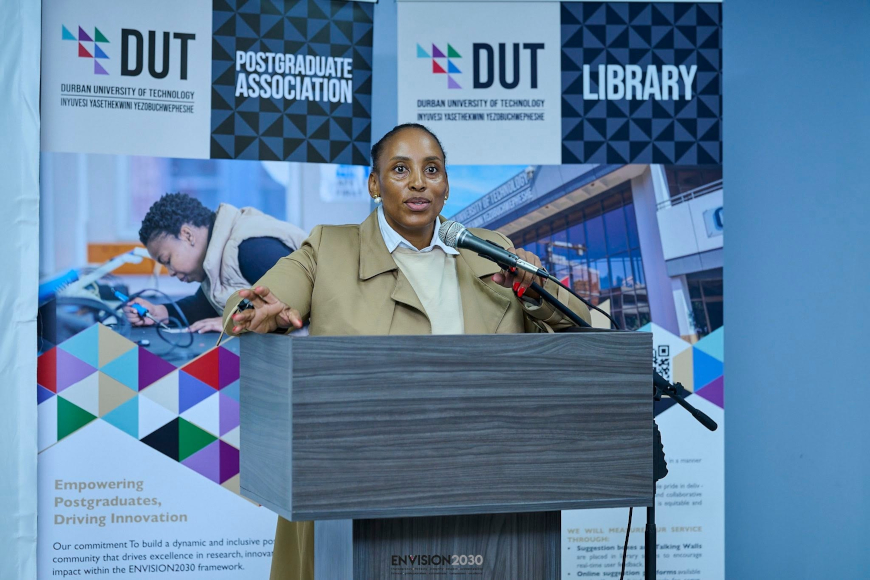
The Research and Postgraduate Support team hosted its much-anticipated Postgraduate Orientation Programme at the BM Patel Library, MLS Campus on Tuesday, 9 June 2026.
The programme director, Mr Zenande Ndakisa, indicated that the orientation was designed to welcome both new and returning postgraduate students, equipping them with the knowledge and tools needed to successfully navigate their academic journeys.
He introduced the Interim Director: Research and Postgraduate Support, Dr Nomcebo Mthombeni, who welcomed postgraduate students and highlighted their role as innovators within the university community. She emphasised that the session provided an opportunity for students to develop solutions to complex challenges.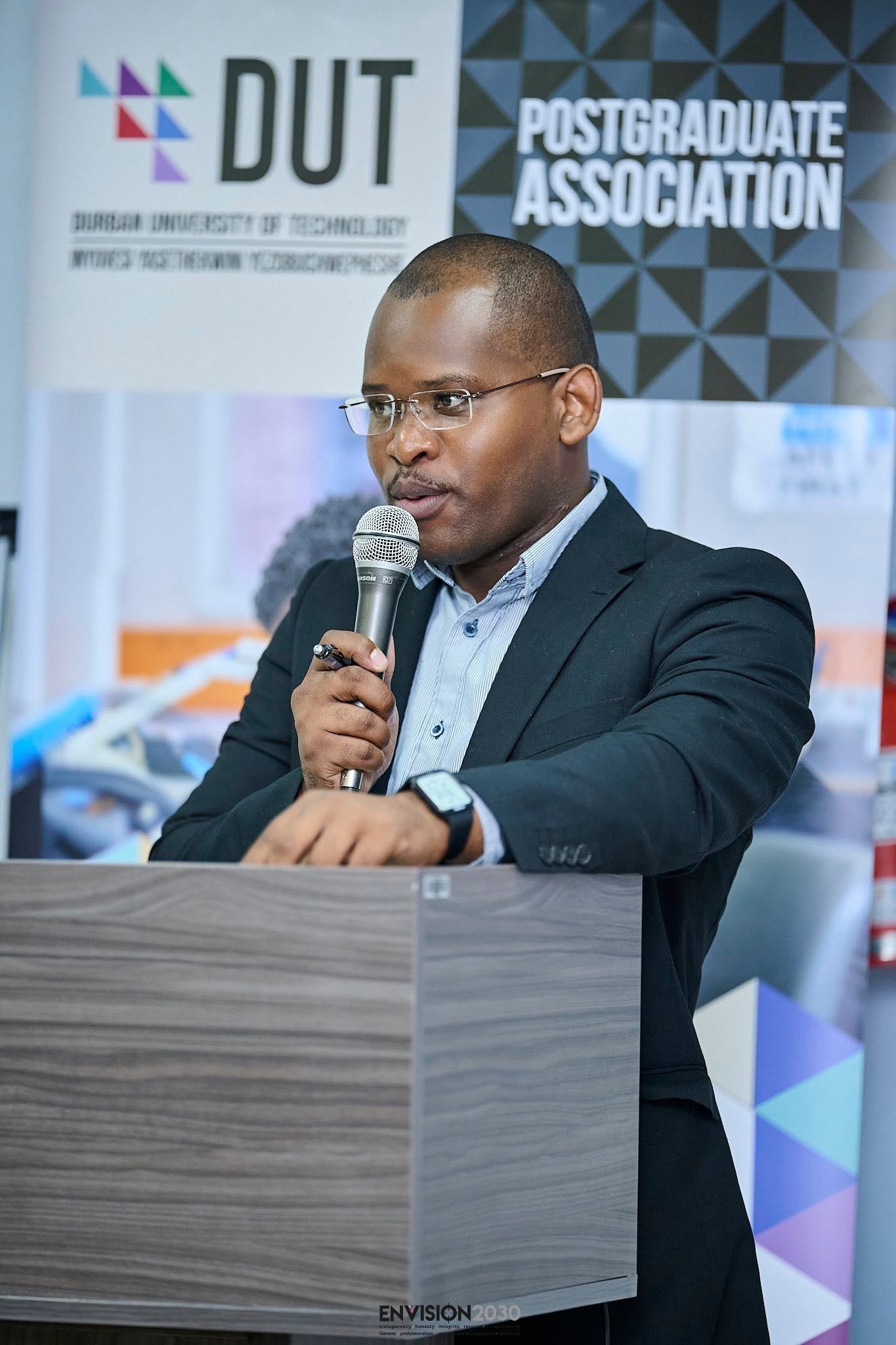
“Here at DUT, research, innovation and engagement form a critical part of our institutional vision, and we are committed to creating an environment that supports your success through quality supervision, research development opportunities, ethics support, and funding opportunities,” she said.
Dr Mthombeni encouraged students to build networks, noting that collaboration plays a vital role in academic and professional development. She also emphasised the importance of understanding the academic calendar to ensure effective planning throughout the research journey.
Dr Pinkie Ntola, Interim Director of Technology Transfer and Innovation (TTI), highlighted the role of TTI in supporting innovation, including facilitating funding opportunities, protecting intellectual property, and enabling the development of spin-off companies and startups. She also spoke about the TTI Incubation Programme, which supports innovators from early-stage development through to commercialisation.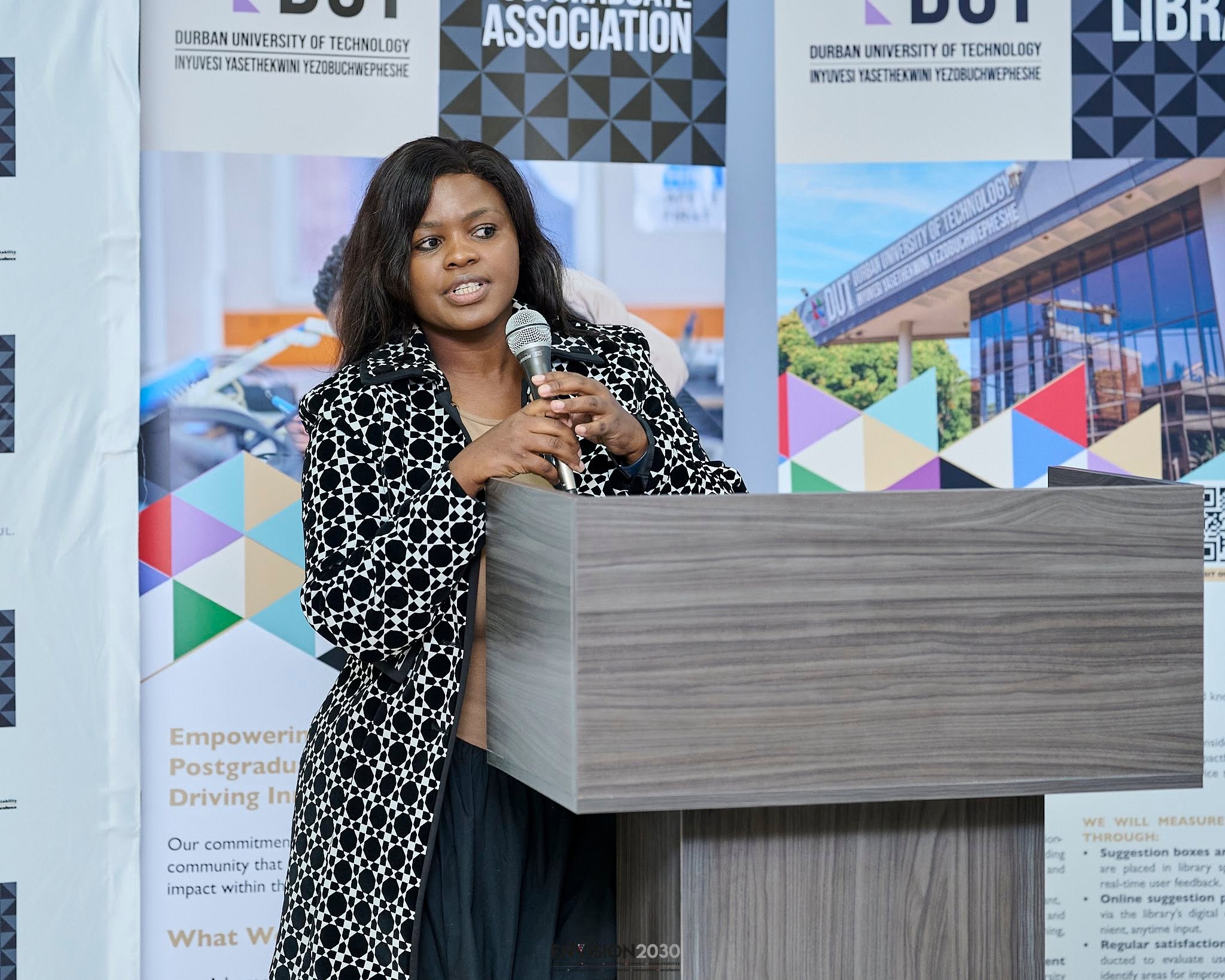
Professor Pfano Mashau, Chair of the Institutional Research Ethics Committee, outlined the research ethics clearance process and explained the role of Research Ethics Committees in ensuring compliance and integrity in research.
Writing support services were presented by Prof Nereshnee Govender from the Writing Centre, who explained the role of tutors in assisting students with reading, referencing, proposal writing, dissertations, and other academic writing needs.
Dr Vaneshree Govender, Section Head for Research Capacity Development, shared insights into key institutional initiatives aimed at strengthening postgraduate research skills. She highlighted funding opportunities such as mobility grants, women in research grants, seed funding, and qualification completion support. She also noted the impact of the Doctoral Mentoring Programme, which has contributed to an increase in PhD-qualified academic staff from 23% in 2015 to 36% in 2025, aligning with the national target of 75% by 2030.
The Alumni Relations Coordinator, Ronelle Lyson, emphasised the importance of maintaining lifelong connections between graduates and the university. She encouraged postgraduate students to engage with alumni platforms and initiatives that support DUT’s ENVISION2030 strategy.
A highlight of the programme was the introduction of the Postgraduate Forum by the President of the Postgraduate Association, Moses Bariki. He described the forum as a platform for collaboration, research exchange, and student empowerment. He also outlined plans to strengthen postgraduate engagement and institutional participation, with targets including increased student involvement and the implementation of key strategic projects aligned with ENVISION2030.
The programme concluded with closing remarks from Themba Zitha of the Research and Postgraduate Support Unit, who thanked participants for attending and acknowledged the organising team for delivering a successful and impactful event.
Pictured: Dr Nomcebo Mthombeni, Interim Director: Research and Postgraduate Support, addressing attendees at the orientation.
Waheeda Peters


