
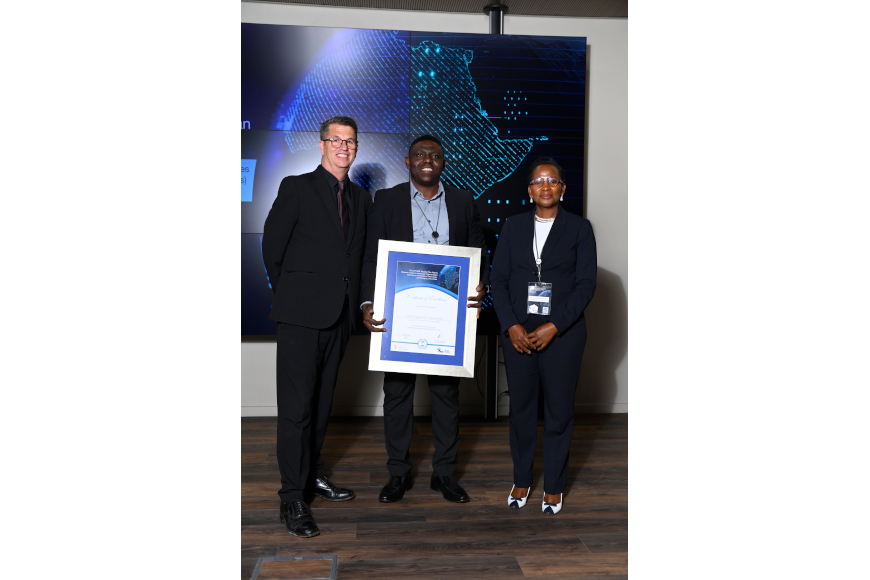
Professor Eric Oscar Amonsou, a Full Professor of Food Science at the Durban University of Technology (DUT), is excited about his recent appointment as NRF SARChI Tier 1 Research Chair in Sustainable Protein Innovation.
This prestigious appointment was announced as part of initiative to boost research capacity at South African universities.
Prof Amonsou’s research journey began in Benin, where he had worked as a researcher at the National Institute of Agricultural Research before pursuing postgraduate studies in Food Science in Ghana and South Africa.
Since joining DUT in 2013, he focused on food chemistry, food processing, and the characterisation of proteins and polysaccharides from underutilised crops.
Over time, he became increasingly aware of the challenges facing global food systems, particularly the need for sustainable, nutritious, and affordable protein sources. This inspired his transition toward alternative proteins, including pulse grains, fungal proteins, and insect proteins, which now form the foundation of his research programme.
Being appointed as a SARChI Chair at DUT is both a tremendous honour and a significant responsibility for him. “Personally, it represents the culmination of many years of dedication to research, teaching, and mentorship. Professionally, it provides a unique opportunity to build a strong research programme that addresses critical challenges in food and nutrition security,” he shared.
Prof Amonsou also indicated that it is a recognition of the collective efforts of his students, colleagues, collaborators, and DUT, which has provided an enabling environment for research excellence.
“I see this SARChI Chair position as a platform to elevate DUT’s contribution to national and global food innovation while creating opportunities for future generations of scientists.,” he emphasised.
Sharing further on his role, Prof Amonsou highlighted that the SARChI Chair position focuses on sustainable protein innovation through four interconnected pillars such as plant proteins, mycoprotein, insect protein and advanced food design, scale-up and commercialisation.
“These pillars are integrated through food chemistry, processing technologies, product development, and commercialisation pathways,” he expressed.
In terms of how his work responds to South Africa’s Decadal Plan for Science, Technology and Innovation; Prof Amonsou divulged that his research aligns strongly with South Africa’s Decadal Plan, particularly its focus on food security, the bioeconomy, sustainable industrialisation, and inclusive economic growth.
“The SARChI Chair position contributes by developing locally sourced protein ingredients, reducing dependence on imported proteins, supporting value addition to indigenous crops, and creating new opportunities within the agri-food sector. Through innovation, skills development, and industry partnerships, we aim to translate scientific discoveries into tangible socio-economic benefits,” he added.
Over the next decade, Prof Amonsou aims to establish South Africa as a leader in sustainable protein innovation. “Specifically, I would like to see new protein ingredients and food products entering the market. Commercialisation of locally developed technologies, increased value addition to African crops and agricultural by-products. New start-ups and spin-off companies emerging from research outputs.
“Job creation across the food innovation value chain; and improved nutrition and food security in vulnerable communities.Ultimately, success will be measured not only by publications but by technologies adopted, businesses created, and lives improved,” shared Prof Amonsou.
His research addresses local challenges in KwaZulu-Natal and beyond. “KwaZulu-Natal faces significant challenges related to food insecurity, unemployment, malnutrition, and agricultural sustainability. “Our research addresses these challenges by developing affordable protein solutions from locally available resources such as pulse grains, food processing by-products, fungi, and insects. We also work closely with farmers, industry, government agencies, and communities to ensure that our innovations are practical, scalable, and relevant to local needs,” he explained.
The knowledge, relayed Prof Amonsou, generated in KwaZulu-Natal can be adapted and transferred across South Africa and the broader African continent.
“Human capital development is one of the most important objectives of the SARChI Chair position. We will provide postgraduate students and postdoctoral fellows with access to state-of-the-art facilities, multidisciplinary research projects, international collaborations, industry exposure, and entrepreneurship training,” he added.
Throughout his career, he has successfully supervised 12 Master’s and 10 PhD graduates, and he looks forward to expanding this contribution through the Chair.
The strategies he aims to use to attract and retain young talent in his field are young researchers who are increasingly motivated by opportunities to address and solve global challenges. “We will attract talent by providing access to cutting-edge research areas such as alternative proteins, biotechnology, food innovation, and sustainability. We will also offer mentorship, research scholarships, industry engagement, international mobility opportunities, and entrepreneurship pathways that allow students to see clear career prospects beyond graduation,” he explained.
Prof Amonsou plans to mentor the next generation of researchers, particularly from underrepresented backgrounds as he strongly believe that talent is universal, but opportunities are not always equally distributed.
His mentorship philosophy is based on inclusion, empowerment, and excellence.
“The SARChI Chair position will create an environment where students from diverse backgrounds can thrive through structured mentorship, research training, leadership development, and networking opportunities. “I want students not only to become excellent researchers but also future leaders, innovators, and entrepreneurs who contribute meaningfully to society, he said.
In relation to his research contributing to innovation, entrepreneurship, or commercialisation; he explained that these are central components of his research programme. Over the years, he has led projects that resulted in intellectual property development, technology transfer activities, and prototype products for commercialisation. Prof Amonsou also founded INOFID, a DUT-linked spin-off company focused on innovative food solutions.
“The Chair will strengthen this trajectory by supporting technology development, product prototyping, industry partnerships, and start-up creation, ensuring that research outcomes translate into economic and societal value,” he shared.
By 2030, Prof Amonsou sees DUT emerging as one of Africa’s leading universities in applied research and innovation, particularly in sustainable food systems, biotechnology, and alternative proteins.
“With strategic investments in infrastructure, research chairs, postgraduate development, and international collaborations, DUT has the potential to become a globally recognised hub for sustainable protein research and food innovation,” he relayed.
For Prof Amonsou, success would mean that his position has created a lasting legacy.
“This includes producing highly skilled graduates, establishing internationally recognised research excellence, developing commercially viable technologies, attracting significant research investment, strengthening industry partnerships, and contributing to food and nutrition security,” he shared.
Most importantly, for Prof Amonsou, success would mean that his SARChI Chair position has helped position South Africa and DUT as global leaders in sustainable protein innovation while creating meaningful benefits for communities, industry, and future generations.
Pictured: Professor Eric Oscar Amonsou
Waheeda Peters


