
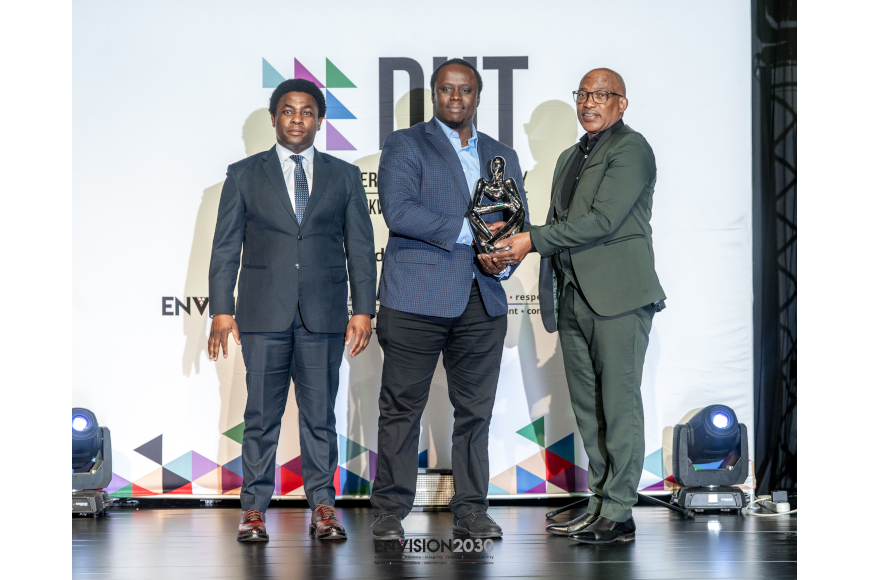
Professor Oludolapo Akanni Olanrewaju is focused on turning research into practical change by helping industries use energy more efficiently and developing solutions that could support a cleaner, more resilient future.
His appointment as the Durban University of Technology’s (DUT) South African Research Chairs Initiative (SARChI) Chair in Sustainable Energy and Industrial Efficiency marks a significant step in advancing research that responds to South Africa’s energy and industrial challenges.
Prof Olanrewaju is a Full Professor in DUT’s Department of Industrial Engineering, an NRF C2-rated researcher and Interim Director of the Institute of Systems Science. He brings extensive research experience in energy efficiency, sustainable energy systems and industrial sustainability.
Since joining DUT in 2018, his research has expanded to include sustainable energy systems, industrial decarbonisation, artificial intelligence applications, life-cycle assessment and systems modelling. His work seeks to improve energy management, strengthen industrial competitiveness and support South Africa’s transition to a low-carbon economy.
The Chair’s five interconnected priorities include:
- Sustainable Energy Systemsthrough renewable energy integration, hybrid energy systems, microgrids, and energy planning.
- Industrial Energy Efficiencythrough advanced optimisation, energy management, and cleaner production strategies.
- Climate Change Mitigation and Decarbonisation, including greenhouse gas reduction pathways and low-carbon industrial development.
- Artificial Intelligence and Intelligent Decision Support Systemsfor energy forecasting, optimisation, and resource management.
- Systems Science for Sustainability, including life-cycle assessment, systems dynamics, and integrated modelling approaches that support evidence-based decision making.
Together, these priorities aim to support a cleaner, more efficient, and resilient industrial and energy future for South Africa.
“Personally, this appointment is a humbling recognition of years of dedication to research, postgraduate development, and knowledge generation. It reflects the support I have received from mentors, colleagues, students, and DUT as an institution,” said Professor Olanrewaju.
Professionally, he sees the Chair as an opportunity to establish a nationally recognised centre of excellence, attract talented postgraduate students and postdoctoral fellows, expand international collaborations, and contribute meaningfully to South Africa’s energy transition.
Over the next decade, Professor Olanrewaju aims to help industries reduce operational costs through improved energy management, support communities through sustainable energy solutions, and inform public policy through evidence-based research. The Chair will also prioritise developing skilled researchers who can contribute to South Africa’s growing green economy.
In KwaZulu-Natal, the research will respond to challenges including energy reliability, climate vulnerability, industrial competitiveness and environmental sustainability. Solutions will focus on renewable energy deployment, industrial efficiency, sustainable infrastructure and resource optimisation, with potential applications beyond the province.
“The systems-based nature of our research means that solutions developed in KwaZulu-Natal can often be adapted and transferred to other provinces and countries facing similar developmental challenges. Our goal is to create locally relevant solutions with broader regional and global applicability,” added Prof Olanrewaju.
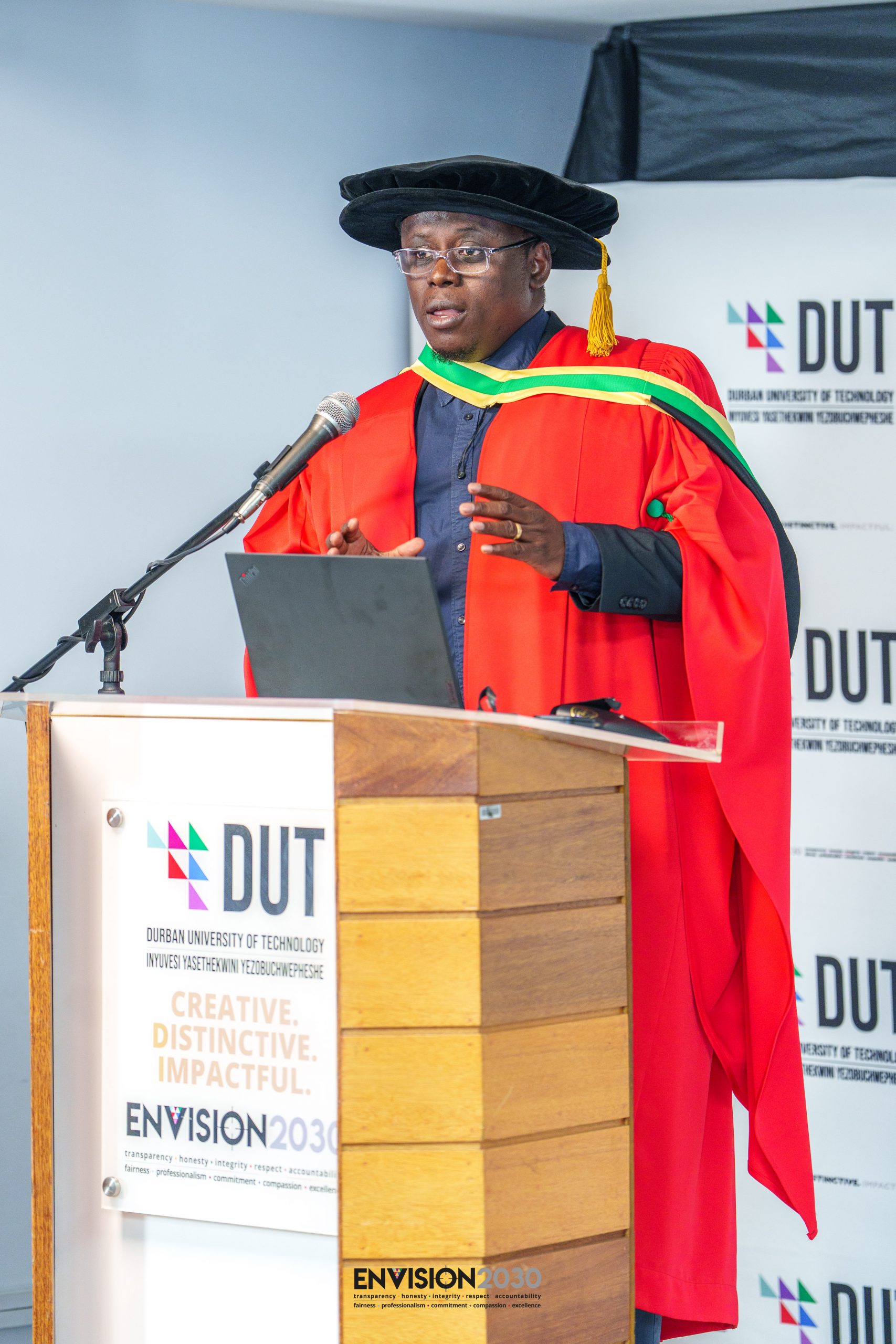 Aligning the Chair with South Africa’s Decadal Plan for Science, Technology and Innovation, Prof Olanrewaju said the Chair aligns strongly with the Decadal Plan by addressing national priorities related to energy security, climate resilience, industrial competitiveness, innovation, and human capital development. By integrating digital technologies, artificial intelligence, sustainability science, and energy systems research, Prof Olanrewaju believes the Chair supports several strategic objectives of the Decadal Plan while addressing real societal challenges.
According to Prof Olanrewaju developing the next generation of researchers will be central to the Chair’s work. Planned support includes scholarships, research assistantships, structured supervision, mentorship, international collaboration, conference participation and industry-based research opportunities. Particular emphasis will be placed on creating an inclusive research environment and empowering historically underrepresented groups.
The Chair also aims to bridge the gap between research and real-world application by developing solutions such as energy management systems, optimisation tools, decision-support platforms and sustainability assessment frameworks. Prof Olanrewaju believes collaboration with industry partners could open opportunities for commercialisation, consulting services, policy innovation and job creation.
Looking towards 2030, Professor Olanrewaju believes DUT is well positioned to strengthen its standing as a leading institution in applied research, sustainability science, energy systems and technology-driven innovation.
Ultimately, the Chair aims to establish a lasting research legacy that develops future researchers, generates impactful knowledge and contributes to a more energy-secure, environmentally sustainable and industrially competitive South Africa.
Pictured: Professor Fulufhelo Nemavhola, Deputy Vice-Chancellor, Research, Innovation and Engagement; Professor Oludolapo Akanni Olanrewaju, SARChI Chair in Sustainable Energy and Industrial Efficiency and Prof Thandwa Mthembu, Vice-Chancellor and Principal at DUT.
Photographer: S’bonelo Dlamini
Simangele Zuma


