
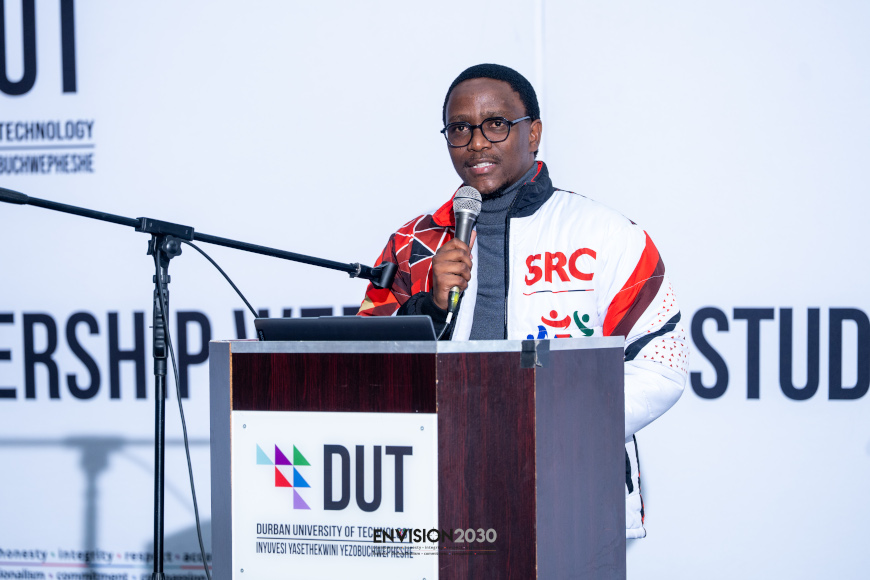
The Durban University of Technology (DUT) Student Representative Council (SRC) held its second mass meeting with students on 5 September 2026 at Cane Growers Hall, ML Sultan Campus in Durban.
The meeting followed the SRC’s first mass meeting, held on 13 August 2026 at Indumiso Main Hall, Indumiso Campus in Pietermaritzburg. Both engagements provided platforms for the SRC to report on its work and for students to engage with their elected representatives on matters affecting the student community.
As the SRC approaches one year since taking office, the second meeting provided an opportunity to reflect on its activities, programmes and engagements during its term.
SRC President Sihle Nkosi delivered the opening address and provided an overview of the Council’s work since assuming office. He reflected on the challenges experienced by students during the registration period following the introduction of the new system and highlighted areas including registration, funding, accommodation and academic support.
“Today is a space for you to reflect on those issues and give solutions or suggestions on how we can improve the system,” Nkosi said.
Nkosi also provided an update on the Historical Debt Programme and highlighted support received through a donation from the Motsepe Foundation. He said the funding was used to assist students with outstanding historical debt and emphasised the importance of continued efforts to support students affected by historical debt.
SRC Secretary-General Samkelo Ngubo presented a report outlining programmes and activities undertaken by the Council during its term. The report also covered the participation of SRC office bearers in various university committees and structures where matters affecting students are considered.
Finance Officer Thalente Mteshane presented an update on student financial matters, including NSFAS, financial aid, bursaries and payment plans.
He also reported on the SRC Grant, which had a budget of R1 million and assisted 190 students who met the required criteria. Mteshane further outlined support provided by the SRC to students who experienced difficulties during the transition to the new PeopleSoft system.
The meeting also included an open discussion, during which students shared views and raised matters relating to funding, academic support, accommodation, transport and the student experience.
Students also discussed opportunities for postgraduate study and support for students undertaking Work Integrated Learning, as well as matters relating to bursary payments and access to academic records.
Academic matters were also discussed, including assessment scheduling, lecture venues and the use of technology in academic work. Students called for continued engagement and clarity around the use of Artificial Intelligence in academic contexts.
The SRC also provided an update on its engagement with relevant university teams regarding lecture venues and audio-visual infrastructure. The Council reported that it had participated in walkabouts with the Audio Visual team and Facilities Management at campuses in Durban and Pietermaritzburg to better understand ongoing projects relating to audio-visual equipment.
Accommodation and student transport were also discussed as part of the broader engagement on the student experience.
The SRC undertook to continue engaging with students and to refer matters requiring attention from relevant university structures to the appropriate stakeholders.
The mass meeting formed part of the SRC’s ongoing efforts to maintain communication with students, provide feedback on its work and create opportunities for students to participate in discussions on matters affecting the student community.
Pictured: SRC Secretary General, Samkelo Ngubo.
Photographer: Sifundo Thwala
Nosihle Mthembu


