
A student-led conversation at the Durban University of Technology (DUT) has encouraged students to take greater ownership of their academic journeys while making use of the support available to help them succeed.
Hosted by the DUT Student Representative Council (SRC) and Champions of the DUT Living Values, in collaboration with the Student Governance Unit, the Student-Led Conversation on Student Success and Academic Excellence took place at the Indumiso Campus Main Hall on 29 July 2026.
The conversation brought together students, university leaders and staff to discuss the factors that contribute to student success, while exploring practical ways to strengthen academic performance, student support and the application of DUT’s Living Values.
According to SRC Academic Officer Charles-Junior Kalyango, the initiative was created to give students a platform to share their experiences, identify challenges affecting their academic journeys and contribute ideas towards building a better university.
“Student success cannot be discussed without hearing directly from students. This conversation created an opportunity for students to share their experiences and ideas, while also engaging with the people and services that are there to support them,” said Kalyango.
Addressing the theme What Does Student Success Look Like at DUT?, Dr Nokuthula Mavela from the Faculty of Health Sciences highlighted the importance of student agency and encouraged students to take an active role in shaping their academic success.
While acknowledging the range of academic support services available at DUT, Mavela reminded students that support must be complemented by personal responsibility.
“Student agency is your responsibility towards your educational journey and towards your success,” she said.
The role of DUT’s Living Values was also central to the conversation. Champions Chairperson Ms. Noluthando Gasa encouraged students to move beyond simply knowing the University’s values and to apply them in their everyday lives.
She explained that values such as honesty, integrity, respect and accountability contribute to a positive learning environment while helping students develop into responsible graduates.
The discussion also provided an opportunity for students to hear from a DUT alumna about the realities of navigating university life.
Ms. Luyanda Zulu, who completed a Diploma in Information and Communication Technology (ICT) at DUT and previously served as Deputy President of the Central Housing Executive (CHE), reflected on her own academic journey and the challenges she encountered along the way.
She spoke about the uncertainty and personal challenges she experienced as a student, but said her determination to succeed was strengthened by seeking support from lecturers, tutors, mentors and friends.
She encouraged students not to allow difficult circumstances or setbacks to determine their future.
A key focus of the conversation was the range of services available to students beyond the classroom.
Representatives from various Student Services units outlined the support available to help students navigate both academic and personal challenges.
Financial Aid Officer Mr Keshan Govender explained that financial aid extends beyond the processing of NSFAS applications and the payment of student allowances.
He said financial aid plays an important role in helping students access higher education, complete their qualifications and reach their full potential. He also encouraged students to manage their funding responsibly and make use of financial literacy programmes offered by the University.
“Financial aid is far more than a funding mechanism. It is a strategic investment in student potential,” said Govender.
Teaching and Learning Development Practitioner Mr Peter Kalanga highlighted the academic support available through the Centre for Excellence in Learning and Teaching (CELT).
He noted that students come from diverse educational and social backgrounds, which can influence their learning experiences, and emphasised that academic support should not be viewed as something only available to students who are struggling.
“The support is not only for students who are struggling, but also for those who are doing well so that they can maintain their good grades,” said Kalanga.
Residence Life was also identified as an important part of the student success journey. Representing Residence Life, Mr Ntsikelelo Nhlenyama explained that student residences provide more than accommodation, creating spaces where students can study, complete assignments and prepare for classes.
He also highlighted the role of residence leaders and academic support programmes in creating an environment that encourages academic achievement.
“Student success lives where students live,” said Nhlenyama.
The conversation further recognised the relationship between academic performance and students’ emotional wellbeing.
Representing Student Counselling, Ms. Sthembile Mjadu and Social Worker Ms. Nobuhle Sithole spoke about the importance of mental health and emotional wellbeing in helping students navigate university life.
Sithole explained that Student Counselling provides individual counselling, crisis intervention and awareness programmes to assist students dealing with challenges including stress, anxiety, trauma, financial difficulties and adjusting to university life.
She encouraged students to seek assistance when they need it, noting that personal wellbeing is closely linked to academic success.
The programme concluded with a panel discussion facilitated by Inam Mbizweni, providing students with an opportunity to engage directly with University representatives and student leaders on matters affecting academic success and student life.
SRC President Sihle Nkosi called on students to take an active role in improving academic success across the University.
He acknowledged the support provided through various DUT departments and programmes, while emphasising the importance of attending classes, participating in support initiatives and encouraging fellow students to succeed.
Nkosi also called for a stronger culture of attendance and student participation across the University.
SRC Deputy President Qhawe Mtengu focused on the need to make student support services more visible and accessible.
He noted that some students, particularly first-year students, may not be aware of the assistance available to them and called for stronger collaboration between the SRC and support units to ensure students are better informed.
Simphiwe Mnyandu and Lwande Miya also contributed to the discussion, responding to students’ questions and sharing their perspectives on student success and the support available at DUT.
The open question-and-answer session allowed students to raise concerns, seek clarity and engage directly with University representatives on issues affecting their academic journeys.
Closing the event, Manager: Student Governance Mr Masiza Ngculu encouraged students and the broader University community to continue working together to build a stronger institution.
Ngculu reminded attendees that student success is a shared responsibility and encouraged them to apply the knowledge, guidance and support discussed during the conversation.
The event reinforced a central message: while DUT provides a range of services and opportunities to support students, academic success requires active participation from students, staff and the wider University community.
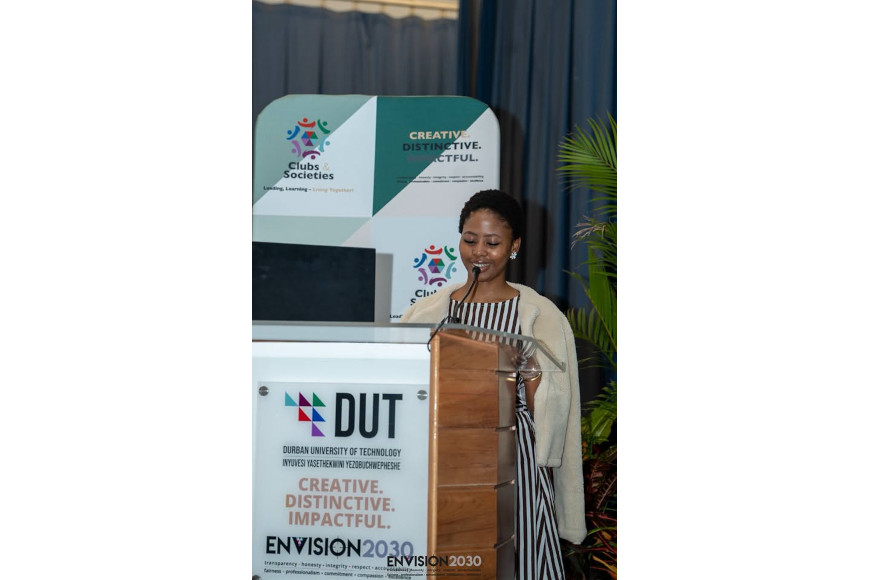
Pictured: DUT alumna Luyanda Zulu engaging during the Student-Led Conversation on Student Success and Academic Excellence.
Photographer: Sandile Lushozi.
Luyanda Mlaba


