RESEARCH
ADVANCEMENT

SDG 7: Affordable and Clean Energy


2026

DUT CHAMPIONS GREEN HYDROGEN INNOVATION THROUGH TVET COLLABORATION

Apr 09, 2026

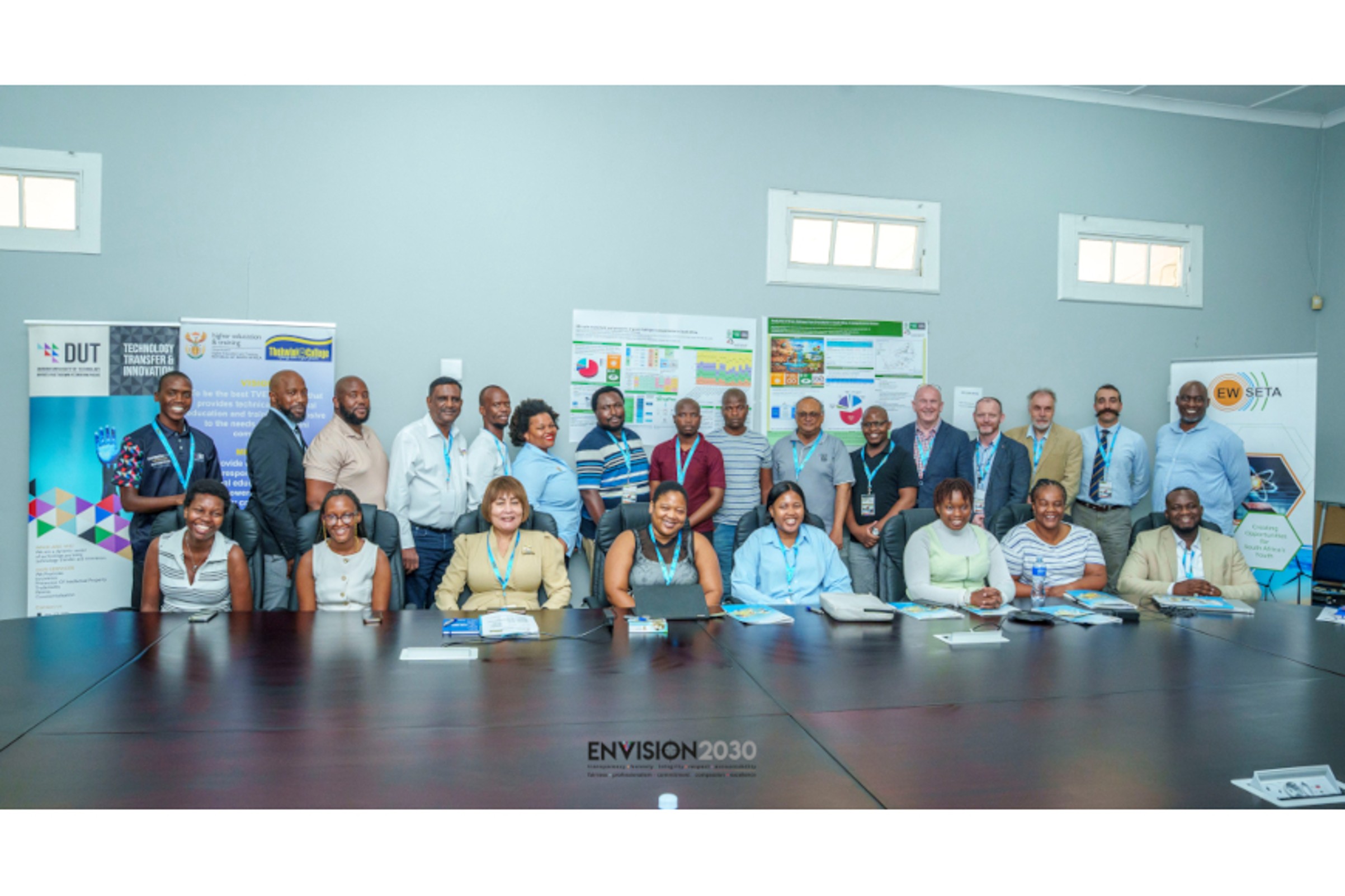
The Department of Chemical Engineering at the Durban University of Technology (DUT), in collaboration with the Technology Transfer and Innovation (TTI) unit, recently participated in a Green Hydrogen Production engagement at Thekwini TVET College, Melbourne Campus. The initiative is designed to strengthen skills and advance research within the TVET sector.


Dr Emmanuel Tetteh, Senior Lecturer and Principal Investigator of the Green Engineering Research Group (GERG), delivered insights on Academic and Research Strides in Hydrogen Production and Technology, highlighting an ongoing green hydrogen funded project supported by the South African National Energy Development Institute (SANEDI) and its contribution to South Africa’s sustainable energy transition.


Sharing the significance of the initiative, Dr Tetteh said that the engagement aims to strengthen collaborative efforts towards advancing the Green Hydrogen Roadmap, particularly in supporting capacity development at TVET colleges as part of the research drive in KwaZulu Natal. He added that sharing knowledge with collaborators helps to foster stronger research capabilities that will address the growing need for skills in hydrogen research.
Dr Tetteh emphasised that the initiative will not be a once off. He noted that once the demonstrator systems become fully operational, DUT intends to open its facilities to students and staff from partnering TVET colleges, creating greater opportunities for practical training and collaboration.


The goal is to provide a real time learning experience beyond theoretical knowledge. Visitors will have the opportunity to observe firsthand how hydrogen energy is produced through sustainable methods, how it is captured and stored, and how it can be utilised across various applications within the green economy.


Nonhlanhla Ntombela, Sanelisiwe Dietsela, and Nqobile Mkhize, all from the Department of Chemical Engineering, were also part of the visiting team at the Thekwini TVET Green Hydrogen Energy initiative


Ntombela highlighted the value of such initiatives, noting that they play a crucial role in enhancing research skills, fostering networking opportunities, and broadening knowledge through stakeholder engagement. She said that engaging with knowledgeable individuals and diverse stakeholders broadens one’s perspective and encourages researchers to share their work and seek exposure.


Key organisations in attendance included the Department of Higher Education and Training, the Chemical Industries Education and Training Authority, and the Energy and Water Sector Education and Training Authority.


This collaboration brought together national and international stakeholders to strengthen research partnerships, share expertise, and advance innovation in the green hydrogen sector.


Pictured: Attendees at the Green Hydrogen Production engagement at Thekwini TVET College, Melbourne Campus.

Vukani Langa


DUT PROFESSOR TO DELIVER INAUGURAL LECTURE ON ENERGY, EFFICIENCY AND INTELLIGENCE


The Durban University of Technology (DUT) will host the Professorial Inaugural Lecture of Professor Oludolapo Akanni Olanrewaju on Thursday, 30 July 2026. Titled “Energy, Efficiency and Intelligence”, the lecture will explore how integrated modelling and artificial intelligence can help shape a more sustainable, energy efficient and equitable future.


Professor Olanrewaju is the Head of Department: Industrial Engineering and Interim Director of the Institute of Systems Science in the Faculty of Engineering and the Built Environment. An accomplished researcher with a National Research Foundation C2 rating, he has co-authored 112 peer reviewed journal publications, 107 peer reviewed conference papers and 18 book chapters. His research focuses on industrial energy systems, sustainability, artificial intelligence and climate resilience.


The lecture, which begins at 5 pm, will examine how advanced modelling techniques and artificial intelligence can improve energy efficiency, strengthen climate resilience and support sustainable development, particularly in developing economies.


Speaking about his forthcoming inaugural lecture, Professor Olanrewaju said it reflects both the evolution of his research and the growing need to integrate modelling and artificial intelligence in addressing global energy challenges.


“The lecture traces my scholarly journey in industrial energy systems modelling, culminating in the development of an integrated analytical and intelligent framework for advancing sustainable energy transitions.


“I will begin by outlining the motivation behind the creation of the IDA ANN DEA modelling architecture, designed to overcome the limitations of single method approaches by combining decomposition analysis, predictive artificial neural networks and efficiency evaluation through data envelopment analysis.”


Using long term case studies from Canada (1990 to 2000) and South Africa (1971 to 2008), Professor Olanrewaju said the lecture demonstrates how activity, structural and intensity effects shape industrial energy consumption, and how efficiency gaps, particularly in developing economies, translate into significant energy saving opportunities.


“The lecture further extends this integrated framework to industrial carbon dioxide emissions (1991 to 2035), incorporating energy mix and emission factor dynamics to reveal the dominant drivers of greenhouse gas growth and quantify feasible mitigation potential. While these retrospectives and forecast insights provide a robust analytical foundation, I argue that the accelerating pace of energy demand, climate disruptions and socioeconomic disparities necessitates a transition towards adaptive, real time decision support tools,” he explained.


To address this need, Professor Olanrewaju will introduce a deep Multitask Learning Reinforcement Learning framework aimed at optimising hybrid renewable energy deployment in underserved communities across sub–Saharan Africa.


“By integrating heterogeneous data sources, ranging from satellite imagery to socio technical indicators, the framework supports intelligent energy classifications, demand forecasting and autonomous recommendations for optimal microgrid configurations,” he said.


He added that the lecture will outline the expected social, environmental and economic impacts of AI driven systems before concluding by positioning this research within a broader agenda for continental collaboration, climate resilience and sustainable development.


Throughout his academic career, Professor Olanrewaju has received numerous accolades, including Best Paper awards at international conferences, the Data Analytics Award at the Zambia IEOM Conference, the Durban University of Technology Researcher of the Year Award in the Gold Category (2020) and Platinum Category (2021), as well as the Faculty Platinum Awards for PhD Research Supervision and PhD Excellence in Research Outputs in 2025.


His contribution to scholarship extends beyond research publications. He is currently editing a book with Elsevier and serves as Guest Editor for several international journals, including AgriEngineering, Sustainability and Atmosphere, on special issues focusing on sustainable energy, climate change and environmental management. He also serves on the editorial board of the SAGE Journal on Renewable Energies and reviews for numerous ISI accredited local and international journals.


Committed to developing future researchers, Professor Olanrewaju has successfully supervised nine doctoral and 21 master’s students and currently supervises 15 doctoral and nine master’s students.


The inaugural lecture forms part of DUT’s commitment to recognising academic excellence and celebrating research that advances knowledge, drives innovation and contributes to sustainable development in South Africa and beyond.


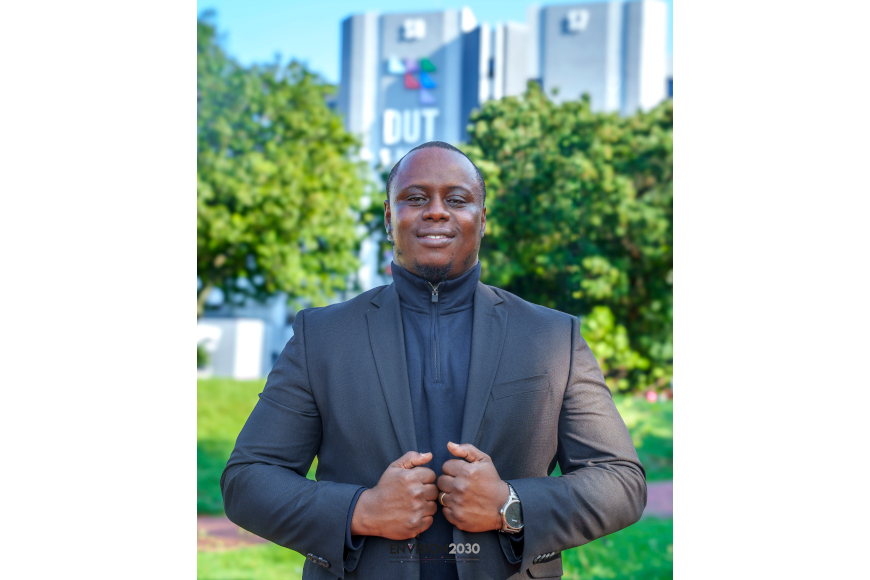
Pictured: Professor Oludolapo Akanni Olanrewaju.

Waheeda Peters
https://www.dut.ac.za/dut-professor-to-deliver-inaugural-lecture-on-energy-efficiency-and-intelligence/


RESEARCH NEWS: DR EMMANUEL KWEINOR TETTEH RECEIVES TWO PRESTIGIOUS AWARDS AT SANEDI


The South African National Energy Development Institute (SANEDI) celebrated outstanding contributions to the nation’s energy transition at its third Annual Energy Conference, held from 24 to 26 February 2026 at the Radisson Blu OR Tambo in Ekurhuleni.


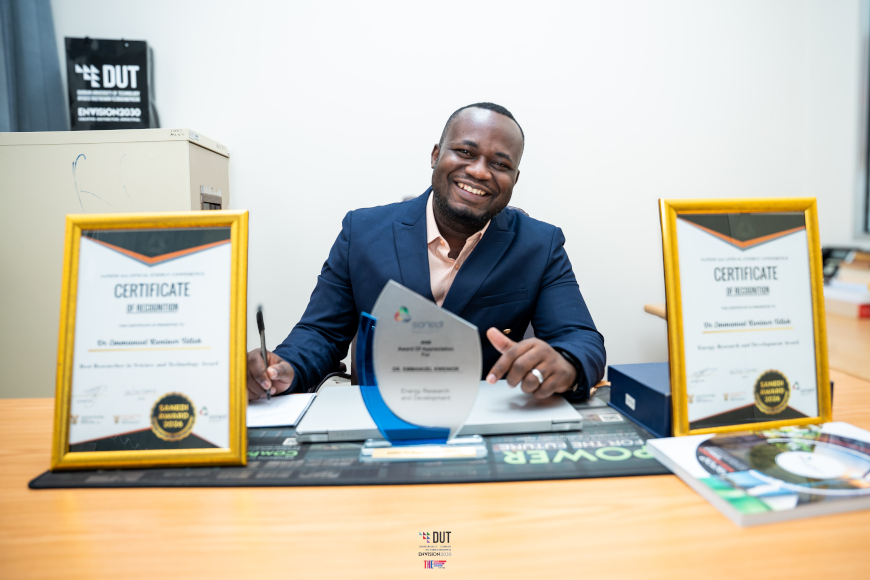
A highlight of the event was the recognition of Dr Emmanuel Kweinor Tetteh, an academic in the Department of Chemical Engineering at the Durban University of Technology (DUT) and Lead Researcher of the Green Engineering Research Group (GERG). Dr Tetteh received two of SANEDI’s highest honours: the Top Researcher in Energy Research and Development Award and the Best Researcher in Science and Technology Award.


The SANEDI Energy Awards annually celebrate individuals, organisations, and partnerships advancing South Africa’s transition toward a more sustainable, inclusive, and energy-secure future. Selection criteria emphasise measurable impact, innovation, research excellence, technology development, skills advancement, and alignment with national priorities for a just energy transition.


“This recognition reinforces DUT’s growing reputation as a driving force in sustainable energy research. The achievements of GERG, supported by SANEDI and HySA Infrastructure, continue to build a strong foundation for future national hydrogen initiatives, including expanded research programmes, advanced training, and multi-institutional collaborations. With this milestone, DUT strengthens its position as a leading hub for green hydrogen innovation in KwaZulu-Natal and across South Africa,” Dr Tetteh said.


Sharing his congratulatory remarks was Executive Dean (Acting) of the Faculty of Engineering and the Built Environment: Professor Molusiwa Stephan Ramabodu.


He indicated that the recognition of Dr Emmanuel Kweinor Tetteh’s receipt of two prestigious awards from the South African National Energy Development Institute is a remarkable achievement that reflects both individual excellence and the growing strength of research within the Faculty of Engineering and the Built Environment. “Being honoured with the Top Researcher in Energy Research and Development Award and the Best Researcher in Science and Technology Award demonstrates the significant impact of his work in advancing sustainable energy solutions, particularly in the field of green hydrogen,” he highlighted.


Further on, Prof Ramabodu emphasised that these awards highlight Dr Tetteh’s leadership in driving innovative research through the Green Engineering Research Group and his role as Principal Investigator of the DUT–SANEDI Green Hydrogen Partnership Initiative.


“His recognition also reflects the collaborative efforts of postgraduate students, co-researchers, and institutional partners who advance energy research. Overall, this achievement reinforces Durban University of Technology’s reputation as an institution committed to research excellence and meaningful contributions to South Africa’s sustainable energy transition,” added Prof Ramabodu.


Overall, Prof Ramabodu expressed that Dr Tetteh’s awards not only celebrate personal academic excellence but also strengthen the faculty’s research profile, innovation capacity, and contribution to national development priorities.


During his acceptance, Dr Tetteh dedicated the awards to the “hard-working and courageous GERG team,” particularly recognising postgraduate students driving hydrogen research: doctoral researcher Ms Ngobile Mkhize and master’s candidates Ms Nonhlanhla Ntombela, Ms Sanelisiwe Diestsela, and Mr Thashrik Pirthiraj, who also attended the conference and showcased their contributions to South Africa’s green hydrogen agenda.


Dr Tetteh also thanked key SANEDI and DUT partners for their support, including Ms Azwihangwisi Nemadandila, SANEDI Project Officer, co-researcher Sampson Mamphweli, Head of the DSTI Energy Secretariat, and Professor Sudesh Rathilal, whose collaboration has been central to strengthening research capacity within the faculty.


Reflecting on the honour, Dr Tetteh noted that the awards symbolise not only his personal journey but also the collective dedication of collaborators, postgraduate students, and national partners committed to the transformative potential of green hydrogen for South Africa.


SANEDI’s acknowledgement of Dr Tetteh celebrates his accomplishments while highlighting DUT’s commitment to ENVISION 2030 and advancing research excellence and innovation for a greener, more resilient energy future.


Pictured: Dr Emmanuel Kweinor Tetteh.
Story: Supplied

https://www.dut.ac.za/research-news-dr-emmanuel-kweinor-tetteh-receives-two-prestigious-awards-at-sanedi/


DUT’S GREEN ENGINEERING RESEARCH GROUP STRENGTHENS HYDROGEN RESEARCH TIES DURING STRATEGIC VISIT TO HYSA INFRASTRUCTURE AND CSIR


Durban University of Technology’s Green Engineering Research Group, GERG, recently visited Hydrogen South Africa, HySA, Infrastructure facilities to expand its hydrogen research partnerships and gain first-hand experience of advanced hydrogen technologies.


The tour, facilitated by the South African National Energy Development Institute, SANEDI, provided the DUT team with valuable exposure to advanced hydrogen research capabilities at North West University, Potchefstroom and the Council for Scientific and Industrial Research, Pretoria. HySA Infrastructure, jointly operated by NWU and CSIR, serves as a national centre of competence in hydrogen technologies and plays a key role in supporting South Africa’s growing hydrogen economy.


This engagement builds on the memorandum of agreement signed between SANEDI and DUT in August 2024, which established a strategic partnership to expand DUT’s hydrogen research capacity. As part of this collaboration, SANEDI committed R2 million in seed funding to support postgraduate research and the acquisition of specialised hydrogen technology. Strengthening research networks with HySA forms a critical pillar of this partnership. The visit offered DUT’s GERG team first-hand insight into the infrastructure and expertise HySA has developed over the past 15 years in hydrogen production, storage, materials development and renewable energy systems.


The DUT delegation, representing GERG, was led by Professor Sudesh Rathilal and accompanied by lead researcher Dr Emmanuel Tetteh, doctoral candidate Ms Ngobile Mkhize and master’s candidates Ms Nonhlanhla Ntombela and Ms Sanelisiwe Diestsela. During the visit, Dr Tetteh presented updates on hydrogen research initiatives, including pioneering work to produce green hydrogen from borehole water. He highlighted ongoing hydrogen projects and emphasised groundwater-based hydrogen production’s role in easing freshwater pressure and fostering inland hydrogen hubs. Professor Rathilal also expressed plans to acquire a locally developed proton exchange membrane electrolyser from HySA Infrastructure. The engagement provided GERG with insights into infrastructure development, water system management and the technical requirements for integrating a PEM electrolyser into DUT’s growing hydrogen research ecosystem.


Professor Sampson Mamphweli, Professor Sudesh Rathilal, Ms Ngobile Mkhize, Ms Sanelisiwe Diestsela, Ms Nonhlanhla Ntombela and Dr Emmanuel Tetteh on a facility tour at HySA in Potchefstroom.


Professor Sampson Mamphweli, Head of the Department of Science, Technology and Innovation, DSTI, Energy Secretariat, led the SANEDI delegation and emphasised the importance of collaboration rather than competition among institutions involved in hydrogen research. He noted that coordinated partnerships among universities, science councils and government entities are essential to drive the implementation of South Africa’s Hydrogen Society Roadmap and expand hydrogen hubs along the Hydrogen Valley corridor from Limpopo through Gauteng to KwaZulu-Natal. He further highlighted that NWU’s hydrogen activities help extend the Hydrogen Valley footprint into the North West province, strengthening the national hydrogen landscape.


Professor Dmitri Bessarabov, Director of HySA Infrastructure at NWU, welcomed DUT’s commitment to hydrogen innovation and expressed full support for future collaboration, including joint research funding applications and capacity building initiatives. He also pledged HySA’s support in offering specialised training opportunities for DUT postgraduate students and assisting with the installation, commissioning and maintenance of the planned bench-scale PEM electrolyser.


The visit concluded at CSIR in Pretoria, where the delegation was introduced to the council’s pioneering work on turquoise hydrogen production through biogas pyrolysis. The CSIR team, led by Mr Ashton Swartbooi, conducted a tour of advanced research facilities and committed to supporting DUT by analysing hydrogen-related research samples and engaging in further technical collaboration.


SANEDI project officer Ms Azwihangwisi Nemadandila expressed appreciation to both CSIR and HySA NWU teams for their hospitality, insightful engagements and openness in sharing research expertise and collaborative opportunities. She commended the professionalism and willingness of all partners to support DUT’s growing role in the national hydrogen ecosystem.


Both SANEDI and DUT extended sincere gratitude to the HySA teams for their guidance, support and commitment to strengthening national hydrogen research partnerships. The visit has laid a strong foundation for future research initiatives, capacity building programmes and long-term institutional collaborations, positioning DUT, through GERG in the Faculty of Engineering and the Built Environment, as a leading centre for green hydrogen research and innovation in KwaZulu-Natal and South Africa.


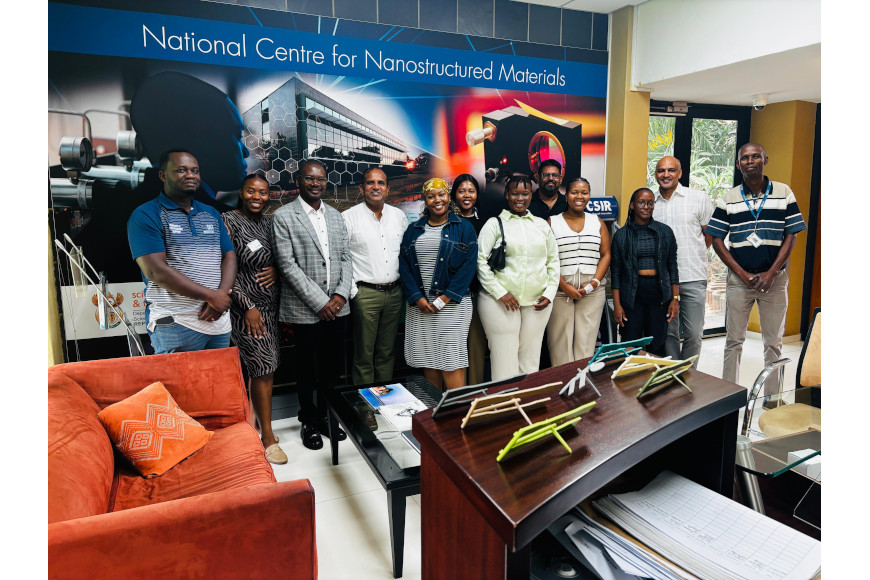
Pictured: DUT’s GERG and SANEDI team welcomed by Mr Ashton Swartbooi at CSIR in Pretoria.

Story: Supplied

https://www.dut.ac.za/duts-green-engineering-research-group-strengthens-hydrogen-research-ties-during-strategic-visit-to-hysa-infrastructure-and-csir/