
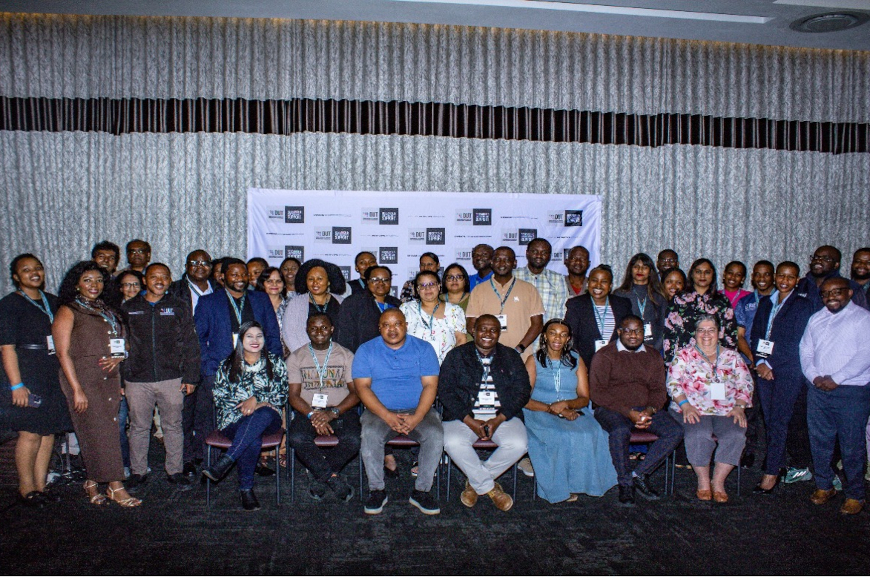
The Institutional Research Ethics Committee (IREC) recently convened a two-day Research Ethics, Integrity and Community Engagement Workshop as part of its strategic mandate to strengthen ethical governance, enhance research integrity, and ensure institutional compliance with national regulatory frameworks. The workshop aligns with DUT’s broader commitment to advancing high-quality, socially responsive research that is ethically sound, globally competitive, and locally relevant.
This intervention was designed not only to reinforce compliance with established ethical standards but to advance a more integrated and values-driven approach to research practice. It responded directly to emerging institutional and sectoral priorities, including the increasing complexity of research ethics oversight, the growing importance of data governance under the Protection of Personal Information Act (POPIA), and the ethical implications of rapidly evolving technologies such as artificial intelligence (AI). In addition, the workshop addressed the imperative to strengthen community-engaged research practices in line with national transformation and decolonisation agendas.
The workshop was structured to provide a coherent progression from foundational principles to applied ethical practice. Day one focused on research ethics and integrity, while Day two extended these principles into the domains of data governance and community engagement. Across both days, the programme combined theoretical grounding with practical application, supported by case-based learning and interactive engagement.
The opening sessions established a strong conceptual foundation by tracing the evolution of research ethics and situating current practices within globally recognised frameworks such as the Nuremberg Code, the Declaration of Helsinki, and the Belmont Report. This historical grounding reinforced the institutional responsibility to uphold ethical standards across all research disciplines.
The programme further engaged extensively with the core ethical principles of respect for persons, beneficence, non-maleficence, and justice, emphasising their application throughout the research lifecycle. Ethical conduct was positioned as central to institutional credibility, public trust, and the integrity of research outputs.
A key component of the programme focused on the role of Research Ethics Committees (RECs), particularly IREC, in providing oversight and safeguarding participant welfare. Participants were guided on the preparation of robust ethics applications, with emphasis on methodological clarity, ethical alignment, and comprehensive risk assessment. The workshop identified application quality as a critical determinant of review efficiency and highlighted the need for ongoing capacity development in this area.
A central contribution of the workshop was the reframing of research integrity as a values-based and systemic construct rather than a compliance-driven obligation. The programme emphasised that integrity is underpinned by core values such as honesty, accountability, transparency, and respect, and is collectively sustained by researchers, institutions, and governance structures.
The workshop addressed key risks to research integrity, including publication pressures, inadequate supervision, poor data management, and unethical authorship practices. It highlighted the need for institutional interventions that extend beyond policy compliance to include the strengthening of research culture, ethics training, and transparent mechanisms for addressing misconduct. This approach aligns with contemporary global perspectives that position integrity as foundational to research excellence and institutional reputation.
The workshop placed significant emphasis on ethical data management as an integral component of responsible research. The session on POPIA provided a focused examination of the legal and ethical requirements governing the processing of personal information, highlighting principles such as accountability, purpose specification, data minimisation, and security safeguards.
Importantly, the workshop underscored that data governance is not a discrete compliance activity but an ongoing institutional responsibility requiring sustained oversight and researcher accountability. This is particularly critical in the context of increasing data intensity in research and the handling of sensitive personal information. Strengthening institutional capacity in this area was identified as essential to mitigating legal and ethical risks.
The inclusion of artificial intelligence as a focal area reflects the institution’s responsiveness to emerging technological developments in research. The workshop examined both the opportunities and risks associated with AI tools such as ChatGPT, recognising their growing use in data analysis, literature synthesis, and research writing.
While acknowledging the efficiency gains offered by AI, the programme highlighted critical ethical concerns, including data privacy risks, algorithmic bias, lack of transparency, and the reliability of AI-generated outputs. Particular emphasis was placed on the issue of accountability, noting that responsibility for research outputs remains with the researcher.
The workshop reinforced the importance of responsible AI use, including verification of outputs, transparency in disclosure, and adherence to emerging publication standards. This component of the programme positions DUT to proactively engage with the ethical dimensions of digital transformation in research.
Day 2 of the workshop advanced a transformative approach to ethical research through a focused engagement on community participation. Grounded in the philosophy of Ubuntu, the programme emphasised that ethical research is inherently relational and must prioritise mutual respect, shared benefit, and meaningful collaboration.
The workshop critically examined traditional research approaches that position communities as passive subjects, highlighting associated risks such as tokenism, exploitation, and inequitable benefit distribution. In contrast, community-engaged research was presented as a more ethical and sustainable model that promotes shared ownership, cultural relevance, and social impact.
A key area of focus was the role of power dynamics in shaping research relationships. The workshop highlighted the need to address inequalities related to resource control, authorship, and decision-making authority, and introduced the concept of “helicopter research” as an example of unethical practice. Participants were encouraged to adopt participatory and co-creative research approaches that prioritise inclusivity and reciprocity.
The programme also engaged with the decolonisation of research ethics, emphasising the recognition of indigenous knowledge systems and the importance of knowledge justice. Within the South African context, cultural sensitivity was identified as a critical ethical consideration, particularly in relation to language, local belief systems, and diverse community contexts
Participant engagement on Day two was notably high, with feedback reflecting strong appreciation for the practical, contextually relevant, and reflective nature of the session. Attendees valued the emphasis on community-centred research and the critical examination of power, ethics, and responsibility.
Participants highlighted that the session deepened their understanding of ethical community engagement and challenged them to rethink traditional research approaches.
Participants further indicated that the session enhanced their ability to:
- Identify and address ethical risks in community-based research,
- Apply participatory and culturally responsive research approaches,
- Navigate complex ethical dilemmas, and
- Promote justice, equity, and inclusivity in research practices.
The workshop achieved its objective of strengthening ethical awareness, research integrity, and practical competence among participants. Feedback indicates a high level of engagement and strong appreciation for the workshop’s relevance and applicability. Participants reported increased confidence in preparing ethics applications, improved understanding of ethical risks, and enhanced capacity to engage responsibly with communities.
Importantly, the workshop contributed to fostering a more reflective and values-driven research culture, encouraging participants to move beyond procedural compliance toward more ethically grounded and socially responsive research practices. The integration of emerging topics such as AI and data governance further enhanced the strategic value of the programme.
The workshop highlights several strategic priorities for institutional consideration. There is a clear need to institutionalise and scale capacity-building initiatives in research ethics and integrity to ensure sustained impact across the university. Strengthening support mechanisms for ethics application development will be critical in improving efficiency and compliance within IREC processes.
Additionally, the increasing complexity of data governance and digital research environments necessitates ongoing training and institutional guidance, particularly in relation to POPIA compliance and the ethical use of AI. The promotion of community-engaged and participatory research approaches should be prioritised as part of the university’s transformation agenda, supported by practical tools and frameworks for implementation.
Finally, continued investment in fostering a positive research culture grounded in integrity, accountability, and ethical responsibility will be essential in maintaining institutional credibility and advancing research excellence.
The Research Ethics, Integrity and Community Engagement Workshop represents a strategically significant intervention in advancing DUT’s ethical research agenda. By integrating foundational principles with emerging and applied dimensions of research practice, the workshop has strengthened institutional capacity to navigate complex ethical challenges in a rapidly evolving research landscape.
The programme reinforces the understanding that ethical research is not limited to compliance but is central to the integrity, quality, and societal impact of research. Sustained investment in such initiatives will be critical in positioning DUT as a leader in ethical, inclusive, and socially responsive research.
Pictured: Attendees at the Research Ethics, Integrity and Community Engagement Workshop.
Bongeka Ndaba


