RESEARCH
ADVANCEMENT

SDG 9 Industry, innovation and infrastructure


2026

RESEARCH DRIVES DUT’S RISE IN THE 2027 WORLD UNIVERSITY RANKINGS


The Durban University of Technology (DUT) has made a significant improvement in the Times Higher Education (THE) World University Rankings 2027, moving up 209 places globally and strengthening its position among universities worldwide and being ranked in the Top 10 in South Africa.


DUT is now ranked in the 1201 to 1400 band, improving from the 1501+ band in the previous ranking. The movement places DUT at number nine amongst all South African universities.


DUT has also recorded a 5-point improvement in its overall score, with research performance accounting for 78% of the gain.


The result comes as DUT continues to strengthen its research and innovation profile. It follows the University’s third consecutive National Research Foundation (NRF) Focused Research Advancement Award in 2026, where DUT emerged as the top achiever among Universities of Technology. The award recognises sustained growth in research productivity and research support over a five-year evaluation period, including doctoral staff capacity, postgraduate outputs, research productivity, NRF investment and growth in NRF-rated researchers.


DUT’s research capacity has also expanded significantly. The University now has 11 South African Research Chairs Initiative (SARChI) Chairs, covering areas including sustainable protein innovation, wastewater treatment and reuse, smart manufacturing, inclusive entrepreneurship, social justice and education, bipolarization, digital transformation and sustainable construction and infrastructure development.


The University will further strengthen this research ecosystem today, 30 September 2026, with the official launch of 18 new Research Institutes alongside its 11 SARChI Chairs.


The launch event brings together DUT researchers, academic leaders, industry partners, government representatives, students and other stakeholders. The new Research Institutes will provide platforms for collaboration across disciplines and support research that responds to regional, national and global challenges.


The ranking improvement comes against this backdrop of continued investment in research and innovation. Research metrics contributed 3.9 points to the University’s overall improvement, accounting for 78% of its total score gain. Research Quality increased by 2.3 points, while Research Environment improved by 1.6 points.


One of the most notable improvements was in citation impact. DUT’s Citation Impact Score increased from 30.1 in 2026 to 36.2 in 2027, an improvement of 6.1 points. The University’s Field Weighted Citation Impact stood at 1.15, compared with a world median of 1.24.


Research productivity also emerged as a key contributor, with DUT recording a score of 65.8 and an improvement of 1.4 points.


DUT Deputy Vice-Chancellor: Research, Innovation and Engagement, Professor Fulufhelo Nemavhola, said the ranking movement is an encouraging indication of the progress being made in research and innovation at the University.


“The positive movement in the Times Higher Education World University Rankings is an encouraging indication of the progress being made in research and innovation at DUT. The fact that research metrics contributed 78% of our overall score improvement is particularly significant and reflects the work of our researchers, postgraduate students, supervisors, faculties, Research Institutes, SARChI Chairs and professional support teams,” said Professor Nemavhola.


He added, “Our three consecutive NRF Focused Research Advancement Awards, the growth of our SARChI Chairs and the establishment of our new Research Institutes are important milestones in strengthening our research capacity. As we continue to implement ENVISION2030, we will strive to focus on research excellence, developing the next generation of researchers and building partnerships that increase the impact and visibility of our work.”


The latest results also show progress beyond research. Teaching increased by 1.0 point, while the Industry pillar improved by 0.3 points. DUT also recorded scores above the world median in several individual metrics, including institutional income, international staff, research productivity, international co-authorship, doctorate staff ratio, research influence and industry income.


The 2027 ranking reflects the progress being made in strengthening DUT’s research and innovation capacity, while highlighting areas where further work is needed. The University’s global ranking movement, continued NRF recognition, 11 SARChI Chairs and the launch of 18 new Research Institutes mark an important period in the growth of its research profile.


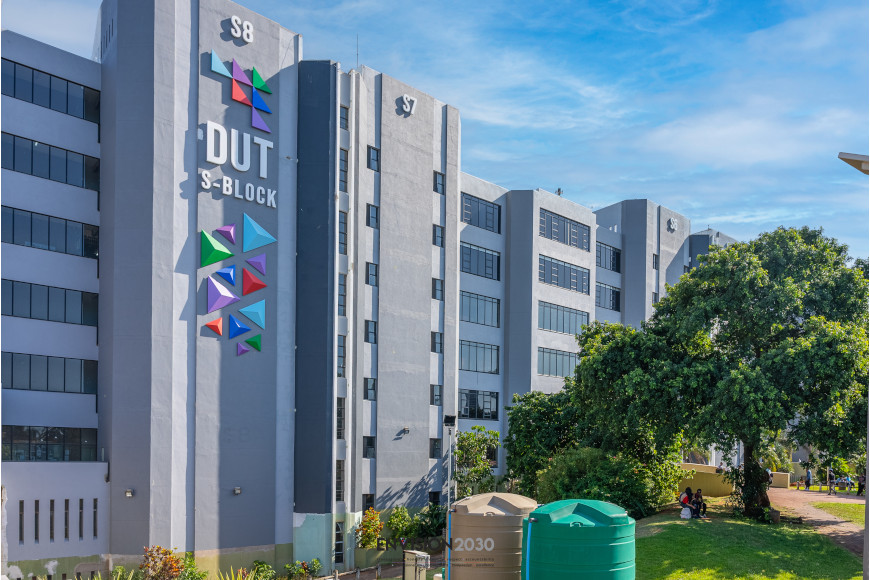
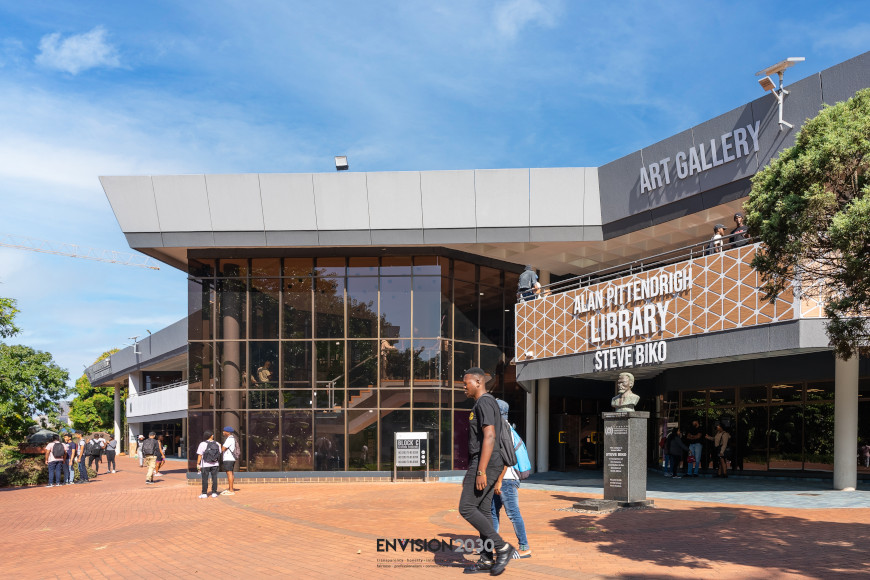
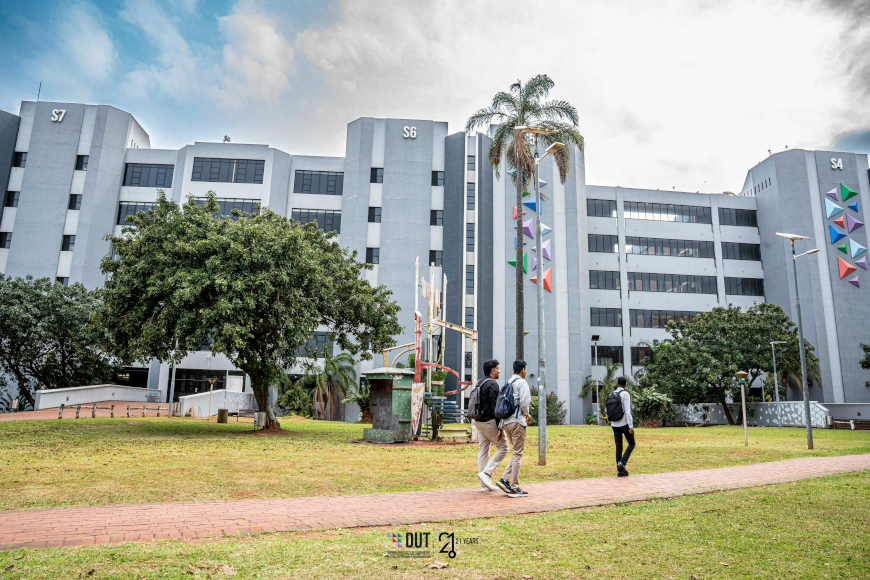
Pictured: DUT Steve Biko Campus.

Tiyani Mboweni


DUT AWARDED EIGHT SARChI CHAIRS TO STRENGTHEN RESEARCH CAPACITY IN SOUTH AFRICA


The Durban University of Technology (DUT) has been awarded eight South African Research Chairs Initiative (SARChI) Chairs by the National Research Foundation (NRF), under the Department of Science, Technology and Innovation (DSTI) Decadal Plan Aligned Research Chairs for Historically Disadvantaged Universities, Universities of Technology, and Emerging Universities.


The eight DUT Decadal Plan Aligned Research Chairs (SARChI Chairs) form part of the 41 new Chairs that were officially launched by the Minister of Science, Technology and Innovation, Professor Blade Nzimande at the National Research Foundation (NRF) Building in Pretoria on Thursday, 16 April 2026. The new cohort of 41 Research Chairs were unveiled to strengthen research capacity, advance innovation, and support the development of critical skills across the country’s public universities.


The eight Research Chairs at DUT consists of Professor Eric Oscar Amonsou (Chair in Sustainable Protein Innovation), Professor Sheena Kumari Kuttan Pillai (Chair in Wastewater treatment and reuse), Professor Rendani Wilson Maladzhi(Chair in Smart Manufacturing Technologies), Professor Pfano Mashau (Chair in Future-Fit and Inclusive Entrepreneurship for a Pan-African Society), Professor Tabitha Grace Mukeredzi (Chair in Education, Social Justice and Society), Professor Kugen Permaul (Chair in Biovalorization), Professor Olive Stumke (Chair in Digital Transformation, Governance, SME Innovation, Education and Skills) and Professor Molusiwa Stephan Ramabodu (Chair in Sustainable Construction and Infrastructure Development).


Deputy Vice-Chancellor: Research, Innovation and Engagement at DUT, Professor Fulufhelo Nemavhola, who attended the launch event, shared that securing eight Research Chairs marked a significant achievement for DUT, reflecting the institution’s growing research excellence and commitment to addressing societal challenges through impactful research, in line with the university’s ENVISION2030 strategy.


“These SARChI Chairs will play a critical role in advancing our strategic research priorities, strengthening postgraduate training and nurturing the next generation of scholars. We are proud of this recognition and remain fully committed to building a vibrant and impactful research ecosystem at DUT. And these national Research Chairs are aligned with our recent implementation of the 18 research institutes at DUT,” reiterated Prof Nemavhola.


Speaking at the launch, the Minister of Science, Technology and Innovation, Professor Blade Nzimande, emphasised that the aim of the appointment of the 41 DSTI Decadal Plan Aligned Research Chairs was to expand the footprint of the NRF’s Research Chairs at historically disadvantaged institutions, universities of technology and emerging universities.


This Minister added, “We also expect them to be deliberate about the development and mentoring of young, black and women researchers. You have a duty to ensure that the knowledge that is produced by our public universities enables our strategic mission of placing science, technology, and innovation at the centre of government, education, industry, and society. Congratulations to all our new Research Chair holders. I wish you well as you undertake this significant role.”


Sharing similar sentiments, the National Research Foundation (NRF) Acting CEO, Dr Angus Paterson said the new Research Chairs carry with them the responsibility of building research communities, mentoring the next generation, and producing knowledge that is both excellent and socially responsive. He indicated that the impact of their work will extend well beyond their disciplines; it will be felt within institutions, communities, and the broader society they serve.


“What we celebrate today is not simply the awarding of research chairs. We celebrate the strengthening of institutional research ecosystems, the creation of new pathways for emerging scholars, and the positioning of universities across the country as meaningful contributors to national development priorities,” added Dr Paterson.


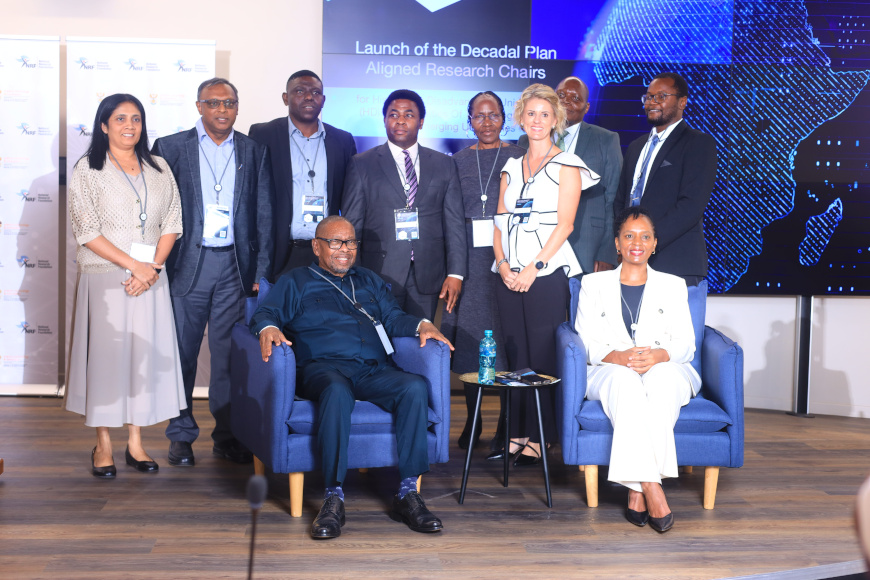
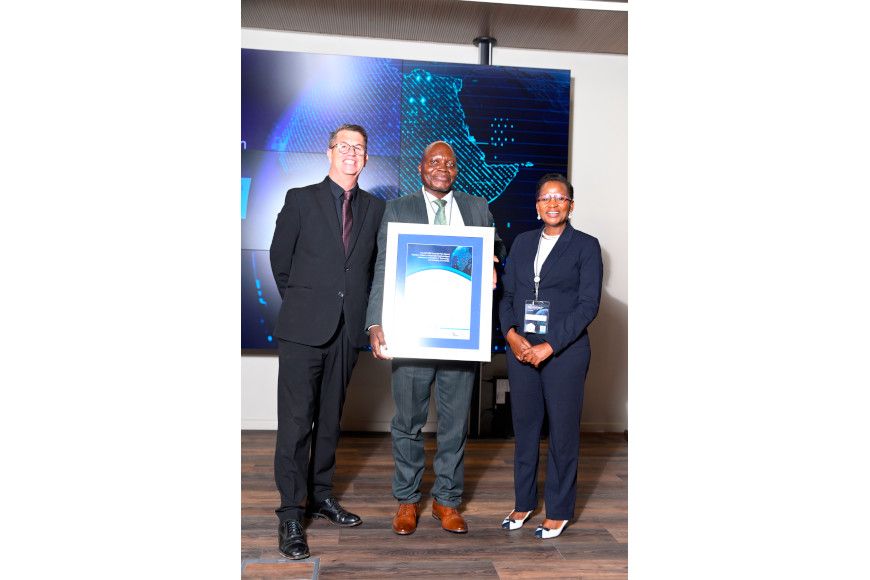
Pictured: The newly appointed DUT Research Chairs with Deputy Vice-Chancellor: Research, Innovation and Engagement at DUT, Professor Fulufhelo Nemavhola, along with the Minister of Science, Technology and Innovation, Prof Blade Nzimande and NRF Board Member, Ms Funeka Khumalo, at the prestigious event.


Photo credit: National Research Foundation (NRF).

Simangele Zuma/Waheeda Peters

https://www.dut.ac.za/dut-awarded-eight-sarchi-chairs-to-strengthen-research-capacity-in-south-africa/


DUT ESTABLISHES 18 RESEARCH INSTITUTES TO STRENGTHEN TRANSDISCIPLINARY RESEARCH AND SOCIETAL IMPACT


The Durban University of Technology (DUT) has taken a decisive step towards advancing high-impact, interdisciplinary research with the establishment of 18 new Research Institutes, effective from 2026. This landmark initiative underscores the University’s commitment to strengthening its research profile and translating knowledge into innovation, entrepreneurship and meaningful societal impact, in line with DUT’s ENVISION2030 strategy.


The establishment of the new research institutes was approved by the DUT Council under the leadership of Mr Wiseman Madinane and fully supported and approved by the DUT Senate. The research institutes form part of DUT’s Disruptive Projects Programme, which seeks to fast-track high-impact initiatives that position the University at the forefront of technological, social and economic innovation.


Building on its existing research capacity, DUT already operates two established research institutes, most notably the Institute of Wastewater Technology (IWWT) and the Institute of Systems Science (ISS), which have demonstrated the University’s ability to deliver impactful, applied research. IWWT addresses critical environmental and water sustainability challenges, while ISS tackles complex societal challenges through interdisciplinary approaches. Together, they illustrate DUT’s commitment to research excellence, innovation, societal impact, and global competitiveness.


DUT Vice-Chancellor and Principal, Professor Thandwa Mthembu.

This milestone has been achieved under the strategic and visionary leadership of the Vice-Chancellor and Principal, Professor Thandwa Mthembu, with oversight from the DUT Council.


Providing insight into the initiative, Deputy Vice-Chancellor: Research, Innovation and Engagement, Professor Fulufhelo Nemavhola, said: “The establishment of 18 research institutes is a strategic acceleration to strengthen interdisciplinary research, respond to real societal and economic challenges, and enhance DUT’s national and global competitiveness.”


He further highlighted the critical role the new research institutes will play in developing the next generation of researchers. “Through these research institutes, DUT is creating structured platforms for emerging and established researchers, postdoctoral fellows and postgraduate students to thrive, while ensuring that research excellence goes hand in hand with real-world impact,” reiterated Prof Nemavhola.


The 18 research institutes include the Institute of Hydrogen Technology; Institute for Innovation and Entrepreneurship; Advanced Grid Technology Research Institute (conversion); Smart Agriculture and Food Security Institute; Institute for Advanced Manufacturing and Robotics; Institute for Societal and Technological Advancement and Impact; Institute of Ocean Engineering and Marine Technology; Urban Planning and Smart Cities Institute (conversion); DUT Health Devices Innovation Institute; Institute of Micro and Nano Systems (IMiNaS); Institute for the Future of Work and Education; Institute for Environmental and Climate Change Research; Indigenous Food Research Institute (IFRi); Biotechnology and Health Innovation Institute; Space Engineering and Exploration Institute; Institute for Data Science and Artificial Intelligence; BRICS Research Institute; and the Biocatalyst Research Institute (conversion).


Deputy Vice-Chancellor: Research, Innovation and Engagement, Professor Fulufhelo Nemavhola.

Prof Nemavhola explained that the rollout of the institutes will follow a phased implementation approach in line with institutional policy and governance frameworks.


In 2026, DUT will implement five institutes as the first wave: Hydrogen Technology; Innovation and Entrepreneurship; Health Devices Innovation; Data Science and Artificial Intelligence; and Urban Planning and Smart Cities. One existing centre will be converted into a full institute, bringing the total number of institutes implemented in the year to six.


“The first-wave research institutes are anchored in the defining questions of our time; how we power our economies sustainably, harness digital transformation, advance health innovation, grow inclusive enterprises and build cities that can endure,” said Prof Nemavhola. “They signal a deliberate shift in how universities respond to global change, not as observers but as active partners in shaping solutions.” He added, “What sets these institutes apart is not only the technology they will generate but the way they are designed to work, across disciplines, in partnership with industry and communities and with a clear line of sight from discovery to implementation. By accelerating the journey from research to real-world impact, they position DUT as a catalyst for innovation that can be adopted, adapted and scaled where it matters most.”


The research institute programme is designed to deliver direct societal and economic value through innovation, enterprise creation, improved systems, and practical solutions deployable beyond the University. The framework prioritises community benefit, economic development, and job creation as core measures of impact.


For KwaZulu-Natal and South Africa, this initiative translates into research that delivers tangible improvements in areas such as health technologies, food security, energy resilience, and smarter, more sustainable cities.


Pictured: DUT Steve Biko campus in Durban.


DUT Vice-Chancellor and Principal, Professor Thandwa Mthembu.

Simangele Zuma

https://www.dut.ac.za/dut-establishes-18-research-institutes-to-strengthen-transdisciplinary-research-and-societal-impact/


DUT SHINES SPOTLIGHT ON RESEARCH EXPANSION, INNOVATION AND GLOBAL EXCELLENCE


The Durban University of Technology (DUT) has strengthened its research and innovation agenda with the launch of 18 Research Institutes, the recognition of 11 South African Research Chairs Initiative (SARChI) Chairs and further gains in global sustainability rankings.


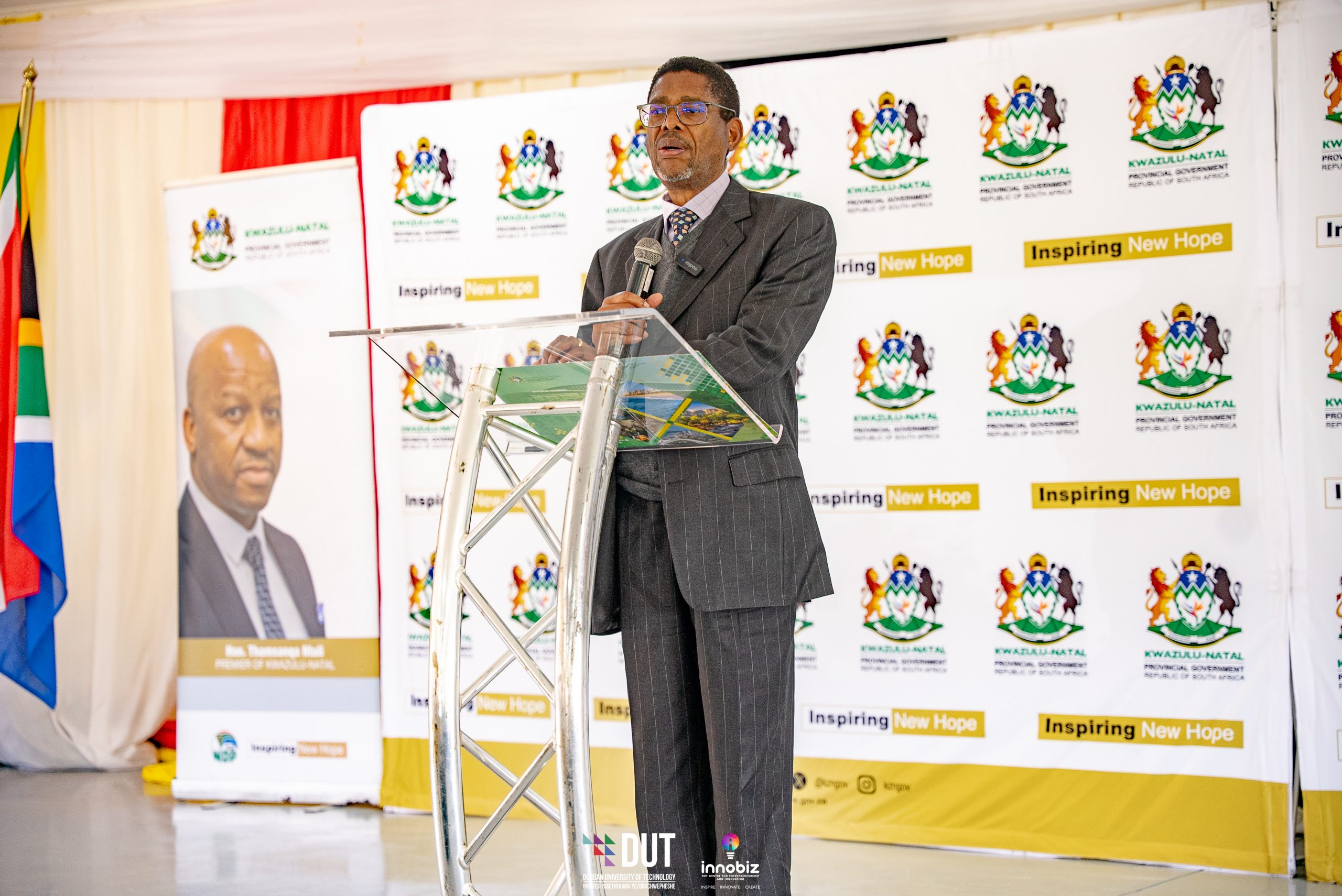
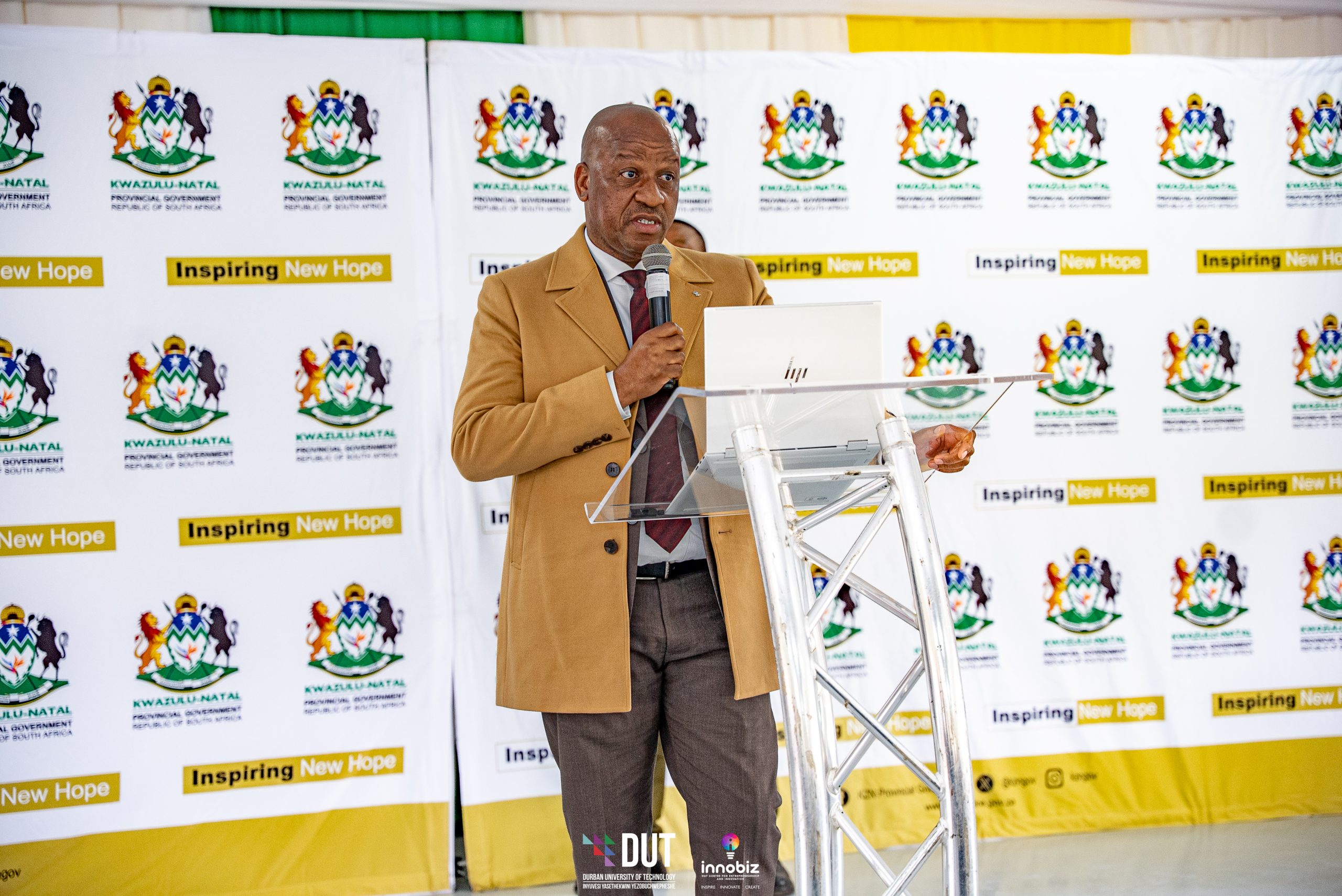
The developments were highlighted at an event held at the Durban International Convention Centre (ICC) on Wednesday, 30 September 2026, which brought together DUT researchers, academics, industry partners, government representatives, students and other stakeholders.


The event provided an opportunity for the University to reflect on its progress in research and innovation, while setting its sights on the next phase of its ENVISION2030 strategy.


Welcoming guests, Professor Vusi Gumede, Deputy Vice-Chancellor: Teaching and Learning at DUT, said the occasion was about more than celebrating achievements.


“This milestone is the result of commitment, hard work, foresight and a shared belief in ENVISION2030. Undoubtedly, we are entering the transformed phase (2027–2030) as we conclude the upended phase. Progress does not happen overnight. Shared responsibility and shared accountability, the critical aspects of the DUT personality, have helped ensure that our institutional character allows us to do things the DUT Way,” said Prof Gumede.


He acknowledged the contribution of DUT Vice-Chancellor and Principal, Professor Thandwa Mthembu, the University Council and the leadership team in advancing the institution’s work.


Prof Gumede also announced DUT’s improved position in the Times Higher Education World University Rankings 2027, released on Wednesday. The University moved from 13th to ninth nationally and climbed more than 300 places globally, placing it in the 1201–1400 band.


Professor Fulufhelo Nemavhola, Deputy Vice-Chancellor: Research, Innovation and Engagement at DUT.

For Professor Fulufhelo Nemavhola, Deputy Vice-Chancellor: Research, Innovation and Engagement, the growth in research at DUT presents an opportunity to do more.


Delivering his address, “The Architecture of Becoming Through Epistemic Imagination and the Craft of Tomorrow,” Prof Nemavhola called on academics and researchers to consider how the University’s expanding research capacity can be translated into solutions that make a difference in society.


DUT’s research output has grown significantly over the past decade. Research publications increased to 995 in 2025, while research outputs for 2025 was 1355. The number of NRF-rated researchers also increased from 26 to 72 between 2016 and 2025.


Prof Nemavhola credited DUT researchers and postgraduate students for contributing to this growth and encouraged them to continue pursuing research that responds to real challenges.


One example is the development of an amadumbe-based juice with potential applications in diabetes management, highlighting how research can move beyond academic outputs and towards practical innovation.


He said he looked forward to seeing the newly established Research Institutes develop strong research programmes and produce tangible results by 2030.


DUT’s growing international profile was also evident in its performance in the 2026 Times Higher Education Sustainability Impact Rankings.


Presenting the University’s results, Dr Pinkie Ntola, Interim Director of Technology Transfer and Innovation at DUT, noted that DUT had moved into the 401–600 global band, from the 1001–1500+ band in 2025.


The University also placed 60th globally for Sustainable Development Goal (SDG) 1: No Poverty.


The event further recognised the contribution of DUT’s researchers through the introduction of 11 newly recognised SARChI Chairs.


Dr Nomcebo Mthombeni, Interim Director of Research and Postgraduate Support at DUT, introduced the Chairs, who were subsequently honoured by Prof Mthembu and Prof Nemavhola.


The SARChI Chairs represent DUT among South Africa’s 26 universities and contribute to strengthening the University’s research profile in their respective fields.


Dr Msizi Myeza, Chief Executive Officer of the Council for the Built Environment (CBE).

Delivering the keynote address, Dr Msizi Myeza, Chief Executive Officer of the Council for the Built Environment (CBE) and a DUT alumnus, turned the focus to the broader development challenges facing South Africa.


Speaking under the theme “Roadmap Towards a Better Life,” Dr Myeza reflected on the National Development Plan (NDP) 2030 and the need to address poverty, inequality and unemployment.


“The NDP remains a vital national framework through which we can continue to confront the intractable and interconnected challenges of poverty, inequality and unemployment. At the same time, our cities, towns and peri-urban villages are urbanising rapidly, placing increasing pressure on infrastructure, housing, public services, transport systems, environmental resources and local economies,” he said.


Dr Myeza said institutions such as research centres and centres of excellence have an important role to play in providing the evidence needed to inform decisions and respond to complex developmental challenges.


“In an environment characterised by uncertainty, complexity and competing priorities, reliable evidence must guide our choices. We must engage with our future from an intelligence standpoint. We must draw on credible data, rigorous analysis, professional expertise and practical experience. Evidence-based decision-making is not simply a technical requirement; it is a responsibility,” he said.


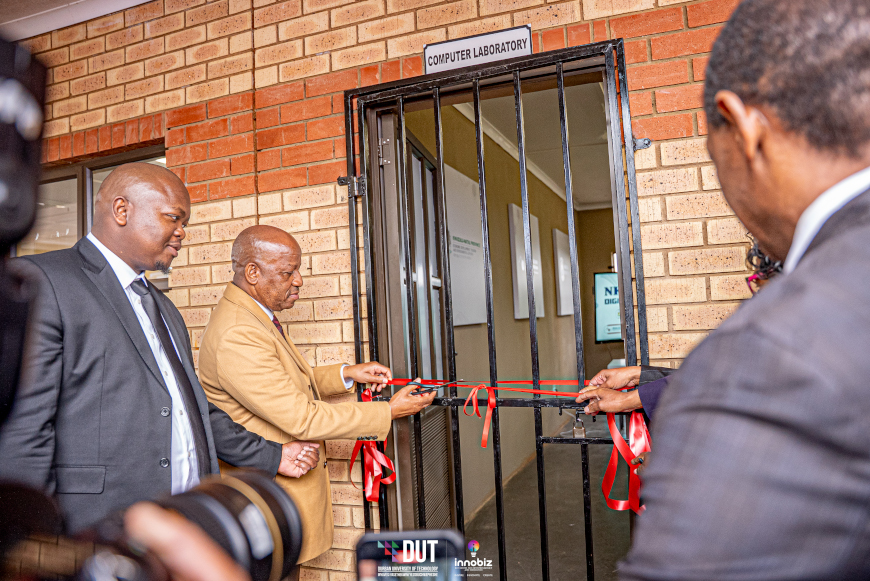
A major moment of the programme was the launch of DUT’s 18 Research Institutes by Prof Mthembu.


The Institutes bring together researchers from different areas of the University to work on research that responds to regional, national and global challenges. They are expected to strengthen collaboration, build research capacity and support the development of solutions with practical and societal value.


The programme was directed by Mr Alan Khan, Senior Director of Corporate Affairs, and Dr Ntola.


The three toastmasters were Mr Siboniso Shabalala, Chief Financial Officer; Prof Ndumiso Ngidi, Advisor and Executive for Institutional Review in the Office of the Vice-Chancellor and Principal; and Dr Matheakuena Mohale, Interim Deputy Vice-Chancellor: People and Operations.


Closing the programme, DUT Registrar Dr Maditsane Nkonoane thanked the speakers, researchers, guests and the broader DUT community for their contribution to the event.


“This is indeed a milestone moment for DUT. We did not just launch Research Institutes; we launched a new chapter in our ENVISION2030 strategy. A chapter that declares that DUT is not just a university of technology, but a university that produces knowledge, that impacts society, and that creates solutions for our city, our province, and our continent,” said Dr Nkonoane.


The launch marks another step in DUT’s efforts to strengthen its research ecosystem and position research, innovation and knowledge production at the centre of its institutional development.


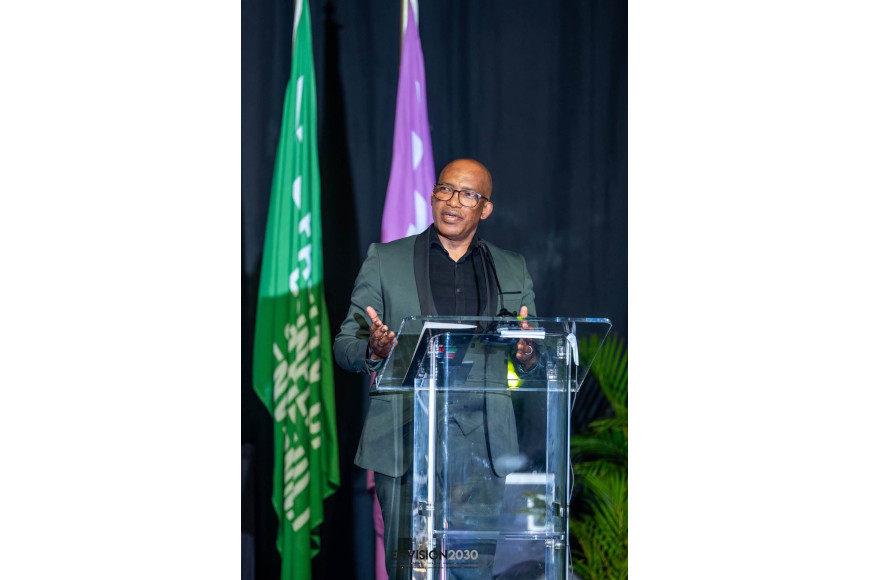
Pictured: DUT Vice-Chancellor and Principal, Professor Thandwa Mthembu  launching the new 18 Research Institutes.


Photographer: S’bonelo Dlamini

Simangele Zuma

https://www.dut.ac.za/dut-shines-spotlight-on-research-expansion-innovation-and-global-excellence/


DUT BUSINESS SCHOOL LAUNCHES INTERNATIONAL PUBLICATION EXPLORING AI-ASSISTED MARKET RESEARCH FOR SMES


Durban University of Technology (DUT) has strengthened its international research collaboration and focus on entrepreneurship and innovation with the launch of a new international publication exploring how artificial intelligence can make market research more accessible and practical for Small and Medium-sized Enterprises (SMEs).


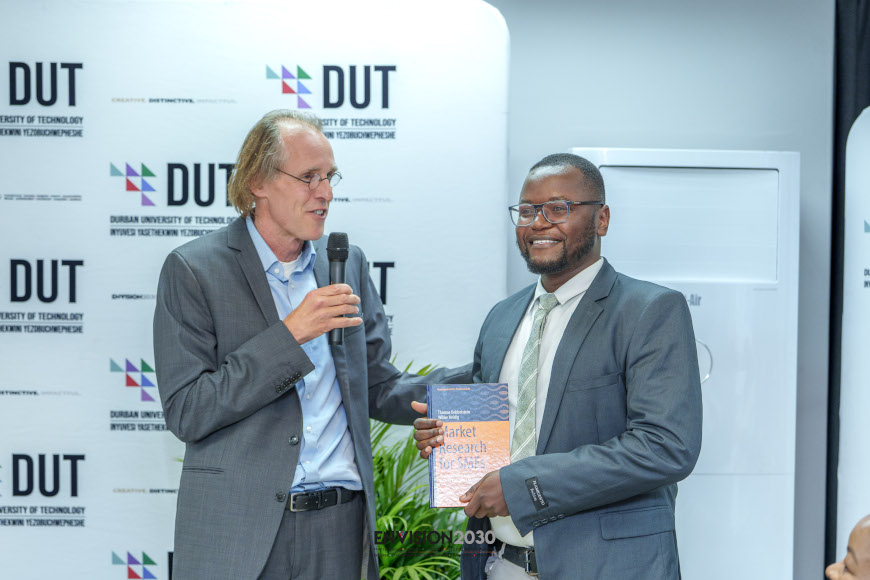
The book, Market Research for SMEs: Understanding Customers and Markets with AI-Enhanced Methods, co-authored by DUT Honorary Research Professors Thomas Dobbelstein and Wibke Heidig, was launched by the DUT Business School on 19 August 2026 at the BM Patel Library Conference Centre at the ML Sultan Campus.


Both authors are Honorary Research Professors at DUT, reflecting an established academic relationship with the university that creates opportunities for knowledge exchange, research collaboration and engagement with DUT students and the broader academic community. Professor Dobbelstein is from DHBW Ravensburg in Germany, while Professor Heidig is from Albstadt-Sigmaringen University in Germany.


Professor Dobbelstein’s connection with DUT has also included engagement with entrepreneurs and postgraduate students, providing a practical link between the international research underpinning the publication and the university’s focus on entrepreneurship, innovation and applied learning. His involvement in the book and its launch demonstrates how DUT’s international academic relationships can contribute directly to the university’s teaching, research and engagement priorities.


The launch brought this international collaboration into the DUT environment, providing academics, students and members of the university community with an opportunity to engage directly with the authors and explore the relevance of AI-assisted market research to business and entrepreneurship.


The programme featured a 30-minute panel discussion moderated by Professor Pfano Mashau. Professor Heidig joined the discussion virtually, while Professor Dobbelstein participated in person.


The panel placed particular emphasis on the practical applications of generative artificial intelligence in market research. Professor Heidig highlighted tools such as ChatGPT and Gemini and explained how they can assist SMEs with various stages of the research process, including information gathering, questionnaire development, qualitative analysis and reporting.


For SMEs, which may not always have access to dedicated market research teams or extensive resources, such technologies can provide opportunities to gather and interpret information more efficiently. However, the discussion also emphasised the importance of using AI responsibly and critically rather than treating it as a substitute for sound research practices.


Professor Heidig also reflected on the evolution of the publication, which developed from an earlier guide focused on the German-speaking market into an international English-language edition. The expanded publication incorporates examples and perspectives intended to make the material relevant across different markets and cultural contexts.


Professor Dobbelstein explained that the international edition was influenced by his close connection with DUT and his engagement with entrepreneurs and postgraduate students.


He said entrepreneurs need a clear understanding of their markets, particularly who their customers are, what they want and how their needs are changing. At the same time, students require practical and academically sound methodologies that allow them to apply their knowledge to real-world business challenges.


The publication was consequently developed as a concise and accessible guide that can support both entrepreneurs and students in navigating market research.


Professor Dobbelstein also highlighted the growing importance of generative AI and the need for students and entrepreneurs to understand how these technologies can be incorporated responsibly into research and business decision-making.


The discussion was further enriched by reflections from Mr Solomon Nyamurima and Ms Nontokozo Ngcobo, who shared their perspectives on the publication and its relevance to the DUT community.


In attendance was the President of the Baden-Württemberg Cooperative State University, Professor Dr Watty Robert, who reaffirmed his full support for the longstanding partnership between the two institutions. He is currently in South Africa participating in DUT International Week, which coincided with the book launch. During the event, he expressed his satisfaction with the collaboration between DUT and his institution and conveyed his excitement at witnessing the tangible outcomes of the Memorandum of Understanding (MoU) in action during his visit.


Participants were then given an opportunity to engage with the speakers during a question-and-answer session, allowing the discussion to move from the theoretical application of AI to practical considerations around market research, entrepreneurship and learning.


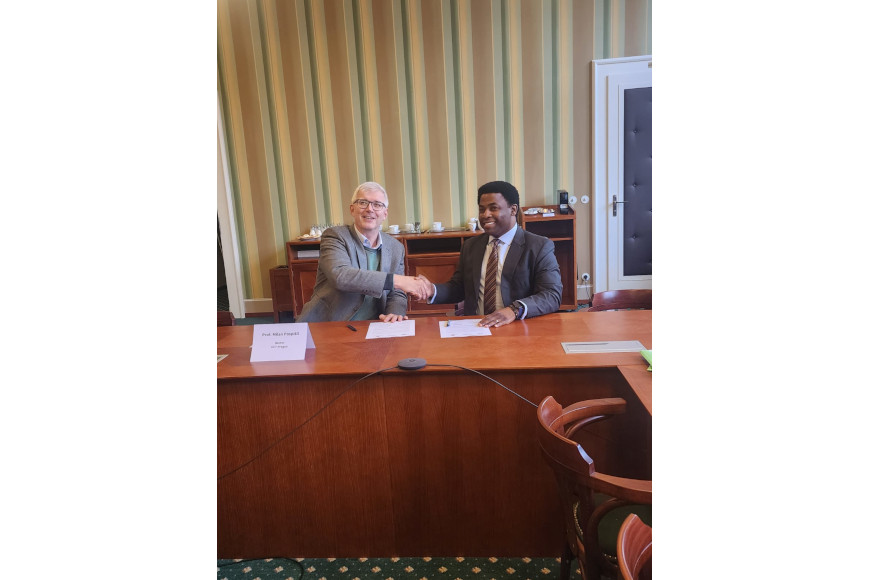
A significant moment of the evening was the official launch of the publication, followed by the ceremonial presentation of a copy to the DUT Library. Professor Dobbelstein formally handed the book to Library Director Dr Malefetjane Phaladi, marking its addition to the university’s library collection.


The publication is also accessible to DUT students through the university library as part of the Springer business package, providing students and researchers with an additional resource on entrepreneurship, market research, business and the application of artificial intelligence.


The launch demonstrated the value of DUT’s international academic partnerships in bringing global expertise and contemporary research into the university environment. Through the involvement of its Honorary Research Professors, DUT is creating opportunities for students and academics to engage with international scholarship while connecting research to practical challenges facing businesses and entrepreneurs.


It also highlighted the growing importance of artificial intelligence in business and the potential for AI-assisted research methods to help SMEs make more informed decisions about their customers, markets and growth opportunities.


For DUT, the publication represents more than the launch of a new academic resource. It is an example of how international research relationships can translate into tangible opportunities for teaching, entrepreneurship, knowledge exchange and research collaboration, while contributing to the university’s international profile.


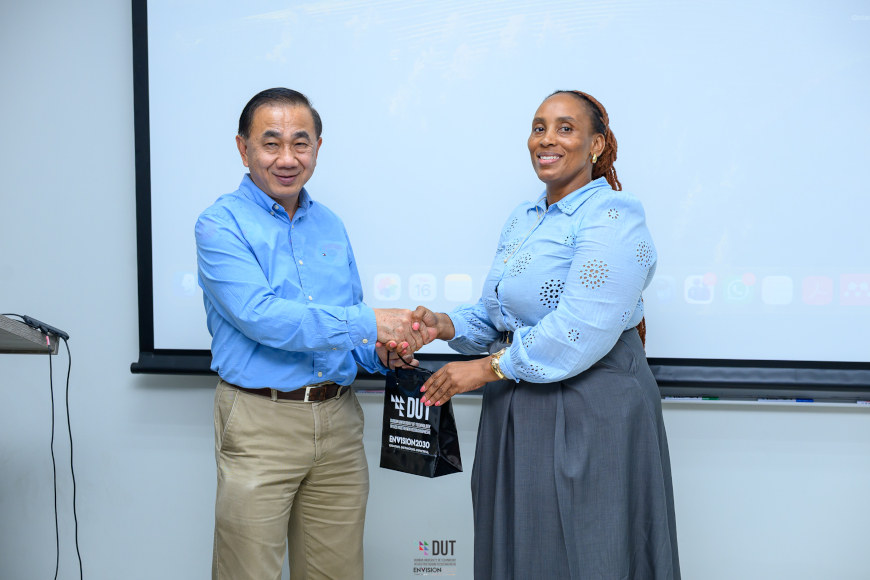
Pictured: Co-author, DUT Honorary Research Professor Thomas Dobbelstein with DUT Business School Director, Professor Pfano Mashau at the book launch.


Photographer: S’bonelo Dlamini

Luyanda Mlaba

https://www.dut.ac.za/dut-business-school-launches-international-publication-exploring-ai-assisted-market-research-for-smes/


RESEARCH NEWS: DUT PROFESSOR RENDANI MALADZHI APPOINTED AS CHAIR IN SMART AND SUSTAINABLE MANUFACTURING TECHNOLOGIES


Positioning Durban University of Technology (DUT) as a national leader in advanced manufacturing research, innovation, and skills development was the recent appointment of Professor Rendani Maladzhi as the Chair in Smart and Sustainable Manufacturing Technologies by the National Research Foundation (NRF).


Prof Maladzhi, Associate Professor and Head of the Department of Mechanical Engineering in the Faculty of Engineering and the Built Environment at DUT, is among eight South African Research Chairs Initiative (SARChI) Chairs awarded to DUT by the NRF under the Department of Science, Technology and Innovation (DSTI) Decadal Plan Aligned Research Chairs for Historically Disadvantaged Universities, Universities of Technology, and Emerging Universities.


The Chair further strengthens DUT’s expanding research and innovation footprint, following the university’s recent establishment of 18 new research institutes aimed at accelerating high impact and solutions driven research across strategic sectors including advanced manufacturing, artificial intelligence, climate resilience, and smart technologies.


Professor Maladzhi’s research journey has been shaped by a long standing commitment to ensuring that engineering research addresses real industrial challenges and delivers tangible value to society, particularly for Small and Medium Enterprises (SMEs). His interest in SME focused manufacturing research began during his Master’s studies in Mechanical Engineering at the Cape Peninsula University of Technology (CPUT) in 2007, where he researched new product development in manufacturing SMEs. During this work, he observed that many SME owners and managers were technically skilled but heavily reliant on manual and traditional production methods.


Concerns about job losses, combined with deeply rooted operational practices, often resulted in resistance to technology adoption. This resistance limited innovation, efficiency, and competitiveness not because SMEs lacked potential, but because they lacked access to appropriate support and guidance. These early experiences shaped his doctoral research in 2009, which focused on innovation management and leadership within SMEs. His findings showed that many enterprises struggled not due to a lack of technical ability, but because of entrenched leadership mindsets that resisted change. This insight shifted his research focus towards demonstrating that responsible technology adoption can improve productivity, sustainability, and skills development, while supporting jobs rather than displacing them, shared Prof Maladzhi.


Speaking on the establishment of the SARChI Chair in Smart and Sustainable Manufacturing Technologies at DUT, Prof Maladzhi said the Chair provides a strategic platform to advance applied research, strengthen SME competitiveness, build advanced manufacturing skills, and contribute meaningfully to South Africa’s industrialisation, productivity growth, and broader socioeconomic development.


Being appointed as a SARChI Chair at the Durban University of Technology is both a humbling honour and a significant milestone in my academic journey. It affirms a research vision shaped over many years, focused on making research meaningful and responsive to the real challenges facing South Africa’s manufacturing sector and SMEs. This recognition reflects not only my own efforts but also the collective contributions of colleagues, students, mentors, and industry partners, shared Prof Maladzhi.


The Chair in Smart and Sustainable Manufacturing Technologies focuses on applied, industry embedded research that responds directly to the challenges faced by manufacturing SMEs, while simultaneously advancing human capacity development at undergraduate, postgraduate, and postdoctoral levels. The Chair’s research priorities are structured around interlinked thematic areas that integrate research excellence, skills development, innovation, and industry collaboration to deliver measurable industrial and societal impact, said Prof Maladzhi.


The Chair focuses on enabling inclusive industrialisation through smart manufacturing, digitalisation, automation, and sustainable production technologies, with a strong emphasis on supporting manufacturing SMEs. Aligned with the Decadal Plan’s focus on innovation, entrepreneurship, and commercialisation, the Chair actively supports technology transfer, industry adoption, and sustainable manufacturing solutions. Through strong industry and international collaborations, the Chair positions DUT as a key contributor to South Africa’s national innovation system and industrial development agenda, added Prof Maladzhi.


At a local level, Prof Maladzhi explained that the Chair works closely with manufacturing SMEs and larger firms across KwaZulu-Natal to improve day to day operations through smart manufacturing, automation, predictive maintenance, and sustainable production solutions. By working directly inside companies, the Chair helps improve productivity, equipment reliability, energy efficiency, and cost competitiveness, areas where many SMEs lack access to specialised expertise.


Sharing how the Chair will support postgraduate students and emerging researchers, Prof Maladzhi said:


The Chair was deliberately designed as a capacity building platform for postgraduate students and emerging researchers, ensuring that research excellence is coupled with mentorship, skills development, and real world relevance. The Chair will provide structured academic supervision and mentorship for 22 Master’s students, eight PhD students, and five postdoctoral fellows, across priority areas such as smart manufacturing, digitalisation, automation, sustainability, and systems engineering. Students and postdoctoral fellows will be integrated into clearly defined research programmes with achievable milestones, regular progress reviews, and strong scholarly guidance.


Over the next five years, the Chair in Smart and Sustainable Manufacturing Technologies aims to deliver measurable and practical impact that directly strengthens South Africa’s manufacturing sector, predominantly Small and Medium Enterprises (SMEs), while contributing to broader societal and economic development.


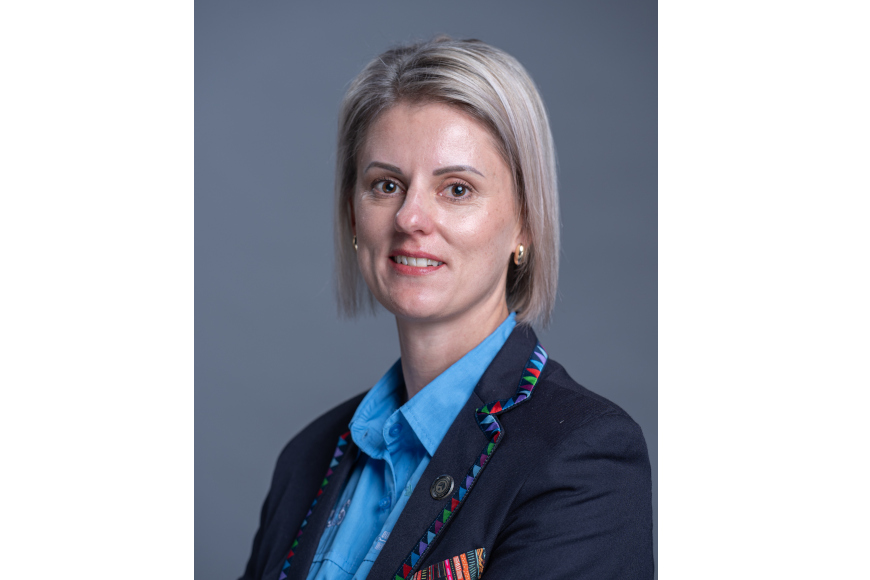
Pictured: Professor Rendani Maladzhi, Chair in Smart and Sustainable Manufacturing Technologies.

Simangele Zuma

https://www.dut.ac.za/research-news-dut-professor-rendani-maladzhi-appointed-as-chair-in-smart-and-sustainable-manufacturing-technologies/


DUT LAUNCHES GROUND-BREAKING ESKOM EXPO YOUNG INNOVATORS TTI INCUBATION PROGRAMME


The Durban University of Technology (DUT) Technology Transfer and Innovation (TTI) Unit in collaboration with the Community Engagement Office, recently hosted the Eskom Expo Young Innovators Incubation Programme from 26–29 March 2026. The innovators are beneficiaries of the DUT TTI Special Awards for Eskom Expo Young Innovators 2025.


The 12-month programme is designed for the 10 recipients of the DUT Special Awards presented at the Eskom Expo for Young Scientists. It aims to provide structured mentorship, skills development, and resources to support learners in advancing their innovations beyond the competition stage and into real-world application.


Delivering the welcome address, Dr Pinkie Ntola, Interim Director of Technology Transfer and Innovation (TTI) at DUT, expressed her excitement about engaging with young innovators and encouraging creative thinking beyond traditional classroom boundaries.


She emphasised the importance of creating space for innovation and independent thought, noting that true breakthroughs often come when learners are encouraged to think differently.


“We need to create environments where young people are not confined to how things have always been done, but are free to think broadly, innovate, and challenge existing systems,” she said.


Adding to the programme’s significance, Ms Nalini Dookie, KwaZulu-Natal Provincial Coordinator for the Eskom Expo for Young Scientists, described the initiative as a milestone for STEM development in South Africa.


“This initiative is the first of its kind in South Africa. We have a long way to go in STEM and innovation, and programmes like this are essential in helping us catch up with the rest of the world,” she said.


Dr Farai Dziike, Technology Transfer and Commercialisation Manager at the Technology Transfer and Innovation Unit, while introducing the programme, highlighted the exceptional performance of the learners at the Eskom Expo 2025, and expressed enthusiasm about supporting their innovation journeys.


“I am truly excited to work with these young innovators because I see great potential in their creativity and passion,” he said.


Through mentorship, workshops, and access to university resources, the programme seeks to strengthen the innovation ecosystem by nurturing young talent and promoting entrepreneurship in science and technology.


Reflecting on her experience, Zanele Witbooi, a Grade 12 learner at R.T. Mokgopa Secondary School in the Free State and DUT Special Award recipient, shared her aspirations for her project.


“I hope that my project can one day be implemented on South African roads. It has the potential to make a real impact in reducing accidents, and I am looking forward to developing it further through this programme,” she said.


Witbooi’s project, titled “Glow in the Dark Highway Paint,” aims to improve road safety by enhancing visibility on roads, particularly in areas affected by high accident rates.


As part of day two of the programme, learners had the opportunity to pitch and showcase their innovations, engage in interactive question-and-answer sessions with mentors and experts, and tour DUT innovation labs. This provided valuable exposure to real-world research and innovation environments, while also offering critical feedback to help refine and strengthen their projects as they progress through the incubation programme.


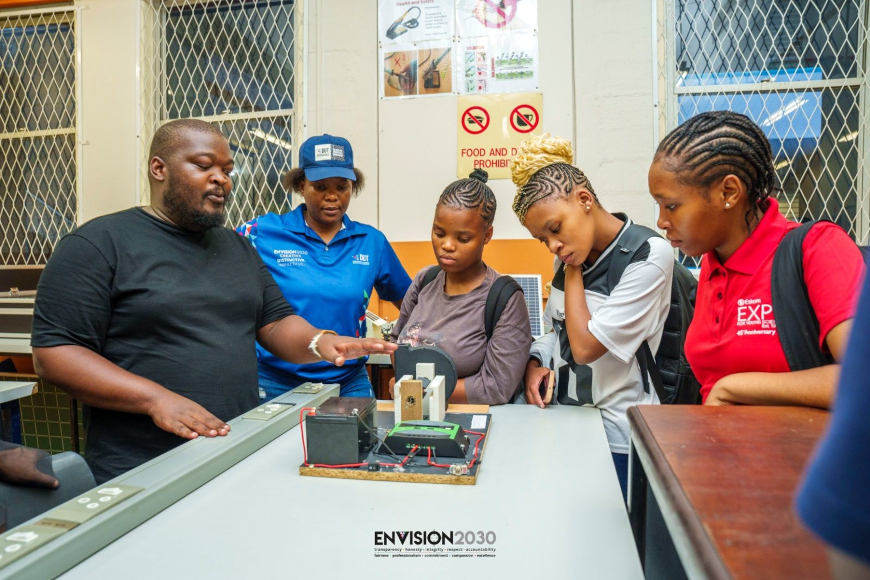
Pictured: Learners during the innovation lab tours at DUT.

Phumeza Msongelwa

https://www.dut.ac.za/dut-launches-ground-breaking-eskom-expo-young-innovators-tti-incubation-programme/


RESEARCH NEWS: MARAGA AIMS TO USE HIS RESEARCH CAPABILITIES TO CONTRIBUTE SOLUTIONS TO CHALLENGES FACING SOCIETY


Information Technology academic, researcher and lecturer, Alex Maraga’s academic and professional journey has been driven by a passion for using technology to understand and solve real-world challenges


The techno-geek is particularly interested in research that connects technological innovation with practical solutions that can benefit society and contribute to sustainable development.


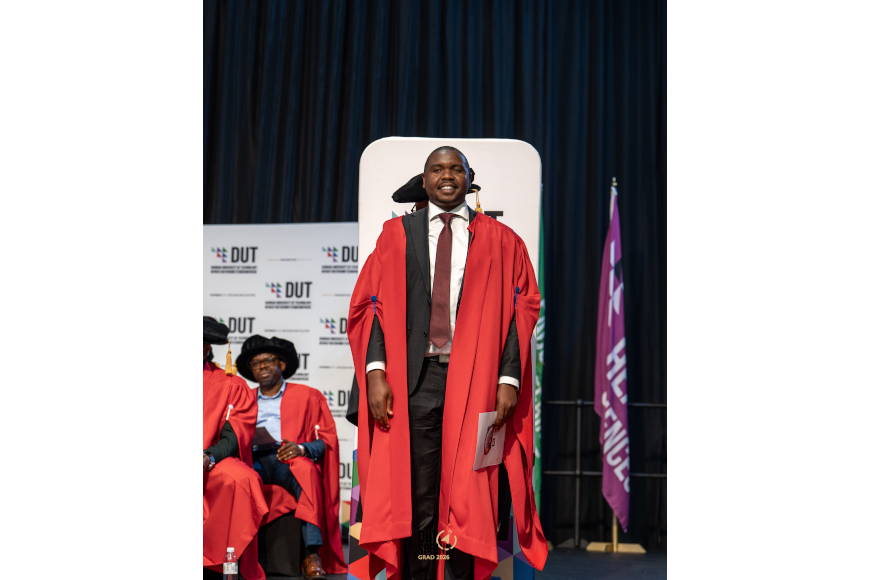
He crossed the stage at the Durban University of Technology’s (DUT’s ) 2026 Spring Graduation at the Olive Convention Centre in Durban, marking a significant milestone in an academic journey that he once questioned whether he could complete.


Becoming a PhD graduate is a significant personal achievement, but Maraga sees it as much more than receiving an academic qualification. It reminds him that knowledge comes with responsibility. Having reached this level, he feels a greater responsibility to use his knowledge, skills and research capabilities to contribute solutions to challenges facing society.


The PhD has also strengthened his confidence as a researcher and reinforced his belief that academic work should ultimately create value beyond the university.


“For me, the qualification is therefore not the end of the journey; it is a platform from which I can continue learning, researching, mentoring others and contributing to society,” he shared.


“I started my academic journey at Durban University of Technology (DUT) four years ago when I enrolled for a PhD in Information Technology. My journey at DUT has been both challenging and rewarding, and it has provided me with an environment in which I could grow academically, professionally and personally,” he shared.


Maraga is especially grateful for the support he had received from the university through access to research resources, facilities and a supportive academic environment.


“I was also fortunate to work with excellent supervisors, particularly Prof Ojo and Prof Mzee, whose guidance, mentorship and encouragement played a significant role in my success. They challenged him to think critically, remain focused and approach research with discipline and purpose.


Beyond the qualification itself, his time at DUT has given him valuable research experience, opportunities to engage with other academics and a deeper appreciation of the role that universities can play in addressing real-world challenges through research and innovation.


“Pursuing a PhD had been a personal academic goal since I began my undergraduate studies. I have always believed that education should go beyond acquiring qualifications; it should equip an individual with the ability to identify meaningful problems, investigate them systematically and contribute practical solutions,” he expressed.


After completing his master’s degree, this ambition became even stronger. He was fortunate to have mentors, particularly Prof Mzee and Dr Maake, who encouraged him to believe that he could take the next step. Their mentorship and the academic environment they created gave him the confidence and opportunity to pursue doctoral studies.


“I was motivated by the desire to become an independent researcher capable of contributing new knowledge and developing technology-based solutions to challenges affecting society,” he indicated.


Obtaining a PhD has been part of his long-term academic and professional vision since his undergraduate studies. “I have always viewed education as a continuous journey and wanted to reach a level where I could contribute not only by applying existing knowledge, but also by creating new knowledge,” he added.


For Maraga, his mentors played an important role in turning that aspiration into reality. Their encouragement, guidance and belief in his potential gave him the confidence to pursue doctoral studies. His family also provided an important source of motivation throughout the journey.


Most importantly, he was inspired by the possibility of using research to move from identifying problems to developing evidence-based solutions. That purpose kept Maraga focused throughout the PhD journey.


“I am the first person in my family to obtain a PhD. This achievement therefore means much more to me than an academic title. It represents years of sacrifice, perseverance, learning and the support of many people who believed in me. For my family, it is a source of great pride and happiness because they witnessed the commitment, challenges and sacrifices that came with the journey,” he excitedly said.


Personally, Maraga sees it as opening a new chapter rather than reaching the end. Being the first PhD graduate in his family carries a responsibility to inspire younger members of the family and demonstrate that ambitious academic and professional goals are achievable with commitment, discipline and perseverance.


His doctoral research is titled “Energy-Efficient and Carbon-Aware Virtual Machine Placement in Cloud Data Centres Using Deep Q-Networks and Agglomerative Clustering.”


“I was inspired by the rapid growth of cloud computing and the increasing amount of energy required to operate cloud data centres. As more people, businesses and institutions depend on digital services, the demand for computing infrastructure continues to grow. This growth has environmental implications because data centres consume significant amounts of electricity and can contribute to carbon emissions,” he explained.


He therefore wanted to explore how Artificial Intelligence could be used to make cloud computing more energy-efficient and environmentally sustainable, while still maintaining reliable services.


“The research brought together my interests in Artificial Intelligence, cloud computing, optimisation and sustainable technology to address an important environmental and technological challenge,” he highlighted.


In simple terms, his research looked at how computers in large cloud data centres can be managed more intelligently so that they use less energy and produce fewer carbon emissions without compromising the quality of services.


“I developed an intelligent approach that helps determine where computing workloads should be placed within a data centre. The approach learns from experience and groups similar workloads to make better placement decisions. In essence, the research demonstrates how Artificial Intelligence can help make the rapidly growing cloud computing industry more sustainable,” emphasised Maraga.


The key finding from his research was that Artificial Intelligence can be effectively used to make cloud computing more energy-efficient and environmentally sustainable while maintaining reliable services.


“The study therefore contributes to the growing field of sustainable computing and provides a foundation for future research on environmentally responsible digital infrastructure,” he relayed.


Maraga indicated that the research is important because of everyone’s dependence on cloud computing continues to increase, while the infrastructure supporting these services consumes significant amounts of energy.


“The challenge is how to meet the growing demand for digital services without unnecessarily increasing energy consumption and carbon emissions. Existing approaches often focus heavily on performance and resource allocation without adequately considering environmental impact. My research addresses this gap by using Artificial Intelligence to make more informed workload-placement decisions that balance service reliability, energy efficiency and carbon reduction. In the long term, such approaches can help data-centre operators and cloud service providers move towards more sustainable digital infrastructure,” he said.


Maraga believes the research has potential relevance to industry, future research and policy discussions around sustainable digital infrastructure.


“For industry, the approach can contribute to more energy-efficient management of cloud data centres, potentially reducing operational costs and environmental impact. For researchers, it provides a foundation for further work on Artificial Intelligence, sustainable computing and carbon-aware digital infrastructure. At a broader level, the findings can contribute to discussions about sustainable digital transformation and the need to consider environmental sustainability as digital infrastructure continues to expand. I also hope that future research can move beyond simulation and explore the application of these approaches in real-world cloud environments,” he added.


Going forward, Maraga has applied for a postdoctoral fellowship at DUT associated with research on Digital Innovation and Transformation for Governance, Accountability and Socio-Economic Development, and he has been shortlisted and interviewed for the position.


If successful, he would be delighted to continue his research journey at DUT and expand his work from sustainable and intelligent computing toward broader applications of Artificial Intelligence, digital innovation and digital transformation.


His long-term goal is to build a strong research career that combines technological innovation with practical solutions to challenges affecting institutions, communities and society, particularly within the African context.


His advice to future students is to not allow the size of the goal to discourage one from taking the first step.


“A PhD may look intimidating when viewed as one big achievement, but it becomes manageable when broken down into smaller goals. Be willing to learn, accept criticism, ask questions and learn from people who are more experienced than you,” he shared.


My PhD journey has taught me that achievement is rarely the result of one person’s effort. Behind every successful graduate is a network of people who provide encouragement, guidance, sacrifice and support.


My journey from Kenya to South Africa and through doctoral studies at DUT has been an experience of academic growth, cultural learning and personal transformation. I had to adapt to a new environment, build new relationships and navigate the demands of advanced research, but every challenge became an opportunity to learn and grow.


I am particularly grateful to my supervisors, mentors, colleagues, friends and family who contributed to my journey in different ways. I am also grateful to DUT for providing an environment that enabled me to pursue my research and develop as a scholar.


“For me, this PhD is not the conclusion of my academic journey. It is a new beginning and a responsibility to use knowledge to create solutions, inspire others and contribute positively to society,” he said.


Pictured: Alex Maraga

Waheeda Peters

https://www.dut.ac.za/research-news-maraga-aims-to-use-his-research-capabilities-to-contribute-solutions-to-challenges-facing-society/
 

DUT STRENGTHENS INNOVATION ECOSYSTEM THROUGH EXPANDING INTELLECTUAL PROPERTY PORTFOLIO


The Durban University of Technology (DUT) is strengthening its position as a leading innovation-driven university, with an expanding intellectual property (IP) portfolio that reflects the institution’s commitment to transforming research into innovative solutions that benefit society, industry and the economy.


Between 2025 and 2026, the University’s Technology Transfer and Innovation (TTI) Directorate reported 41 innovation disclosures to the National Intellectual Property Management Office (NIPMO), reflecting a strengthening institutional culture of innovation and research translation. These disclosures span engineering, healthcare, biotechnology, environmental sustainability, digital technologies and smart systems, demonstrating the breadth of research excellence across the University.


The University’s expanding innovation portfolio includes 18 patent-related disclosures in process, nine South African provisional patent applications, eight registered designs, four trademark applications, two Patent Cooperation Treaty (PCT) applications and one European Patent Office (EPO) filing. Together, these milestones highlight DUT’s growing capacity to identify, protect and advance innovations with commercial and societal potential.


Deputy Vice-Chancellor: Research, Innovation and Engagement, Professor Fulufhelo Nemavhola, said the growth of the University’s intellectual property portfolio reflects DUT’s strategic commitment to research excellence, innovation and societal impact. “Innovation is one of the defining pillars of a University of Technology. At DUT, we are committed to creating an environment where research generates tangible solutions that improve lives, strengthen industry and contribute to South Africa’s socio-economic development. The growth in our intellectual property portfolio demonstrates the creativity and ingenuity of our researchers, staff and students and reflects the University’s strategic commitment to transforming knowledge into impact.”


Professor Nemavhola emphasised that protecting intellectual property is critical to transforming research into meaningful innovation and enabling it to reach its full potential. “Protecting intellectual property is a critical step in the innovation journey. It ensures that the ideas emerging from our research are recognised, safeguarded and developed into technologies, products and services that can benefit society. I encourage all researchers, academics and students to work closely with the Technology Transfer and Innovation Unit to disclose their innovations and contribute to building a stronger culture of innovation at DUT.”


The Technology Transfer and Innovation (TTI) Directorate plays a central role in supporting researchers and innovators throughout the innovation journey, from invention disclosure and intellectual property assessment to protection, commercialisation, industry engagement and spin-out development.


Acting Director: Technology Transfer and Innovation, Dr Pinkie Ntola, said the growth in DUT’s innovation portfolio reflects the University’s commitment to building a vibrant innovation ecosystem.


“We are encouraged by the significant growth in innovation disclosures, intellectual property protection and commercialisation activities at DUT. These achievements reflect a growing culture of innovation, with researchers increasingly recognising the importance of protecting their discoveries before publication and exploring opportunities to translate their research into products, services and technologies that benefit society.”


Professor Nemavhola said the Directorate continues to strengthen the systems that support researchers throughout the innovation journey.


“The Technology Transfer and Innovation Directorate plays a central role in supporting researchers and innovators throughout the innovation journey, from invention disclosure and intellectual property assessment to protection, commercialisation, industry engagement and spin-out development. Over the past few years, the Directorate has strengthened innovation support systems, expanded researcher awareness, increased industry collaborations and supported the development of technologies with real commercial and societal potential.”


“Our goal is to ensure that every promising innovation has the opportunity to move beyond the laboratory and create meaningful impact. Through continued engagement, capacity-building and strategic partnerships with industry, government and other universities, we are strengthening DUT’s innovation ecosystem, contributing to economic development, and positioning the University as a leader in innovation, technology transfer and entrepreneurship.”


To further strengthen this culture of innovation, DUT is rolling out the Innovation and Intellectual Property Growth Campaign, an institutional initiative designed to showcase the University’s growing innovation portfolio, recognise inventors and research teams, promote intellectual property awareness, and encourage staff and students to disclose new innovations through the TTI Directorate.


The campaign will include media features, inventor profiles, educational content on intellectual property, faculty engagement sessions, social media storytelling and the “Protect Before You Publish” initiative, which encourages researchers to protect potentially valuable intellectual property before placing it in the public domain.


DUT’s innovation ecosystem has also received significant national support. The TTI Directorate secured R4 428 909 in funding from the National Intellectual Property Management Office for the 2026 to 2028 period to strengthen intellectual property protection and evaluation, support pre-commercialisation activities, enhance industry collaboration and advance technologies towards commercialisation.


Aligned with DUT’s ENVISION2030 strategy, the University’s innovation value chain guides ideas through every stage of development, from innovation disclosure and intellectual property protection to technology development, commercialisation and societal impact. Through this structured approach, DUT is creating an environment where research extends beyond academic publication to become protected intellectual property, industry partnerships and innovations that address real-world challenges.


As the University continues to strengthen its innovation ecosystem, researchers, academics and students are encouraged to engage with the Technology Transfer and Innovation Directorate to transform their ideas into protected innovations that can contribute to economic growth, improve lives and create lasting societal impact.


Pictured: DUT is strengthening its position as a leading innovation-driven university.

Tiyani Mboweni


DVC: RIE ENGAGES FACULTY OF ENGINEERING AND THE BUILT ENVIRONMENT STAFF ON RESEARCH AND INNOVATION PERFORMANCE


In his fourth Faculty Engagement, Professor Fulufhelo Nemavhola, Deputy Vice-Chancellor: Research, Innovation and Engagement at Durban University of Technology (DUT) engaged with the Faculty of Engineering and the Built Environment staff, providing a platform to reflect on the faculty’s research and innovation performance. The robust discussion was held at the Steve Biko campus on Wednesday, 10 June 2026.


The engagement formed part of Prof Nemavhola’s ongoing efforts to advance the university’s research and innovation outputs. A few weeks ago, he engaged with the staff from the faculties of Accounting and Informatics, Managements Sciences as well as Arts and Design seeking their commitment in positioning DUT as a leading university of technology recognised for research excellence, innovation and societal impact.


Facilitating the engagement was Mr Zwakele Ngubane, Director of Alumni and Advancement Relations at DUT who encouraged staff to take full advantage of the opportunity to engage directly with the DVC: RIE and his office.


In his welcome remarks, Professor Molusiwa Ramabodu, Acting Executive Dean of the Faculty of Engineering and the Built Environment, expressed his sincere appreciation to Prof Nemavhola and his team for availing themselves to engage with the faculty. He warmly welcomed attendees and urged staff not to hesitate to ask questions or raise concerns that could contribute to the betterment of the faculty and its research environment.


Dr Nomcebo Mthombeni, Interim Director of the Research and Postgraduate Support Unit, presented an overview of the faculty’s research performance, highlighting research output units, postgraduate enrolment figures and key research focus areas. She also shared valuable insights into postgraduate support mechanisms, funding opportunities and initiatives aimed at strengthening student success and research productivity.


Dr Mthombeni commended the faculty for being the second-highest contributor of research outputs at DUT, recording 204 units in 2025, behind only the Faculty of Management Sciences. While acknowledging this achievement, she noted that the faculty did not generate any book outputs during the year and expressed hope that this area would improve in the 2026 reporting cycle.


She further recognised the contributions of the departments of Construction Management, Chemical Engineering, Mechanical Engineering and Electrical Power Engineering in driving the faculty’s research output performance. Dr Mthombeni also noted that only 35% of permanent academic staff within the faculty currently hold doctoral qualifications and encouraged more staff members to pursue PhDs to strengthen research capacity and output.


Addressing innovation and the commercialisation of research, Dr Pinkie Ntola, Interim Director of Technology Transfer and Innovation, presented on the importance of strengthening intellectual property within the university environment. Her presentation outlined DUT’s intellectual property portfolio and unpacked the institution’s in-house funding opportunities designed to support innovation development, technology transfer and commercialisation initiatives among staff and students.


DVC: RIE, Prof Nemavhola kept his presentation brief, focusing on key institutional research statistics and their strategic implications. His intention was to allow sufficient time for engagement and meaningful discussion between his office and the faculty.


He revealed that 41% of DUT staff hold doctoral qualifications, exceeding the university of technology sector average of 36%.  Despite this positive performance, he stressed the need to increase the number of PhD holders across the institution.


Prof Nemavhola raised concerns about the large proportion of doctoral holders who are employed on a contract or part-time basis, as well as those who are over the age of 55. He cautioned that this presents a sustainability risk, as many of these academics may exit the institution in the near future.


He encouraged staff to work diligently to ensure the university remains sustainable through increased research outputs and innovative research that addresses pressing societal challenges. Prof Nemavhola also made a strong appeal to professors within the faculty to actively contribute to research publication outputs.


“It is unacceptable to have academic leaders who are not contributing to research within the university,” he said.


The engagement concluded with an interactive question-and-answer session, during which participants engaged Prof Nemavhola on matters relating to research funding, postgraduate supervision, publication outputs and strengthening partnerships with industry and external stakeholders.


In his closing remarks, Prof Ramabodu reiterated the significance of continued engagements between faculty leadership and the Research, Innovation and Engagement office. He noted that such platforms are essential for fostering innovation, strengthening research capacity and preparing academics and students to contribute meaningfully to South Africa’s economic development.


On Thursday, 11 June 2026, Prof Nemavhola hosted a similar Faculty Engagement with the Faculty of Health Sciences to discuss its research and innovation agenda. He is also scheduled to meet with the Faculty of Applied Sciences as part of his ongoing efforts to strengthen research and innovation outputs across the university.


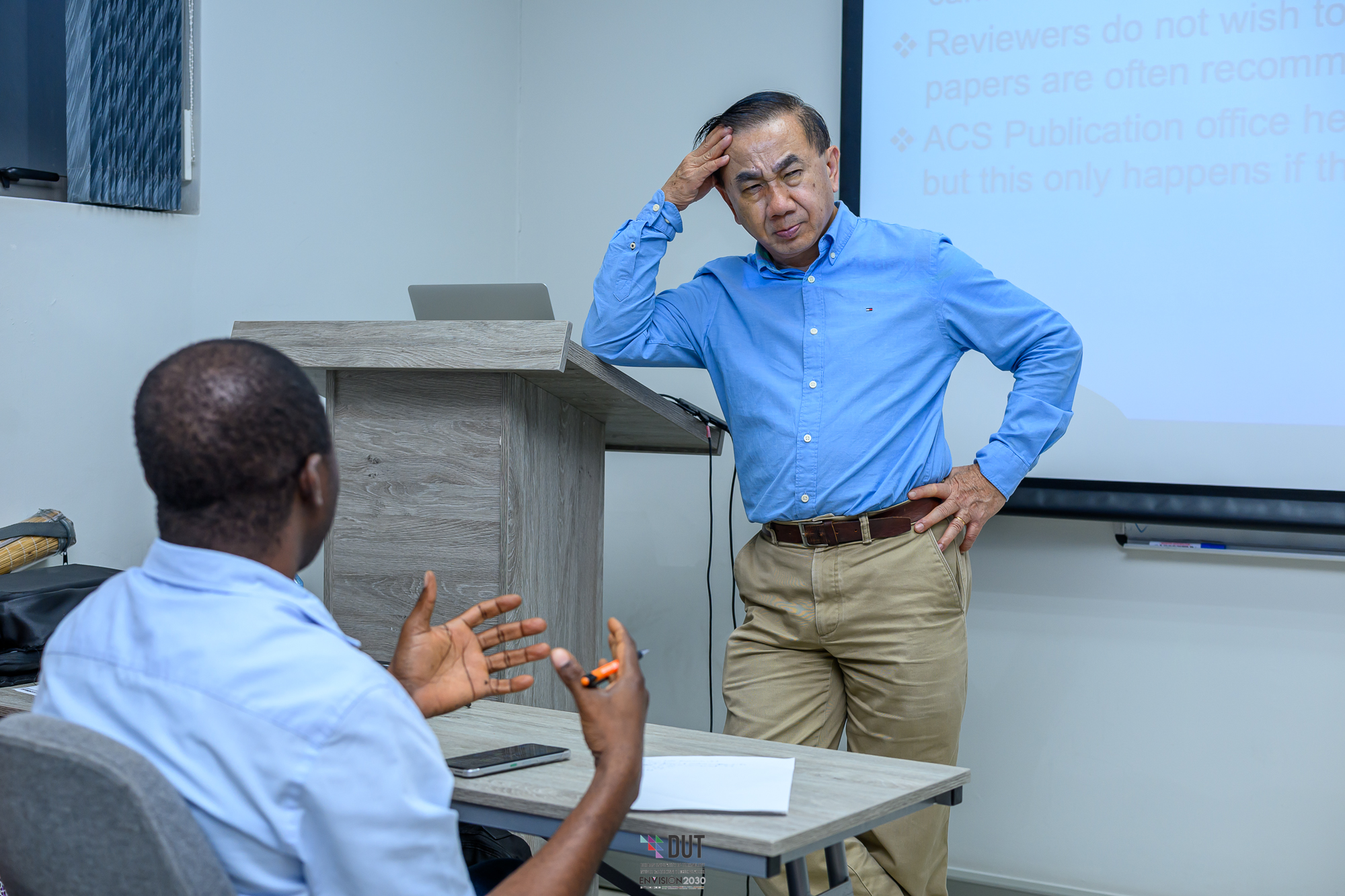
Pictured: DVC: RIE Professor Fulufhelo Nemavhola engaging the Faculty of Engineering and the Built Environment staff.


Photographer: S’bonelo Dlamini.

Simangele Zuma/Sibonisile Mdlozini

https://www.dut.ac.za/dvc-rie-engages-faculty-of-engineering-and-the-built-environment-staff-on-research-and-innovation-performance/


RESEARCH NEWS: DUT PROFESSOR RENDANI MALADZHI APPOINTED AS CHAIR IN SMART AND SUSTAINABLE MANUFACTURING TECHNOLOGIES


Positioning Durban University of Technology (DUT) as a national leader in advanced manufacturing research, innovation, and skills development was the recent appointment of Professor Rendani Maladzhi as the Chair in Smart and Sustainable Manufacturing Technologies by the National Research Foundation (NRF).


Prof Maladzhi, Associate Professor and Head of the Department of Mechanical Engineering in the Faculty of Engineering and the Built Environment at DUT, is among eight South African Research Chairs Initiative (SARChI) Chairs awarded to DUT by the NRF under the Department of Science, Technology and Innovation (DSTI) Decadal Plan Aligned Research Chairs for Historically Disadvantaged Universities, Universities of Technology, and Emerging Universities.


The Chair further strengthens DUT’s expanding research and innovation footprint, following the university’s recent establishment of 18 new research institutes aimed at accelerating high impact and solutions driven research across strategic sectors including advanced manufacturing, artificial intelligence, climate resilience, and smart technologies.


Professor Maladzhi’s research journey has been shaped by a long standing commitment to ensuring that engineering research addresses real industrial challenges and delivers tangible value to society, particularly for Small and Medium Enterprises (SMEs). His interest in SME focused manufacturing research began during his Master’s studies in Mechanical Engineering at the Cape Peninsula University of Technology (CPUT) in 2007, where he researched new product development in manufacturing SMEs. During this work, he observed that many SME owners and managers were technically skilled but heavily reliant on manual and traditional production methods.


Concerns about job losses, combined with deeply rooted operational practices, often resulted in resistance to technology adoption. This resistance limited innovation, efficiency, and competitiveness not because SMEs lacked potential, but because they lacked access to appropriate support and guidance. These early experiences shaped his doctoral research in 2009, which focused on innovation management and leadership within SMEs. His findings showed that many enterprises struggled not due to a lack of technical ability, but because of entrenched leadership mindsets that resisted change. This insight shifted his research focus towards demonstrating that responsible technology adoption can improve productivity, sustainability, and skills development, while supporting jobs rather than displacing them, shared Prof Maladzhi.


Speaking on the establishment of the SARChI Chair in Smart and Sustainable Manufacturing Technologies at DUT, Prof Maladzhi said the Chair provides a strategic platform to advance applied research, strengthen SME competitiveness, build advanced manufacturing skills, and contribute meaningfully to South Africa’s industrialisation, productivity growth, and broader socioeconomic development.


Being appointed as a SARChI Chair at the Durban University of Technology is both a humbling honour and a significant milestone in my academic journey. It affirms a research vision shaped over many years, focused on making research meaningful and responsive to the real challenges facing South Africa’s manufacturing sector and SMEs. This recognition reflects not only my own efforts but also the collective contributions of colleagues, students, mentors, and industry partners, shared Prof Maladzhi.


The Chair in Smart and Sustainable Manufacturing Technologies focuses on applied, industry embedded research that responds directly to the challenges faced by manufacturing SMEs, while simultaneously advancing human capacity development at undergraduate, postgraduate, and postdoctoral levels. The Chair’s research priorities are structured around interlinked thematic areas that integrate research excellence, skills development, innovation, and industry collaboration to deliver measurable industrial and societal impact, said Prof Maladzhi.


The Chair focuses on enabling inclusive industrialisation through smart manufacturing, digitalisation, automation, and sustainable production technologies, with a strong emphasis on supporting manufacturing SMEs. Aligned with the Decadal Plan’s focus on innovation, entrepreneurship, and commercialisation, the Chair actively supports technology transfer, industry adoption, and sustainable manufacturing solutions. Through strong industry and international collaborations, the Chair positions DUT as a key contributor to South Africa’s national innovation system and industrial development agenda, added Prof Maladzhi.


At a local level, Prof Maladzhi explained that the Chair works closely with manufacturing SMEs and larger firms across KwaZulu-Natal to improve day to day operations through smart manufacturing, automation, predictive maintenance, and sustainable production solutions. By working directly inside companies, the Chair helps improve productivity, equipment reliability, energy efficiency, and cost competitiveness, areas where many SMEs lack access to specialised expertise.


Sharing how the Chair will support postgraduate students and emerging researchers, Prof Maladzhi said:


The Chair was deliberately designed as a capacity building platform for postgraduate students and emerging researchers, ensuring that research excellence is coupled with mentorship, skills development, and real world relevance. The Chair will provide structured academic supervision and mentorship for 22 Master’s students, eight PhD students, and five postdoctoral fellows, across priority areas such as smart manufacturing, digitalisation, automation, sustainability, and systems engineering. Students and postdoctoral fellows will be integrated into clearly defined research programmes with achievable milestones, regular progress reviews, and strong scholarly guidance.


Over the next five years, the Chair in Smart and Sustainable Manufacturing Technologies aims to deliver measurable and practical impact that directly strengthens South Africa’s manufacturing sector, predominantly Small and Medium Enterprises (SMEs), while contributing to broader societal and economic development.


Pictured: Professor Rendani Maladzhi, Chair in Smart and Sustainable Manufacturing Technologies.

Simangele Zuma

https://www.dut.ac.za/research-news-dut-professor-rendani-maladzhi-appointed-as-chair-in-smart-and-sustainable-manufacturing-technologies/


RESEARCH NEWS: PROF OLIVE STUMKE’S RESEARCH CHAIR POSITION IS ABOUT PRODUCING CHANGE IN DIGITAL TRANSFORMATION


The recent launch of eight new Research Chairs at the Durban University of Technology (DUT) forms part of the expansion of research capacity across South Africa’s higher education sector.


Professor Olive Stumke, an Associate Professor, is one of the recipients of the NRF SARChI Research Chair in Digital Transformation in the Faculty of Accounting and Informatics at DUT.


Deputy Vice-Chancellor: Research, Innovation and Engagement at DUT, Professor Fulufhelo Nemavhola, emphasised that the appointment of the Research Chairs marks a significant achievement for DUT and reflects the institution’s growing research excellence and commitment to addressing societal challenges through impactful research, in line with the university’s ENVISION2030 strategy.


Sharing her research journey, Prof Stumke explained that it began with a fundamental question of how adequately prepared DUT graduates are for a workplace increasingly driven by technology. This led to her doctoral research, which developed an ICT competency framework for accountancy professionals, forming the foundation of her subsequent work.


“Through that work, I identified a critical disconnect. While auditing and taxation professions have never required a Master’s or PhD as a condition for practice, the absence of advanced research in this space has left us without the knowledge base needed to navigate the Fourth Industrial Revolution,” she shared.


At DUT, Prof Stumke has expanded her research from ICT competencies into areas including AI in auditing, virtual reality as a teaching tool, fraud detection frameworks, predictive modelling for SME loan defaults, and digital transformation of governance.


“I have published in journals including the South African Journal of Economic and Management Sciences, the Southern African Journal of Accountability and Auditing Research, and the International Journal of Advanced Computer Science and Applications. I also have a chapter on AI in auditing and compliance submitted for final editing with Routledge,” she explained.


Beyond research outputs, she has secured FASSET funding for student development and currently convenes the DUT Artificial Intelligence Policy Task Force.


Internationally, Prof Stumke has driven MOUs with CHRIST University in India, the European Taxation Academic Network (ETAIN), the Chartered Institute of Business Accountants (CIBA), and maintains a collaborative partnership with the British Council.


“What led me to this focus area is personal conviction. I believe technology is no longer optional, it is essential. My mantra, ‘work smarter, not harder,’ reflects my research philosophy. It is not about turning graduates into IT specialists, but equipping them with practical, tech-driven skills that improve processes, strengthen compliance, and add value to organisations and communities,” she said.


For Prof Stumke, this appointment is a meaningful milestone.


“To receive this recognition from the NRF affirms that this work matters, not only within academia but also for the broader socio-economic development of our country. Professionally, it expands the scale of what is possible,” she said.


The SARChI Chair enables her to dedicate more time to research, supervise postgraduate students, appoint postdoctoral fellows, build international collaborations, and develop digital tools and frameworks aligned to her research agenda.


Her research chair is structured around four interconnected themes.


Theme one focuses on the enablers of digital transformation, including human capital, infrastructure, international partnerships, and investment. Theme two explores digital governance in the public sector, examining how AI-driven decision-support tools can strengthen governance and improve service delivery in municipalities.


Theme three addresses small businesses and entrepreneurs by developing accessible digital toolkits to improve compliance, productivity, and resilience.


Theme four focuses on future-proofing education by embedding data analytics, AI, and digital tools into curricula to prepare graduates for the 5th Industrial Revolution.


Prof Stumke will also support master’s students, PhD candidates, and postdoctoral fellows throughout the five-year programme.


“Students and fellows will be embedded in interdisciplinary research projects within the EPIP Research Group. They will receive structured supervision, access to research infrastructure, funding for conferences, and opportunities for international benchmarking,” she explained.


She emphasised her commitment to mentoring the next generation of researchers, particularly from underrepresented backgrounds.


“Mentoring is central to this programme. I am committed to gender equity and to recruiting researchers from historically disadvantaged institutions, with targeted outreach to support female researchers and their advancement into academic leadership,” she said.


A succession plan has also been established, identifying a young female researcher to be developed for future leadership.


“My mentoring approach is student-centred and hands-on. The EPIP model fosters peer learning where established researchers, emerging academics, and interns collaborate on shared projects,” she said.


She added that all projects under the chair have practical application and potential for real-world impact.


“We will explore commercialisation through professional certification courses and licensing of digital tools developed in the programme. Innovation is embedded in the EPIP Research Group, an interdisciplinary model that produces both academic and commercial value, and which received the Excellence in Engineering Practice Innovation Project award in 2025,” she said.


By 2030, Prof Stumke envisions DUT as a leading institution in interdisciplinary digital transformation research.


“Our international and industry collaborations will embed DUT within global research networks beyond the funding period. DUT’s ENVISION2030 strategy commits to producing graduates and researchers who drive innovation and contribute to socio-economic progress. This programme is designed to deliver on that commitment, positioning DUT as a university that not only teaches about the next industrial revolution but actively shapes it,” she concluded.


Pictured: Professor Olive Stumke

Waheeda Peters

https://www.dut.ac.za/research-news-prof-olive-stumkes-research-chair-position-is-about-producing-change-in-digital-transformation/


PROF NEMAVHOLA HOSTS FIRST SERIES OF FACULTY ENGAGEMENTS TO ADVANCE THE UNIVERSITY’S RESEARCH AND INNOVATION OUTPUT


The Deputy Vice-Chancellor: Research, Innovation and Engagement (DVC: RIE) at the Durban University of Technology, Professor Fulufhelo Nemavhola, recently hosted the first series of Faculty Engagements with the Faculties of Accounting and Informatics and Management Sciences at the Ritson Campus in Durban on Tuesday, 21 April 2026.


Facilitating both sessions was the Senior Director of Corporate Affairs, Mr Alan Khan, who highlighted the importance of strengthening collaboration between the DVC: RIE office and academic faculties. He also reflected on recent research achievements that demonstrate DUT’s commitment to addressing societal challenges through impactful research and innovation.


Mr Khan further highlighted the eight South African Research Chairs Initiative (SARChI) Chairs recently awarded to DUT by the Minister of Science, Technology and Innovation, Professor Blade Nzimande. He also announced that DUT has secured a 15-month contract with Universities South Africa (USAf) to lead a strategic national project aimed at strengthening and harmonising entrepreneurship across South Africa’s 26 public universities. The project will be led by a multidisciplinary team under the leadership of Prof Nemavhola.


In the Faculty of Accounting and Informatics session, Executive Dean Prof Oludayo Olugbara delivered welcome remarks, while in the Faculty of Management Sciences session, Interim Executive Dean Prof Mattys Swanepoel addressed staff. Both Deans described the engagement platform as an important opportunity to strengthen collaboration and advance the university’s research and innovation agenda. They encouraged staff to actively participate, share ideas, and explore interdisciplinary partnerships.


The Interim Director of the Research and Postgraduate Support Unit, Dr Nomcebo Mthombeni, shared key research performance data, noting that the Faculty of Accounting and Informatics recorded 98 research outputs in 2025, a significant improvement from 48.72 in 2024. She also highlighted that one department has over 80 percent of its academic staff holding PhDs.


In the second session, Dr Mthombeni commended the Faculty of Management Sciences for being the highest contributor of research output at DUT, recording 308 units in 2025, compared to 209.97 in 2024. She further noted steady improvements in postgraduate enrolment across both faculties and encouraged staff to engage her office on research funding opportunities. She also clarified that conference attendance approvals now reside within faculties under updated Research, Innovation and Engagement (RIE) policies.


Dr Pinky Ntola, Interim Director of Technology Transfer and Innovation, emphasised the importance of strengthening DUT’s intellectual property portfolio. She explained that this supports research protection prior to publication, enables commercialisation and spin-off development, and contributes to sustainable third-stream income. She also outlined available innovation funding opportunities within her unit.


In his presentation, Prof Nemavhola shared key institutional research statistics and their strategic implications. He noted that 36 percent of academic staff hold doctoral qualifications, which remains below the sector average when compared to other South African universities. He further indicated that 18 percent of doctoral holders are not actively engaged in research or postgraduate supervision.


He encouraged academics to prioritise research output as a core expectation of university work and emphasised the importance of equitable workload distribution to ensure meaningful participation in research activities across all staff.


Prof Nemavhola also highlighted that in 2023, 50 percent of conference attendance claims could not be processed against Department of Higher Education and Training subsidy requirements. He noted that recent policy updates aim to safeguard staff from attending non-compliant or questionable conferences.


He concluded his presentation by opening the floor for discussion, allowing extended time for a robust question and answer session.


Staff from both faculties actively engaged, raising concerns around administrative workloads for academics, conference approval processes, research incentives, and institutional Wi-Fi challenges.


Prof Nemavhola and his team responded to the majority of questions, offering guidance, clarifications, and acknowledging areas requiring further attention and improvement.


The remaining faculties will engage with Prof Nemavhola in upcoming sessions, with the Faculty of Arts and Design scheduled to meet at the DUT Hotel School, Ritson Campus on Friday, 24 April 2026 at 09h00.


Pictured: DVC:RIE, Prof Fulufhelo Nemavhola addressing staff at the Faculty of Accounting and Informatics engagement.


Photographer: Khulasande Tshayile

Simangele Zuma

https://www.dut.ac.za/prof-nemavhola-hosts-first-series-of-faculty-engagements-to-advance-the-universitys-research-and-innovation-output/


RESEARCH NEWS: PROF KC TAM PRESENTS ON NANOTECHNOLOGY, PATENTING AND EFFECTIVE JOURNAL WRITING


The Research and Postgraduate Directorate, together with the Department of Chemical Engineering, hosted a research seminar by Professor Michael KC Tam from the Department of Chemical Engineering and Waterloo Institute for Nanotechnology at the University of Waterloo on Building a Sustainable Future, One Nanomaterial at a Time. The event took place at the IWWT Seminar Room, Steve Biko Campus on Thursday, 16 April 2026.


Prof Tam’s research focuses on cellulose nanomaterials, colloids, self-assembly systems, polymer-surfactant interactions, and water treatment systems. He is an Honorary Researcher in the Chemical Engineering Department at the Durban University of Technology (DUT). His Google citation exceeds 34,220 citations, and his H-index is 96, cementing him as a researcher with significant global recognition for his influential body of work.


In his presentation, Prof Tam discussed the research ecosystem at the University of Waterloo, noting that the Waterloo corridor has the largest concentration of technology companies and startup activity in Canada. He shared that the University of Waterloo is a global leader in engineering education and research, ranked among the top 50 engineering schools in the world. He further highlighted collaborative graduate research programmes between the Department of Chemical Engineering and the Waterloo Institute for Nanotechnology in areas such as nanotechnology for advanced materials, soft matter engineering, electrochemical engineering, biotechnology, and sustainable reaction engineering.


He explained that nanotechnology is emerging as a transformative field driving innovation across science and engineering. Within this context, he emphasised the growing need to develop nanomaterials from renewable resources due to the environmental limitations of traditional carbon-based raw materials such as crude oil. This transition, he noted, is opening new opportunities for sustainable materials in advanced engineering applications. Cellulose nanocrystals (CNCs), in particular, offer a promising pathway for product development and formulation across multiple industrial sectors. He further emphasised that cellulose nanocrystals are stable, water-dispersible, non-toxic, renewable, and abundant.


To unlock their potential, Prof Tam highlighted ongoing research, patent portfolios, and innovations at the Department of Chemical Engineering and the Waterloo Institute for Nanotechnology. Researchers are actively developing surface functionalisation strategies, including the grafting of amphiphilic polymers and the deposition of inorganic and metallic nanoparticles. He noted that the University of Waterloo has a distinctive creator-owned intellectual property policy, which generally allows researchers to retain ownership of the intellectual property they generate. Under this framework, researchers are able to commercialise their work independently or with institutional support while retaining ownership rights.


His presentation further explored how these functionalisation techniques impart enhanced properties to cellulose nanocrystals, enabling their application in innovative fields. He demonstrated how these sustainable nanomaterials can be tailored to address specific market needs, with applications in wastewater treatment, antimicrobial systems, conductive inks, agricultural technologies, and water harvesting.


He also showcased research led by Dr Debbie Wu on conductive cellulose nanocrystals. Prof Tam explained that Dr Wu’s work focuses on developing hybrid materials by incorporating intrinsically conductive polymers into cellulose nanocrystals. The resulting composites retain the mechanical strength and surface area of cellulose nanocrystals while also exhibiting the electrical properties of conductive polymers. He added that this approach improves synthesis using polyvinylpyrrolidone, enhancing the interaction between polypyrrole and conductive cellulose nanocrystals.


He further discussed emerging research directions, including selective removal of contaminants and the development of sustainable applications of cellulose nanocrystals in packaging, antimicrobial materials, consumer products, and filtration systems.


Prof Tam concluded this section of his talk by referencing the journal ACS Sustainable Resource Management, an interdisciplinary peer reviewed publication focused on the sustainable use of natural and waste resources. In his role as deputy editor, he encouraged DUT researchers to consider developing a similar publication to showcase the institution’s research outputs and achievements.


The programme continued with a question and answer session, where discussions focused on the potential of sustainable nanomaterials to address market challenges, new applications in advanced engineering, and approaches to research commercialisation while maintaining intellectual property ownership.


The second part of the seminar focused on writing effective journal articles. Prof Tam addressed key aspects of academic publishing, including selecting appropriate journals, publishing in high impact outlets, understanding the peer review process, common reasons for manuscript rejection, and strategies for preparing strong research papers.


He emphasised that publishing is a critical component of the research process, as it enables knowledge dissemination and contributes to the wider academic community. He also highlighted the competitive nature of academic publishing, noting that many journals accept only a small percentage of submitted manuscripts, making originality and scientific significance essential.


Prof Tam further guided attendees on structuring effective journal articles, stressing the importance of a strong title, clear organisation, and well presented data. He noted that titles and keywords are essential for research visibility, as they are often the first elements readers use to determine relevance. He also encouraged researchers to view peer review feedback as a constructive process that strengthens their work. In addition, he advised participants to aim for reputable journals while being prepared for rejection as a normal part of academic publishing.


He encouraged researchers to actively seek feedback and engage with experienced scholars to refine their writing and improve publication success. Overall, he emphasised that strong academic writing requires resilience, strategy, and a commitment to quality.


In her closing remarks, Dr Nomcebo Mthombeni, Interim Director of the Research and Postgraduate Support Directorate, expressed appreciation for the insightful presentation delivered by Prof Tam. She noted that the session made academic publishing more accessible, particularly for postgraduate students. She emphasised the importance of producing high impact research outputs and encouraged students to apply the knowledge gained to improve the quality of their work. She also reminded attendees that research tools support academic thinking and do not replace it, comparing them to a calculator that only produces meaningful results when correct inputs are provided.


She further encouraged students to view rejection as part of the academic growth process, highlighting that reviewer feedback plays an important role in strengthening research outputs. She urged participants to approach publishing with confidence and to use each experience as an opportunity for development.


Biography


Prof Michael Tam obtained his B.Eng. and PhD degrees in Chemical Engineering from Monash University, Australia, in 1982 and 199?, respectively. He completed a postdoctoral fellowship at McMaster University, Canada, before joining Nanyang Technological University, Singapore, where he taught for 15 years. In June 2007, he joined the University of Waterloo as a tenured full professor in the Department of Chemical Engineering. He is an active member of the Waterloo Institute for Nanotechnology.


He has published more than 400 journal articles in polymer science and engineering and has received several prestigious awards, including the Harold Jan Shoemaker Award and the Tan Chin Tuan Fellowship. He is recognised for his contributions to sustainable nanomaterials and functional colloids. He remains dedicated to advancing research and teaching in chemical and nanotechnology engineering.


Pictured: Professor Michael KC Tam (University of Waterloo) and Dr Nomcebo Mthombeni (Interim Director of the Research and Postgraduate Support Directorate), at the event.


Waheeda Peters/Sinamile Sithole

https://www.dut.ac.za/research-news-prof-kc-tam-presents-on-nanotechnology-patenting-and-effective-journal-writing/


DUT RESEARCH SPECIALIST PRESENTS ON DATA-DRIVEN IMPACT AT TTIR 2026


The Durban University of Technology (DUT) is proud of its continued contribution to global research dialogue, as Dr Louis du Plessis, Quality Specialist for Postgraduate Studies, presented at the Tomorrow Today in Research (TTIR) 2026 South Africa event, hosted at the University of KwaZulu-Natal. He shared insights on the role of institutional data in advancing research impact and strategic decision-making in higher education.


Presenting on “Harnessing Research Data for Strategic Impact,” Dr du Plessis explored the growing centrality of institutional data in shaping research performance, demonstrating impact, and strengthening strategic decision-making within higher education systems.


His presentation highlighted the evolving research landscape, where quality, integrity, collaboration, and digital competence are increasingly critical to impact-driven scholarship. He noted that contemporary research evaluation is no longer limited to academic outputs alone, but increasingly considers societal, economic, and institutional contributions, requiring robust data systems to evidence and support such impact.


A key focus of his presentation was the relationship between research impact and institutional data. Dr du Plessis emphasised that credible and integrated data enables universities to monitor performance, demonstrate public value, and respond effectively to national priorities, funding requirements, and stakeholder expectations.


Drawing on DUT’s ongoing digital transformation journey, he reflected on the Institution’s transition from fragmented reporting systems towards more integrated and outward-facing research management platforms. He noted that this shift supports improved collaboration, enhanced visibility, and greater innovation within the research environment.


He further highlighted that in an increasingly competitive and resource-constrained higher education landscape, institutions must view data not only as a tool for compliance and reporting, but as a strategic asset that strengthens reputation, mitigates risk, and unlocks opportunities for collaboration and third-stream income generation.


The TTIR 2026 event brought together academic leaders, research managers, librarians, and policymakers to examine how artificial intelligence and data-driven approaches are reshaping higher education and global research systems.


Dr du Plessis’s contribution underscored the importance of aligning institutional data, systems, and strategy to ensure that research delivers meaningful, measurable, and sustainable impact in addressing societal challenges.


Pictured: Left to Right: Anne-Catherine Rota, Elsevier (France) Strategic Engagement Manager Europe, Middle East and Africa; Dr Louis du Plessis; Kaveh Samadi, Elsevier (Netherlands) Software Solution Advisor – Research Intelligence; and Diaa Medhat, Elsevier (UAE) Solutions Manager – Middle East and Africa.


Story: Supplied

https://www.dut.ac.za/dut-research-specialist-presents-on-data-driven-impact-at-ttir-2026/


RESEARCH NEWS: DUT PROFESSOR PERMAUL AWARDED PRESTIGIOUS SARChI RESEARCH CHAIR IN BIOVALORIZATION


The recent appointment of Professor Kugen Permaul as the South African Research Chairs Initiative (SARChI) Research Chair in Biovalorization has positioned the Durban University of Technology (DUT) as a leader in biotechnology research. His appointment underscores the University’s commitment to advancing innovative, sustainable solutions that address environmental challenges, promote economic development, and contribute to a more inclusive future.


Professor Permaul from the Department of Biotechnology and Food Technology under the Faculty of Applied Sciences is among eight South African Research Chairs Initiative (SARChI) Chairs awarded to DUT by the NRF under the Department of Science, Technology and Innovation (DSTI) Decadal Plan Aligned Research Chairs for Historically Disadvantaged Universities, Universities of Technology, and Emerging Universities.


Professor Permaul is a distinguished researcher with a career spanning more than two decades at DUT. After completing his PhD at the University of KwaZulu-Natal, he joined the Department of Biological Sciences at the then ML Sultan Technikon in 1999 as a postdoctoral fellow under the supervision of the late Professor Bharti Odhav. At a time when only a few departments at the institution were actively engaged in research, he became one of DUT’s first postdoctoral fellows and quickly established himself as a leading researcher in biotechnology.


He was employed as a lecturer in 2000 and over the years, he progressed through the academic ranks, becoming an Associate Professor in 2008 and a Full Professor in 2011. His research journey evolved from molecular biology to enzyme technology and ultimately: biovalorization – the conversion of biological waste into high-value products.


Expressing his excitement about the appointment, Professor Permaul said the SARChI Chair would provide an opportunity to pursue innovative research with greater flexibility and impact.


“I am thrilled to have been awarded a Tier 1 SARChI Research Chair in Biovalorization. Personally, the guaranteed funding will allow me to plan and execute exploratory projects without constantly thinking of financial constraints. Professionally, it is hoped that the position will create new opportunities for collaboration and establish beneficial partnerships,” he said.


According to Prof Permaul the Chair’s primary research focus will be to expand existing work on biomass valorization and develop practical applications that can deliver tangible societal benefits.


Professor Permaul explained that his research aligns strongly with the national priorities of environmental sustainability, green technologies, re-industrialisation and circular economies.


“Most of my future work will involve translating laboratory research into viable processes that convert biological wastes into fuels, biochemicals and biopolymers. These processes will employ green technologies and generate minimal waste,” he said.


Among the Chair’s key goals is the commercialization of innovative bioprocesses, including the conversion of waste crustacean shells into bioplastics, pharmaceuticals, hybrid biopolymers and fertilisers. Prof Permaul shared that research in this area has been ongoing for several years, and the Chair award will help consolidate these efforts into a fully integrated circular process.


By partnering with relevant industries, Professor Permaul hopes to reduce environmental pollution while creating value from waste streams.


“Being a province with a large coastline and extensive agricultural activities, KwaZulu-Natal presents opportunities to convert waste into useful products. Through strategic partnerships, we can help reduce waste pollution while supporting sustainable economic growth,” stated Prof Permaul.


He further revealed that the Chair will also play a crucial role in developing the next generation of scientists and innovators. Professor Permaul emphasized that postgraduate students and emerging researchers will be at the heart of the programme, receiving opportunities to develop advanced biotechnology skills, build professional networks and explore entrepreneurial pathways.


“Postgraduate students and emerging researchers are pivotal in developing new innovations. We want to equip them with the skills and experiences needed to pursue successful careers in research, industry and also as entrepreneurs,” he said.


Beyond research and training, Professor Permaul believes that the commercialization of biotechnology innovations can inspire students to view entrepreneurship as an attainable career path. He envisions the creation of spin-off enterprises that showcase how scientific discoveries can be transformed into real-world solutions and economic opportunities.


Looking ahead, Professor Permaul hopes that by the end of his first five-year tenure as SARChI Chair, a multidisciplinary network of researchers, industry partners and international collaborators will have successfully transformed local biological resources into valuable products that address environmental and economic challenges.


“A successful tenure would be the establishment of a multidisciplinary network predominantly based at DUT, but including industrial, national and international partners, that has valorized local bioresources into useful products. This foundation will allow future generations of researchers to extend these innovations to address other environmental challenges,” he said.


Pictured: Professor Kugen Permaul, the newly appointed South African Research Chairs Initiative (SARChI) Research Chair in Biovalorization.


Simangele Zuma

https://www.dut.ac.za/research-news-dut-professor-permaul-awarded-prestigious-sarchi-research-chair-in-biovalorization/


DUT PROFESSOR FAIZAL BUX RANKED THIRD IN SOUTH AFRICA AMONG LEADING ENVIRONMENTAL SCIENTISTS


The Durban University of Technology (DUT) is proud to celebrate a remarkable achievement by Professor Faizal Bux, Director of the Institute for Water and Wastewater Technology (IWWT), who has been ranked third in South Africa and 1 857th globally in the 2026 Research.com Ranking of Best Scientists in Environmental Sciences.


Professor Bux has also been recognised with the 2026 Research.com Environmental Sciences Leader Award in South Africa, further acknowledging his contribution to environmental science research and innovation.


The ranking recognises researchers whose work has made a significant contribution to their fields through published research and citations. Professor Bux’s inclusion among the leading environmental scientists in the world reflects a distinguished career dedicated to advancing research in water, wastewater treatment, environmental sustainability and biotechnology.


Deputy Vice Chancellor: Research, Innovation and Engagement, Professor Fulufhelo Nemavhola, congratulated Professor Bux on the achievement.


“Professor Bux’s ranking is a well deserved recognition of his commitment to research excellence and his contribution to environmental science. His work continues to raise the profile of DUT’s research locally and internationally while contributing solutions to environmental issues that affect communities and industries alike,” said Professor Nemavhola.


Professor Bux’s research focuses on renewable energy, sustainability, wastewater treatment, pollution control and environmental biotechnology. Over the years, he has become widely recognised for his work in algal biotechnology, wastewater treatment and reuse, biodiesel production, carbon sequestration and water quality management.


His research has also explored the environmental impact of pharmaceuticals, antibiotics and microplastics, as well as the use of wastewater monitoring to better understand the spread of diseases such as COVID 19.


Through his leadership of the Institute for Water and Wastewater Technology, Professor Bux has helped establish DUT as a centre of excellence in water and environmental research. His work has contributed to the development of research capacity, the supervision of postgraduate students and the strengthening of research partnerships in South Africa and abroad.


Professor Bux has published extensively in leading international journals, including Science of The Total Environment, Algal Research, Journal of Environmental Chemical Engineering and Chemosphere. His research continues to contribute to scientific knowledge and practical environmental solutions.


Speaking about the recognition, Professor Bux said the achievement reflects the collective efforts of students, researchers and collaborators who have contributed to the success of various research projects over the years.


“It is an honour to receive this recognition. Research is a collaborative effort, and I am grateful to the many students, colleagues and partners who have contributed to this journey. I remain committed to conducting research that supports sustainable development and addresses environmental challenges facing our country and the wider world.”


Professor Bux’s achievement is a source of pride for DUT and highlights the important role of research in finding solutions to environmental and sustainability challenges while contributing to the advancement of scientific knowledge.


Pictured: Professor Faizal Bux, Director of the Institute for Water and Wastewater Technology (IWWT).


Tiyani Mboweni

https://www.dut.ac.za/dut-professor-faizal-bux-ranked-third-in-south-africa-among-leading-environmental-scientists/


DUT STUDENTS TAKE ALL THE TOP SPOTS AT KZN HACKATHON


The dominance of students from the Faculty of Accounting and Informatics at the two-day MICT SETA National Skills Challenge Hackathon KZN Regionals demonstrates the Durban University of Technology (DUT) innovation excellence. This achievement highlights that DUT is not only producing skilled graduates but also nurturing bold innovators and future entrepreneurs.


DUT students swept the podium, claiming all top three positions. The MICT SETA National Skills Challenge Hackathon KZN Regionals, hosted at the MKRI offices in Durban, took place from Sunday, 22 March, to Monday, 23 March 2026.


All three winning teams emerged from the faculty’s specialist labs, underscoring DUT’s innovation capabilities. The first-place team walked away with an impressive R100,000 prize, while the second and third place teams each secured R50,000.


The victorious first-place team, DUT Informatics, made up of Lindokuhle Mnguni, Queen Hadebe, and Sanelisekile Nqabeni, will now advance to the National Competition in Johannesburg, representing DUT at the national level.


Second place was awarded to Team Demo, consisting of Siqiniseko Ntombela, Andile Ntshangase, Bukeka Nxumalo, Mesuli Gama, and Mbuso Khoza. Third place went to Clever Programming, represented by Gomotso Mohapi, Ntokozo Ngcobo, and Lwazi Ncongwana.


Sharing his excitement, Siqiniseko Ntombela from Team Demo said, “We are very happy and proud of our achievement. Winning at MICT SETA was an incredible experience for me and my team, and it has motivated us to keep working hard and continuously improve our skills.”


Team Demo’s project focused on a tourism safety app designed to enhance the travel experience. The app enables users to identify potentially dangerous areas and suggests safer routes, empowering tourists to explore new destinations with greater confidence and peace of mind.


Faculty Technician and Engagement representative, Mrs Ugeshni Moodley, together with the Executive Dean, Professor Oludayo Olugbara, extended their heartfelt congratulations to all the winning teams.


Mrs Moodley highlighted that this outstanding achievement demonstrates the success of the Faculty’s Engineering Practice Innovation Project (EPIP) model, implemented across its specialist laboratories. She also expressed great anticipation for the national stage, where DUT’s innovators will once again rise to the challenge.


Pictured: Faculty of Accounting and Informatics students at the MICT SETA National Skills Challenge Hackathon KZN Regionals.


Vukani Langa

https://www.dut.ac.za/dut-students-take-all-the-top-spots-at-kzn-hackathon/


DUT HITS RECORD HIGH RESEARCH GROWTH


Durban University of Technology (DUT) has achieved a milestone in its research performance, recording 660.98 DHET-accredited research output units in 2024. This was a 14.9% increase from 2023. The increase of 85.58 units was the latest in a decade-long upward trend, with awarded units rising from 235.62 in 2015, representing an overall growth of an impressive 180.5% across journals, books, book chapters and conference proceedings.


DUT submitted a total of 702.62 research output units to the Department of Higher Education and Training (DHET) for the 2024 cycle. After verification, the final awarded figure was 660.98 units. A small adjustment of 2.41 units will be carried over to the next reporting cycle, demonstrating the precise auditing and verification applied to all submissions. The university achieved an approval rate of 94.1%, the highest in five years.


“This result is not only about producing more but also about producing more credibly,” said Professor Fulufhelo Nemavhola, Deputy Vice-Chancellor: Research, Innovation and Engagement. “When we grow our research output units and simultaneously improve our approval rate, it tells a bigger story; our systems are maturing, our evidence is stronger and our research outputs are being validated with greater confidence.”


Journal publications continue to be the main engine of DUT’s research output. The university claimed 553.36 journal units, with 532.40 units approved, reflecting a 96.2% approval rate. “This is important because journals are where our research is most visible internationally,” Prof Nemavhola noted. “It also means our internal processes, author verification, affiliations, supporting evidence and accurate capture must be excellent because journals are where small errors get magnified.”


Book publications and book chapters showed a significant rebound in 2024. DUT claimed 78.15 units and was awarded 67.95 units, translating into an 86.9% approval rate. Year-on-year growth in this category demonstrated a recovery, after earlier fluctuations. Published conference proceedings also strengthened. DUT claimed 71.10 units and was awarded 60.64 units, with an 85.3% approval rate, reflecting steady consolidation in this category.


While volume is one measure of success, quality is key for external recognition. DHET feedback showed that errors in author counts, digital object identifiers and evidence packaging could lead to unit deductions or rejection. The Department treats incorrect author counts as a serious matter, as they directly affect unit allocation and can be considered fraudulent in extreme cases. DUT’s 94.1% approval rate indicated that submissions were increasingly clean, improving from 92.7% in 2023. “As a university, we must treat every research output unit as a protected asset,” Prof Nemavhola said. “A unit lost to avoidable documentation or capture errors is not just an administrative issue. It is lost recognition for scholarly work already completed.”


Looking ahead, DUT aims to turn the 2024 momentum into a sustainable advantage. Strengthening internal controls, particularly around author verification, Digital Object Identifier (DOI) validation and evidence packaging, is central to ensuring all submissions are audit-ready before they reach the Department of Higher Education and Training. “Our next step is to institutionalise a culture of submission integrity,” Prof Nemavhola added. “Output growth must be matched by process excellence, so our researchers are rewarded fully and fairly for what they produce,” he concluded.


The 2024 research output at DUT reflected the combined efforts of researchers, supervisors, postgraduate students and support teams, who ensured submissions were credible and complete. The headline figure of 660.98 units awarded was not just a measure of productivity, it signaled DUT’s growing maturity as a research-focused university and demonstrated the institution’s ability to meet national standards, in a tightening research reporting environment.


Pictured: Professor Fulufhelo Nemavhola, Deputy Vice-Chancellor: Research, Innovation and Engagement at DUT.


Photographer: S’bonelo Dlamini

https://www.dut.ac.za/dut-hits-record-high-research-growth/


BICIOT STUDENTS SHOWCASE INNOVATION AT 2026 THIRD-YEAR PROJECT EXHIBITION


Third-year students in the Bachelor of Information and Communications Technology in Internet of Things (BICIoT) programme at the Durban University of Technology (DUT) showcased their innovative solutions to real-world challenges during the 2026 BICIoT Third-Year Project Exhibition on Tuesday, 20 October 2026.


Hosted by the Information Systems Department in the Faculty of Accounting and Informatics (FAI), the exhibition took place at the IoT Laboratory on the ML Sultan Campus. It provided students with an opportunity to demonstrate working prototypes developed by applying the knowledge and skills acquired throughout their studies.


The exhibition marked an important milestone for the programme, with the second cohort of BICIoT students expected to graduate in 2027. Students were tasked with identifying real-world problems, designing feasible solutions within practical constraints and developing prototypes that demonstrated the potential of Internet of Things technologies.


Welcoming guests, Head of the Information Systems Department, Professor Nalen Naicker, commended the students for their perseverance and dedication in completing a demanding qualification. He also highlighted the programme’s continued development and the progress made in the quality of students’ projects.


“This is the second cohort of students that will be graduating from the programme, and I think every year we are getting better and better in terms of our IoT deliverables. We are looking forward to seeing some fantastic projects today,” said Prof Naicker.


He emphasised that employability remains a key outcome of the qualification, encouraging students to continue strengthening their technical competencies as they prepare to transition from academia into industry. He congratulated them on progressing to their final year and wished them well in their future careers.


The BICIoT Programme Coordinator, Dr Oyeniyi Alimi, described the exhibition as an important platform for demonstrating how students could apply the knowledge gained throughout their qualification to address societal challenges.


“The projects you will see today represent much more than the work completed in a single module. They are the result of a collective effort by academic staff teaching across various modules, whose contributions have helped students develop the skills and knowledge demonstrated during the exhibition,” said Dr Alimi.


He explained that the projects reflected the learning journey students had undertaken from their first year through to their final year, demonstrating their growing ability to apply technology to problems affecting communities and society more broadly.


Dr Alimi added that the exhibition reflected DUT’s commitment to producing innovative, adaptable and socially responsible graduates who can translate theoretical knowledge into practical solutions. He also highlighted the role of the Engineering Practice Innovation Project (EPIP) model of teaching and learning in preparing students to tackle real-world challenges.


“This exhibition is also an outcome of the EPIP model of teaching and learning. It reflects our commitment to creating opportunities where students can connect theoretical knowledge with practical experience and develop solutions that address real-world challenges. Through this process, students learn to think critically, work collaboratively, communicate effectively and become active contributors to society,” he said.


Following the opening programme, academics and industry representatives toured the exhibition, where students presented their projects, demonstrated how their prototypes worked and answered questions about their development processes, challenges and potential applications.


Professor Mogiveny Rakoomar praised the students for the quality of their work, highlighting the level of innovation, technical competence and problem-solving reflected in the projects.


“The projects showcased by the students were truly remarkable. I was highly impressed by the level of innovation, technical competence and problem-solving demonstrated throughout the exhibition. Some of the work presented is comparable to projects that one would expect to see at Master’s and even PhD level. This speaks volumes about the quality of the programme and the commitment of the students,” said Prof Rakoomar.


Industry representative Lister Dube from Pert Industrials also commended the students for developing solutions that combined creativity with practical relevance.


“I was impressed by the creativity and functionality of the projects presented today. The students have shown that they can identify real-world challenges and develop practical solutions using emerging technologies. These are the kinds of skills that industry is looking for, and it is encouraging to see graduates who are already thinking innovatively and applying technology in meaningful ways,” said Dube.


The exhibition highlighted the technical capabilities of BICIoT students and the programme’s emphasis on practical, industry-relevant learning. As they prepare for graduation in 2027, the second cohort has demonstrated its ability to apply emerging technologies, solve problems and develop solutions with the potential to make a meaningful contribution to society.


Pictured: Third-year students in the Bachelor of Information and Communications Technology in Internet of Things (BICIoT) during their Project Exhibition.


Sinamile Sithole


2025

DUT TRAINS 80 YOUNG WOMEN ON DRONE TECHNOLOGY

Dec 04, 2025


A total of 80 young women from Grades 9,10 and 11 are currently undergoing training on drone technology at the Durban University of Technology (DUT). They are part of a five-day RoboGirl 2025 programme which is being hosted by the Departments of Information Technology and Electronic and Computer Engineering at DUT in partnership with Lenovo Southern Africa and Toyota South Africa.


This exciting initiative aimed to empower young women in technology and innovation was officially launched at the Moses Kotane Research Institute offices in Durban on Monday, 01 December 2025.


At the launch, 80 young innovators from 16 high schools based in Durban and surrounding areas were in high spirits, excited to be part of this groundbreaking initiative. Each school is represented by five participants who will compete in the Drone Technology Competition on Saturday, 06 December 2025


Delivering the welcome remarks Ms Jane Govindsamy, Corporate Social Investment (CSI) Champion at Lenovo Southern Africa said the launch marked a proud moment for the next chapter of a programme that will be transforming the future of young women in technology.


“To our students, you are the heart of this programme. RoboGirl exists because we believe in your potential, your ideas, your talent, and your future. This platform is designed to expose you to robotics, coding, engineering, innovation while showing you that the world is wide open for you to explore. As we kick off RoboGirl 2025, we are excited to see your passion, your curiosity and incredible projects you will create. You are the next generation of problem solvers, leaders and innovators,” said Ms Govindsamy to the young women.


In his address, Mr Mubeen Suleman, Services Ops Support Manager at Lenovo Southern Africa said they believe at Lenovo technology should be an enabler for every learner, despite where they are from. He shared that their strategy focuses on bridging the digital divide, fostering science, technology, engineering and mathematics (STEM) education and creating platforms for creativity and critical thinking.


“RoboGirl began in 2022 with a simple yet powerful vision to close the gender gap in STEM and empower young women to become future leaders in technology. Over the past three years, this programme has grown from coding and robotics to AI applications, and now, in 2025, we enter our fourth chapter, Drone Technology. This week, students will learn to design, build, and programme drones, mastering skills in electronics, coding, and mechanical design. These sessions are not just about technology, but also about teamwork, problem-solving, and innovation,” shared Mr Suleman.


Mr Ebrahim Asmal, Head of Department in the Department of Information Technology at DUT said globally, women remain underrepresented in STEM fields. He indicated that this was not because of ability, but because of barriers-social, cultural, and economic.
“RoboGirl exists to break those barriers. We want every girl to know you belong in technology, you belong in innovation, and you belong in shaping the future,” said Mr Asmal.


In terms of what the programme offers, Asmal shared that students attended a three-day workshop where they were taught to design, build, and programme robots using industry-standard tools by Mr Imtiaz Haniff, a Senior Technician in the Department of Electronic and Computer Engineering at DUT.


“The girls are connecting with inspiring women and tutors in tech who have walked the path and are ready to guide them as role models and mentors. On Thursday and Friday the girls will be given the opportunity to innovate and develop a working drone which will be judged on Saturday, 06 December 2025, by a panel of esteemed judges and assessed and the results will be announced at a glitzy gala dinner at Elangeni Hotel on 06 December 2025. For those who excel, doors will open to internships, bursaries, and future careers in technology,” he said.
In addition, Mr Asmal added that more than 50 educators will be attending an Artificial Intelligence (AI), coding and robotics workshop from 08 December 2025 to 10 December 2025 at DUT in partnership with Lenovo Southern Africa.


In his message of support, Professor Matthys Swanepoel, Deputy Dean in the Faculty of Accounting and Informatics at DUT shared his eagerness in witnessing the young women designing and operating their own drones after their training. He believes the RoboGirl programme solidifies DUT’s commitment to shaping the technology landscape of KwaZulu-Natal.


Sharing similar sentiments, Ms Zama Dlamini, Acting Executive Manager in Development Services at Moses Kotane Research Institute said by providing structured mentorship and hands-on experience, the initiative fosters research-driven learning, knowledge creation, and skills development among young female learners. She said that this collaborative programme reflects a shared commitment to promoting research, advancing knowledge dissemination, and supporting community-centred innovation.


In closing Ms Subashnie Soobramoney from the Department of Information Technology at DUT said that through this initiative, DUT was not only nurturing future engineers, programmers, and technologists; but also nurturing problem-solvers, leaders, and changemakers who will contribute meaningfully to society.


Pictured: The 80 young innovators from 16 schools at the RoboGirl Media Launch.


Photographer: S’bonelo Dlamini


Simangele Zuma

https://www.dut.ac.za/dut-trains-80-young-women-on-drone-technology/
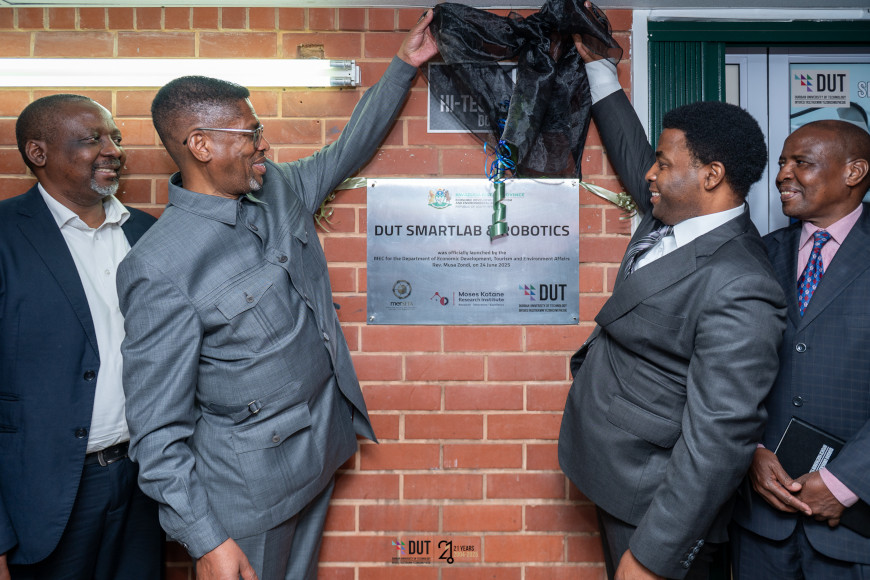
 

DUT LAUNCHES GLOBAL URBAN INNOVATION AND ENTREPRENEURSHIP COMPETITION


The Durban University of Technology (DUT) in partnership with the Alliance of Guangzhou International Sister-City Universities (GISU), hosted the Opening Ceremony and Networking Breakfast of the grand finale of the global GISU Urban Innovation and Entrepreneurship Competition, at the Southern Sun Elangeni and Maharani Hotel in Durban on Thursday, 30 October 2025.

DUT, through the Technology, Transfer and Innovation unit, in collaboration with the innobiz DUT Centre for Entrepreneurship and Innovation, has made history by being the first university in Africa to host this prestigious competition, under the theme: Further Promoting Sustainable Urban Development.

The Opening Ceremony included esteemed local and international stakeholders, including academic leaders, industry partners and student teams, who gathered to celebrate DUT’s commitment to promoting entrepreneurship, innovation and global collaboration. This global competition comprising of students from 28 universities representing 23 different countries, will be held over two days, concluding on Friday, 31 October 2025.

Representing DUT in the competition are five student entrepreneurs namely; Ms Hlengiwe Ngubane, founder of Project X; Ms Tiffany Mokoteli of Tiffany Mokoteli Enterprise; Ms Chumwe Kasanga, owner of Temwiko; Mr Banathi Sihonqo, founder of Infinity Soma Wellness Clinic and Mr Lusanda Ndlovu, founder of Innovative Mechanical Engineering Solutions (IMES). These students are active participants in the university’s dedicated incubation programme at the innobiz DUT Centre for Entrepreneurship and Innovation.

Ms Kasanga of Temwiko will be presenting later today (Thursday, 30 October 2025) under the Concept Teams Presentations, where she will be competing against student entrepreneurs and innovators from across the world. The remaining four DUT student entrepreneurs will be presenting on Friday, 31 October 2025, under the Start-Up Teams Presentations category, competing for big prizes to help take their businesses to new heights and showcase their solutions to urban challenges.

Facilitating the Opening Ceremony and Networking Breakfast was Mr Zwakele Ngubane, Director of the Advancement and Alumni Relations at DUT. He thanked GISU for affording DUT this once in a lifetime opportunity to host the seventh annual GISU Urban Innovation and Entrepreneurship Competition.

In his welcome address, Mr Alan Khan, Senior Director of Corporate Affairs at DUT, acknowledged the DUT Vice-Chancellor and Principal, Professor Thandwa Mthembu for his visionary leadership and unwavering support of all entrepreneurial activities across the institution, which has ensured that DUT embarks on this current upward trajectory towards becoming fully entrepreneurial. He also acknowledged the DUT Deputy Vice-Chancellor: Research, Innovation and Engagement (RIE), Professor Fulufhelo Nemavhola, another visionary leader, who is at the forefront of leading and ensuring that critical aspects such as research and innovation thrive in the DUT entrepreneurial ecosystem.

“This year’s theme; “Further Promoting Sustainable Urban Development” is not only timely but necessary, as our cities, including Durban, are experiencing challenges related to climate change, inequality, migration, unemployment and technology disruptions and yet our cities are also hubs of hope, centres of innovation and engines of economic change. It is important that we remember that it is only through innovation, creativity and entrepreneurship that we can change our societies for the better because it is innovation, creativity and entrepreneurship, that are the most powerful tools that can be used to drive a sustainable, inclusive and resilient urban future,” shared Mr Khan as he warmly welcomed all the distinguished guests.

Mr Steve Farr, the Alliance Secretariat Executive Director presenting the 2025 Chairman’s Award to Professor Fulufhelo Nemavhola, DVC: RIE at DUT.

Mr Steve Farr, the Alliance Secretariat Executive Director, provided insight on the GISU Industry, Business Network and Opportunities. He presented the 2025 Chairman’s Award to DUT, which is a proud member of this Alliance. The award was in recognition of DUT’s outstanding contributions in leadership and support of the Alliance.

Delivering the stakeholder remarks were Dr Simphiwe Buthelezi of the Moses Kotane Research Institute and Mr Yolan Nagoor, from the Durban Chamber of Commerce and Industry. They commended DUT for promoting a culture of entrepreneurship and innovation among young people.

Mr Bheki Zulu, the innobiz DUT Board member and Professor Thomas Dobbelstein, the Chairperson of the DUT Business School, both delivered messages of support, sharing their excitement in being part of DUT’s momentous occasion.

Delivering the keynote address, Dr Nomcebo Mthombeni, the Interim Director of the Research and Postgraduate Support at DUT, emphasised the significance of entrepreneurs being innovative to bring about impactful societal change. “We know all of the challenges and we really need entrepreneurs. As universities, I don’t think that we can afford to create graduates that go out and look for work, this initiative is about us creating entrepreneurs,” Dr Mthombeni said.

She highlighted the importance of entrepreneurs innovating business that would create solutions for the regions that they were in, citing Nigerian born billionaire entrepreneur Aliko Dangote, who built an empire through focusing on the African continent’s fundamental needs such as cement, sugar, salt and energy. “His story is really about strategic mastery and scale. He understood Africa’s infrastructure, industrialisation gaps that could become his business advantage, he didn’t really chase the global markets but he focused on Africa, providing what can build vast wealth but solving our continental problems,” Dr Mthombeni said.

Ms Nontokozo Ngcobo, innobiz DUT Centre for Entrepreneurship and Innovation Manager, said that the University’s participation in the competition had been productive and brimming with lessons. “For that we are grateful as it has only served to benefit our student entrepreneurs. Our student entrepreneurs have been participating in GISU competition for the past six years. Notably, we have enjoyed great success in the competition through Mr. Luyanda Majozi and his urban streetwear venture, Enigmatic Cotton, that saw him securing the first runner-up prize in the Start-Up category at the Guangzhou International Sister-Cities Universities (GISU) 2024 Global Start-Up competition in China,” Ms Ngcobo said.

Furthermore, she said participation in such globally recognised platforms was incredibly important for local SMMEs as it provides a platform to showcase local innovations and solutions to a wider audience, opening doors to international collaborations, partnerships and investment opportunities. “We hope that through this year’s GISU Entrepreneurship and Innovation finals competition, we can all leverage new knowledge and solutions for societal impact, as encouraged by our University’s blueprint, ENVISION2030.” Ms. Ngcobo said.

Additionally, Ms Ngcobo said that beyond just being a contest, all innovators should view this wonderful platform provided by the Alliance as a launchpad for sustainable ideas, entrepreneurial growth and global collaboration. “I hope that this year’s finals competition will empower participants to shape the future of urban living through innovation, creativity and purpose-driven business,” Ms Ngcobo concluded.

Pictured: The DUT Deputy Vice-Chancellor: Research, Innovation and Engagement, Professor Fulufhelo Nemavhola with the distinguished guests at the opening ceremony.

Photographer: Khulasande Tshayile.

Simangele Zuma/Samkelo Mtshali


https://www.dut.ac.za/dut-launches-global-urban-innovation-and-entrepreneurship-competition/
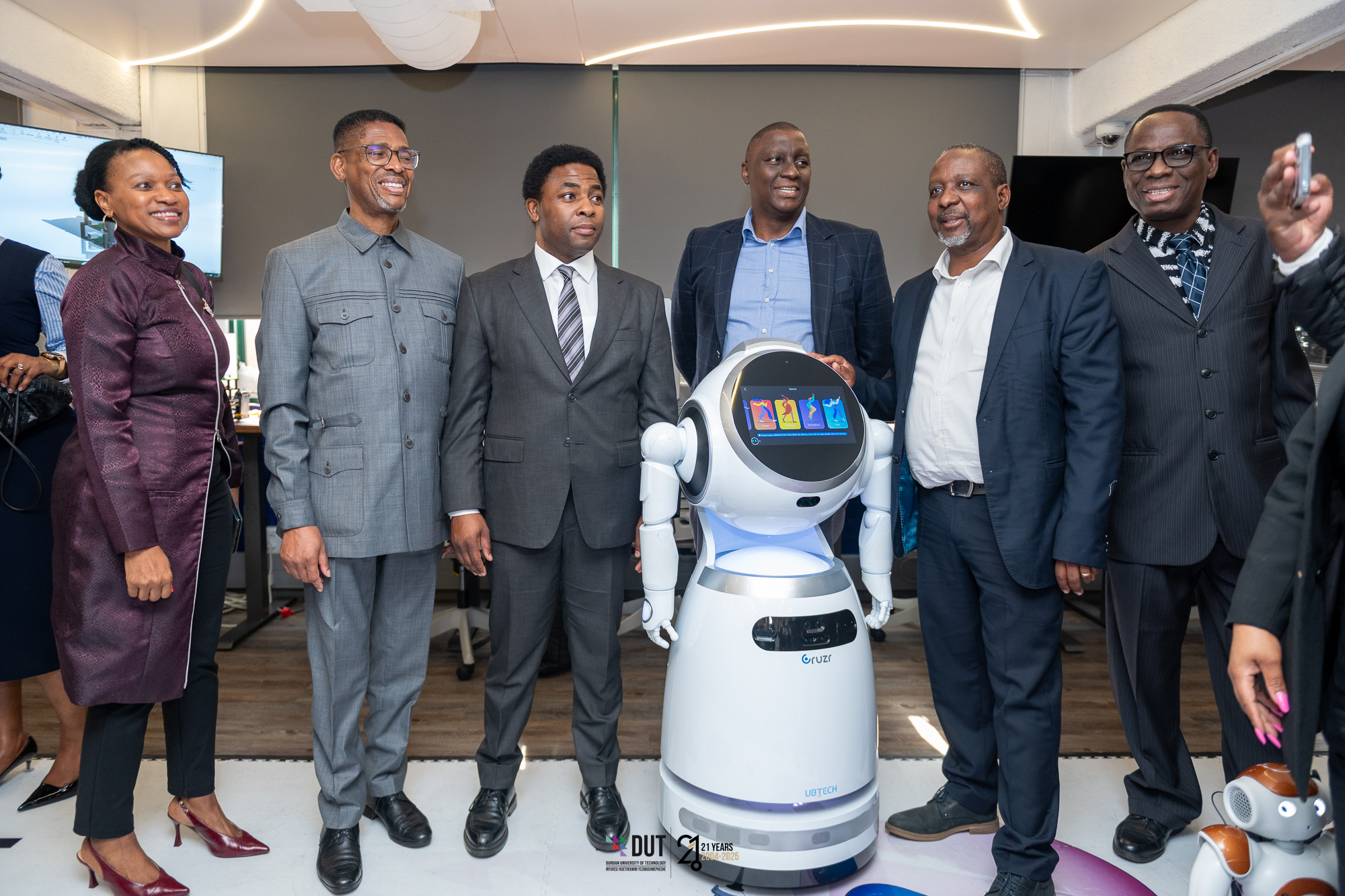
DUT AND UCT PRAGUE STRENGTHEN GLOBAL PARTNERSHIPS THROUGH RESEARCH AND INNOVATION AGREEMENT


The Durban University of Technology (DUT) has taken another significant step in advancing its internationalisation and research collaboration agenda by signing a strategic partnership agreement with the University of Chemistry and Technology, Prague (UCT Prague) in the Czech Republic.


The signing ceremony was led by Professor Fulufhelo Nemavhola, Deputy Vice-Chancellor: Research, Innovation and Engagement at DUT, together with Rector Prof. Ing. Milan Pospíšil, CSc. from UCT Prague.


This partnership marks an important milestone in strengthening academic and research ties between Africa and Europe, creating a platform for meaningful collaboration and shared innovation. The agreement outlines key areas of cooperation, including:


  • Collaborative research and innovation projects.
  • Student and staff mobility, such as academic exchanges, co-supervision and summer schools.
  • Joint curriculum development and micro-credentials.
  • Technology transfer and industry-engaged initiatives in emerging fields such as green hydrogen, advanced materials, sustainable manufacturing and AI-enabled process optimisation.

Professor Nemavhola expressed his appreciation to Rector Pospíšil and the UCT Prague team for their warm hospitality and shared vision for academic excellence. He was accompanied by DUT representatives Dr Samuels (International Education and Partnerships), Dr Mthombeni (Interim Director: Research and Postgraduate Support) and Dr Kabane (Senior Lecturer, Chemistry).


Speaking after the signing, Professor Nemavhola said the collaboration would pave the way for innovative joint projects and impactful research outcomes that benefit both regions. “This partnership represents DUT’s continued commitment to expanding our global footprint through meaningful collaborations that translate research into real-world solutions. Together with UCT Prague, we look forward to creating new opportunities for our students, staff and industry partners as we ENVISION2030 and beyond,” said Professor Nemavhola.


The Agreement will see the establishment of joint working groups and pilot initiatives aimed at accelerating research translation, knowledge exchange and sustainable development, reinforcing DUT’s ENVISION2030 strategy.


Pictured: Prof. Ing. Milan Pospíšil, CSc. Rector, University of Chemistry and Technology, Prague (UCT Prague) and Professor Fulufhelo Nemavhola, DUT, Deputy Vice-Chancellor: Research, Innovation and Engagement signing the agreement in Czechia.


Alan Khan

https://www.dut.ac.za/dut-and-uct-prague-strengthen-global-partnerships-through-research-and-innovation-agreement/

INNOBIZ DUT PARTNERS WITH PROVINCIAL GOVERNMENT AND MKRI TO LAUNCH NKANDLA DIGITAL CENTRE


KwaZulu-Natal Premier, Honourable Thamsanqa Ntuli has hailed the opening of the Vumanhlamvu Digital Centre in Nkandla, brought by the collaborative efforts of the innobiz DUT Centre for Entrepreneurship and Innovation alongside its partners the Moses Kotane Research Institute and the KZN provincial government, as a result of the sterling power of collaboration between organisations.


Premier Ntuli was speaking to the innobiz DUT team on the sidelines of the launch of the Digital Centre in the underserved rural area of Vumanhlamvu, which falls under the vast northern KwaZulu-Natal town of Nkandla, on Monday 11 August 2025.


Rev Musa Zondi,MEC for Economic Development, Tourism, and Environmental Affairs (EDTEA).


The programme featured distinguished speakers and guests including KZN Premier Mr Thami Ntuli, Rev Musa Zondi,MEC for Economic Development, Tourism, and Environmental Affairs (EDTEA), Professor Thandwa Mthembu, Vice-Chancellor and Principal of the Durban University of Technology (DUT), Professor Fulufhelo Nemavhola, Deputy Vice-Chancellor: Research, Innovation and Engagement at DUT, representatives from the US Embassy, Mr Charles Mpofu of Nedbank and traditional leaders of the community.


The launch of the Vumanhlamvu Digital Centre, donated by Moses Kotane Research Institute, formed part of the wider Adopt-A-School project pioneered and extensively driven by the innobiz DUT Centre since 2022 in which 20 schools were adopted participate in the “Grow and Thrive School Garden Challenge”.


A special highlight of the day’s proceedings was the Entrepreneurship Awards ceremony, where innobiz DUT honoured schools participating in the Adopt-A-School Entrepreneurship initiative, “The Grow and Thrive School Garden Challenge”.


These awards celebrated young changemakers and passionate teachers from Vumanhlamvu Primary School, Ntolwani Primary School and Mnyakanya High School, who demonstrated creativity, innovation and sustainability in their school based agricultural initiatives. The winning schools each received monetary prizes to help them purchase additional garden resources, ensuring their projects continue to thrive and expand.


The 2025 leg of the project themed: “Adopt-A-School: Building Future Entrepreneurs through Agriculture, Technology, and Financial Literacy for Kids” also saw a computer lab being launched at the Bizimali High School, also in Nkandla, in a bid to bridge the digital divide and expose rural youth to a myriad of digital and technological opportunities.


In alignment with the values and principles of seeking collaboration to advance societal impact, as enshrined in DUT’s ENVISION2030 strategy, innobiz collaborated with the MKRI to ensure that the dream of the Digital Centre aimed at bridging the digital divide between the youth in far flung rural areas such as Nkandla and their counterparts in semi-urban and urban areas.


KwaZulu-Natal Premier, Honourable Thamsanqa Ntuli.


“We need to close the gap that exists of inequality between the most rural communities, township communities, and the urban communities, hence I was making a call that it’s important for universities to reach out to rural people and communities. Universities experience an influx of applications, but upon analysis you realise that the majority of people are people coming from areas that have already progressed to a better level. So it’s important that this collaboration between the Durban University of Technology, the Moses Kotane Research Institute, the Department of Economic Development, Tourism and Environmental Affairs and the Nkandla Local Municipality is finding expression, not only here in Vumanhlamvu but also in other parts of KwaZulu-Natal,” the Premier said.


Premier Ntuli said that the youth of the two benefitting communities, Vumanhlamvu and Bizimali, had struck gold with the launching of the Digital Centre and the Computer Lab as they would now be able to participate in the digital economy and bring new solutions to problems plaguing the global community.


“It is going to enable them to compete with the youth from countries such as the United States of America, Asia, and whichever countries that are mostly developed compared to South Africa. It is a digital journey that must be embraced by tertiary institutions such as DUT. I am proud of the DUT that they are able to be here in Nkandla and I expect that as we move to other rural and township communities we walk together that journey to reshape the future of our province, because what we are doing here is to shape the future of our province,” Premier Ntuli elaborated.


One of the key aspects of the Adopt-A-School project was to inculcate an entrepreneurial spirit, mindset and skills into primary and high school learners, and Premier Ntuli said that the translation of agriculture into the digital economy would ensure that at grassroots level entrepreneurs are groomed where they resided and would be changing the lives of their own communities in which they resided.


DUT’s Professor Fulufhlelo Nemavhola, DVC:RIE, Ms Nontokozo Ngobo, innobiz DUT Manager, Professor Thandwa Mthembu, Vice-Chancellor and Principal at DUT.


“It’s quite a very important programme and we must ensure that we run with it in all disadvantaged communities,” Premier Ntuli added.


DUT’s Professor Fulufhelo Nemavhola, DVC:RIE, emphasised the importance of collaboration, saying that this aligned with the quad-helix model employed by DUT which meant that the University’s role was to work hand in hand with stakeholders such as the various spheres of government, corporates and the local communities.


More than teaching the school learners entrepreneurial skills, Prof Nemavhola said that it was also about imparting on them the fundamentals of life, including discipline, time management, and the ability to organise themselves as human beings.


“The principles of entrepreneurship are a cherry on the top because once they are able to organise themselves, they would be able to do almost everything. It’s very important to teach them these principles when they are still young so that they are able to carry them forward,” said Prof Nemavhola said.


Switching his focus to the launch of the Digital Centre at Vumanhlamvu and the Computer Lab at Bizimali Prof Nemavhola emphasised the significance of digital and internet connection.


“If communities don’t have some kind of connectivity or internet, they are going to be left behind because anyway knowledge is through the internet, knowledge is through Artificial Intelligence (AI) and without connectivity you are not able to gain much. If you look at AI as an example there’s a lot that, through access to the internet, communities can learn and they can even innovate through AI and so forth. It’s very important for communities like these to have access technology, and otherwise they will be left behind because development in the near future is going to be through connectivity and the advancement of technology,” Prof Nemavhola added.


Dr Thandeka Ellenson, CEO of the Moses Kotane Research Institute.


Dr Thandeka Ellenson, CEO of the Moses Kotane Research Institute, said that it was critical that all partners collaborate to bring to life projects such as the Digital Centre in Vumanhlamvu, adding that each partner plays an important role.


“Government brings support, institutions like innobiz DUT bring the innovative part, Moses Kotane Research Institute brings the infrastructure, so it’s very important that we collaborate and have each and every partner to contribute towards the development of the society which then leads to economic development which is what we are for,” Dr Ellenson said.


She added that the launch of the Vumanhlamvu Digital Centre and the Bizimali Computer Lab were part of the KwaZulu-Natal provincial government’s digital transformation strategy which has pillars including connecting the society to the internet, digital skilling which ensures that once they are connected they are skilled in order to participate in the digital economy and ensuring that they are on par with other societies around the globe.


“In today’s world we are going digital in every way, so for a member of society to participate in this digital economy they need to be digitally skilled and this is necessary in numerous sectors, including agriculture, tourism, and manufacturing which are now based on the fifth Industrial Revolution.


“The 5IR requires that members of the society be skilled digitally, so this is very important because we are equipping the communities to be able to participate in those spaces. In addition to that we are making sure that those that would not have had access to digital or ICT infrastructure are included in this day,” Dr Ellenson explained.


Pictured: KZN Premier, Honourable Thamsanqa Ntuli officially opening the Nkandla Digital Centre.


Photographer: Khonzinkosi Magcaba.

Samkelo Mtshali


https://www.dut.ac.za/innobiz-dut-partners-with-provincial-government-and-mkri-to-launch-nkandla-digital-centre/

DUT STUDENTS ENCOURAGED TO UTILISE NEWLY LAUNCHED SMART ROBOTICS LABORATORY IN DEVELOPING SOLUTIONS FOR SOCIETAL CHALLENGES


The Durban University of Technology (DUT) successfully launched one of Africa’s most advanced Smart Robotics Laboratory, a state-of-the-art facility developed in strategic partnership with the Moses Kotane Research Institute (MKRI), and the Manufacturing, Engineering and Related Services Sector Education and Training Authority (merSETA).


The historical launch took place at DUT’s Ritson Campus on Tuesday, 24 June 2025. Hosting the event during Youth Month highlighted the lab’s transformative potential to empower young South Africans for leadership in the digital economy. Students are set to gain hands on experience using equipment identical to that found in leading global manufacturing facilities, ensuring their skills match international standards and workplace demands.


Professor Fulufhelo Nemavhola, DUT’s Deputy Vice Chancellor: Research, Innovation and Engagement  emphasised the importance of embracing the 4th Industrial Revolution to stay relevant. He highlighted the DUT Smart Lab Project as a key initiative driving youth innovation and technology, equipping students with cutting-edge skills to succeed in a rapidly changing world.


Pictured: Dignitaries at the Smart Robotics Laboratory launch.


“We are not just launching the lab, but we are igniting the movement of minds and invention. The DUT smart lab stands as a beacon of what is possible when institutions, government and youth unite. This is not just a facility, but it is a response and intentional answer to the question South Africa cannot avoid. We are preparing our youth for the world that is coming,” said Prof Nemavhola.


merSETA Acting CEO Mr Naphtaly Mokgotsane shared insight on industry support and funding in driving technology innovations. He stated that supporting youth development through technology innovation is both an economic necessity and a social obligation, highlighting merSETA’s commitment to empowering young people.


“We are one of the 21 SETA’s, established through the Skills Development Act (SDA). Our role is to facilitate skills development. It is a great pleasure for me to speak to you about the project that represents the future of skills development in our country. We funded the Smart robotics lab project, in partnership with DUT and MKRI. The partnership brings together the best of academia, research and industry collaborations to prepare our youth for the 4th industrial revolution,” said Mr Mokgotsane.


Dr Thandeka Ellenson, CEO of the Moses Kotane Research Institute then thanked innovators for their dedication to advancing South Africa and encouraged students to harness the lab’s potential to develop solutions for societal challenges. “I would like to encourage our youth today to be not just content with the status core. Be creative, solve problems, address societal challenges and participate in digital economy,” said Ellenson.


In his keynote address, Economic Development, Tourism and Environmental Affairs MEC Rev. Musa Zondi praised MKRI’s vision and merSETA’s contribution to the lab project, noting its potential to benefit not just DUT but the wider KwaZulu-Natal community.


“It is both an honour and privilege to stand before you today in this beautiful occasion of the launch of the smart lab, which is a transformative initiative that marks a new chapter in our province’s commitment to innovation, technology and inclusive economic development. I would also like to extend my heartfelt congratulations to the Moses Kotane Research Institute, for their vision, leadership and commitment to the empowerment of our youth and advancement of cutting edge research and innovation,” said MEC Zondi.


Faculty of Accounting and Informatics students, mentored by Prof Oludayo Olugbara, Mr Fanie Ndlovu and Mrs Ugeshni Moodley showcasing their innovative projects that leveraged cutting-edge technologies was one of the highlights of the programme. This display of student innovation demonstrated the potential of emerging technologies in solving real-world problems.


The programme concluded on a high note, with the ribbon cutting ceremony and student demonstration of the smart technology and humanoid robots in the lab.


Pictured: Left to right: Mr Naphtaly Mokgotsane (merSETA Acting CEO), Rev. Musa Zondi (EDTEA MEC), Professor Fulufhelo Nemavhola (Deputy Vice-Chancellor: Research, Innovation and Engagement), and Professor Mashupye Kgaphola (Interim Deputy Vice-Chancellor: Teaching and Learning, at the ribbon cutting ceremony.


Photographer: Khulasande Tshayile

Thubelihle Dumakude


https://www.dut.ac.za/dut-students-encouraged-to-utilise-newly-launched-smart-robotics-laboratory-in-developing-solutions-for-societal-challenges/