RESEARCH
ADVANCEMENT

SDG15 Life on Land


2026

DUT STUDENTS TURN ENVIRONMENTAL LAW INTO REAL-WORLD SOLUTIONS


First-year students at the Durban University of Technology (DUT) are demonstrating how creativity and innovation can help address environmental challenges, using the law as a tool to promote sustainability and protect the environment.


The students presented their ideas and projects on 15 October 2026 at the Midlands Campus as part of the Environmental Sustainability and Law (ES&L) Project-Based Learning (PBL) and Design Thinking (DT) Project 2026. The initiative was undertaken by the Department of Applied Law for students enrolled in the Law for Life module.


Spearheaded by the Centre for Excellence in Teaching and Learning (CELT), the project seeks to introduce innovative teaching and learning approaches that encourage creativity, innovation and adaptability. It also supports DUT’s ENVISION2030 perspectives, the National Development Plan 2030, the United Nations Sustainable Development Goals (SDGs) and the University’s recently approved Philosophy of Education, which incorporates Project-Based Learning and Design Thinking.


The Law for Life module introduces first-year students to areas of law that influence everyday life. However, understanding how the law operates beyond the classroom can be challenging when learning is largely confined to theory and textbook case studies. The project addressed this gap by giving students an opportunity to investigate environmental problems in their communities and explore how legal knowledge could inform practical solutions.


As part of their learning, students attended guest lectures facilitated by the innobiz DUT Centre for Entrepreneurship and Innovation, together with a CELT student development practitioner. These engagements exposed them to interdisciplinary and transdisciplinary approaches to environmental sustainability, highlighting the connections between law, innovation, economic development and social and cultural contexts.


Students then conducted fieldwork at schools, tuck shops, taxi ranks and other community spaces to identify environmental challenges and develop recommendations. Their investigations focused on water quality and river pollution, biodiversity loss, waste management and urban sprawl and land use.


The project culminated in a range of creative, practical solutions that demonstrated how students could apply design thinking to problems affecting their communities. Among their initiatives were environmental awareness campaigns that combined public education with clean-up activities across Pietermaritzburg, as well as collaborations with external non-governmental organisations (NGOs).


Other projects included solar-powered software applications designed to monitor environmental issues and detect potential problems before they escalate, a free emergency website for reporting environmental concerns directly to the local municipality, sensor-based bins with colour-coded systems to encourage waste separation, and a flood alarm system. These solutions reflected the students’ efforts to move beyond identifying problems towards developing and testing possible interventions.


Through the process, students strengthened their research, communication, collaboration and critical-thinking skills while learning to approach complex environmental issues from different perspectives. The experience also demonstrated the value of connecting legal education with community engagement and technological innovation.


The student presentations were assessed by a panel comprising Ms Thembelihle Mathaba, an executive member of the Student Women Economic Empowerment Programme; Dr Peter Kalanga, Academic Development Practitioner and Student Support and Development Unit Coordinator; and Mr Minenhle Dlamini, the project leader and lecturer in the Department of Applied Law.


By bringing together environmental law, design thinking and project-based learning, the initiative illustrates how teaching and learning at DUT can equip students to engage meaningfully with societal challenges. It also reinforces the importance of developing graduates who can apply their knowledge creatively, think critically and contribute to more sustainable communities.


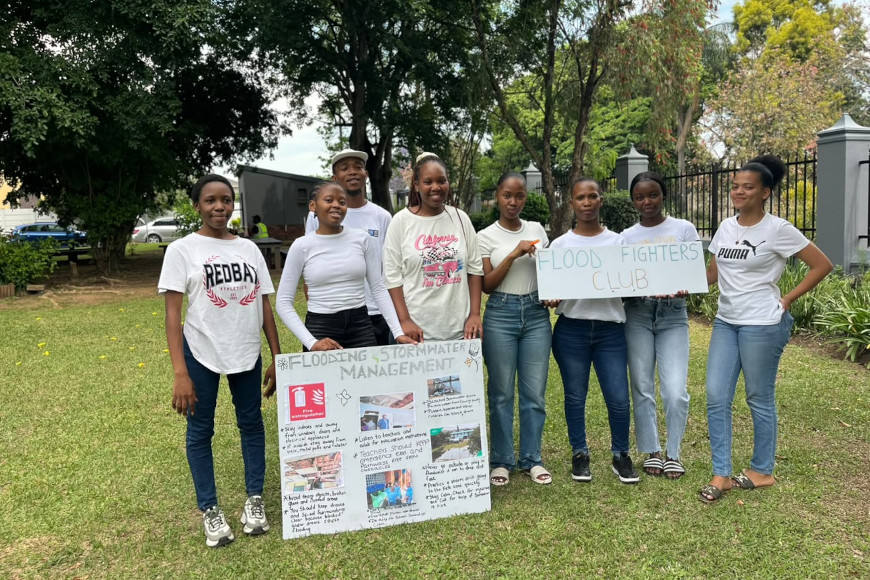
Pictured: The Flood Fighters Club presenting their project.


Photo: Supplied.

Minenhle Dlamini

https://www.dut.ac.za/dut-students-turn-environmental-law-into-real-world-solutions/


2025


FACULTY PLANTS SEEDS OF LEGACY WITH NEW INDIGENOUS GARDEN


The Faculty of Applied Sciences launched its Legacy Garden on Thursday, 24 July 2025, in a heartfelt tribute to decades of service. The event brought together colleagues, industry partners and supporters to honour long-serving staff members through the planting of indigenous trees, a symbolic and lasting gesture tied to the values of Mandela Month.


Located at the Steve Biko Campus, the garden features 67 trees, each representing a staff member, past or present, who has left a meaningful mark on the Faculty’s journey. More than just a green space, it serves as a living archive of dedication, growth and service.


“This garden represents more than recognition. It’s a living testament to how individual dedication creates collective transformation,” said Executive Dean Professor Suren Singh. “We’re planting seeds of hope, sustainability and service that will flourish for generations.”


At the heart of the ceremony was a tree planted in honour of Ms Gill Shackleford, who has worked in the Dean’s Office since 1987. With 38 years of service, Gill’s contribution was described as the grounding force through many of the Faculty’s defining seasons.


“Like the roots of this tree that anchor it to the ground, Shackleford’s commitment has grounded this Faculty through different eras,” Professor Singh observed.
Reflecting on the day, Shackleford shared: “It was a lovely and humbling moment. After so many years, it’s heartwarming to know that our contributions are seen and remembered. This garden is not just a tribute. It’s a message to future generations that every role matters.”


The event drew distinguished guests from various sectors, including Pedro Dias, Football Director at AmaZulu FC; Eric Apelgren, Durban’s International Relations Negotiator; Gugu Sisalana, Director at eThekwini Municipality; and Ayanda Melansi, Content Specialist at Gagasi FM. Their presence reinforced DUT’s growing network of partnerships and commitment to community connection.


While many staff members were present, several were honoured in absentia due to retirement or unavailability. These included Captain Shange, Mr Jonathan Pillay and Professor Bisetty. Their trees were planted with heartfelt acknowledgements from colleagues who knew their work well.


The Legacy Garden offers more than tribute. It also holds academic value. The Horticulture, Biotechnology and Mathematics departments are already exploring how the space can support teaching and learning.

Dr Heleen Grobbelaar from Consumer Sciences reflected: “This garden is a beautiful reminder that our work is part of something bigger. It’s a space that celebrates knowledge, nature and community.”


Dr Noor Ally from Mathematics added: “As a mathematician, I appreciate how small actions can have exponential impact. Planting these trees symbolises how every contribution matters.”


Mr Vee Dilraj from Biotechnology and Food Science noted: “Biotechnology teaches us about sustainability and responsibility. This garden embodies those lessons. The future depends on how we care for the environment and each other.”


The ceremony closed with music, warm conversations and meaningful connections among colleagues. The message was clear. This garden represents more than a one-time tribute. Like the Faculty itself, it will continue growing and serving as an enduring reminder of the power of service, sustainability and institutional memory.


The Legacy Garden is open to staff, students and the public during regular campus hours.


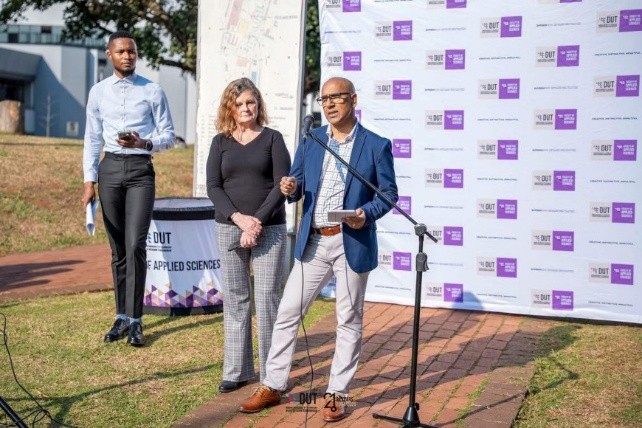
Pictured: Executive Dean Professor Suren Singh with Ms Gill Shackleford at the launch of the Legacy Garden.

Silindile Buthelezi

https://www.dut.ac.za/faculty-of-applied-sciences-plants-seeds-for-a-sustainable-future-at-umlazi-comtech/


DUT HOSTS INAUGURAL ECOTOURISM INDABA AT MIDLAND RIVERSIDE CAMPUS


The Durban University of Technology (DUT) Department of Ecotourism recently hosted its inaugural Ecotourism Indaba at the Riverside campus in Midlands. The three-day event, which coincided with National Tourism Month, created a vibrant space for dialogue, collaboration, and innovation, while celebrating South Africa’s cultural diversity and rich natural heritage. 


The programme was officially opened by the Midlands Campus Director, Dr Nonhlanhla Mthiyane, who warmly welcomed industry partners, DUT staff, students, and high school learners. In her address, she described the Indaba as more than an event but a platform that reflected DUT’s values and commitment to sustainability. She emphasised that ecotourism was not only about showcasing destinations but also about protecting natural heritage, uplifting communities, and building a sustainable future.  


Speaking directly to Grade 11 Tourism learners from Siyanda High School, Dr Mthiyane encouraged them to participate actively and to draw inspiration from the exhibitions, reminding them that they were the next generation of leaders and change-makers. She also urged DUT students to be creative, distinctive, and impactful in preserving the environment, noting that their future careers in the sector depended on sustainable practices. 


The Head of the Department of Ecotourism, Dr Nsizwazikhona Chili, also addressed the gathering and spoke about the importance of using every opportunity to effect positive change. He highlighted DUT’s strong focus on entrepreneurship, explaining that the aim was not only to prepare students for employment but also to equip them with skills for self-employment and business creation. He reminded students that transformation does not mean selfishness, but selflessness, explaining that true change uplifts others and leaves a legacy for generations to come. He further encouraged students to embrace tourism as a sector full of opportunities, particularly when approached with an entrepreneurial mindset. 


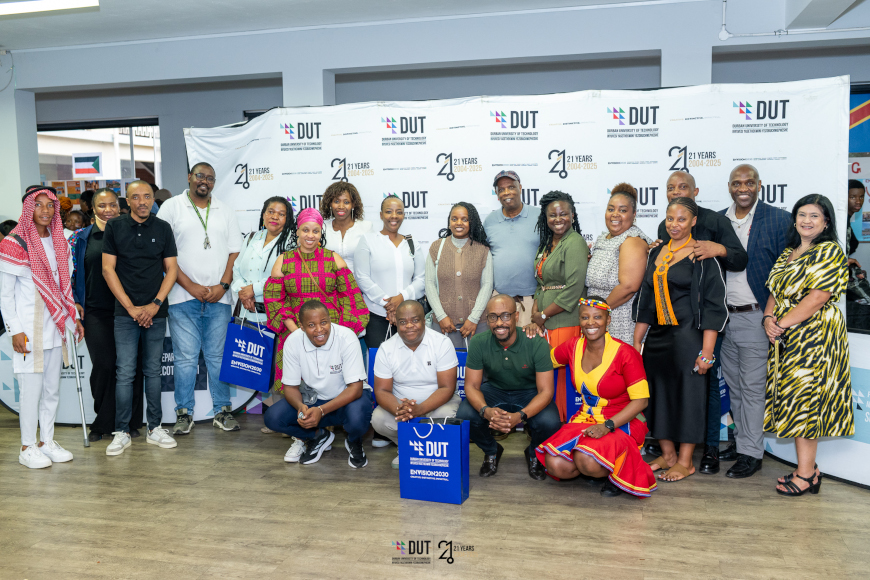
The Indaba’s opening day featured a lively exhibition led by 287 second-year Tourism students, who showcased tourism attractions across Africa with displays that integrated traditional food, attire, and culture, reflecting the continent’s diversity. Industry partners such as EDTEA, African Link, KZN Wildlife, the Mandela Capture Site, Travel with Flair, KZN Museum as well Redlands Hotel participated by assessing the students’ projects through an integrated rubric that covered event management, marketing, and tourism management. At the same time, grade 11 tourism learners from Siyanda High School took part in an itinerary design competition, where prizes and certificates were awarded to the best teams. 


The programme also recognised excellence among students. After the second-year exhibitions, the department together with industry partners provided feedback and awarded prizes to the groups with the best exhibition stands. The Kenya group was announced as the winner, receiving the Best Exhibition Stand Award. Speaking on behalf of her group, Nonjabulo Sigwebela expressed her excitement and gratitude for the recognition. 


Day two of the Ecotourism Indaba placed a strong emphasis on environmental conservation, with a major highlight being the annual uMsunduzi River Cleanup—now proudly in its third consecutive year. A total of 153 first-year Ecotourism students actively participated in this hands-on initiative, aimed at promoting ecological awareness and sustainable environmental practices. 


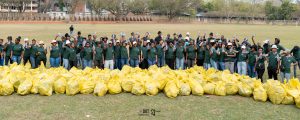
Students collected over 300 bags of waste.

Guided by their lecturers, the students worked collaboratively to remove litter from the riverbanks, collecting over 300 bags of waste. Attired in Ecotourism-branded t-shirts and equipped with safety gloves and litter bags, the students not only cleaned the natural environment but also embodied the principles of responsible ecotourism. Their involvement demonstrated a practical application of classroom knowledge and a deepened understanding of the critical link between tourism and conservation. 


In addition to the cleanup, the day featured a series of insightful presentations delivered by the first-year students themselves. These presentations explored the ecological importance of rivers as vital (and fragile) ecosystems and examined the interdependence between ecotourism and the natural environment. By reflecting on the role rivers play in biodiversity, water security, and tourism experiences, students reinforced the idea that protecting natural resources is essential for the long-term sustainability of the ecotourism industry. 


The Indaba concluded on the third day with an online webinar themed “A Future for Eco-Tourism” through the lens of Climate Change, which drew over 150 participants and connected universities from Kenya, Midlands State University from Zimbabwe, Tanzania Sokoine University of Agriculture from Tanzania, and across South Africa. The virtual discussions examined the impact of climate change on ecotourism and provided students with valuable regional and international perspectives on sustainability. Guest speakers included Dr Ariel Prinsloo, Postdoctoral Research Fellow at the University of the Witwatersrand, and Ms Nelisiwe Mvuni, Environmental & Climate Change Practitioner at the Ekurhuleni Metropolitan Municipality.


Lecturer Mrs Janice Naidoo praised the Indaba as a living example of ENVISION2030, DUT’s long-term strategic framework. She highlighted how the event aligned closely with the core values and strategic focus areas of the institution, including student-centredness, environmental responsibility, innovative research, meaningful community engagement, and long-term sustainability. 


Mrs Naidoo commended both staff and students for their unwavering dedication and active participation, noting that the success of the Indaba was not the result of individual efforts alone. Instead, she emphasised that it was a truly collaborative achievement, every member of the department played a vital role in planning, organising, and executing the event. Their collective commitment, she added, reflected the spirit of unity and shared purpose that lied at the core of DUT’s vision for the future.  


The inaugural DUT Ecotourism Indaba was made possible through the generous support of key sponsors, including the South African Health Foundation, Aquelle, and the City of Choice. Centred around the unifying theme “A Future for Eco-Tourism,” the event served as a platform to showcase student talent, innovation, and creativity. 


Beyond highlighting academic excellence, the Indaba also played a crucial role in strengthening collaborations between the university, industry stakeholders, and the wider community. This partnership-driven approach reinforced DUT’s commitment to shaping sustainable futures and ensured the university remained at the forefront of advancing Ecotourism in South Africa and beyond. 


Pictured: Ecotourism staff members and industry partners from EDTEA, African Link, KZN Wildlife, the Mandela Capture Site, Travel with Flair, KZN Museum, and Redlands Hotel. 


Photographer: Khulasande Tshayile.

Sinamile Sithole  


https://www.dut.ac.za/dut-hosts-inaugural-ecotourism-indaba-at-midland-riverside-campus/