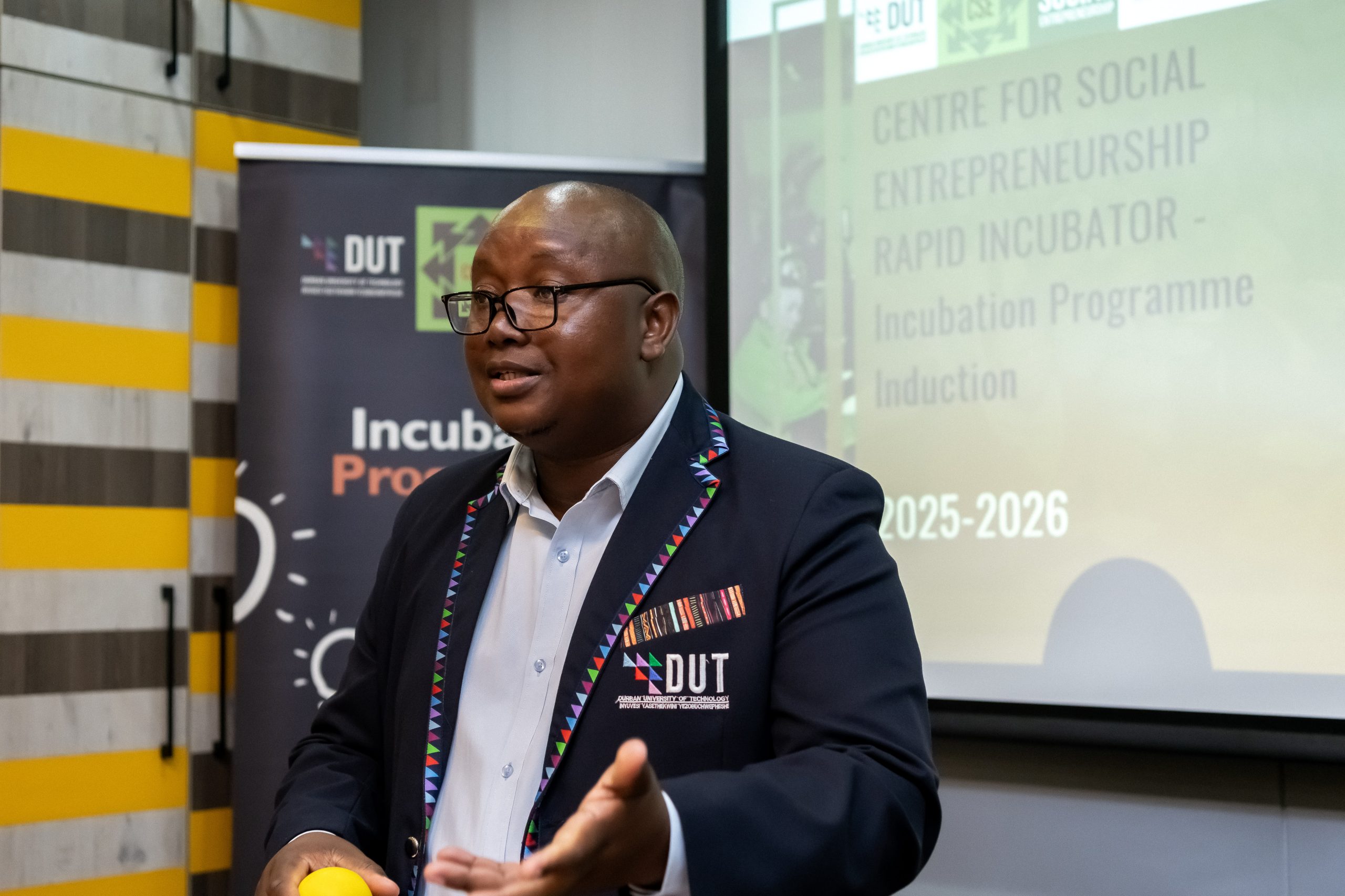
RESEARCH
ADVANCEMENT

SDG8 Decent Work and Economic Growth


2026

CELT AT DUT HOSTS WORKSHOP ON DECOLONISING ENTREPRENEURSHIP


The Centre for Excellence in Learning and Teaching (CELT) at the Durban University of Technology (DUT) hosted a workshop titled “The Nexus Between Decolonisation and Entrepreneurship.” The workshop was held at the Hotel School, Ritson Campus, on Thursday, 12 March 2026.


The workshop explored how entrepreneurship education can move beyond Eurocentric theories and case studies by integrating indigenous knowledge systems, Ubuntu philosophy, and local economic realities. The purpose of the workshop was to critically examine the intersection between epistemic decolonisation and entrepreneurship education and practical pathways for curriculum transformation within higher education.


The opening remarks were presented by the Educational Technologist, Ms Bwalya Nyangu Lungu, who extended a warm welcome to guests and attendees.


The Acting Director of CELT, Dr Shoba Rathilal, delivered a presentation on the relationship between decolonisation, entrepreneurship, and the philosophy of education in higher education. She explained that decolonisation is a global higher education priority, aimed at addressing the alienation many students experience when dominant knowledge systems do not reflect their realities. Dr Rathilal emphasised the need for students to engage critically with different knowledge systems, recognising multiple ways of knowing.


She further highlighted the importance of developing an entrepreneurial mindset among graduates, not only for business creation but for innovation, problem-solving, and responding to societal challenges. In the context of a constrained job market, graduates should be equipped to create opportunities and contribute meaningfully to society. This aligns with the university’s philosophy of education, which emphasises creativity, innovation, and societal transformation.


Dr Rathilal pointed out that decolonisation and entrepreneurship should be integrated rather than treated as separate agendas. While decolonisation broadens knowledge systems, entrepreneurship enables their practical application for social impact. She stressed the role of educators in designing inclusive, contextually relevant curricula and teaching approaches that prepare students to become active agents of change.


Prof Simphiwe Nojiyeza clarified key concepts of decolonisation and decoloniality. He explained that decolonisation refers to the historical process of political independence from colonial rule, while decoloniality is a broader, ongoing effort to challenge systems of power, knowledge, and inequality rooted in colonialism.


Decoloniality requires addressing epistemic, cultural, economic, and political dimensions and recognising Indigenous knowledge systems across all disciplines. Prof Nojiyeza introduced Afrocentricity and Africology as approaches that centre African agency, history, and culture in knowledge production. He argued that Africa has long been a site of innovation and knowledge, challenging Eurocentric narratives that position the West as the primary source of development. He also highlighted how colonialism and coloniality continue to shape language, education, and economic systems in Africa, including the dominance of European languages and structures.


Among the guests who shared presentations were Dr Mandla Mubecua, who spoke on Indigenous Knowledge Systems and Entrepreneurial Practice, Dr Misheck Musaigwa, who presented on Re-contextualisation and Curriculum Redesign in Business Education, and Ms Lindokuhle Ntuli, who discussed Entrepreneurship in the Global South, focusing on cooperatives, social enterprises, and community-based models.


The event was concluded by Ms Bwalya Nyangu Lungu, who thanked the guest speakers for their presence and insightful presentations. She also expressed appreciation for the active participation and engagement of the audience.


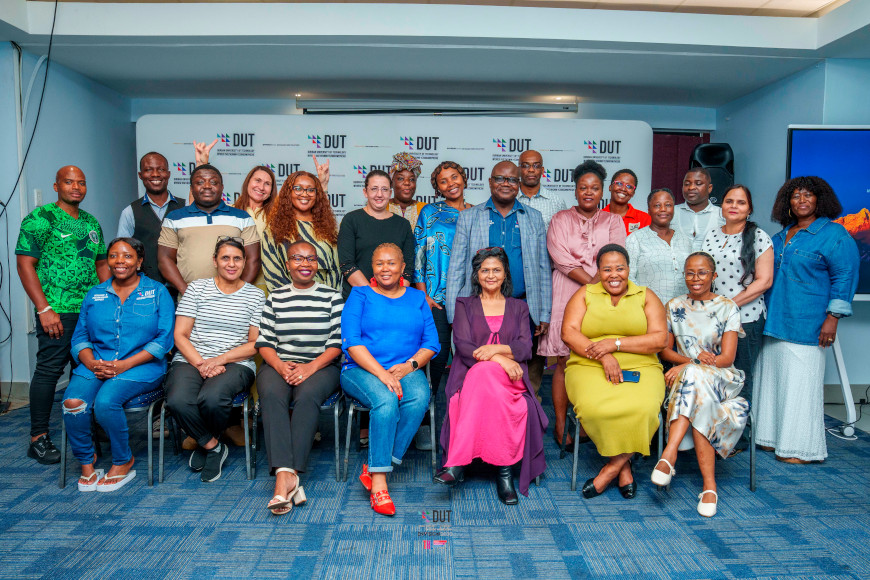
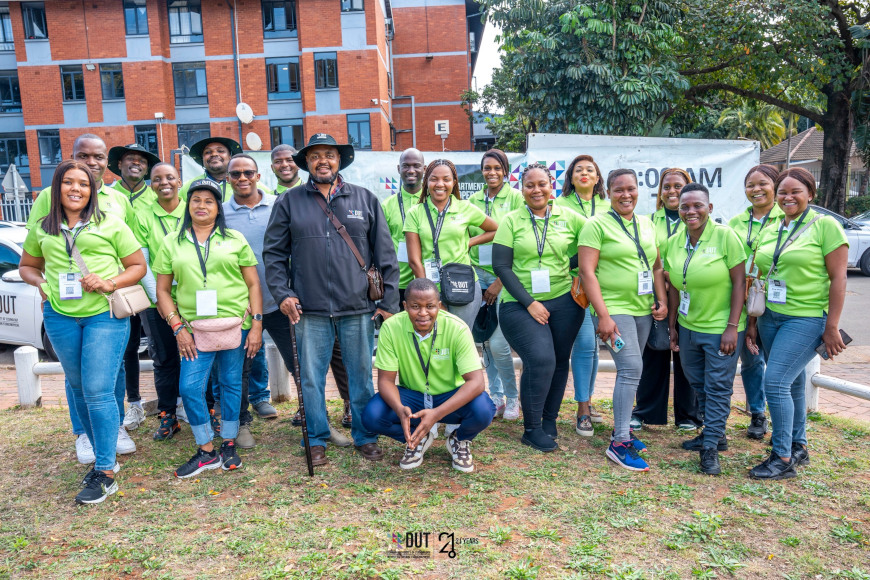
Pictured: Attendees at the Decolonisation and Entrepreneurship Workshop.


Photographer: S’bonelo Dlamini.

Phiwayinkosi Sibiya

https://www.dut.ac.za/celt-at-dut-hosts-workshop-on-decolonising-entrepreneurship/


ENTREPRENEURSHIP TALK WITH PENUEL INSPIRES DUT STUDENT ENTREPRENEURS


It was a special two days at the innobiz DUT Centre for Entrepreneurship and Innovation as the Centre hosted The Entrepreneurship Talk with Mr Penuel Mlotshwa, bringing together student entrepreneurs, innovators and business leaders for conversations on entrepreneurship.


At the heart of the engagement were stories of humble beginnings, setbacks, resilience and perseverance, as a panel of five entrepreneurs from the three phases of the innobiz incubation programme shared their journeys, challenges, lessons and ambitions.


The panel, led by Mr Penuel Mlotshwa and innobiz DUT Centre Manager Ms Nontokozo Ngcobo, comprised Mr Mlungiseleli Bucu, founder of 4th AI; Ms Melokuhle Ntleko, founder of Takkie Wash SA; Mr Nkanyiso Dlamini, founder of Ruth Concepts; Ms Sinalenjabulo Ndlovu, founder of Nondela Project; and Ms Humeira Hassan, founder of Aquagreen Technologies.


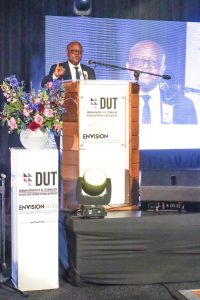
Mr Penuel Mlotshwa.

Led by Mr Mlotshwa through his popular YouTube podcast, The Penuel Show, in collaboration with innobiz DUT, the engagement aimed to connect student entrepreneurs with potential customers and expose them to practical insights from an established voice in South Africa’s entrepreneurship space.


Ms Ngcobo thanked the University’s Executive Management Committee, led by DUT Vice-Chancellor and Principal Professor Thandwa Mthembu, for creating an enabling environment for entrepreneurship development within the DUT community.


“Prof. Mthembu always talks about an enabling environment and he has created DUT to be an enabling environment for entrepreneurship development not only because of the high unemployment rate that we have in South Africa, but also because there are people who are not made to work, people who show characteristics of being an entrepreneur and universities are safer spaces for that,” Ms Ngcobo said.


She highlighted the importance of integrating entrepreneurship into the curriculum to support the development of students who may have strong ideas but lack basic business and financial management skills.


“That’s why we bring you into the programme to teach you those critical financial management skills. Through innobiz we cover basic financial and business management skills, how to market your businesses, and how to integrate AI into your businesses.


“The University is currently going further than just creating entrepreneurs by ensuring that there is integration of entrepreneurship into the curriculum, ensuring that we start to ignite the entrepreneurial mindset from the classroom,” Ms Ngcobo said.


She also thanked the University for supporting opportunities that expose students to international markets, entrepreneurship trends and global best practices through benchmarking expeditions.


“We thank the University for supporting our crazy ideas. When you talk of exposure, we now have a budget for local and international exposure and that exposure contributes to how you think, the perspectives of other people in the entrepreneurship space and critically contributes to your business growth,” Ms Ngcobo said.


Mr Mlotshwa also recognised DUT’s support for student entrepreneurship through programmes such as those offered by innobiz.


“We speak about it in passing, but I don’t think you guys understand how difficult it is to run a department like this. There are a lot of institutions in South Africa that speak a big game about entrepreneurship, ‘we need entrepreneurs, entrepreneurs are the ones that create jobs’, but when you actually get on the ground you realise there’s a lot of red tape and a lot of pushback.


“We are not sure why this is, but we are hoping some of these institutions will engage us so that people like Ms Ngcobo can assist them and show them how this thing actually works. From my side I would also like to thank Prof. Mthembu and his executive team and the whole of DUT for creating an enabling environment for what this is and I’m looking forward to taking this on the road to other universities because this is desperately needed in the country,” Mr Mlotshwa said.


The entrepreneurs on the panel then shared their experiences of navigating the challenges and opportunities of building businesses.


Mr Dlamini spoke about the importance of maintaining accurate financial records when seeking investment. He explained how detailed documentation of every transaction in his businesses helped demonstrate financial discipline and made his businesses more attractive to investors and financial institutions.


Ms Hassan, whose business is based on the commercialisation of her research, spoke about the challenge of bridging the gap between research and commercialisation. She highlighted the importance of ensuring that research translated into products and services that address societal needs and have a meaningful impact on communities.


Ms Ntleko, who runs seven businesses, shared her experiences of managing older employees as a young entrepreneur. She spoke about the importance of leadership, accountability and consequence management while navigating business growth.


Mr Bucu encouraged young entrepreneurs to believe in their ideas and remain focused despite doubts from others. He emphasised the importance of putting in the work, refining ideas and continuously developing their businesses.


Ms Ndlovu spoke about operating in the male-dominated electrical construction industry. She said she approached the challenge by believing that she belonged in the sector and competing through the quality and competence of her work.


The session also included a question-and-answer segment, where participants engaged the panel on practical ways of navigating different sectors, including accessing funding, commercialising research, protecting ideas through intellectual property and establishing market linkages.


Through The Entrepreneurship Talk with Penuel, innobiz DUT provided student entrepreneurs with a platform to engage with experienced entrepreneurs, gain practical insights and explore opportunities to grow their businesses beyond the University environment.


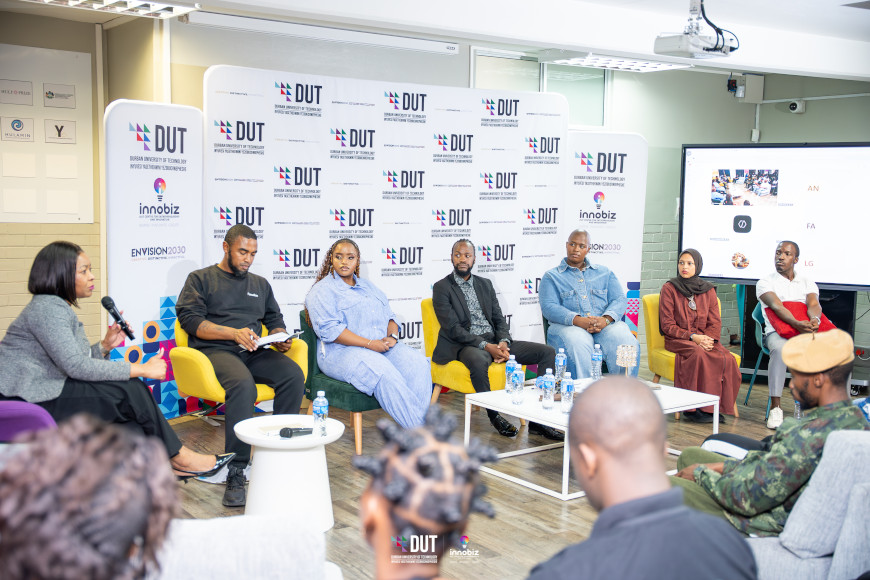
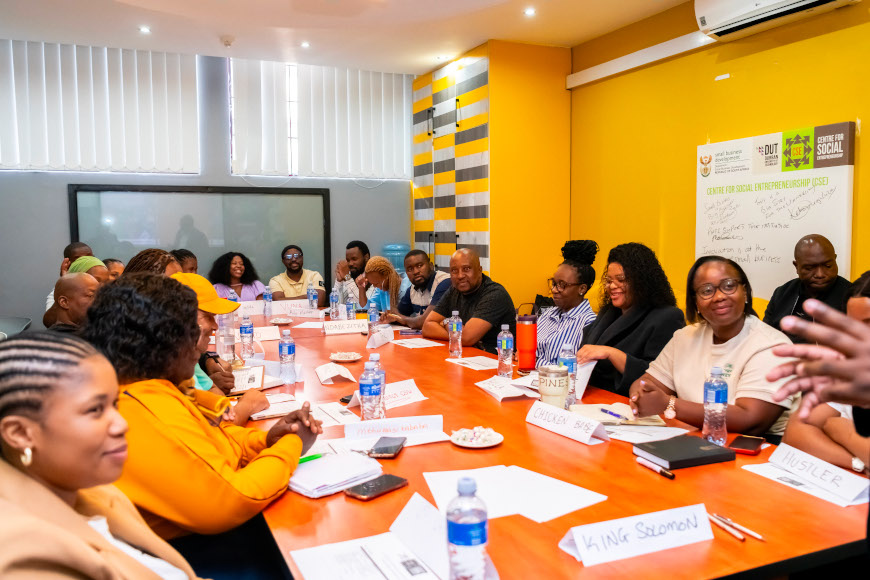
Pictured: The panel discussion that took place during the session. 


Photographer: Khonzinkosi Magcaba

Samkelo Mtshali

https://www.dut.ac.za/entrepreneurship-talk-with-penuel-inspires-dut-student-entrepreneurs/


DUT INNOBIZ FOSTERS ENTREPRENEURIAL EXCELLENCE THROUGH PERSONAL DEVELOPMENT


Building a successful enterprise begins with personal growth. On 10 and 11 July 2026, student entrepreneurs participated in a transformative two-day Personal and Leadership Development Bootcamp designed to strengthen the leadership, resilience and self-awareness needed to succeed in business.


Hosted by the innobiz DUT Centre for Entrepreneurship and Innovation at the ML Sultan Campus, the programme brought together emerging entrepreneurs, mentors and experienced business owners for two days of learning, self-reflection and practical engagement aimed at developing both the individual and the entrepreneur.


The programme challenged participants to unlock their potential and equipped them with practical tools to lead themselves, inspire others and confidently navigate the realities of entrepreneurship.


The programme was officially opened by Ms Nontokozo Ngcobo, Centre Manager at innobiz DUT, who encouraged participants to embrace the opportunity to grow beyond their businesses by investing in their personal development and leadership capabilities.


Addressing the aspiring entrepreneurs, she emphasised that sustainable business success begins with the individual, urging participants to cultivate resilience, self-awareness and a growth mindset as they navigate their entrepreneurial journeys.


Adding to the day’s inspiration, Mr Atul Padalkar, Founder of Bizfarm, reminded participants that while setbacks are an inevitable part of the entrepreneurial journey, perseverance is what sets successful entrepreneurs apart, sharing the powerful message, “Failure is inevitable, but giving up is a choice.”


The day’s learning was facilitated by Mr Michael Biyela and Ms Hendrina Khanyile of HDK Training and Development Consulting, who guided entrepreneurs through engaging sessions aimed at building self-leadership, confidence and personal effectiveness.


A highlight of the programme was the alumni entrepreneur panel discussion on “Applied Leadership in Business”, where former DUT student entrepreneurs reflected on their journeys from student innovators to business owners.


Melodious Ntleko, Founder of Takkie Wash SA, encouraged participants to recognise the impact they can make, reminding them that, “Your business has the power to change lives. Lead with purpose and make an impact.”


Luyanda Majozi, Founder of Enigmatic Cotton, encouraged aspiring entrepreneurs to build businesses with intention, emphasising that purpose-driven businesses create lasting value for communities and future generations.


Mbali Ngema, Founder of Ksaselihle Fresh Vegetables, shared the realities of building a business from the ground up, inspiring participants with the message, “Starting a business from scratch, building it, marketing it and doing it by yourself is not for the weak. Business owners are built.”


Throughout the two-day programme, participants strengthened the mindset, leadership skills and resilience required to build sustainable businesses that create meaningful impact within their communities and contribute to South Africa’s entrepreneurial ecosystem.


On Day Two of the Personal and Leadership Development Bootcamp, the innobiz DUT Centre for Entrepreneurship and Innovation welcomed the X-axis Experience Group as facilitators for the session. The Day Two session focused on enhancing students’ critical thinking, emotional intelligence and leadership skills.


According to the X-axis team, “These bootcamp activities help develop thinking skills both personally and in the workplace.” They emphasised that practical exercises foster self-awareness and improve decision-making abilities.


Student reflections highlighted themes such as effective communication, using extra senses, learning from mistakes and avoiding repetition. Many students noted that the activities encouraged them to think outside the box and develop a greater sense of confidence in their abilities.


Furthermore, participants expressed appreciation for the interactive nature of the sessions, noting that real-world applications made the concepts more relatable. The facilitators also provided valuable insights into how to implement these skills in their personal and professional lives.


Overall, Day Two successfully contributed to building a foundation for future leadership development among the students, equipping them with practical tools to navigate challenges confidently.


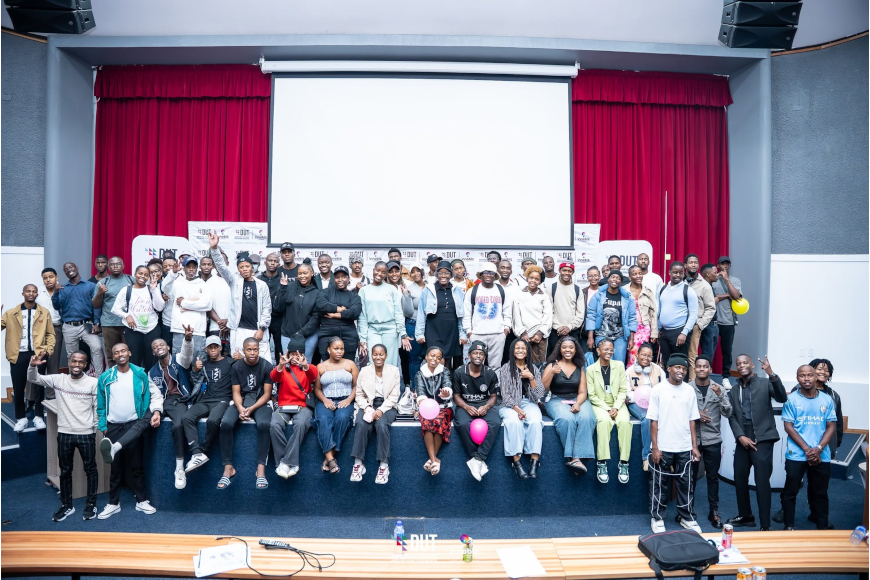
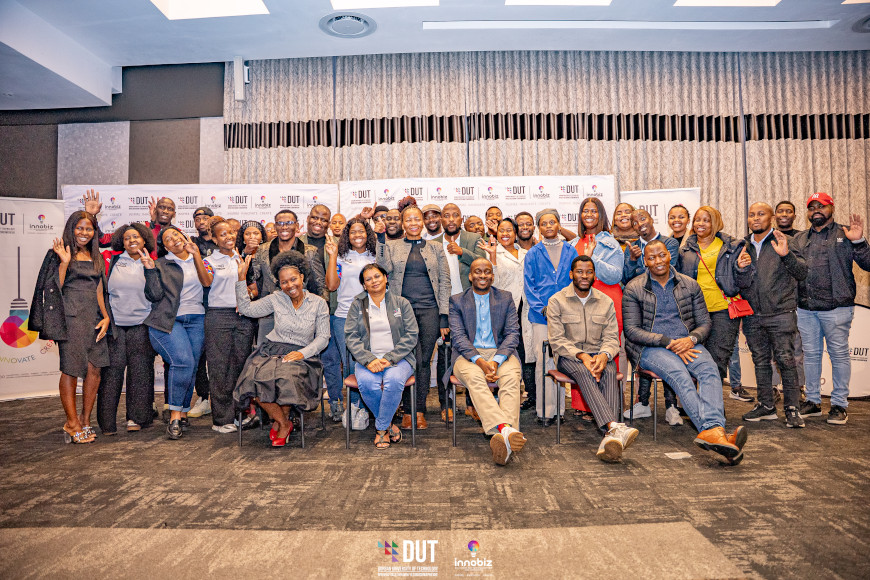
Pictured:

Photographer: Khonzinkosi Magcaba

Sindiswa Khuzwayo

https://www.dut.ac.za/dut-innobiz-fosters-entrepreneurial-excellence-through-personal-development/


DUT STUDENT ENTREPRENEUR SCOOPS SECOND PLACE AT THE GREEN YOUTH INDABA’S GREEN INNOVATORS PITCH COMPETITION


Lulwazi Jali, a third-year Information and Communications Technology in Business Analysis student at the Durban University of Technology (DUT) and founder of Taxi Fynder, secured second place and R75 000 in prize money in the Green Innovators Pitch Competition which was hosted at the 11th Annual Green Youth Indaba in Sun City, North West Province from 18 to 20 June 2026.


His achievement highlights the innovative spirit and entrepreneurial excellence fostered at DUT while also demonstrating the important role that young people play in addressing environmental and socio-economic challenges through creative and sustainable business ideas. His business Taxi Fynder introduces e-hailing efficiencies to the public transport industry, improving access, safety and convenience for underserved communities. His motivation stems from the challenges he faced using public transport when he was growing up.


This year’s edition of the Green Youth Indaba Green Innovators Pitch Competition, held under the theme Innovative businesses focusing on sustainability and environmental impact, saw 50 young entrepreneurs from the higher education space and wider society deliver their pitches in front of a panel of four judges.


Lulwazi, who hails from KwaSwayimane in KwaZulu-Natal, is also a student entrepreneur under the tutelage of the university’s student entrepreneurship development programme, the innobiz DUT Centre for Entrepreneurship and Innovation.


Lulwazi Jali, the founder of Taxi Fynder.

Zooming in on his participation in the competition, Lulwazi said the strongest aspect of his pitch presentation was the clear link between sustainability and practical impact.


He said he was able to demonstrate how reducing unnecessary taxi movements could lower fuel consumption and emissions while simultaneously improving the daily commuting experience for millions of South Africans. He added that the solution addressed both environmental and social challenges in a way that was easy to understand. Most importantly, he said, they had proof of concept and their PowerPoint presentation included embedded videos of taxi drivers sharing testimonials on how the app improved their daily operations and efficiency.


He highlighted that one of the biggest lessons he learnt in the competition was that innovation comes in many forms and that he was inspired by the creativity, passion and determination of the other participants.


He further noted that the experience reinforced the importance of continuous learning, collaboration and focusing on creating solutions that deliver measurable impact for communities and the environment, emphasising that proof of concept is critical because nothing matters more than the numbers.


He said the award is a tremendous encouragement and confirmation that the vision behind Taxi Fynder has value. He added that the funding provides an important opportunity to accelerate development, validate key assumptions and move closer to bringing the solution to market. It represents both recognition and responsibility to continue building something that can make a meaningful difference.


He also revealed that the prize money will be invested into key areas that support the development and validation of Taxi Fynder, including software development, market research and stakeholder engagement within the taxi industry.
He said the goal is to scale the platform’s customer base by onboarding more associations until they fully capacitate KwaZulu-Natal and prepare the business for future growth and investment opportunities. He added that the next major milestones include refining the business model based on user feedback and building strategic partnerships within the transport sector. He said the long-term vision is to establish Taxi Fynder as a trusted digital platform that improves commuter access to transport while supporting a more sustainable and efficient taxi industry. Once the KwaZulu-Natal market is fully established, the plan is to expand to neighbouring provinces including Mpumalanga, Free State and Eastern Cape.


Ms Nontokozo Ngcobo, the innobiz DUT Centre Manager, expressed her delight at witnessing one of the Centre’s student entrepreneurs succeeding on a nationally recognised platform such as the Green Youth Indaba.
She said one of their greatest achievements is seeing students apply what they are taught and succeed at the highest levels. She added that students are developing pitching skills, refining business ideas and putting systems and processes in place that make their ventures attractive to investors. She noted that seeing DUT students compete against more than 50 businesses from across South Africa and secure second place is a tremendous success for both the students and the innobiz DUT team.


She recalled that when Lulwazi first joined the programme in early 2025, his idea showed potential but needed significant refinement. She said that through continuous mentorship, hard work and his willingness to accept feedback and adapt, he has transformed that idea into a credible and growing business.


She added that his commitment to advancing his innovation is commendable and thanked the university for its ongoing support as well as the dedication of the innobiz DUT team. She said the success of students like Lulwazi serves as an inspiring example of what can be achieved through commitment and perseverance.


She further noted that while he was competing within DUT, he was also up against students and young entrepreneurs from universities and organisations across the country. She said emerging as runner-up at a national level is a remarkable achievement and one that fills the institution with immense pride.


For DUT, Lulwazi’s success means it is the second consecutive year that entrepreneurs under the innobiz DUT Centre have achieved success at the Green Youth Indaba.


His success follows that of Mr Luyanda Majozi, founder of Enigmatic Cotton, and Mr Luvo Gugwana, founder of Green Arch Innovations, who earned third place in the Green Innovators Pitch Competition and received the Green SMME Trailblazer Award for 2025 at the 10th Annual Green Youth Indaba held in Durban.


Pictured: Lulwazi Jali presenting at the Green Youth Indaba’s Green Innovators Pitch Competition.


Photographer: Green Youth Indaba

Samkelo Mtshali

https://www.dut.ac.za/dut-student-entrepreneur-scoops-second-place-at-the-green-youth-indabas-green-innovators-pitch-competition/


INNOBIZ DUT STRENGTHENS GOVERNANCE WITH APPOINTMENT OF FIVE NEW INDEPENDENT DIRECTORS


The innobiz DUT Centre for Entrepreneurship and Innovation has strengthened its governance structure through the appointment of five additional Independent Non-Executive Directors, reinforcing its commitment to advancing innovation and entrepreneurship at the Durban University of Technology (DUT).


The newly appointed Independent Non-Executive Directors are Ms Jaana Puukka, Dr Buntubakhe Quwe, Mr Thokozani Kubheka, Ms Nothando Mkhize, and Professor Thomas Dobbelstein. These appointments expand the Board’s composition, which now includes a strengthened mix of independent and ex officio members tasked with providing strategic oversight and guidance to the Centre.


The Board noted that the process of finalising these appointments took place over a period of time, which affected the organisation’s ability to fully execute its mandate during the interim phase. With the Board now fully constituted, innobiz DUT is positioned to enhance strategic leadership, improve governance oversight, and strengthen coordination in delivering on its innovation and entrepreneurship mandate.


The Board officially commenced its term in March 2026, beginning with a structured induction programme designed to support effective governance and operational understanding. This included an immersive tour of innobiz DUT facilities, providing members with direct exposure to the Centre’s activities, followed by a two-day governance training programme facilitated by the Institute of Directors South Africa (IoDSA). The training focused on strengthening governance competence and aligning with current best practice standards.


With its full complement now in place, the Board is expected to provide focused leadership and strategic direction aimed at accelerating innovation-led enterprise development within DUT. This includes strengthening partnerships, enhancing institutional coordination, and supporting initiatives that contribute to the University’s broader innovation ecosystem.


The Board extended its appreciation to its Chairperson, Professor Fulufhelo Nemavhola, for his leadership in guiding the Board through its establishment phase and ensuring its effective constitution. His stewardship has been instrumental in laying a strong foundation for the Centre’s future growth and impact.


The strengthened governance structure is expected to enhance institutional efficiency, improve decision-making processes, and unlock new opportunities for innovation-driven development within DUT.


The Board also expressed its appreciation to the DUT Council for its continued support and confidence, reaffirming its commitment to advancing the strategic objectives of innobiz DUT and contributing meaningfully to the University’s innovation agenda.


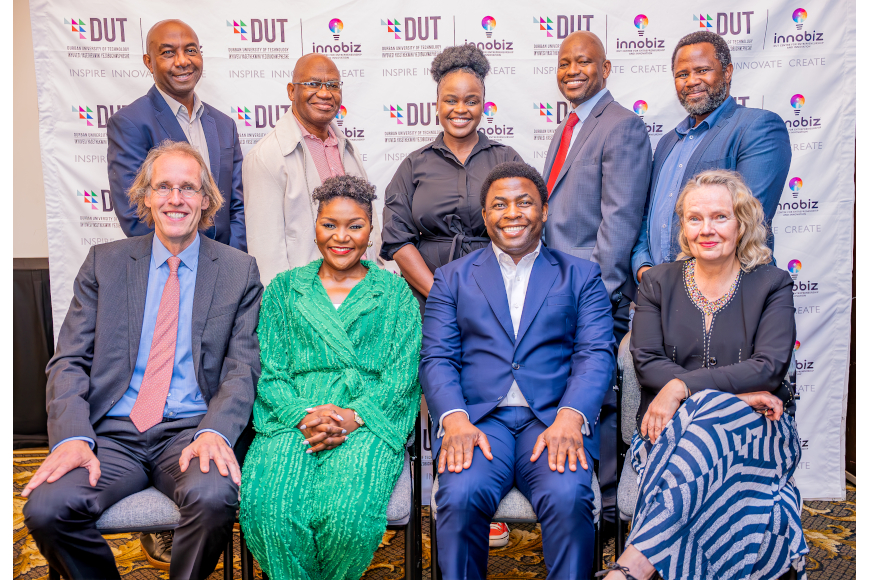
Pictured: The innobiz DUT Board of Directors.

Story: Supplied

https://www.dut.ac.za/innobiz-dut-strengthens-governance-with-appointment-of-five-new-independent-directors/


RESEARCH NEWS: DUT PROFESSOR PFANO MASHAU LEADS TRANSFORMATION OF ENTREPRENEURSHIP ACROSS AFRICA


The recent appointment of Professor Pfano Mashau as the Chair in Future-Fit and Inclusive Entrepreneurship for a Pan-African Society by the National Research Foundation (NRF) has reinforced the Durban University of Technology’s (DUT) commitment to advancing entrepreneurship, research, and innovation.


Prof Mashau, who serves as the Director of the DUT Business School and Chairperson of the Institutional Research Ethics Committee (IREC), is among eight South African Research Chairs Initiative (SARChI) Chairs awarded to DUT by the NRF under the Department of Science, Technology and Innovation (DSTI) Decadal Plan Aligned Research Chairs for Historically Disadvantaged Universities, Universities of Technology, and Emerging Universities. He has been recognised for his leadership in advancing entrepreneurship that addresses socio-economic challenges across the African continent.


According to Prof Mashau, his research journey at DUT has evolved through deliberate engagement with the realities of South Africa’s economic and social landscape. His previous research project focused on the commercialisation of African indigenous practices.


“I became increasingly aware of two persistent challenges: the limited inclusivity of entrepreneurial participation and the growing disconnect between traditional entrepreneurial models and the demands of a rapidly changing, technology-driven economy. In advancing this work, and in alignment with the project, my focus is now on how we prepare entrepreneurs not only to participate in the economy, but to do so in ways that are adaptive, innovative, and responsive to emerging sectors such as the digital economy, green industries, and the ocean economy. At the same time, I am concerned with ensuring that these opportunities are accessible to historically marginalised groups, including youth, women, and rural communities,” shared Prof Mashau.


Sharing his excitement about the appointment, Prof Mashau said it represents recognition of years of sustained academic and applied work. Professionally, he noted that it provides a platform to scale impact, consolidate research efforts, and contribute meaningfully to national development priorities.


“Importantly, the Chair allows for a shift from fragmented, short-term projects to a structured and long-term research programme. It also positions DUT as a key contributor in shaping the discourse and practice of entrepreneurship in South Africa and beyond. I see this appointment not simply as an honour, but as a mandate to produce work that is both rigorous and transformative,” he added.


Prof Mashau unpacked the Chair’s three core research priorities. The first is future-fit entrepreneurship, which focuses on preparing entrepreneurs for emerging and high-growth sectors such as digital technologies, renewable energy, the ocean economy, and innovation. The second is inclusive entrepreneurial ecosystems, which involves addressing structural barriers that limit participation in entrepreneurship, particularly among underrepresented groups. The aim is to develop models that expand access to resources, networks, and opportunities.


The third priority is entrepreneurial capability development, which rethinks how universities and other institutions develop entrepreneurial skills. The emphasis is on practical, experiential learning that equips individuals to navigate uncertainty, innovate, and scale their ventures.


“Furthermore, the Chair supports the translation of research into practical applications that address societal challenges. This includes contributing to policy development, supporting small business growth, and enabling the adoption of new technologies in entrepreneurial contexts. The intention is to ensure that research is not only aligned with national priorities, but actively contributes to achieving them,” reiterated Prof Mashau.


Looking ahead, Prof Mashau said that over the next five to ten years, the Chair aims to achieve measurable impact, including increasing the participation of underrepresented groups in high-value and future-oriented sectors of the economy.


“It also involves developing scalable entrepreneurial models that emerge directly from research and can be implemented across different contexts. In addition, the Chair seeks to strengthen collaboration between universities and industry, ensuring that research outputs are relevant and applicable. Another key objective is to contribute to evidence-based policymaking that improves the effectiveness of entrepreneurship support systems in South Africa,” he added.


Ultimately, the goal is to move beyond theoretical contributions and deliver outcomes that improve livelihoods, create sustainable businesses, and contribute to economic growth.


Addressing local challenges in KwaZulu-Natal and beyond, Prof Mashau noted that the province presents unique challenges, including high youth unemployment, inequality, and limited access to high-growth economic opportunities. He said the Chair will respond by developing locally relevant entrepreneurial models aligned to the province’s socio-economic conditions.


“This includes leveraging regional strengths such as the port economy, agriculture, and tourism to create new entrepreneurial opportunities. It also involves working closely with municipalities, industry partners, and community organisations to pilot and scale interventions that support inclusive entrepreneurship. While the initial focus will be on KwaZulu-Natal, the intention is to develop models that can be adapted and applied across South Africa and other emerging economies,” he said.


On developing postgraduate students and emerging researchers, Prof Mashau said the Chair will provide opportunities to engage in high-impact research projects, access funding, and collaborate with industry and entrepreneurial ecosystems. A strong focus will also be placed on building a collaborative research culture that encourages innovation and excellence.


Emerging researchers will receive guidance in research methodologies, academic writing, publication, and career development, with particular attention given to supporting individuals from underrepresented backgrounds.


“The Chair will actively bridge the gap between research and application by promoting the translation of research outputs into innovative products, services, and business models. This includes supporting the development of start-ups, facilitating industry partnerships, and strengthening innovation hubs and incubators,” he added.


By 2030, Prof Mashau envisions DUT as a leading institution in Africa for applied research in entrepreneurship, recognised for strong industry partnerships, impactful research outputs, and producing graduates who are both employable and entrepreneurial.


Success, he believes, will be measured by a sustainable and recognised research programme, a strong pipeline of postgraduate and postdoctoral researchers, and tangible societal and economic impact. Most importantly, success will be reflected in expanded access to entrepreneurship and improved readiness for the future economy.


Pictured: Professor Pfano Mashau, Chair holder in Future-Fit and Inclusive Entrepreneurship for a Pan-African Society.


Picture cred: National Research Foundation.

Simangele Zuma

https://www.dut.ac.za/research-news-dut-professor-pfano-mashau-leads-transformation-of-entrepreneurship-across-africa/


DUT TTI INCUBATION PROGRAMME DRIVES INNOVATION AND ENTREPRENEURIAL GROWTH


The Technology Transfer and Innovation (TTI) Unit at the Durban University of Technology (DUT) recently hosted its 2026 Incubation Review Workshop, held over two days from 9–10 April at the DUT Hotel School on the Ritson Campus.


The workshop provided a dynamic platform for emerging technology innovators to present their ideas, showcase progress, and receive valuable feedback from industry experts and mentors.


Dr Farai Dziike from TTI said the incubation programme is designed to support and nurture innovative ideas, guiding them through development into commercially viable products or businesses, thereby bridging the gap between academic research and the market. It enables participants to transform their concepts into tangible solutions with real-world impact.


Dr Dziike indicated that the incubation programme runs for 12 months and that participants drawn from DUT students, staff, and alumni are selected through a formal application process. Furthermore, priority is given to innovations that demonstrate strong potential for commercialisation and meaningful societal impact. Successful applicants receive funding and comprehensive support from TTI, including mentorship, technical guidance, and business development resources.


“Once admitted, incubatees undergo an induction phase followed by quarterly review sessions. These reviews serve as critical monitoring and evaluation checkpoints, assessing progress, refining strategies, and ensuring that each innovation remains on track toward successful development and market readiness,” he explained.


The main goal of the TTI incubation programme is to cultivate an entrepreneurial mindset among researchers and academics by promoting technology-driven innovation and facilitating the commercialisation of research.


One of the incubatees, Minenhle Ndleko, an Honours student in Engineering Technology in Electronic Engineering, highlighted the significance of the incubation programme in enhancing his management skills, particularly after receiving funding. He emphasised the importance of being responsible and strategic when managing financial resources for innovative projects.


He noted that the programme has greatly improved his pitching abilities, enabling him to communicate his ideas more effectively. Furthermore, the incubation process has supported him in developing and scaling his project from an initial concept to a working prototype.


Currently, he is focused on refining and finalising his prototype, ensuring it meets the required standards and is ready for the next stage of development.


“The incubation has helped me a lot in terms of pitching skills. It has also helped me improve and scale my project from an idea into a prototype so far. Right now, I am busy improving and finalising my prototype,” he said.


Pictured: Dr Farai Dziike from the Technology Transfer and Innovation (TTI) Unit addressing the students at the Incubation Review Workshop.


Photographer: S’bonelo Dlamini

Vukani Langa

https://www.dut.ac.za/dut-tti-incubation-programme-drives-innovation-and-entrepreneurial-growth/


CELT AT DUT HOSTS WORKSHOP ON DECOLONISING ENTREPRENEURSHIP


The Centre for Excellence in Learning and Teaching (CELT) at the Durban University of Technology (DUT) hosted a workshop titled “The Nexus Between Decolonisation and Entrepreneurship.” The workshop was held at the Hotel School, Ritson Campus, on Thursday, 12 March 2026.


The workshop explored how entrepreneurship education can move beyond Eurocentric theories and case studies by integrating indigenous knowledge systems, Ubuntu philosophy, and local economic realities. The purpose of the workshop was to critically examine the intersection between epistemic decolonisation and entrepreneurship education and practical pathways for curriculum transformation within higher education.


The opening remarks were presented by the Educational Technologist, Ms Bwalya Nyangu Lungu, who extended a warm welcome to guests and attendees.


The Acting Director of CELT, Dr Shoba Rathilal, delivered a presentation on the relationship between decolonisation, entrepreneurship, and the philosophy of education in higher education. She explained that decolonisation is a global higher education priority, aimed at addressing the alienation many students experience when dominant knowledge systems do not reflect their realities. Dr Rathilal emphasised the need for students to engage critically with different knowledge systems, recognising multiple ways of knowing.


She further highlighted the importance of developing an entrepreneurial mindset among graduates, not only for business creation but for innovation, problem-solving, and responding to societal challenges. In the context of a constrained job market, graduates should be equipped to create opportunities and contribute meaningfully to society. This aligns with the university’s philosophy of education, which emphasises creativity, innovation, and societal transformation.


Dr Rathilal pointed out that decolonisation and entrepreneurship should be integrated rather than treated as separate agendas. While decolonisation broadens knowledge systems, entrepreneurship enables their practical application for social impact. She stressed the role of educators in designing inclusive, contextually relevant curricula and teaching approaches that prepare students to become active agents of change.


Prof Simphiwe Nojiyeza clarified key concepts of decolonisation and decoloniality. He explained that decolonisation refers to the historical process of political independence from colonial rule, while decoloniality is a broader, ongoing effort to challenge systems of power, knowledge, and inequality rooted in colonialism.


Decoloniality requires addressing epistemic, cultural, economic, and political dimensions and recognising Indigenous knowledge systems across all disciplines. Prof Nojiyeza introduced Afrocentricity and Africology as approaches that centre African agency, history, and culture in knowledge production. He argued that Africa has long been a site of innovation and knowledge, challenging Eurocentric narratives that position the West as the primary source of development. He also highlighted how colonialism and coloniality continue to shape language, education, and economic systems in Africa, including the dominance of European languages and structures.


Among the guests who shared presentations were Dr Mandla Mubecua, who spoke on Indigenous Knowledge Systems and Entrepreneurial Practice, Dr Misheck Musaigwa, who presented on Re-contextualisation and Curriculum Redesign in Business Education, and Ms Lindokuhle Ntuli, who discussed Entrepreneurship in the Global South, focusing on cooperatives, social enterprises, and community-based models.


The event was concluded by Ms Bwalya Nyangu Lungu, who thanked the guest speakers for their presence and insightful presentations. She also expressed appreciation for the active participation and engagement of the audience.


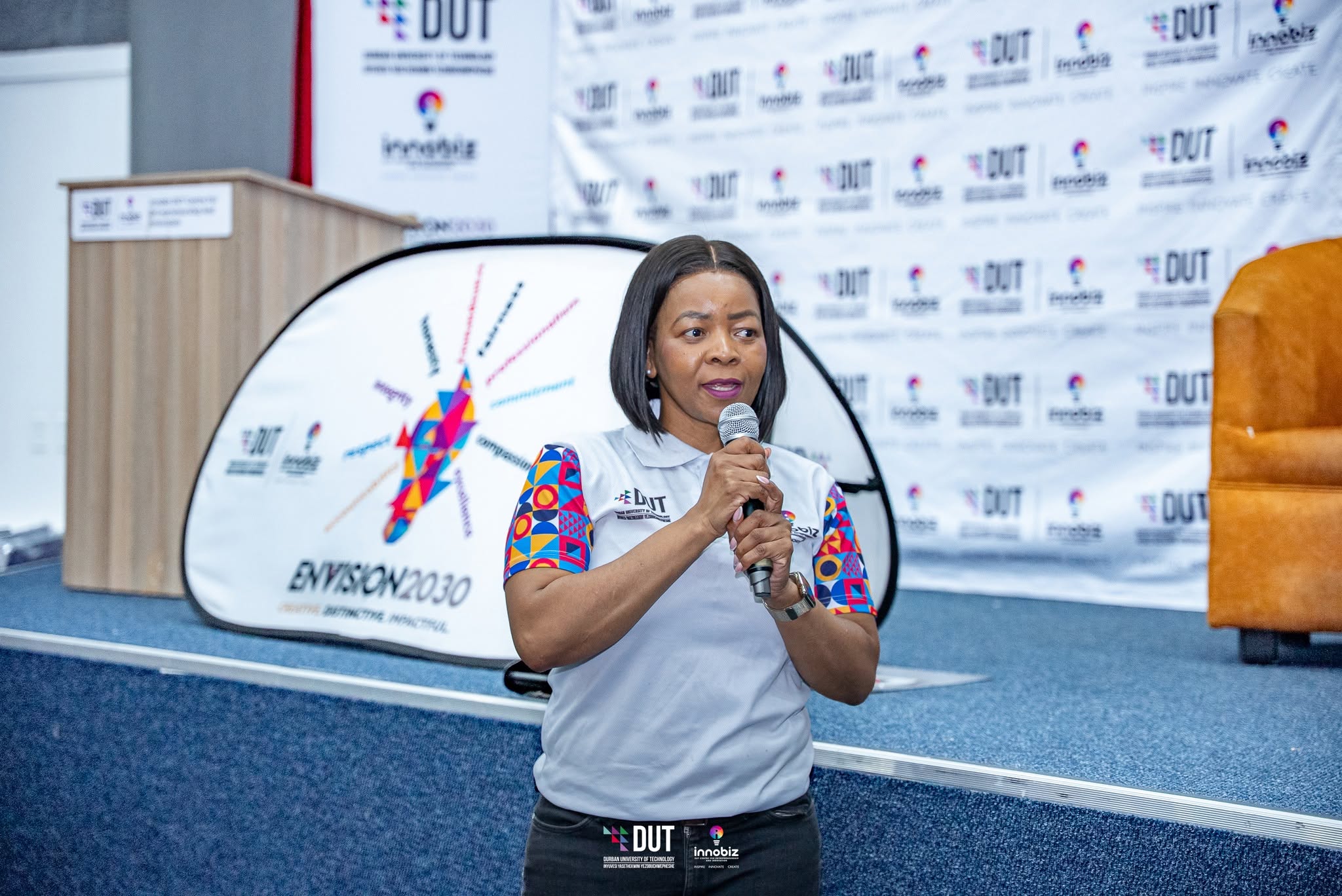
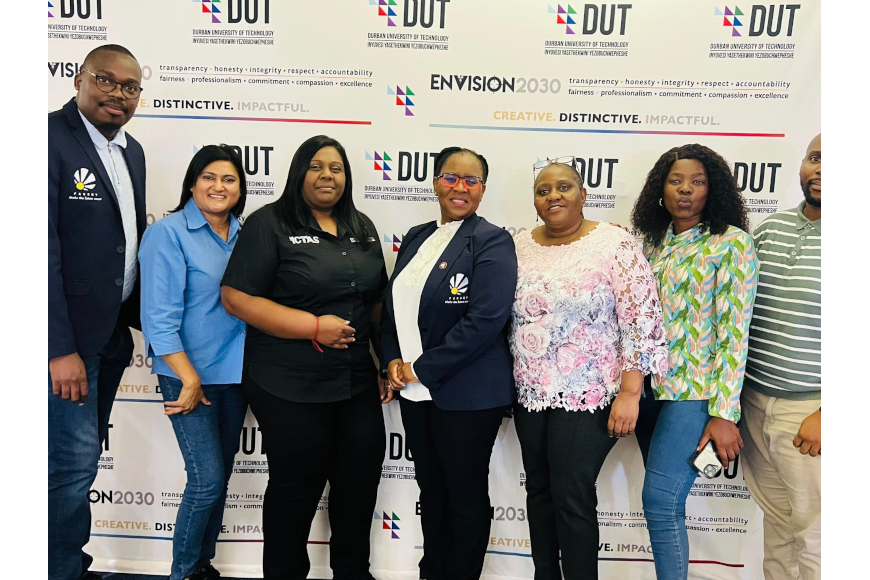
Pictured: Attendees at the Decolonisation and Entrepreneurship Workshop.


Photographer: S’bonelo Dlamini.

Phiwayinkosi Sibiya

https://www.dut.ac.za/celt-at-dut-hosts-workshop-on-decolonising-entrepreneurship/


DUT RESEARCHERS UNCOVER WHAT FASHION ENTREPRENEURS NEED TO SUCCEED IN THE DIGITAL AGE


Entrepreneurship is embedded in the DNA of the ENVISION2030 strategy at the Durban University of Technology (DUT) and new research is providing timely guidance for fashion entrepreneurs operating in an increasingly digital marketplace.


A recently published international study by researchers from DUT and Baden-Württemberg Cooperative State University (DHBW) in Ravensburg, Germany, offers practical insight into how fashion designers can build stronger connections with consumers across both digital and physical retail spaces. The study, Catwalk to Consumer: Critical Communication Considerations for Fashion Designers to Achieve Omnichannel Success in South Africa and Germany, was published in the journal, Studies in Media and Communication (Vol. 14, No. 3, 2026) and draws on survey responses from more than 1000 consumers from Germany and South Africa.


Authored by Dr Boitumelo Pooe, Professor Veena Rawjee, Professor Thomas Dobbelstein and Professor Karen Corbishley, the research examined how consumers interacted with fashion brands across multiple platforms, a model known as “omnichannel” retailing and identified the factors most likely to influence long-term customer loyalty and business growth. Three key drivers emerged as central to consumer engagement are easy access to information while shopping, the availability of online shopping alternatives and the ability to move seamlessly between digital and in-store channels.


While these preferences were shared across both markets, the research highlighted important regional differences. South African consumers displayed a stronger emotional connection to brands and a greater willingness to recommend retailers to others, suggesting strong potential for community-driven growth when entrepreneurs deliver consistent and integrated customer experiences. German consumers, by contrast, prioritised efficiency and real-time product information, underscoring the importance of reliable digital infrastructure and clear communication within physical retail spaces.


The publication of the research also supports DUT’s commitment to internationalisation, postgraduate development and impactful research partnerships. Professor Thomas Dobbelstein, Chairperson of the DUT Business School and an esteemed Professor based at DHBW in Germany, said the study spoke directly to DUT’s strategic focus on entrepreneurship and innovation. “Fashion entrepreneurs form an important part of the creative and economic ecosystem in both South Africa and Germany. This research offers practical insight into how designers can communicate more effectively with consumers across digital and physical platforms, while also highlighting the value of sustained collaboration between DUT and DHBW in developing globally relevant scholarship and supporting emerging entrepreneurial talent.”


Professor Dobbelstein, who also serves on the DUT innobiz Board of Directors, noted that equipping entrepreneurs with research-informed strategies aligned closely with DUT’s commitment to producing adaptive graduates who transform society.  The published study reinforced DUT’s role as a responsive, globally connected University of Technology, one that supports entrepreneurship, strengthens international collaboration and generates research that speaks directly to real-world economic and social needs. For South African fashion entrepreneurs in particular, the findings offer practical guidance for building resilient brands, deepening customer engagement and growing sustainably, in a digitally integrated retail environment.


For more on the published journal article, please click the link: https://redfame.com/journal/index.php/smc/article/view/7951


Pictured: An AI generated image.

Alan Khan

https://www.dut.ac.za/dut-researchers-uncover-what-fashion-entrepreneurs-need-to-succeed-in-the-digital-age/


DUT ENTREPRENEURIAL EXCELLENCE HIGHLIGHTED BY MS NGCOBO AT SUT 2026


South Africa’s entrepreneurial leadership took centre stage in Thailand as Ms Nontokozo Ngcobo, Manager of the innobiz DUT Centre for Entrepreneurship and Innovation, joined global business leaders as a featured speaker, facilitator and coach at the Suranaree University of Technology (SUT) Global Entrepreneurship Camp 2026.


The prestigious international programme brought together student innovators and entrepreneurship experts from more than ten countries under the theme “Sustainable and Resilient Communities: Innovating for a Healthier Planet and People.”


From 28 January to 9 February 2026, Ms Ngcobo led a group of DUT student entrepreneurs to the camp, demonstrating the University’s commitment to developing adaptive, entrepreneurial thinkers capable of operating in international innovation ecosystems.


Opening her address, Ms Ngcobo shared DUT’s strategy for producing entrepreneurially minded graduates. She highlighted the strong executive support provided by DUT leadership, led by Vice-Chancellor and Principal, Professor Thandwa Mthembu, in transforming the institution into an entrepreneurial university that goes beyond the traditional teaching and learning mandate. Her remarks positioned DUT as a distinctive higher education model where enterprise development is integrated into the academic journey.


Ms Ngcobo’s session on “Ideation for Innovative Solutions” was delivered with passion and precision. Speaking to a global audience, she introduced practical business tools, including the effectuation process and problem-based innovation frameworks. Through examples of young international entrepreneurs and DUT student success stories, she illustrated how structured entrepreneurial thinking leads to real-world impact. Her facilitation style encouraged continuous participation, turning the session into a dynamic exchange of ideas.


She shared the platform with internationally respected leaders, including Dr Mullika Sungsanit, Head of the Centre of Excellence for Entrepreneurship at SUT; Mr Lars Andersson, Head of Innovation and IP Management at Technopolis; Mr Radtasiri Wachirapunyanont of the Tara Climate Foundation; and Dr Panachit Kittipanya-ngam, CEO of Ztrus.


In a special acknowledgement, Dr Sungsanit expressed deep appreciation for her nine-year professional collaboration with Ms Ngcobo, commending her excellence, consistency and passion, and highlighting how her leadership continues to influence global entrepreneurship education.


With more than 15 years of contribution to entrepreneurship development, Ms Ngcobo has been a driving force behind South Africa’s innovation ecosystem. As the founding leader and Manager of the innobiz DUT Centre for Entrepreneurship and Innovation, she has built one of the country’s key university-based platforms for start-up incubation, mentorship and enterprise acceleration. Her work connects academia, industry and global networks, strengthening opportunities for young entrepreneurs and solidifying her reputation as a leading force in innovation and entrepreneurship.


Her leadership extends across multiple DUT departments and faculties, embedding an entrepreneurial culture across the institution and reinforcing DUT’s mission to produce graduates who create opportunities rather than wait for them.


At SUT 2026, Ms Ngcobo’s impact extended beyond the classroom. It was evident in the confidence of the DUT students she mentored, who engaged with peers from around the world as emerging global innovators. For a leader who has long worked behind the scenes building platforms for others, her presence on this international stage marked a powerful recognition of her influence.


Ms Nontokozo Ngcobo continues to stand as one of South Africa’s most significant yet humble architects of entrepreneurship development, a bridge between local talent and global opportunity and a champion of excellence driven by passion, consistency and purpose.


Pictured: Ms Nontokozo Ngcobo, innobiz DUT Centre Manager, engaging with student entrepreneurs and guests during her presentation on “Ideation for Innovation Solutions” at the recently concluded SUT Global Entrepreneurship Camp 2026 in Bangkok, Thailand. 


Samkelo Mtshali

https://www.dut.ac.za/dut-entrepreneurial-excellence-highlighted-by-ms-ngcobo-at-sut-2026/


DUT ALUMNA AMONG TOP 16 ON ETV’S NYAMA BATTLE


The Durban University of Technology (DUT) continues to shape adaptive graduates who are not only job seekers but creators of opportunities. Among them is Ntandoyenkosi Sikobi, an Advanced Diploma in Information and Communications Technology alumna, selected for a place in the Top 16 of Nyama Battle Season 2, a nationally broadcast competition sponsored by Boxer and eTV.


Sikobi, who hails from KwaZulu-Natal, has taken her technical skills and entrepreneurial vision beyond the classroom and into community-driven business. She is the founder of Taste KwaStofela, a wood-fired pizza venture that she established with her sister, Gcina Sikobi, building a business based on family, warmth and authentic connection.


What began in 2021 to support her family has evolved into a growing brand known for its immersive food experiences. Through pop-ups, live cooking showcases and team-building activations, Taste KwaStofela uses food as a powerful tool for connection, empowerment and job creation. At its core, the brand reflects Sikobi’s commitment to sustainable, purpose-driven entrepreneurship.


Reaching the Top 16 of Nyama Battle is both humbling and affirming for Sikobi. She hopes to be among the Top 12 contestants who will compete on national television.


“Being selected validates the resilience, discipline and vision behind my journey. It is an honour to represent young entrepreneurs and students on a national platform,” she said.


Nyama Battle has tested more than her culinary skills. The competition demands creativity, execution under pressure, personal branding and consistency. These are qualities Sikobi has refined through her ICT training and entrepreneurial experience at DUT.


“My studies sharpened my problem-solving and analytical skills. This competition is a real-world application of strategy, discipline and execution,” she explained.


Sikobi hopes to use the exposure and resources to scale Taste KwaStofela nationally, generate employment opportunities and inspire young people, especially women and students, to trust the power of their ideas.


Beyond the competition, she remains passionate about student empowerment. She believes that while academic knowledge is vital, students must also cultivate adaptability, self-leadership and entrepreneurial thinking during their studies.


The business will soon launch a mobile pizza trailer, allowing them to host pop-up events and live cooking experiences across various locations.


“In today’s economy, theory alone is not enough. Empowerment gives students the confidence to create opportunities rather than wait for them,” she added.


Looking ahead, Sikobi’s goals are clear. She aims to integrate technology into her business operations, mentor aspiring entrepreneurs and build ventures that generate lasting social and economic impact.


“I strongly associate myself with the DUT Living Values and principles of commitment, compassion and excellence. Commitment drives me to remain focused, disciplined and consistent in pursuing my goals, even in the face of challenges. Compassion guides how I engage with others, ensuring that I lead with empathy, understanding and respect for diverse experiences. Excellence motivates me to give my best in everything I do, uphold high standards and continuously seek improvement,” she shared.


Providing insight into Sikobi’s dedication is Fanie Ndlovu, technician at DUT’s Department of Accounting and Informatics. Ndlovu has mentored her for nearly two years and describes Sikobi as highly focused, receptive to guidance and results-driven.


“She is incredibly focused, always open to advice and most importantly, she executes. When I came across the Nyama Battle competition, I shared the opportunity with her and she did not hesitate. She prepared an impressive and engaging video and entered the competition immediately. This is the power of dedication: listening, taking action and executing with excellence. She is definitely going far,” he said.


Sikobi strongly believes in continuous learning and furthering her studies, having completed an additional course in 2025 in Cybersecurity, CyberOps Associate.


Her advice to future students hoping to enter similar competitions is simple but powerful: “Start before you feel ready. Be authentic, disciplined and consistent. Courage matters more than perfection.”


To vote for Ntandoyenkosi Sikobi, visit www.nyamabattle.co.za


Pictured: Ntandoyenkosi Sikobi with her sister and business partner, Gcina Sikobi.


Phiwayinkosi Sibiya/Waheeda Peters

https://www.dut.ac.za/dut-alumna-among-top-16-on-etvs-nyama-battle/


FROM FAMILY INSPIRATION TO FOOD INNOVATION DRIVEN BY PASSION AND PURPOSE


At the Durban University of Technology (DUT) entrepreneurship, creativity and innovation are driving forces behind student success and societal impact. One such inspiring example is Nqobile Nongcebo Mgwaba (22) from Amanzimtoti, a third-year Diploma in Consumer Sciences: Food and Nutrition student, and the founder and CEO of Flavors of Home Spices.


Mgwaba’s journey is rooted in a strong educational foundation. A proud alumna of Vukile High School in Maphumulo, she credits the school’s culture of discipline, academic rigor, and purpose for shaping who she is today. Under the leadership of Mr. Njapha, the school instilled values of hard work, dedication, and resilience principles that continue to guide her approach to both her studies and entrepreneurship. She carries these lessons with gratitude and a commitment to making a positive impact in her community and beyond.


Flavors of Home is a food manufacturing brand that produces high-quality spice blends made from scratch, using carefully selected herbs and spices.


“The brand offers a wide range of health-conscious options, including low-salt, sugar-free, and gluten-free blends suitable for vegan, Banting, and Keto lifestyles, alongside traditional spice mixes for everyday cooking. The mission was to make healthy food flavorful and accessible to everyone,” said Mgwaba.


The idea of Flavors of Home was born from a deep personal experience. When Mgwaba’s mother was diagnosed with ulcers, the family had to adopt a bland diet. She quickly realised that food without spices was not just tasteless, it was demotivating. Drawing on her knowledge from DUT, she began experimenting with gentle, stomach-friendly spice blends. What started as a solution for her mother soon became a household staple, and that is when she realised she had something special.


She officially launched Flavors of Home in 2022, and her entrepreneurial journey has been nothing short of remarkable. Mgwaba has participated in the Spice Development Project, completed the Student Entrepreneurship Programme (SEP), and earned third place in the SEP pitching competition. She was also selected for the prestigious World Intellectual Property Organisation (WIPO) programme, an experience she described as truly transformative.


“Studying Food and Nutrition at DUT gave me a strong foundation to build something sustainable on my own terms. My toughest pitch was not in a boardroom, but in a Food Science class an experience that taught me resilience. By the time I pitched at the SEP competition, it felt effortless, shaping me into a confident and determined young entrepreneur,” she expressed.


To fellow students, Mgwaba also offers heartfelt encouragement: “Do not give up on your dreams, no matter the obstacles. Find what you love in your course and chase opportunities. You are not alone in struggling with many people are, they just don’t share their stories. Keep pushing. One day, you will look back and smile.”


Her advice to aspiring entrepreneurs is clear: “Build a strong foundation, solve real problems, surround yourself with the right people, and seize opportunities. At DUT, she strongly resonates with the value of Innovation embracing creativity to develop solutions that matter.”


As Flavors of Home continues to grow, she remains driven by her passion for healthy, flavorful food. She sees entrepreneurship not just as building a business, but as building a community creating value that genuinely improves people’s lives.


Looking back, she understands that her journey is defined not only by success, but by struggle, growth, and the people she has met along the way. And with that perspective, Mgwaba is excited, grounded, and determined to see what comes next.


Pictured: Student entrepreneur, Nqobile Mgwaba.

Phiwayinkosi Sibiya

https://www.dut.ac.za/from-family-inspiration-to-food-innovation-driven-by-passion-and-purpose/


DUT WORKSHOP EXPLORES ECONOMIC OPPORTUNITIES IN SANITARY DIGNITY PRODUCTS MANUFACTURING


The innobiz DUT Centre for Entrepreneurship and Innovation recently hosted a Manufacturing of Sanitary Dignity Products and Its Value Chain Workshop, aimed at promoting the participation of women, youth and persons with disabilities in the manufacturing sector and related value chains.


The workshop brought together government departments, development agencies and other key stakeholders to explore the economic opportunities within the sanitary products manufacturing sector, particularly for emerging entrepreneurs and small businesses.


Among the stakeholders sharing their insights were the Department of Women, Youth and Persons with Disabilities; the National Youth Development Agency (NYDA); the Department of Small Business Development and its entity, the Small Enterprise Development and Finance Agency (SEDFA); the Department of Science, Technology and Innovation; the National Empowerment Fund (NEF); and the Women’s Economic Assembly (WECONA).


For innobiz DUT, the engagement reinforced the Centre’s role in advancing entrepreneurship, enterprise development and innovation by connecting emerging businesses with funding opportunities, industry stakeholders, business support and potential markets.


Through collaboration with government departments, development agencies and industry partners, the workshop provided a platform to explore opportunities for SMMEs and cooperatives to participate in manufacturing and strengthen their contribution to the economy.


The discussions also highlighted the importance of looking beyond business creation towards building sustainable enterprises and developing inclusive value chains that contribute to economic growth, in line with the National Development Plan (NDP) 2030.


Ms Mafiki Khoza, Deputy Chairperson of the Women’s Economic Assembly (WECONA), said the organisation firmly believed that women’s economic empowerment should move beyond verbal commitments made at public platforms and translate into tangible economic opportunities.


“Women must not only be beneficiaries and consumers, but they should also become manufacturers, suppliers, innovators, and owners of sustainable businesses. The manufacturing of sanitary dignity products presents an important opportunity to achieve things beyond addressing menstrual health and dignity.


“The sector can stimulate local manufacturing, create employment and promote industrialisation and open doors for women, youth and persons with disabilities owned enterprises. We must look beyond the finished product and recognise opportunities across the entire value chain,” Ms Khoza explained.


Mr Sipiwo Matshoba, Chief Director: Social Empowerment and Participation in the Department of Women, Youth and Persons with Disabilities, explained that since its inception in 2019, the Sanitary Dignity Programme has focused on ensuring that women and girls are able to manage their menstruation safely and with dignity.


In his presentation, Mr Matshoba emphasised the importance of local manufacturers complying with the relevant health and safety standards and guidelines stipulated by the South African Bureau of Standards (SABS) and the South African Health Products Regulatory Authority (SAHPRA).


He also cautioned aspiring entrepreneurs against underestimating the challenges associated with entering the manufacturing sector.


“We also have to speak on some of the challenges present and be realistic about that because we don’t want to come here and peddle a lie if we are going to come with a suggestion that they are going to be entrepreneurs tomorrow.


“We want you to be aware that there is pain as well here and there is no gain without pain, because this industry needs a lot of resilience, patience, because besides just manufacturing you’ve got to also comply with the regulatory authorities by following particular and stringent specifications,” Mr Matshoba highlighted.


Among the challenges he identified were access to finance, machinery, raw materials and markets. However, he noted that entrepreneurs who had demonstrated patience and resilience in the sector had also reaped significant benefits from their businesses.


“The strength of this enterprise is that women will always menstruate, this business is not going to fall anytime soon unless the human race is wiped off the face of the earth. So, it’s one of those enterprises in which if you are serious about it there is guaranteed sustainability,” Mr Matshoba added.


Ms Nonkonzo Nzama from the KwaZulu-Natal Department of Economic Development, Tourism and Environmental Affairs (EDTEA) outlined the support available to small businesses through the department, including training, capacity building, access to infrastructure and funding opportunities through its entities, such as Ithala Bank.


She explained that the department supports the development of SMMEs and cooperatives through various programmes, with particular focus on women, youth and persons with disabilities.


“We deal with the development of SMMEs through various units in our department that deal with enterprise development of SMMEs and cooperatives, including ours which targets women, youth and persons with disabilities.


“We have advertised this programme twice, to invite people in this sector to assist us to develop SMMEs who are responsible for manufacturing because our was on manufacturing. Yes, we do look at people in distribution and warehousing, but we also wanted to focus on manufacturing because the reality is that we don’t have manufacturers.


“We are trying to get more manufacturers, especially black manufacturers because this is a big industry and the market is there,” Ms Nzama said.


Ms Gugulethu Zwane, Deputy Director-General for Institutional Planning at the Department of Science, Technology and Innovation, encouraged aspiring entrepreneurs to recognise their potential and take responsibility for creating their own opportunities.


She reminded participants that their backgrounds should not limit their ambitions and that the choices they make today could shape their future.


“You can achieve whatever you put your mind to despite the circumstances, don’t wait for opportunities to come to you, create them,” Ms Zwane said.


The workshop contributed to the broader objectives of the National Development Plan (NDP) 2030, particularly in promoting inclusive economic growth, skills development, entrepreneurship and the meaningful participation of women, youth and persons with disabilities in the economy.


By bringing government, industry and enterprise development stakeholders together, innobiz DUT continues to create platforms that connect entrepreneurs to opportunities, strengthen value chains and support inclusive economic development.


Pictured: Ms Nontokozo Ngcobo, innobiz DUT Centre Manager, speaking at the workshop.


Samkelo Thulasizwe Lesley Mtshali

https://www.dut.ac.za/dut-workshop-explores-economic-opportunities-in-sanitary-dignity-products-manufacturing/


2025

FASSET AWARDS FUNDING TO DUT’S INFORMATION AND CORPORATE MANAGEMENT DEPARTMENT TO ADVANCE WORK INTEGRATED LEARNING


The Durban University of Technology’s (DUT) Faculty of Accounting and Informatics, continues to make great strides in advancing student employability and industry readiness. The Department of Information and Corporate Management, under the leadership of Professor Smangele Pretty Moyane, has recently been awarded an additional allocation of R16 250 000 million from the Finance and Accounting Services Sector Education and Training Authority (FASSET) for the 2025/2026 Higher Education and Training Work Integrated Learning (HET WIL) Programme.


This funding will benefit 250 learners, with each student receiving a stipend of R65 000 over a 12-month period. The initiative forms part of FASSET’s commitment to enhancing workplace learning and skills development in line with the Skills Development Act and FASSET’s Discretionary Grants Policy.


Professor Moyane expressed her gratitude for the continued partnership with FASSET, noting that the allocation will play a crucial role in bridging the gap between academic learning and real-world experience. “This award is a testament to DUT’s strong relationship with industry partners and our dedication to preparing graduates who are work-ready and capable of contributing meaningfully to the economy,” she said.


The funding will support the recruitment, placement, and mentorship of learners within various organisations, offering them hands-on experience aligned with their academic disciplines. The programme, which officially commences on 1 November 2025, reinforces DUT’s ongoing commitment to the national skills development agenda and the university’s ENVISION2030 strategy, which prioritises people-centredness, innovation, and excellence in higher education.


Pictured: ASSET CEO and ICM staff members.

Siphokazi Dlamini


BRIDGING THE GAP – TRANSITIONING FROM CAMPUS TO CAREER IN SOUTH AFRICA AND THE GLOBAL WORKFORCE


The International Student Organisation (ISO) under Clubs and Societies, in collaboration with the International Education and Partnerships Directorate (IEP), hosted a highly engaging Career Connect Workshop on 10 October 2025. Held in a hybrid format at the ML Sultan Campus Conference Room and streamed live via MS Teams, the event brought together students, staff, guest speakers, and industry professionals for a day of empowerment and career readiness. The workshop aimed to help students and graduates navigate the transition from university to the professional world by providing insights into employability, entrepreneurship, networking, and mental health. It aligned with DUT’s ENVISION2030 Living Values Framework-Transparency, Honesty, Respect, and Accountability, reflecting the university’s mission to produce socially responsive, skilled, and adaptable graduates.


The event began with an enthusiastic welcome from Mr Kazaka Chiyambire, who co-hosted alongside Mr. Lwazi Chiliza, encouraging participants to fully engage and absorb lessons from each speaker. Dr Andile Masuku, from the Department of Student Governance and Development, officially opened the program by commending the ISO for its initiative in organizing an event that empowers students beyond academics. He highlighted that this workshop served as a platform for personal and professional growth, urging students to seize the opportunity to gain experience, connect, and envision themselves as future leaders in a rapidly evolving global workforce.


To set a lively tone, Ms Chantell Jembere, a former ISO Executive, led an entertaining ice-breaker activity that encouraged participation and teamwork. Her session created a comfortable atmosphere where students could express their career dreams and aspirations, reminding everyone that, despite different goals, success is rooted in creativity, growth, and purpose.


Introducing the program, Dr Ejidike, President of the International Students Organisation, explained that the workshop was designed to help students define their direction after graduation and understand what they want to achieve and how to get there. He emphasised that many graduates struggle with uncertainty, and this event aimed to bridge that gap by equipping them with knowledge, confidence, and guidance from professionals. Dr Ejidike noted that clarity, preparation, and mentorship are essential for effective career transitions and encouraged students to apply the lessons shared to shape meaningful futures aligned with DUT’s goal of transforming education into opportunity.


Delivering the keynote address, Dr Emmanuel Tetteh, a lecturer and senior researcher, shared his personal journey from student to award-winning academic, highlighting the value of perseverance, self-belief, and continuous learning. He emphasized that DUT graduates must use knowledge not just for employment but to make a meaningful impact on their communities and the economy. Dr Tetteh also stressed the importance of professional identity, digital literacy, and global research participation, urging students to embrace lifelong learning and adaptability. He concluded by calling on institutions to modernize curricula, expand mentorship programs, and strengthen career support networks to ensure graduates remain relevant and future ready.


In a practical and engaging presentation, Ms Phumzile Martha Monageng, DUT’s Career Resource Officer, focused on Curriculum Vitae (CV) alignment and interview readiness. She explained that authenticity and effort are key to crafting a strong CV and warned against over-reliance on templates and AI tools. Instead, she encouraged students to highlight their genuine experiences and personal growth, even through informal or volunteer work. Ms Monageng advised those without formal experience to “create their own” by engaging in community service, sports, and leadership roles to build valuable skills. Her message was clear, “success has no shortcuts,” it requires action, participation, and consistency to stand out in today’s competitive job market.


Focusing on mental wellness, Ms Nompumelelo Nduli from Strong Training spoke about stress management and workplace balance. She explained the difference between positive and negative stress, offering strategies to maintain emotional stability and productivity. Her session emphasized that professional success depends as much on emotional intelligence and self-care as on technical skills.


Turning attention to academia, Prof Sabiu Saheed from the Department of Biotechnology and Food Technology shared valuable insights on building a brand as an academic. He described academia as a calling founded on teaching, research, and service, requiring passion and perseverance. Drawing from his own journey, he encouraged aspiring academics to pursue higher qualifications like a PhD, develop teaching excellence, and remain adaptable to technological and educational changes. Prof. Saheed highlighted networking, collaboration, and mentorship as crucial for growth and success, while candidly addressing challenges such as competition, heavy workloads, and funding demands. He reminded students that research should serve humanity, create impact, and shape society through knowledge.


From a networking perspective, Ms Ronelle Lyson of the Alumni Relations Office delivered an engaging talk on the importance of professional relationships. She explained that while a degree opens doors, it is one’s network that sustains opportunities. M. Lyson urged students to begin networking during their studies by connecting with lecturers, classmates, and professionals, being polite and curious to attract opportunities. She also encouraged active use of online platforms such as LinkedIn for career development, stressing the importance of maintaining an updated profile and engaging meaningfully. Her advice to attend alumni events, seek mentors, and follow up on new connections reinforced the idea that small interactions can lead to big breakthroughs in one’s career.


Expanding the global perspective, Ms Carol Newman from the International Education and Partnerships Office spoke about international exchange opportunities, especially the Erasmus Student Exchange Programme-one of DUT’s most influential initiatives. She outlined the process and requirements, highlighting that these programmes enhance academic growth, intercultural competence, and global networking. Ms Newman explained that international study experiences enrich students’ CVs, broaden their perspectives, and help them become adaptive graduates ready for global challenges. She encouraged those interested in exchange opportunities to visit the DUT student portal, reminding them that stepping outside their comfort zone can lead to transformative personal and academic growth.


Khothatso Memela, Mthokozisi Manqele, from the innobiz Innovation and Entrepreneurship Centre inspired students to embrace entrepreneurship as a viable and empowering career path. They defined entrepreneurship as creating value, solving problems, and driving innovation rather than simply starting a business. Mr Memela explained how Innobiz supports students in structuring their business ideas, offering mentorship, training, and access to grants and competitions. By nurturing innovation and self-employment, Innobiz aligns perfectly with DUT’s ENVISION2030 Living Values Framework, which promotes creativity, community engagement, and sustainable development. The speakers encouraged students to take initiative, think creatively, and use their knowledge to create opportunities, not just seek them.


Bringing the event to a heartfelt close, Ms Philile Mbamali, International Students Relations Officer from the International Education and Partnerships (IEP) Office, expressed her gratitude to everyone who made the workshop a success. She extended sincere thanks to all the speakers for sharing their time, expertise, and insights on career development, and to the students for their enthusiastic participation. Ms Mbamali acknowledged the effort of each attendee, noting that showing up and engaging was the first major step toward personal and professional growth. She shared her hope that the workshop had provided clarity and inspiration for those who were uncertain about their next steps after graduation, encouraging them to take what they had learned and use it to shape their future paths with confidence. Her closing words left the audience motivated and reassured that, while the transition from campus to career can be challenging, the guidance and opportunities provided by DUT and its partners will continue to light the way forward for every graduate ready to learn, grow, and make an impact.


The Bridging the Gap Career Connect Workshop was a transformative and motivational experience that embodied DUT’s mission of transforming lives and communities through learning, discovery, and engagement. Through diverse and insightful sessions, students gained practical skills, inspiration, and confidence to transition from campus to career with clarity and purpose. By combining employability training, wellness education, and entrepreneurial empowerment, the event successfully prepared DUT graduates to step into the global workforce as competent, ethical, and innovative professionals ready to make an impact.

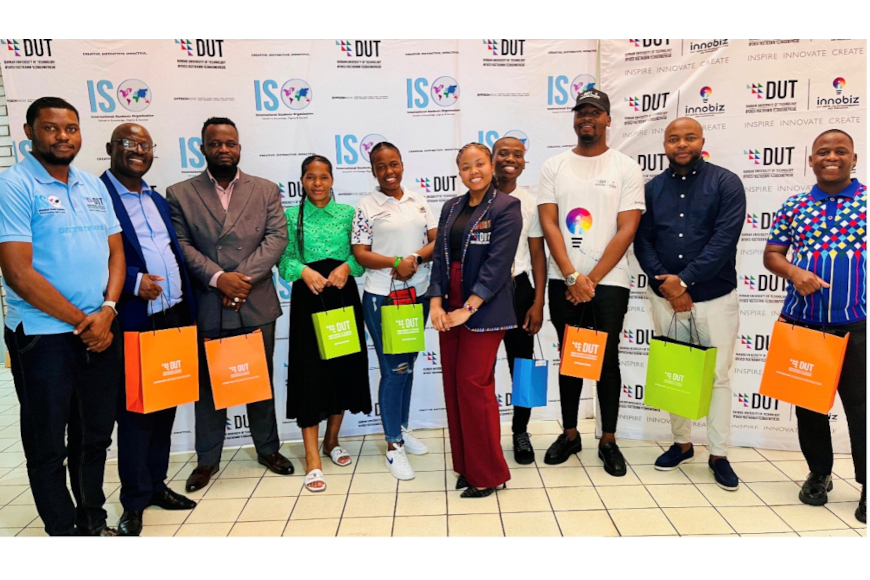
Pictured: Attendees at the Career Connect Workshop.

Amanda Jali
https://www.dut.ac.za/bridging-the-gap-transitioning-from-campus-to-career-in-south-africa-and-the-global-workforce/

DUT RISE INDUCTION EQUIPS STUDENTS FOR THE WORLD OF WORK


The Durban University of Technology (DUT), through its Advancement and Alumni Relations Unit (AARU), successfully hosted the DUT RISE (Readiness Industry Skills Enhancement) Action Learning Workshop on 25 October 2025 at Mansfield Hall, Ritson Campus. The interactive session, led by Ms Ronelle Lyson, the Alumni Relations Coordinator, welcomed 85 enthusiastic students eager to sharpen their employability skills and gain valuable insights into workplace readiness.


The workshop marked the beginning of a transformative journey for students participating in the DUT RISE programme which is an initiative designed to bridge the gap between academic learning and professional application. The session aimed to prepare students to confidently navigate real-world challenges by enhancing their problem-solving, communication, and teamwork abilities.


Throughout the session, students were engaged in workplace simulation activities, where they were tasked with resolving practical scenarios similar to those faced in corporate environments. These exercises encouraged collaboration, critical thinking, and leadership, allowing students to apply theoretical knowledge to dynamic, real-life contexts.


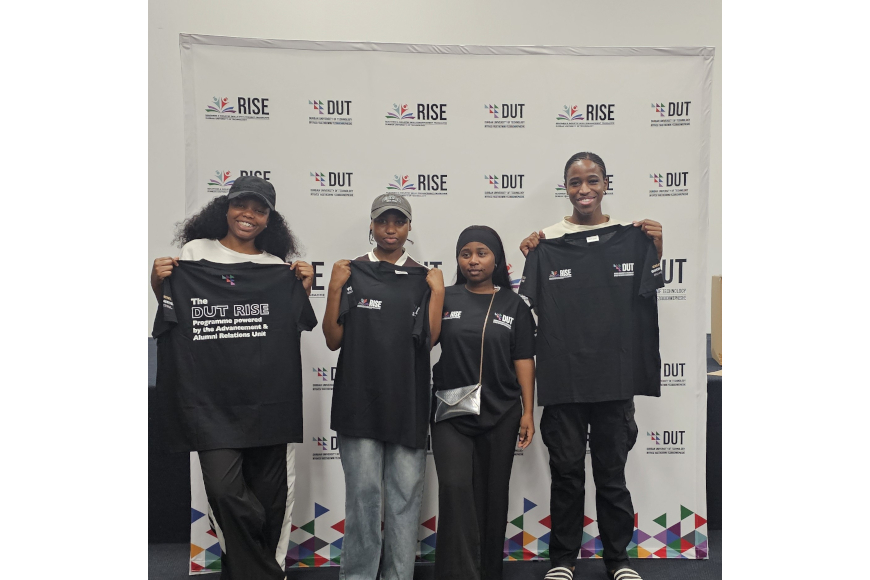
In addition to the learning experience, each student received a DUT RISE t-shirt, symbolising their commitment to growth, readiness, and excellence. The energy in the hall reflected a shared sense of pride and purpose as students embraced their role as the next generation of DUT ambassadors entering the professional sphere.


The impact of the DUT RISE programme continues to create a positive platform for students to develop essential skills that go beyond the classroom. The programme emphasises the importance of readiness and adaptability in today’s ever-changing job market and encouraged students to make the most of the opportunities provided through the initiative.


The success of the DUT RISE Induction reaffirms AARU’s ongoing commitment to empowering DUT students with the confidence, competence, and connections needed to excel in their chosen careers. By investing in initiatives that prepare graduates for industry demands, DUT continues to live out its vision of producing adaptive, innovative, and socially responsible graduates ready to make meaningful contributions to society.


Pictured: Students participating in the DUT RISE (Readiness Industry Skills Enhancement) Action Learning Workshop.

Swelihle Shoba

https://www.dut.ac.za/dut-rise-induction-equips-students-for-the-world-of-work/


WOW CAREER FAIR 2025 BRIDGES THE GAP BETWEEN DUT STUDENTS AND FUTURE EMPLOYERS


The Co-operative Education unit at Durban University of Technology (DUT) is hosting its annual World of Work (WoW) 2025 Career Fair, attracting many students on its first day. The first day of the event took place at the Fred Crookes Sports Centre at the Steve Biko campus in Durban on Wednesday, 20 August 2025. The fair is expected to conclude on Friday, 22 August 2025, at the Indumiso campus in Pietermaritzburg.


The aim of the World of Work 2025 Career Fair is to equip students with the essential skills and mindset required to succeed in the modern workplace. The World of Work is designed to help students bridge the gap between education and employment by gaining practical insights into today’s professional environment.


Dr Themba Msukwini, Director of Co-operative Education, opened the World of Work 2025 Career Fair on Wednesday, 20 August 2024, welcoming 142 participating organisations. He extended a warm welcome to students and officially declared the event open.


“This event is for strengthening relationship with the organizations for the benefit for DUT students and graduates.  Furthermore, the opportunity for postgraduates to engage with the employers for industrial research,” added Dr Msukwini.


Some of the DUT students gathered outside the Pedros Chicken stand.

Giving more insight into the World of Work Career Fair  was Ms Shireen Singh, Acting Manager at the Co-operative Education unit. She stated that the participating organisations would be offering various job placement opportunities, including work-integrated learning (WIL) and graduate placements. She added that the unit’s goal was to support students in becoming workplace ready and confident in navigating their next steps, whether that involved employment, further training, or entrepreneurship.


“The programme overview includes interactive workshops, real-world case studies, and opportunities for reflection and skills development across areas such as communication, teamwork, time management, and career planning. We are excited about what lies ahead and look forward to seeing the contribution and growth of this event in full support of adaptive graduates,” she said.


Ms Singh stated that she was proud to see that DUT adaptive graduates were making a mark in organisations. She added that organisations often praised DUT students, saying they stood out from students at other universities. She expressed happiness that organisations consistently sought out DUT students, recognising the difference in their calibre compared to students from other institutions.


DUT student Ezra Krishna, a third-year Bachelor of Technology in Chemical Engineering student, shared that the World of Work career  fair was highly impactful, providing him with the opportunity to meet companies that aligned with his career aspirations. He added that the exhibitors shared practical skills that informed and prepared him for his future career prospects.


In engaging with students, Nomcebo Zungu, Deputy Student Representative from the Women Engineering and the Built Environment (WEBE) organisation, shared her thoughts on the World of Work programme, describing it as an incredible experience. She indicated that the programme provided an amazing opportunity to engage in industry related discussions, to participate in hands-on activities, and to get noticed by top companies for future opportunities.


As the Worlf of Work career faired, the students showed great interest in engaging with industry professionals, eager to learn about career opportunities and to network with potential employers.


Day one was followed by the World of Work gala dinner, which took place at the Greyville Convention Centre.


Welcoming the guests to the exhilarating dinner was Director: Advancement and Alumni Relations, Mr Zwakele Ngubane who spoke on behalf on the Deputy Vice-Chancellor: Research, Innovation and Engagement: Professor Fulufhelo Nemavhola. Mr Ngubane shared that the World of Work is a stable feature in the calendar of events at DUT which brings together students and the industry in a meaningful and impactful manner. Some companies shared their highlights with Ms Drinnie Ferguson, Learning and Development Business Partner at Pedros speaking about the SPARKS internship in partnership with DUT which has 28 interns, offering them a unique opportunity to gain real-world experience in the fast-paced environment of South Africa’s fastest-growing chicken franchise.


Adding to the conversation was Mr Sipho Mkhize, a Manager in the Office of the Mayor at  the iLembe District Municipality. He shared his talk how his public relations and communications career stemmed from his work integrated learning, teaching him how to respond to challenges in this dynamic field. Giving more insight into the world of technology was Mr Nathaniel Zhang, Director of the Huawei KZN region, who elaborated on  Huawei’s aim to push the boundaries of technology further, reaching out to the villages to empower the disadvantaged communities as well as to offer internships to universities.


“We have interns from DUT. Huawei is a good brand to showcase, and students show a great interest in technology,” he said.


Mr Andile Sipengane, Head of  uMngeni Water Services: subsidiary of uMngeni-uThukela Water Board.

This was followed by the much-anticipated talk by  keynote speaker, Mr Andile Sipengane, Head of  uMngeni Water Services: subsidiary of uMngeni-uThukela Water Board. He expressed that the World of Work is shifting rapidly, with economic change drivers such as technology, innovation, and globalisation. He went on to say that yet at the heart of it all remains the people, who are young, brilliant, and innovative, who will drive economic growth and development and shape the future industries, the communities, and the country,


“DUT and some industry players have always been in the forefront in a mission to link academic excellence with industry.  It is against this backdrop, that more partnerships and collaboration is encouraged as one amongst others of the fundamental key driver creation of access and success into employability and entrepreneurship innovation  for our unemployed youth and graduate throughput,” he said.


Mr Sipengane shared his sincere gratitude to the industries, industry bodies, professional associations, Quality Assurance institutions i.e. CHE, QCTO, SAQA, SETAs, SASCE, WACE, Department of Employment and Labour through Labour Activation Programmes (LAP), the National Skills Fund (NSF), that partner with institutions of learning and skills development service providers and industry to support initiatives driving employability, community development and entrepreneurship. “The skills development system is real and working for our country,” he expressed.


Mr Sipengane concluded by urging all stakeholders to share their experiences, to enhance the various partnerships and collaborations, ensuring its building from strength to strength.


The evening concluded with prizes given to lucky guests by Co-op’s Dr Msukwini and Ms Singh, at the Greyville Convention Centre venue. The World of Work event will continue on Thursday, 21 August 2025, and come to close on Friday, 22 August 2025, marking its final day at DUT’s Indumiso campus.


Pictured: The DUT Co-operative Education staff excited about hosting its annual World of Work (WoW) 2025 Career Fair.

Phiwayinkosi Sibiya/Waheeda Peters

https://www.dut.ac.za/wow-career-fair-2025-bridges-the-gap-between-dut-students-and-future-employers/

INNOBIZ DUT HOSTED AN ALUMNI STUDENT ENTREPRENEURS ENGAGEMENT


In line with the innobiz DUT Centre for Entrepreneurship and Innovation’s steadfast belief in the power of collaboration, forging new entrepreneurial relationships and strengthening existing ones, the Centre over the past weekend hosted the innobiz DUT Alumni Engagement.


The event, which has seen close to 50 alumni student entrepreneurs participating, forms part of the Centre’s efforts to reconnect with and continue supporting our alumni student entrepreneurs through site visits and business development discussions.


The event spanned over two days, Friday, 11 July 2025 and Saturday, 12 July 2025 in Durban, with a programme packed with activities for the alumni student entrepreneurs and guests to engage in a variety of discussions including a presentation on fundraising and investment opportunities from Mr Thato Ntseare, an Investment Manager at E Squared Investments.


Another interesting topic of engagement that was deliberated upon at length over the two-day event included the power of leadership in shaping entrepreneurial success by Mr Zakheni Ngubo, a mentor and strategy partner for the SAB Foundation, Business Mentor and Coach who is also the Founding Director for the Innovation and Research Commercialisation Agency.


A presentation on enterprise development, Intellectual Property and commercialisation was also shared to the cohort by Mr Sipho Dikweni, a Strategic Advisor on Entrepreneurship at the Council for Scientific and Industrial Research (CSIR).


From the University, the alumni student entrepreneurs received an opportunity to learn of the supplier development pathways, procurement opportunities and supplier database registration at DUT through a presentation from Ms. Nirupa “Nicky” Kemraj, a Sourcing Manager at DUT Procurement.


Welcoming the alumni cohort and guests, Ms Nontokozo Ngcobo, innobiz DUT Centre Manager, said that the event had been long in planning with the idea being to gauge the distance the entrepreneurs had traversed in the entrepreneurial space.


“There has so much that has happened in the past two to three years, but today I don’t want us to dwell on the past, I want us to chart a way forward on how we can best support each other and how best we can continue with the platform that we’ve established as you know that DUT will always be your home,” Ms Ngcobo alluded in her welcoming address.


Furthermore, she said that it was incredible to reconnect with so many of the Centre’s alumni student entrepreneurs and further strengthen the relationship between the Centre and those who have gone on to bigger things in entrepreneurship having passed through its doors.


“This is the beginning of a new, exciting journey, with each and every one of you. We have designed the session to be highly impactful and we’ve brought in specific business people that are at your level to assist you based on an outline and overview to check where you are, what you need and for them to accelerate you from whatever level you are in,” Ms Ngcobo shared.


She further implored the cohort to use their experience in the entrepreneurship space to become mentors to those still navigating their way through the Centre’s intensive three year programme.


“We want to also touch on how you guys can also maybe give back to support this work that we are doing as a Centre, how you can assist those that are still upcoming because you’ve experienced business and its challenges as young people.


“Today we are also connecting with some from the big network of like-minded people in the entrepreneurship space that we’ve established over the years, to come and support. We are privileged to be joined by key partners that are strategic to your growth going forward, these partners are specifically here to empower your growth,” Ms Ngcobo explained.


M. Dikweni shared that at the CSIR they were responsible for, amongst others, building new companies and ensuring that they become sustainable.


“It is nice to be meeting with you and it will be interesting to see how we can help you guys grow as we do provide a lot of support to SMMEs, especially core technical support while we also have a lot of facilities that we make available for your development,” Mr Dikweni said.


Mr. Ngubo, who is also an adjudicator and advisory board member for SAB, CSRI, Entrepreneurship Development in Higher Education (EDHE), shared that he was passionate about mentorship and assisting companies to commercialise and get their product market fit, and how to take them from where they are to raising money.


“I am looking forward to getting to know you guys and what sort of opportunities are there in the ecosystem and how you can access those for your organisations,” Mr Ngubo said.


He advised the cohort that leadership and entrepreneurship were about two things; the entrepreneur as an individual because while building the business they were building the most valuable commodity, themselves, their skills, character.


Further advice was for them to use every opportunity that they received while developing their business as an opportunity to develop themselves.


“Entrepreneurship is not easy, you build and you grind and it becomes a very personal journey. People often say ‘it’s not personal, it’s business’, but it’s always personal because it’s your heart, your soul, your energy poured into building the business and mostly importantly building yourself,” Mr Ngubo shared.


Ms Kemraj shared that their job at DUT Procurement was not just to protect DUT’s interests, but to protect the suppliers’ interests.


“As everyone in this room knows of DUT’s Envision2030, it starts off with stewardship and ends up with society, even in procurement we still have to follow that because every single thing has an end game and our end game is how improve lives and livelihoods,” Ms Kemraj explained.


Mr.Ntseare, shared with the alumni student entrepreneurs that at E Squared Investments their focus was on fast growing businesses, largely in the technological sector, although they also looked at businesses that displayed rapid growth and had both an impact purpose and a financial return.


DAY 2


As the Incubation Alumni Engagement hosted by the innobiz DUT Centre for Entrepreneurship and Innovation entered its second day, the main focus centred on creating sustainable businesses and ensuring that the impact created by alumni business was tracked consistently.


Ms Nontokozo Ngcobo, the innobiz DUT Centre Manager, shared that the Centre wanted to ensure that the ENVISION2030 call for producing adaptive graduates continued and that the legacy of the ENVISION2030 roadmap, the adaptability of the graduates, is traceable, trackable and sustainable.


“This is aligns with us producing sustainable business, and as we re-engage with the first group that we started with we want to ensure that they are sustainable and if get stuck they must know that innobiz is their home, DUT is their home, and we are here to support them,” Ms Ngcobo asserted.


Ms Ngcobo explained that the main goal of the Incubation Alumni Engagement was to ensure that the cohort gets to know that business grows, and that there were different levels of business.


“We wanted to introduce them to the real side of business, yes we understand that they’re making money and we appreciate that but they need to know that there is growth beyond, for example, the R5 million they are making or the R10 million contract that they. We want them to ask themselves, what’s next?” said Ms Ngcobo.


Another key aspect for the engagement, explained Ms Ngcobo, was to introduce them to the acceleration programme which has key industry partners including the Council for Scientific and


Industrial Research (CSIR), SAB Foundation, angel investors, and other key partners of the Centre.


“We wanted to ensure that they now understand the next level of their businesses where we need to talk hardcore business issues,” Ms Ngcobo shared.


Amongst some of the critical engagements that the alumni cohort and the business experts touched on centered around networking, knowledge sharing, fundraising, and mentorship and how key these aspects were to the continued and consistent growth of their business.


Ms Ngcobo elaborated on just how important for the entrepreneurs these topics were, particularly given how lonely business can sometimes be for the entrepreneurs.


“Business can truly be lonely, and these entrepreneurs have gotten to a point where they have to focus on so many things, some of them have even attested that they don’t even get time to sit with their laptops and do their administration because they have to be operational.


“Although business can be lonely and drive them up the wall, if they network, they will get to know that these challenges are universal, and are for everyone in business. So, we wanted to re-introduce them to each other so that they could learn from each other, and network.


“This is very important for them, even for their well-being, their mental health as well, so that they don’t drown because they know they have another sister or brother in entrepreneurship to call, they have mentors to call,, and they know that there is a pool of a community in this space that could assist from other peer businesses,” Ms Ngcobo said.


She explained that with the cohort no longer in line to benefit from the Centre’s incubation programme, it was also significant to expose them to the external business support agency partners to further accelerate their enterprises.


The engagement also had its sights on the future, with the alumni cohort now expected to assist the Centre with the upcoming businesses currently in the various stages of the innobiz incubation programme.


“They can impart their experience with our upcoming student entrepreneurs, because they have experienced first hand the difficulties and challenges of business and the majority have overcome those challenges. We want them to come back to share those experiences with the ones coming into the entrepreneurship space and support, mentor, and guide them.


“We want to work with them in various projects while we are also supporting them. We want to create a platform for them to impart their experience, knowledge that they have learnt through their practical entrepreneurial journey,” Ms Ngcobo explained.


The cohort was exposed to opportunities from various industry players, including the Council for Scientific and Industrial Research (CSIR), DUT Procurement and business mentors and coaches with years of experience in the entrepreneurship landscape.


Mr Sipho Dikweni, Commercialisation Manager at the CSIR, shared that they were responsible for scientific and industrial research, mostly building new technologies and solving specific problems for the industry.


“We also follow scientific and improving technological trends and disrupting the status quo, so we work with SMMEs from technical support and contract research and assist them generally if they want to commercialise some of the Intellectual Property that we have within the institution, they can licence that IP and take it to the market.


“We can also coach them throughout the process, until they are sustainable in the market and we can actually get our return on investment. The coaching is not time specific, it depends on what you are doing and how mature you are as a company.


“We don’t do early stage companies, we are doing companies that are already operating, who have interest in the technologies that we have so that it enables them to be competitive in the market, introduce new products into the market or solve specific problems that they would have with the technologies that they products that they are taking to the market,” Mr. Dikweni said.


Ms Nirupa Kemraj, DUT Procurement Sourcing Manager, explained that there were several opportunities for student entrepreneurs, particularly in the EMEs (Exempt Micro Enterprise) and QSE (Qualifying Small Enterprises) categories, because they are small businesses.


“We have opportunities in electrical, plumbing, carpentry and building works, framework contracts where we appoint several suppliers per category for electrical and plumbing, and we award work evenly on different campuses and different residences. So that’s one of the opportunities.


“If students want to access opportunities on the DUT website, they can do so under tenders or Request for Quotation (QFQ) and they don’t need to be registered on the database, they just need to look it up, apply and make sure that they submit all of the documents,” Ms. Kemraj said.


Additionally, she highlighted that when students want to do business with the University, they also need to be mindful of whether there was a demand for the service that they were providing.


“It all depends on the demand, but there is nothing stopping them from engaging with us and talking with us. They also need to be mindful that being on the database doesn’t mean you automatically get the work, it’s up to them to market their business and if they are not getting work they can come and ask us why.


“It’s hard for us to monitor who we buy from, but we can try and assist them, coach them, help them to see where they are going wrong or right and encourage them to apply for more tenders, more RFQs.


“We are finding that a lot of small suppliers are not applying for tenders and I wonder why, but being on the database doesn’t mean you automatically get work, you have to work for it like in any business because have to be seen as being fair, competitive, transparent and we can’t give them work automatically,” Ms Kemraj explained.


Pictured: The innobiz DUT student entrepreneurship alumni cohort alongside innobiz staff, business mentors and coaches pictured during the innobiz DUT Centre Alumni Engagement 2025.


Photographer: Khonzinkosi Magcaba.

Samkelo Mtshali


https://www.dut.ac.za/innobiz-dut-hosted-an-alumni-student-entrepreneurs-engagement/

DUT-CSERI WELCOMES NEW COHORT OF ENTREPRENEURS FOR 2025/2026 INCUBATION PROGRAMME


The Durban University of Technology (DUT) Centre for Social Entrepreneurship and Rapid Incubator (CSERI) officially kicked off its 2025/2026 incubation programme with an Induction Workshop held on Tuesday, 27 May 2025, at its offices on the ML Sultan Campus.


A total of 29 entrepreneurs14 men and 15 women have been selected to join the year-long programme designed to support the growth and sustainability of Small, Medium and Micro Enterprises (SMMEs). The programme offers access to business development training, coaching, mentorship, markets, potential funders. It also focuses on the personal development of the entrepreneur, recognising that sustainable business growth begins with empowered individuals.


This year’s cohort is as diverse as it is dynamic, spanning sectors such as cleaning services, healthcare, construction, manufacturing (including perfumes and clothing), food and beverage, technology, information and consulting services, personal care and beauty, agriculture (from crop production to poultry farming), energy, transportation, photography, and integrated business services.


CSERI Director, Mr Solomon Nyamurima.

Welcoming the new entrepreneurs, CSERI Director Mr Solomon Nyamurima encouraged participants to view the programme not as a competition, but as a collaborative opportunity.


“You come from different backgrounds, but what will unite and strengthen you is mutual respect and professionalism,” said Nyamurima. “Let the DUT Living Values; Transparency, Honesty, Integrity, Respect, and Accountability guide you, not only through this programme but in how you run your businesses.”


He urged entrepreneurs to stay connected to their communities, grow responsibly, and remain committed to producing quality work. “Don’t be afraid to collaborate. Build relationships and always strive for excellence.”


Adding a personal and inspirational touch to the event was CSERI alumnus Mr Cebolenkosi Gcabashe, founder of G Khula Trading. His business specialises in property enhancement cleaning services including roof cleaning, landscaping, and grass cutting. A member of the 2024/2025 cohort, Gcabashe reflected on his journey, highlighting the importance of active participation and self-drive.


“CSERI provided the platform, but I had to put in the work. I’ve won funding competitions, learned how to manage my finances and market my business, and most importantly, I’ve built a community of fellow entrepreneurs. Make the most of this opportunity,” he said.


All the entrepreneurs expressed enthusiasm about the start of their journey. Ndumiso Ncube from Manjula Group shared: “The induction answered many of the questions I had. I’m looking forward to learning more throughout the incubation programme.”


As CSERI continues its work in nurturing innovative and resilient entrepreneurs, the 2025/2026 cohort stands as another significant step in DUT’s mission to foster sustainable impact through entrepreneurship.


Pictured: New cohort of entrepreneurs.

Snelisiwe Hlongwane

https://www.dut.ac.za/dut-cseri-welcomes-new-cohort-of-entrepreneurs-for-2025-2026-incubation-programme/