RESEARCH
ADVANCEMENT

SDG 10: Reduced Inequalities


2026

DUT HOSTS ADAPT AND CONNECT PROGRAMME TO EMPOWER STUDENTS WITH DISABILITIES


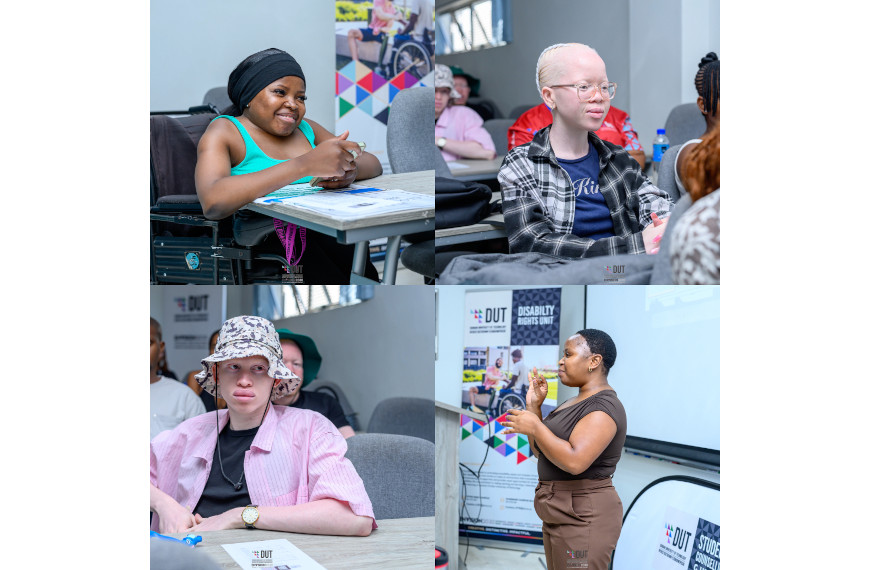
The Durban University of Technology (DUT) reinforced its commitment to inclusivity by hosting the Adapt and Connect Programme, a two-day initiative organised by the Disability Rights Unit (DRU) to empower students with disabilities and connect them with key support services across the university.


The programme took place on Thursday, 5 March at the Institute for Water and Wastewater Technology boardroom at the Steve Biko Campus in Durban and continued on 6 March at the Riverside Campus in Pietermaritzburg. It was designed for students with disabilities from both campuses, ensuring equal access to essential information, services and support structures.


The initiative aimed to provide students with uninterrupted access to institutional services while raising awareness across university units about the importance of comprehensive support. The event offered a platform for students to engage with key departments and gain insight into the resources available to help them succeed academically and personally.


The Disability Officer, Ms Gugu Khuluse, welcomed the students and guests and expressed appreciation to colleagues from various university units who continue to support the programme each year. She highlighted the importance of collaboration in creating an inclusive learning environment and extended a special welcome to first-year students, encouraging them to embrace university life while making use of the available support structures.


“Welcome to DUT and thank you for choosing this university as your family. University life may feel overwhelming at first, but we are here to support you throughout your journey. Please listen carefully to the information shared today and remember that the Disability Rights Unit is here to assist and support you during your time at the university,” she said.


The Interim Director of the Student Counselling and Health Unit, Mr Sihle Mbanjwa, explained the purpose of the programme and emphasised DUT’s commitment to inclusivity. He noted that disability should not only be understood in terms of visible physical conditions but also includes invisible disabilities such as learning difficulties, neurological conditions and psychological challenges.


“Disability is broader than what we can physically see. Some students may have invisible disabilities that affect their learning and daily functioning. It is therefore important for students to disclose their conditions so that the university can provide appropriate support,” he explained.


Mr Mbanjwa encouraged students to engage with the Disability Rights Unit and make use of available services. He also highlighted the social model of disability, which focuses on removing barriers within environments rather than viewing disability as a limitation of the individual. He stressed that the institution has a responsibility to create an environment that accommodates students’ needs and that the focus should always be on students’ abilities rather than their disabilities.


The Student Representative Council Social and Welfare Officer, Ms Sibongile Ndlovu, assured students that the SRC works closely with the DRU to advocate for students with disabilities and ensure they receive the necessary support. She encouraged students to believe in their abilities and seek help whenever they encounter challenges.


Chairperson of the Students with Disabilities Association, Ms Siphokazi Mbili, also urged students to connect with the association and the DRU for assistance. She emphasised that the association collaborates with the DRU to advocate for students and ensure their voices are heard.


“We are here to support you throughout your academic journey. If you face any challenges or need guidance, please reach out to us. It is important that students become aware of the services available to them early so that we can assist before challenges become bigger problems,” she said.


The programme featured presentations from several university units that support the DRU, including Financial Aid, Student Housing and Residence Life, Sports Administration, the Library, the Writing Centre, the Legal Unit, Isolempilo Clinic and the Centre for Excellence in Learning and Teaching. These units provided students with informative insights, enriching their understanding of available resources.


Delivering the vote of thanks, Dean of Students, Dr Clement Moreku, commended the organisers for bringing together different university departments to support students with disabilities. He highlighted that collaboration among university units plays a vital role in ensuring that all students have equal opportunities to succeed.


Dr Moreku emphasised that student success depends on collective effort, noting that access must be accompanied by support. “For our students to succeed, we must work together to ensure access with success. Compassion and professionalism are important in ensuring that every student receives the support they need,” he added.


He encouraged students to make use of the services available to them and to report any challenges so that the university can provide the necessary assistance.


Pictured: Students with disabilities at the Adapt and Connect Programme.


Photographer: Khulasande Tshayile

Sinamile Sithole

https://www.dut.ac.za/dut-hosts-adapt-and-connect-programme-to-empower-students-with-disabilities/
 

BEYOND INCLUSION SYMPOSIUM ADDRESSES KEY ISSUES CONFRONTING LGBTQI+ COMMUNITY


The International Centre of Nonviolence (ICON) at the Durban University of Technology; in collaboration with Uthingo Network, hosted the two-day Beyond Inclusion Symposium under the theme, “Confronting Anti-LGBTQI+ Violence and Discrimination in the South African Education System” ,at Mansfield Hall, Ritson Campus, from 21 to 22 September 2026.


The symposium brought together high school and primary school learners, university students, parents, activists, researchers, academics, civil society representatives and policymakers to discuss the experiences of LGBTQI+ youth and explore approaches to creating more inclusive educational environments.


In her opening remarks, S’thembile Mjadu, Acting Director of Student Counselling and Development, framed inclusion as both a constitutional and moral obligation. She highlighted the need for institutions to move beyond broad commitments to inclusion by strengthening anti-discrimination measures, reporting pathways, healing curricula, safe residences, affirming services and meaningful support for LGBTQI+ students and learners.


Professor Relebohile Moletsane’s keynote address brought the discussion into focus through the story of Thando, a composite representation of patterns emerging from research and lived experiences. Thando’s school day demonstrated how discrimination does not always take the form of a dramatic or reportable incident. Instead, it can involve the constant calculation of how to walk, speak, dress, sit and behave in order to remain safe.


The first day featured a panel discussion titled “Speaking to Our Lived Educational Experiences” ,facilitated by Brian Sibeko, Director of Uthingo Network. The panel included Olwethu Masuku, a learner and representative from Uthingo Network Support Group; Sbusiso Mahlinza, a student from the University of KwaZulu-Natal and representative of the Queer Alliance; Qiniso Gumede, a DUT student and representative of the Rainbow Alliance; and Nhlanhla Myeza, a learner from Nonhlevu Secondary School.


This was followed by a panel discussion facilitated by Dr Ruth Nyamadzawo, a Postdoctoral Fellow at ICON, DUT. Titled “What is the Research Telling Us?”, the discussion brought together Nkonzo Mkhize, Researcher and PhD candidate at the University of the Witwatersrand; Dr Dudu Shabane, Lecturer at ICON, DUT; and Melicia Khasa, educator at KwaMakhutha Comprehensive High School. The panellists reported on their research studies that explored the experiences of LGBTQI+ youth and how they experience violence, discrimination and inclusion within educational settings.


The final panel discussion of the day, titled “Voices of Adults: Challenging the Systems That Shape Young People’s Experiences” ,focused on the role of adults and institutions in shaping young people’s experiences. The panel included Zanele Mnyandu, Principal of Tinley Manor High School; Cynthia Myeni, parent of a queer learner; and Virginia Magwaza, Founder and Managing Director of Parents, Families & Friends of South African Queers (PFSAQ).


Adding a creative dimension to the programme, attendees were treated to a poetry performance by Thola Mhlongo and a drama performance by students from DUT’s Department of Drama and Production Studies.


The second and final day of the Beyond Inclusion Symposium was anchored on the theme, “Imagining Inclusive Education” ,continuing the discussions and reflections from the first day.


The first panel discussion, titled “Reimagining Inclusive Education” ,was facilitated by Professor Tabitha Murekedzi, SARChI Chair in Education, Social Justice and Society at DUT. The panel included Professor Phumlani Myende from the University of KwaZulu-Natal School of Education; Tandile Mbatsha, Education Officer at Gender Dynamix; Nonhlanhla Mkhize, Executive Director at the Durban Lesbian, Gay, and Community Health Centre; and Dr Zakhele Nzuza, Senior Lecturer and Head of Department in Inclusive Education at th


The discussion examined approaches to creating educational environments that respond to the diverse experiences of learners and students.


“For me, the concept of inclusion is too broad yet very simple. For the longest time, sometimes we understood it to mean fixing things and systems, and so on. My basic meaning of inclusion and inclusive education is about one key concept, which is care. All the other concepts that relate to care, or that are part of inclusive education, are centred around what care means,” said Professor Myende.


Tandile Mbatsha further explored the concept of care in relation to inclusive education, emphasising the importance of allowing learners and students to exercise autonomy in determining their identity and being accepted within educational environments.


“Care comes from seeing an individual for who they are, and as they are telling you who they are. It is around self-determination, and making sure that the policies are conducive for an individual to thrive in the school,” said Mbatsha.


The importance of understanding also emerged from the discussion, with panellists highlighting the need for educators to understand their learners and students in order to support their development and participation.


“As an educator, you are not going to get to the learner if you do not understand the learner. Inclusive education means to be respected, valued, and above all, free from discrimination. Ultimately, it means creating a sense of belonging where everyone can learn, be taught, and participate without fear,” said Dr Nzuza.


The final panel discussion of the symposium, titled “From Policy to Practice: Conversation with Policymakers” , was facilitated by Professor Cheryl Potgieter, a South African academic and psychologist. The discussion focused on moving from awareness of anti-LGBTQI+ violence and discrimination towards accountability and practical change.


The panel included Zanele Ncwane, KwaZulu-Natal Provincial Manager for the Commission for Gender Equality; Phumlani Ndlovu, representative of the School Governing Body Governance for Ilembe District under the Department of Basic Education; Nkonzo Mkhize, Researcher and PhD candidate at the University of the Witwatersrand; and Brian Sibeko, Director of Uthingo Network.


The discussion explored practical ways in which policy can be translated into practice, as well as the relationship between policy and the everyday experiences of the LGBTQI+ community in educational settings. Panellists also considered possible responses to the challenges faced by LGBTQI+ learners and students.


The symposium concluded with closing remarks from Programme Director Professor Ndumiso Daluxolo Ngidi, Director of ICON and Associate Professor at DUT. He expressed his gratitude to the attendees and reflected on the productive engagement throughout the two days.


Professor Ngidi emphasised that transformation cannot take place within one institution alone and requires a collective commitment from different stakeholders.


The Beyond Inclusion Symposium highlighted the importance of collaborative engagement between DUT’s Faculty of Management Sciences, ICON and Uthingo Network in creating spaces for dialogue on inclusive education and the experiences of LGBTQI+ youth.


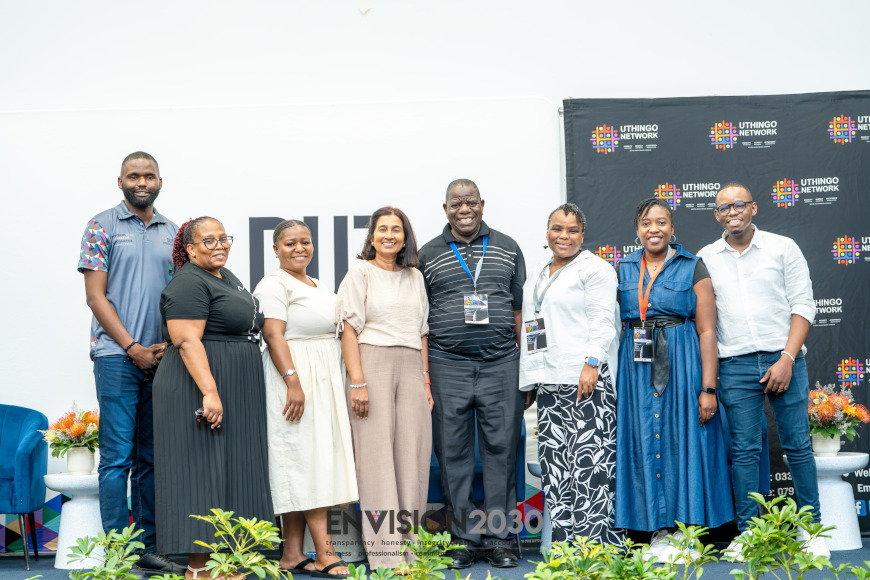
Pictured: DUT ICON representatives.


Photographer: Sifundo Thwala

Sompisi Ntuli

https://www.dut.ac.za/beyond-inclusion-symposium-addresses-key-issues-confronting-lgbtqi-community/

DUT DRU INDUCTS SUPPORT STAFF TO STRENGTHEN SUPPORT FOR STUDENTS WITH DISABILITIES


The Disability Rights Unit (DRU) at the Durban University of Technology (DUT) hosted a Disability Support Staff Induction Programme at Walsingham Residence. The programme aimed to equip 25 newly appointed tutors and scribes with the knowledge and skills required to effectively support students with disabilities while promoting inclusivity and student wellbeing across the institution.


During the session, support staff were introduced to the DRU’s approach to disability support and gained insight into the different types of disabilities accommodated by the unit, as well as the specific needs associated with each.


The session was facilitated by Talent Cele, who outlined key protocols and procedures for delivering effective and ethical support. The training reinforced the importance of professionalism, empathy and consistency in enhancing the academic experience of students with disabilities at DUT.


Nico Siga from DRU explained the purpose and importance of the induction programme, emphasising how it prepares tutors and scribes for their roles and responsibilities.


He also provided a comprehensive overview of the duties of tutors and scribes, highlighting the importance of offering academic guidance, practical assistance, professionalism, confidentiality, effective communication and continuous support to ensure that students receive the necessary help to succeed in their studies.


Sihle Mbanjwa, Interim Director for Student Counselling and Health, opened the session by welcoming attendees and acknowledging the Disability Rights Unit (DRU) for organising the event.


He highlighted that tutors and scribes play different but closely connected roles in helping students succeed academically. Tutors are responsible for helping students understand their academic work, dedicating time to engage with them, identify their challenges and support their learning process.


He emphasised that while tutors assist students, students must also actively participate in their own learning.


Sihle further discussed the responsibilities of scribes, stressing the importance of academic integrity and fairness during assessments. He explained that scribes act only as the “hand” of the student by accurately writing or typing exactly what the student communicates without correcting, changing or influencing answers.


“The role of the scribe is to remove barriers for students who cannot write due to permanent or temporary disabilities while ensuring that assessments remain fair and reflect the student’s true knowledge and abilities. The scribes had to familiarise themselves with students’ communication styles and needs before assessments to build effective working relationships,” he added.


Odwa Mahlungulu and Ayanda Nsele, both Administrative Assistants in the Disability Rights Unit, discussed the responsibilities and ethical conduct expected from scribes and tutors who assist students with disabilities.


They explained that scribes must write exactly what the student says during exams without correcting grammar, changing wording or giving hints and answers. They are also required to read responses back to students to ensure accuracy.


They emphasised the importance of professionalism, fairness and maintaining academic integrity while supporting students.


They further explained that assistants support students by attending classes, taking notes, recording lectures, assisting during exams and, in some instances, helping with administrative tasks.


“The aim of these services is to provide equal learning opportunities and improve the educational experience of students with disabilities. The DRU monitors the work of tutors and scribes through systems that ensure that students receive proper and effective support,” she explained.


Siphokazi Mbili, a third-year Industrial Engineering student and Chairperson of the Students with Disability Association (SWDA), emphasised that academic support goes beyond the curriculum and focuses on creating inclusive learning environments for students with disabilities.


She explained that tutors and scribes play an important role in reducing barriers to learning by supporting students in ways that respect their individual learning styles and independence.


She highlighted three key principles for their work: promoting student autonomy, showing empathy and commitment to inclusion, and maintaining professionalism and confidentiality.


Nokwanda Malinga from the Student Housing and Residence Life Unit, Ayanda Nsele from DRU Midlands, Sphesihle Ngubo from the HIV/AIDS Centre and Phumzile Monageng from Student Counselling also provided training to the support staff, guiding them on expectations, responsibilities and professional conduct when working with students with disabilities.


Viwe Makwabasa, a student with disability (SWD) and now a scribe, provided entertainment during the programme.


In her closing remarks, Disability Rights Unit Officer Gugu Khuluse extended her heartfelt gratitude to all attendees for their participation.


She also expressed appreciation to colleagues who attended and presented at the induction programme, acknowledging their commitment to supporting students with disabilities.


She further thanked the tutors and scribes for their willingness to support students with disabilities.


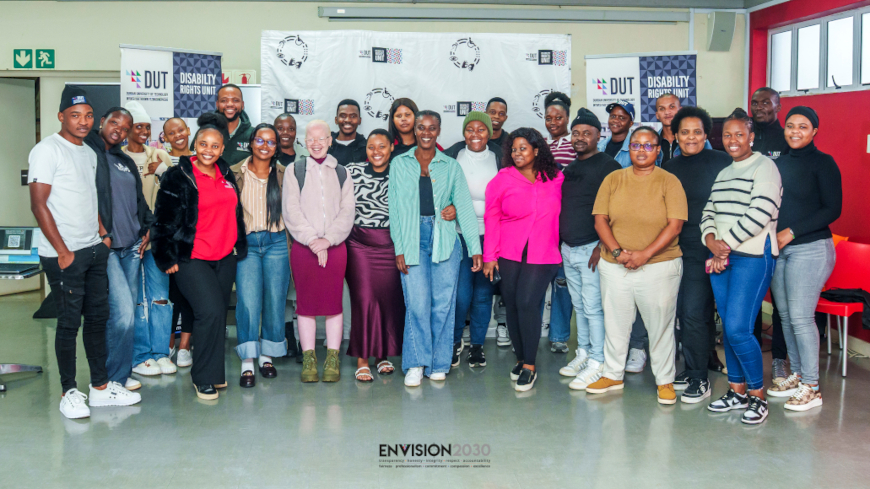
Pictured: The attendees of the scribes and tutors induction with the DRU staff.


S’bonelo Dlamini
Phiwayinkosi Sibiya

https://www.dut.ac.za/dut-dru-inducts-support-staff-to-strengthen-support-for-students-with-disabilities/

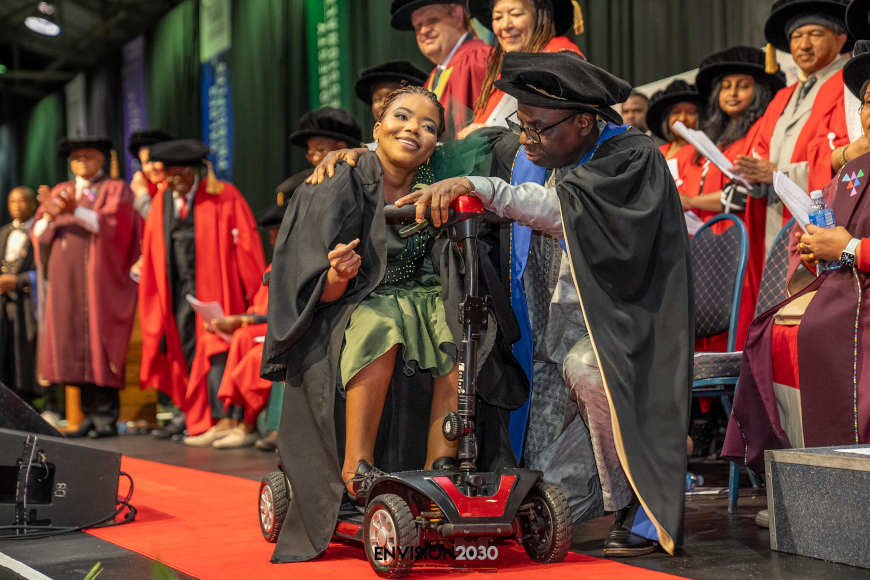
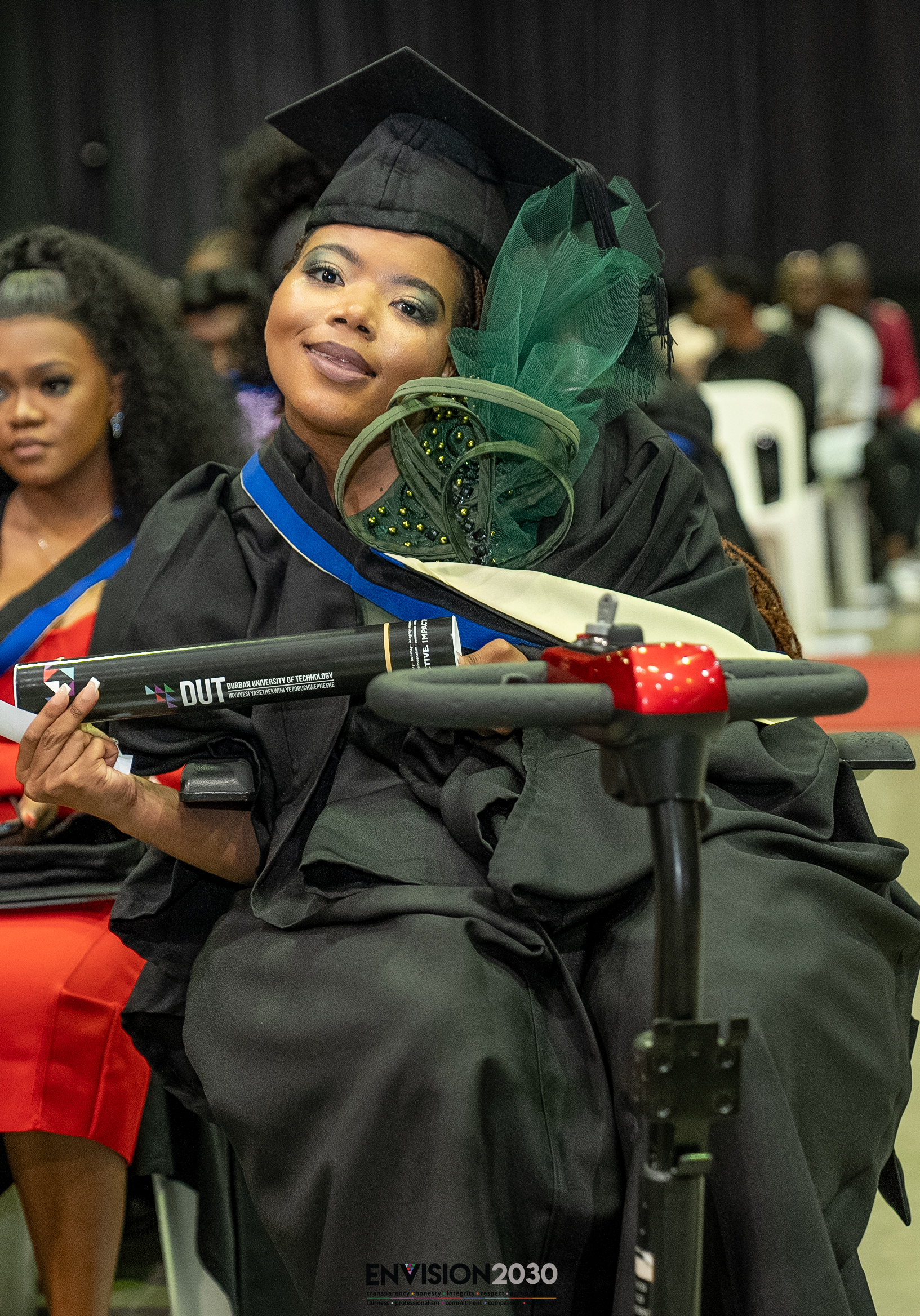
THE UNSTOPPABLE KHUZWAYO GRADUATES WITH PRIDE AGAINST ALL ODDS


A remarkable individual whose path to success is marked by unwavering perseverance, Nqobile Khuzwayo graduated with a Diploma in Business and Information Management at the opening ceremony of the Durban University of Technology (DUT) 2024 Spring Graduation, which was held at the Durban Exhibition Centre on Thursday, 19 September 2024.


For Khuzwayo (28) from KwaMashu in Durban this was a big achievement for her after overcoming numerous challenges as a student with disabilities. In 2011 she suffered a hypoxic brain injury that necessitated her to receive specialised education.


She hopes her achievement will inspire other students with disabilities to pursue their higher education studies and not let their disability to disable them from succeeding in life.


Nqobile Khuzwayo at her graduation.

“I want to specifically encourage students living with disabilities to pursue their academic dreams. They must not let any barriers hold them back, with determination and focus they can succeed and reach their full potential. I would advise anyone considering furthering their education to take the opportunity and go for it. Studying can be a fun and rewarding experience, especially when you are passionate about your field,” said Khuzwayo.


Raised by her late grandmother, she had attended various schools, adapting to new environments and circumstances. After matriculating in 2018, she took a gap year due to limited mobility, but persevered and secured a spot at DUT in 2020 to pursue a Diploma in Business and Information Management, embracing a new chapter in her academic journey.


Khuzwayo has been actively involved in various organisations, including the Students with Disabilities Association (SWDA), where she has held leadership roles as secretary and academic officer. She also contributed to the Man Carve Organisation, capturing data and participating in initiatives like food parcel distribution and rural school visits. Khuzwayo gained valuable experience working at the DUT Disability Rights Unit as part of her Work-Integrated Learning (WIL) programme, which she found to be a great opportunity.


She is eager to continue her studies, having planned to pursue an Advanced Diploma in Business Administration. She is determined to return next year to achieve her goal of obtaining the Advanced Diploma. Her wish is to study until she reaches the PhD level.


Khuzwayo extended a special thanks to the DUT Disability Rights Unit (DRU) for playing a vital role in her academic success. She mentioned that the DRU provided her with essential support, including caregivers and extended exam times. She commended the DRU staff for being understanding, approachable, dedicated, creating a supportive learning environment that enabled her to excel academically.


She mentioned that the Unit’s commitment to ensuring equal access to education for students with disabilities was commendable, highlighting their expertise, compassion, and empowering approach as key factors in her success.


Pictured: Nqobile Khuzwayo.

Photographer: Mnqobi Ngobese.

Phiwayinkosi Sibiya

https://www.dut.ac.za/the-unstoppable-khuzwayo-graduates-with-pride-against-all-odds/

LOGISTICAL SERVICES STRENGTHENS ACCESSIBILITY WITH HANDOVER OF VEHICLES TO DISABILITY RIGHTS UNIT


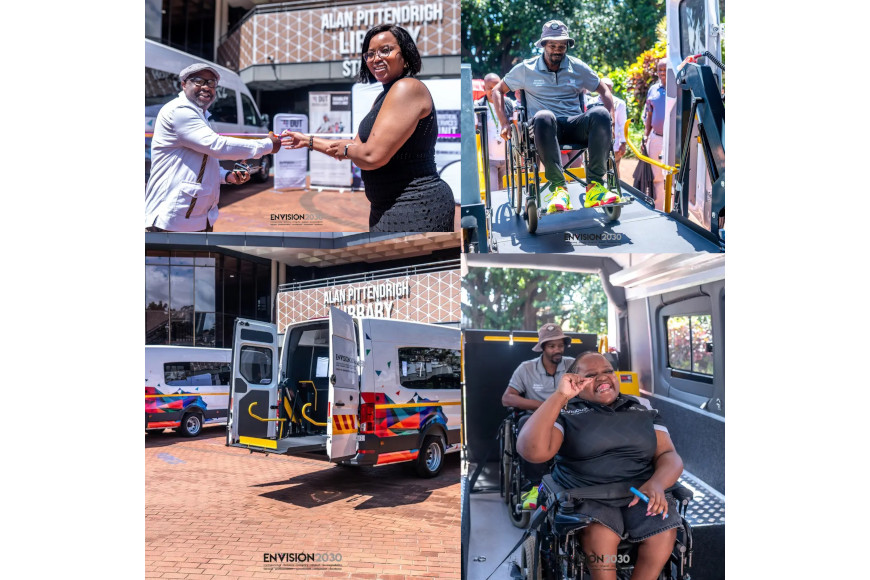
The Durban University of Technology (DUT), through its Logistical Services function within Real Estate Management, officially handed over two transport vehicles to the Disability Rights Unit (DRU) on 29 October 2026 at the Steve Biko Campus. The vehicles are intended to improve mobility and accessibility for students with disabilities across the University’s campuses.


The new vehicles are expected to provide a safer, more convenient and comfortable transport option for students who rely on university transport to attend classes and participate in campus activities.


Speaking at the handover ceremony, Dean of Students, Dr Clement Moreku, described the occasion as an important milestone for the University and the students who will benefit from the service.


“We are grateful to the Fleet Management Unit for its role in ensuring that these vehicles are available to our students with disabilities. They have been waiting for this for three years,” he said.


Dr Moreku said the vehicles would help address some of the transport challenges experienced by students with disabilities while reinforcing DUT’s commitment to student support and inclusion.


“These vehicles will go a long way towards addressing the challenges faced by our students and align with the University’s commitment to ensuring that all students are cared for and supported. We are confident that they will positively contribute to our students’ academic success,” he added.


He also acknowledged the Registrar, Dr Maditsane Nkonoane, for his role in ensuring that funding was allocated for the acquisition of the vehicles. He further recognised the dedication of the DRU team and expressed hope that the University would continue investing in resources and services that improve the experiences of students with disabilities.


Fleet Management Services Manager, Ms Bonny Mbatha, said the need for accessible transport had long been identified as a gap within the institution. She explained that the Fleet Management team had been working towards finding a solution that would enable students with disabilities to travel between campuses safely and with greater ease.


“We are proud that students with disabilities can now be accommodated and move safely between campuses. This is one of the biggest achievements, not only for the Disability Rights Unit but for DUT as a whole,” she said.


Ms Gugu Khuluse, Disability Rights Officer, highlighted the challenges the University previously encountered when sourcing suitable transport for students with disabilities.


“Hiring specialised buses has been difficult because some transport providers do not have vehicles that accommodate students with disabilities. These new vehicles will provide a more accessible and convenient transport solution for our students,” she said.


For one of the beneficiaries, Mandisi Hlabisa, a final-year Human Resources Management student, the handover represents a welcome development that will make accessing academic activities easier.


“I am very happy that we have finally received these vehicles. I often struggled to attend classes because of transport challenges, especially during rainy weather,” she said.


The handover marks an important step in DUT’s ongoing efforts to create a more inclusive and accessible learning environment, ensuring that students with disabilities have the support and resources they need to participate fully in university life and succeed academically.


Pictured: Dr C Moreku, Miss Bonny Mbatha, and students within the disability unit.


Photographer: Sbonelo Dlamini

Luyanda Mlaba

https://www.dut.ac.za/logistical-services-strengthens-accessibility-with-handover-of-vehicles-to-disability-rights-unit/