
Follow Us On Social Media
 @dut.febe
 @dut.febe
 DUT Faculty of Engineering and Built Environment
 DUT Faculty of Engineering and Built Environment
HOD Positions Available

Back to Faculty Page
Town and Regional Planning Handbook
Staff
VISION and MISSION
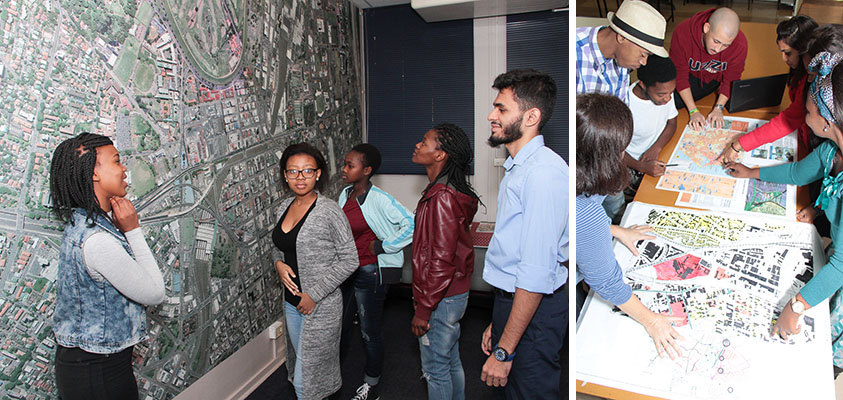
The Department of Town and Regional Planning recognises the need to effectively respond to the socio-economic transformation challenges facing South Africa. The Department is committed to the principle of autonomy, academic freedom and rejects any form of racism, sexism and/or sectarianism. We are committed to developing a planning profession that is relevant and appropriate to the needs of the community, government, planning institutions and the private sector. We support building a student focused Department that places the student at the centre of learning and teaching to develop lifelong learning pathways in the field of Town and Regional Planning.
The Department therefore aims to offer a service to its students in the following ways:
- To develop curricula and syllabi which are relevant and appropriate to the needs of the country undergoing socio-economic transformation;
- To reach out to communities where possible, by way of practical projects, and to make this information accessible to interested constituency groups;
- to redress the imbalances of the past especially in respect of race, gender, class and any other form of social imbalance, through appropriate equity policies;
- to develop and refine technological and research methodologies relevant to development and planning;
- to continuously monitor and evaluate planning, teaching and learning methodologies to ensure effective planning education;
- to actively participate in developing student centered learning pathways throughout their educational experiences and as lifelong learners.
PROGRAMMES OFFERED
Programmes offered in this Department which, upon successful completion, lead to the award of the following qualifications:
Bachelor of Technology: Town and Regional Planning (BTTRP1) SAQA 73689, NQF 7
The purpose of the qualifications offered in Town and Regional Planning is to provide professional and technical education leading to a qualification and professional recognition as identified by the Planning Profession Act of 2002.
To achieve this purpose, the Department of Town and Regional Planning provides the opportunity for learners to develop their skills, knowledge and application thereof, within the context of social responsibility and sustainable development through the following broad curricula guidelines:
- the use of social science theory as an analytical framework in which to understand, conceptualise and analyse society, politics, process, the environment and context of development;
- the application of design as a spatial tool for developing human settlement processes, land use and physical development;
- economic issues and context as they relate to development;
- the environmental and sustainability challenges for planning and society;
- the legal framework in which planning functions;
- management processes as it relates to the built environment;
- ethics and values that underpin the profession;
- developing life skills.
ENTRANCE REQUIREMENTS
Bachelor Degree of the Built Environment in Urban and Regional Planning (BBURP1)
Bachelor Degree of the Built Environment (BBE) in Urban & Regional Planning Entry Requirements
Master of the Built Environment (MBE) Entry Requirements
Doctor of Philosophy in the Built Environment (PhD) Entry Requirements
Applications to: Central Applications Office(C.A.O)
LINKS
hhttp://www.sapi.org.za/
http://sacplan.org.za/
Contact Details
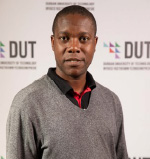 Head of Department: Dr Godfrey G. Musvoto
Tel: 0313732665
Email: godfreym@dut.ac.za
Location: S Block 3, Level 4
Campus: Steve Biko Campus
 Secretary: Mrs. V Rabbiechun
Tel: 031 373 2673
Fax: 031 373 2806 / 086 674 1456
Email: vashna@dut.ac.za
Location: S Block 3, Level 4, Room BS 3605
Campus: Steve Biko Campus
