RESEARCH
ADVANCEMENT

SDG4 Quality Education


2026

DUT LIBRARY CELEBRATES SCHOLARSHIP AND PUBLISHING THROUGH BOOK LAUNCHES


The Durban University of Technology (DUT) Library recently hosted two book launch events at the BM Patel Library Conference Centre, showcasing publications by members of the DUT community and highlighting the University’s commitment to promoting scholarship, reading and knowledge sharing.


The launches featured publications by Dr Collence Takaingenhamo Chisita, Senior Lecturer in the Department of Information Systems; Vhugala Peace Mashau, a DUT Library Book Club student member and author; and Dr Wiza Munyeka, Senior Lecturer and Head of the Department of Human Resource Management at DUT. Mr Romeo Matumba, Librarian: Marketing and Communication at DUT, served as Programme Director for both events.


The events brought together academics, students, library staff and members of the wider DUT community to recognise the authors and contributors and engage with their published works.


The first book launch, held on 21 August 2026, featured publications by Dr Chisita and Vhugala Peace Mashau. The programme opened with an address by Prof Smangele Moyane, Deputy Dean of the Faculty of Accounting and Informatics at DUT.


Dr Chisita presented three publications exploring the changing role of libraries and their place in society. These included Libraries in an Era of Constant Change: From Yesteryear to the Future, co authored with Professor Madeliene Fombad, Dr Tshepo Mosweu, Dr Vusi W. Tsabedze, Professor Rexwhite Enakrire and Dr Godfrey Tsvuura; Libraries as Vanguards of Community Service Provision in Shifting Information Landscapes, co authored with Dr Rabiya Ali; and Innovating in Libraries: Surviving Technological Lethargy in Times of Endless Transformation, Volumes 1 and 2, with Dr Blessing Chiparausha and Professor Madeliene Fombad as contributors.


Drawing on Heylighen’s 2016 Stigmergic framework for co publication, Dr Chisita reflected on his experience as an author and co editor and highlighted the importance of collaborative knowledge production. He also discussed the value of documenting and sharing knowledge about the changing information environment in which libraries operate.


Vhugala Peace Mashau, a DUT Library Book Club student member and author, presented his works, Things I Wish I Could Say: The Rising of Mashau and The Rise of Poetry.


Through his poetry, Mashau explores themes of humanity, relationships, emotional healing and the complexities of human experience. His work encourages readers to reflect on the challenges people face and the time and understanding required in the healing process.


Members of the DUT Library Book Club also performed a poetry item during the programme, demonstrating the role of the Library in creating spaces where students can engage with literature and express themselves creatively.


The launch concluded with a vote of thanks by Mr Nhlanhla Nhleko, Library Manager at DUT, who acknowledged the authors, contributors, speakers, Book Club members and everyone who attended the event.


A second book launch featured Navigating Organisational Dynamics: Contemporary Perspectives and Challenges in Organisational Behaviour in South Africa, edited by Dr Wiza Munyeka, Senior Lecturer and Head of the Department of Human Resource Management at DUT.


The publication brings together contributions from Liiza Gie, Tatenda Chikukwa, Ashnee Rajlal, Pauline Eyono, Sifiso Myeni, Lucia Ngidi, Samuel Bangura, Baphiwe Daweti, Nigel Makuwe, Webster Hlophe, Anos Chitamba, Linda Ratau, Zephrus Molewa, Jane Makgopa, Mercillene Mathews and Goldmarks Makamure.


The core author team is drawn from the Department of Human Resource Management at DUT, with contributions from academics and professionals from institutions including the University of Johannesburg, University of KwaZulu Natal, Vaal University of Technology, Afrisight (Pty) Limited and University Canada West in Canada. The book is published by Juta Publishers, South Africa.


Delivering a message from the Dean’s Office, Prof M.J. Swanepoel, Executive Dean of Management Sciences, said he was encouraged to see Library Book Club members actively participating in book launches.


He commended DUT Library for its role in cultivating a culture of reading and writing at the University and highlighted the importance of providing students with opportunities to engage directly with books and authors.


Prof Swanepoel also congratulated Dr Munyeka, the editor, and all the contributors involved in the publication, as well as those who participated in the launch both in person and online.


Dr Munyeka presented an overview of the publication, outlining its purpose, key themes and contribution to understanding organisational behaviour in the South African context. He also reflected on the motivation behind the book and the collaborative process involved in bringing the publication together.


Mr Dumo Xaba, author and photographer, contributed a poetry item to the programme, after which Dr Munyeka presented the reviewer’s remarks before officially unveiling the publication.


The second launch concluded with a vote of thanks by Dr Baphiwe Daweti, Senior Lecturer in the Department of Human Resource Management, who thanked the authors, editor, speakers, organisers and attendees for their participation.


The two events form part of DUT Library’s ongoing efforts to promote scholarship and publications produced by members of the University community. They also provide students, particularly members of the Library Book Club, with opportunities to meet authors, hear about their experiences and participate in activities that promote reading, writing and knowledge exchange.


Through initiatives such as these, DUT Library continues to strengthen its role in the University’s knowledge ecosystem by creating platforms for published work to be presented, discussed and shared with readers.


The book launches also demonstrate how the Library contributes beyond its traditional role as a repository of information, serving as a space for intellectual exchange, collaboration and the development of a vibrant culture of scholarship across the University.


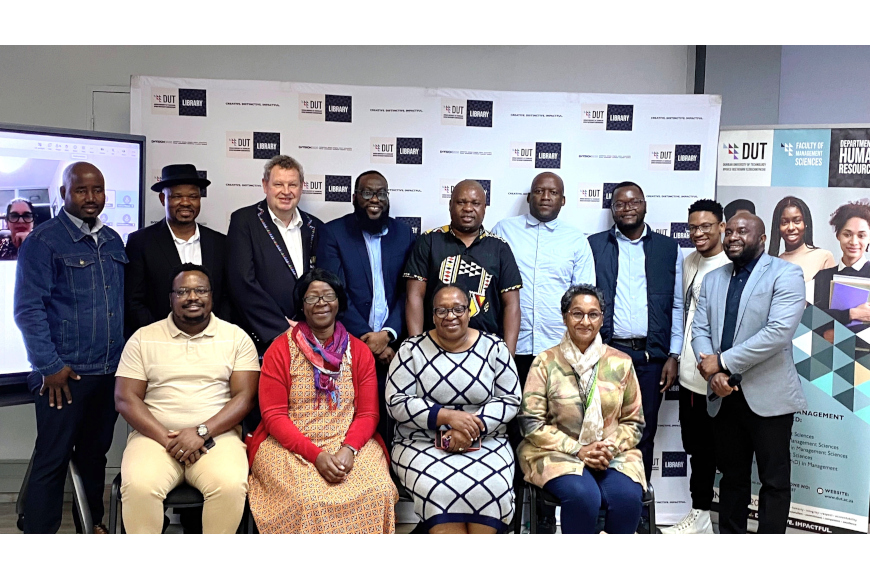
Pictured: Distinguished guests at the book launch.


Photographs: DUT Library Book Club members

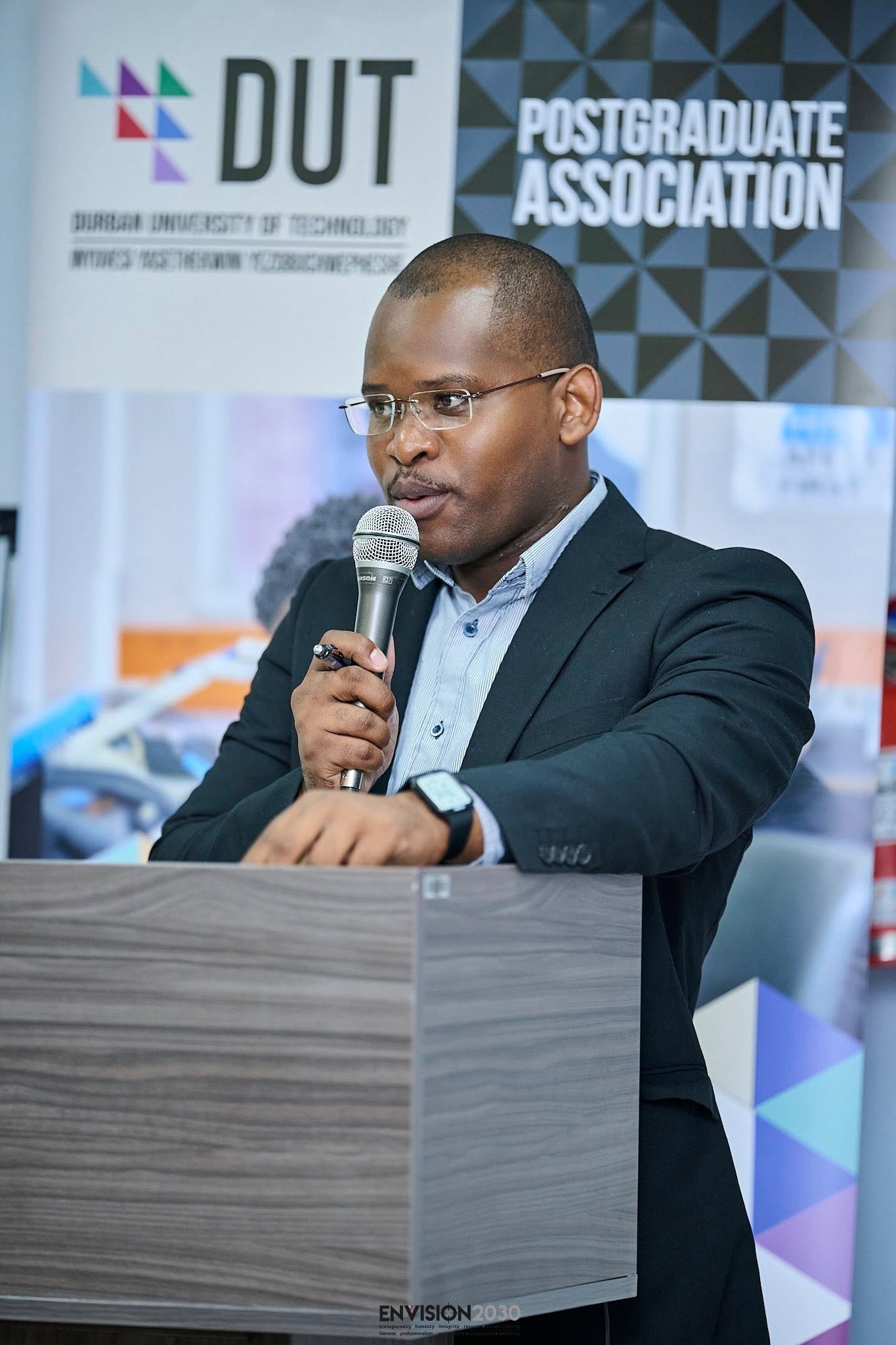
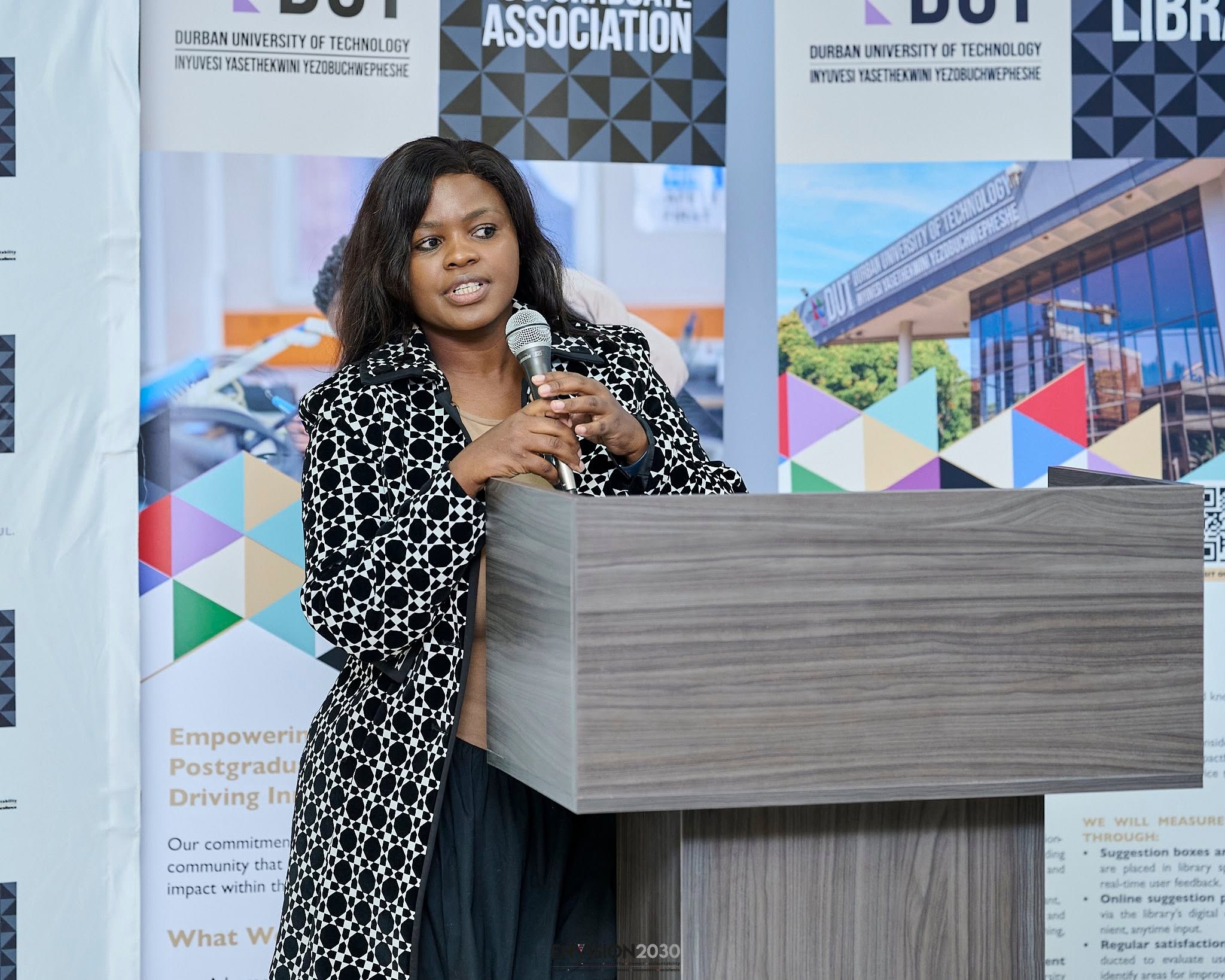
Romeo Matumba, Dr Collence Chisita, Dr Wiza Munyeka and Vhugala Mashau
 

https://www.dut.ac.za/dut-library-celebrates-scholarship-and-publishing-through-book-launches/


WORLD OF WORK GALA DINNER STRENGTHENS COLLABORATION BETWEEN ACADEMIA AND INDUSTRY


The Co-operative Education Unit at the Durban University of Technology (DUT) hosted its annual World of Work (WoW) Gala Dinner, bringing together students, industry partners and key stakeholders to strengthen collaboration between academia and industry and support the development of future-ready graduates and leaders.


The prestigious event was held at The Station Urban Event Space in Durban on Wednesday, 19 August 2026, following the official opening of the WoW Career Fair 2026 at the Fred Crookes Sports Centre, Steve Biko Campus, on Wednesday, 19 August and Thursday, 20 August 2026. The career fair will conclude at the Indumiso Campus in Pietermaritzburg on Friday, 21 August 2026.


The Gala Dinner provided an opportunity to celebrate the longstanding partnerships between DUT and industry, while highlighting the critical role of workplace learning, mentorship and industry engagement in preparing students for successful careers.


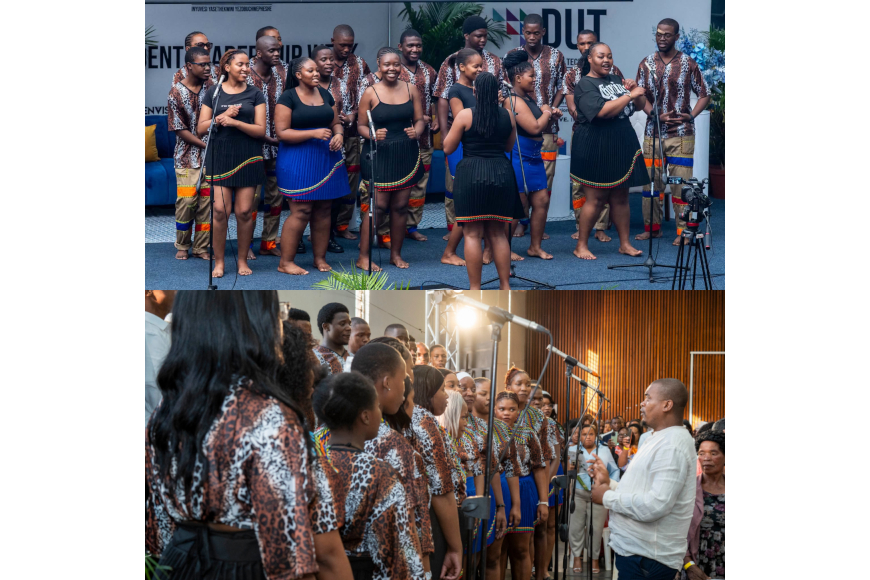
The evening was facilitated by two Public Relations graduates working under the Co-operative Education Unit, Ms Philiswa Shongwe and Mr Innocent Mhlongo. Guests were warmly welcomed by students from the Department of Child and Youth Care, who set the tone for the evening with vibrant traditional music.


Delivering the welcoming remarks on behalf of Professor Fulufhelo Nemavhola, Deputy Vice-Chancellor: Research, Innovation and Engagement at DUT, was Mr Zwakele Ngubane, Director of the Advancement and Alumni Relations Unit. He conveyed Professor Nemavhola’s apologies for his absence, as he was travelling abroad on University business.


Mr Ngubane emphasised that meaningful partnerships between higher education and industry are central to preparing graduates to navigate an increasingly complex world of work.


“This evening celebrates something that lies at the heart of DUT’s ENVISION2030 strategy: developing adaptive graduates, not only for employment, but for meaningful participation and leadership in a rapidly changing world. The transition from the lecture hall to the workplace is one of the most important journeys in a student’s life. While universities provide knowledge, critical thinking and technical expertise, it is through meaningful engagement with industry that students gain insight into the realities, expectations and opportunities of the world of work,” said Mr Ngubane.


He expressed his appreciation to DUT’s industry partners for their continued support and commitment to student development, particularly through opening their workplaces to students, providing workplace learning opportunities, mentoring emerging talent and participating in initiatives such as the WoW Career Fair.


Ms Lungile Dlamini, Regional Manager at the Culture, Art, Tourism, Hospitality and Sport Sector Education and Training Authority (CATHSSETA), shared insights into the SETA’s mandate and its role in developing skills aligned with industry needs.


She explained that CATHSSETA works to ensure that students acquire skills that respond to the evolving requirements of the workplace. While acknowledging that CATHSSETA is one of the smaller SETAs, she said the organisation remains proud of its contribution towards developing the next generation of professionals.


Addressing students, Ms Dlamini encouraged them to embrace every opportunity available to them and to remain open to starting small, emphasising that early experiences can provide valuable lessons and create pathways towards bigger and better opportunities.


Delivering the keynote address, titled “Igniting Possibilities,” was Advocate Vasanti Srineevassan, Human Resource Executive at Lion Match Group Products.


Advocate Srineevassan applauded DUT for its contribution to economic growth, social progress and community transformation, highlighting the importance of the partnership between DUT and Lion Match Products.


“Our relationship with DUT has been built on shared values: a commitment to excellence, practical learning, innovation, and the development of young people who will become the workforce and leaders of tomorrow. Together, we recognise that bridging the gap between academic learning and the realities of the workplace is more important today than ever before,” said Advocate Srineevassan.


She noted that the rapidly changing world of work requires graduates to possess more than technical expertise. Employers increasingly value adaptability, critical thinking, emotional intelligence and the ability to collaborate effectively in diverse environments.


“Universities provide the foundation, but industry partnerships help bring that learning to life,” she said.


Also addressing the gathering was Dr Zena Richards, Director in the Office of the Deputy Vice-Chancellor: Teaching and Learning at DUT, who delivered a message of appreciation on behalf of Professor Vusi Gumede, Deputy Vice-Chancellor: Teaching and Learning.


“On behalf of the DVC: Teaching and Learning and the DUT community, I extend our sincere appreciation to all our partners from industry, professional organisations and the Sector Education and Training Authorities. Thank you for opening your workplaces to our students, sharing your expertise, providing mentorship and investing in the next generation of professionals. Your partnership and commitment have helped to transform educational opportunities into meaningful workplace experiences for our students,” said Dr Richards.


Dr Richards also gave special recognition to Mr Rajen Naidoo, Regional Manager at the Chemical Industries Education and Training Authority (CHIETA), highlighting the longstanding relationship between DUT and CHIETA.


She explained that the partnership dates back to the first SETA funding application submitted in 2013 by the Co-operative Education Unit under the leadership of its then Acting Director, Dr Themba Msukwini.


Since then, CHIETA has approved millions of rands in funding to support stipends for DUT students undertaking workplace training. Dr Richards said this contribution has helped remove financial barriers and enabled many students to complete an important component of their education through workplace-based learning.


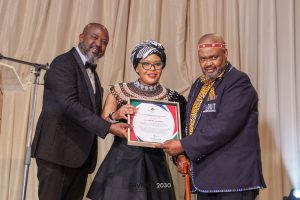
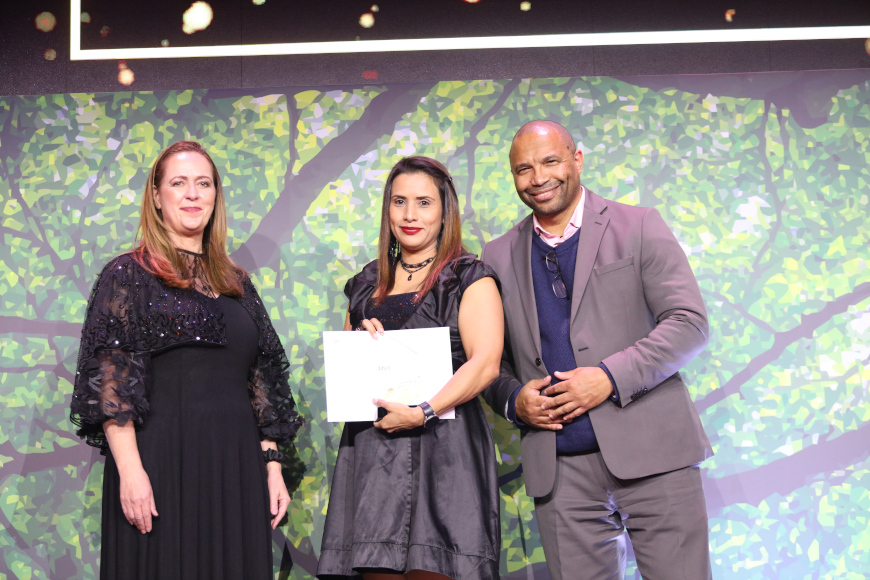
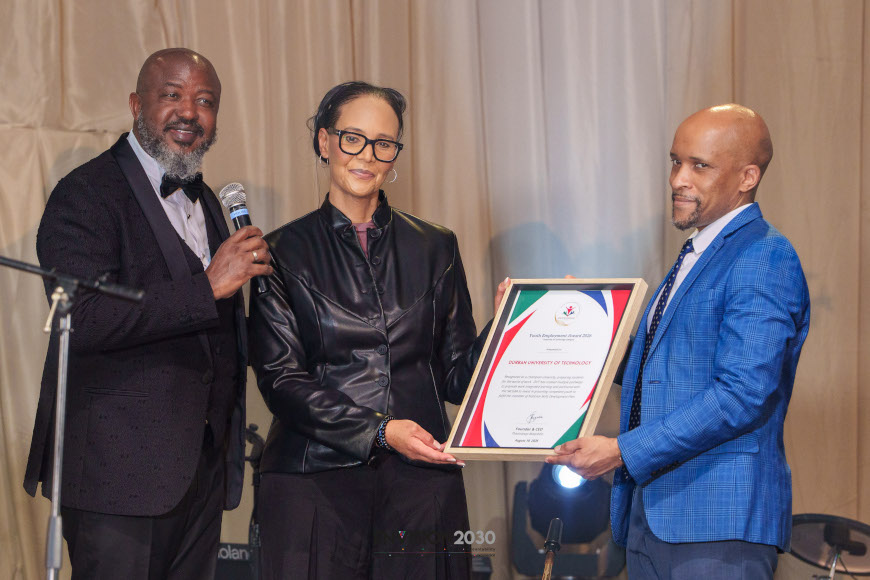
Mr Thamsanqa Maqubela, CEO of SACGRA presenting the Youth Employment Award 2026 to Dr Themba Msukwini and his wife, Mrs Msukwini.

The evening also featured a special recognition of DUT and Dr Msukwini by Mr Thamsanqa Maqubela, Chief Executive Officer of the South African Council for Graduates (SACGRA). Mr Maqubela presented two Youth Employment Awards in the University of Technology and Director of Co-Operative Education categories, in recognition of their significant contribution to shaping and supporting the development of future leaders over the years.


Dr Msukwini expressed his appreciation for the recognition and introduced members of his team from the Durban and Midlands campuses, acknowledging their dedication and service to the Co-operative Education Unit.


In closing, Ms Shireen Singh, Acting Manager in the Co-Operative Education Unit announced that Dr Msukwini will be leaving DUT at the end of August 2026, following 30 years of service to the University.


She revealed that Dr Msukwini will be pursuing farming after his departure and has committed to creating training opportunities for DUT students through his new venture.


On behalf of the Co-operative Education Unit, Ms Singh expressed her sincere appreciation to Dr Msukwini for his leadership, guidance and support over the years.


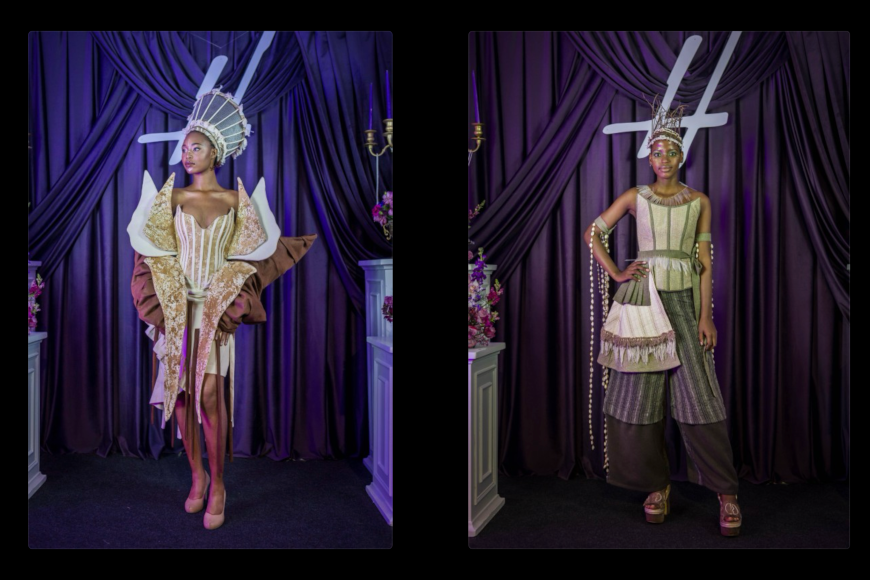
The Gala Dinner concluded on a celebratory note, with guests entertained by musical performances from Siphokazi Maphumulo, popularly known as Nonzwakazi, as well as a fashion showcase featuring DUT students from the Department of Fashion and Textiles.


The WoW Gala Dinner reaffirmed the importance of strong academia-industry partnerships in creating meaningful workplace learning opportunities and equipping DUT graduates with the skills, experience and confidence needed to thrive in an evolving world of work.


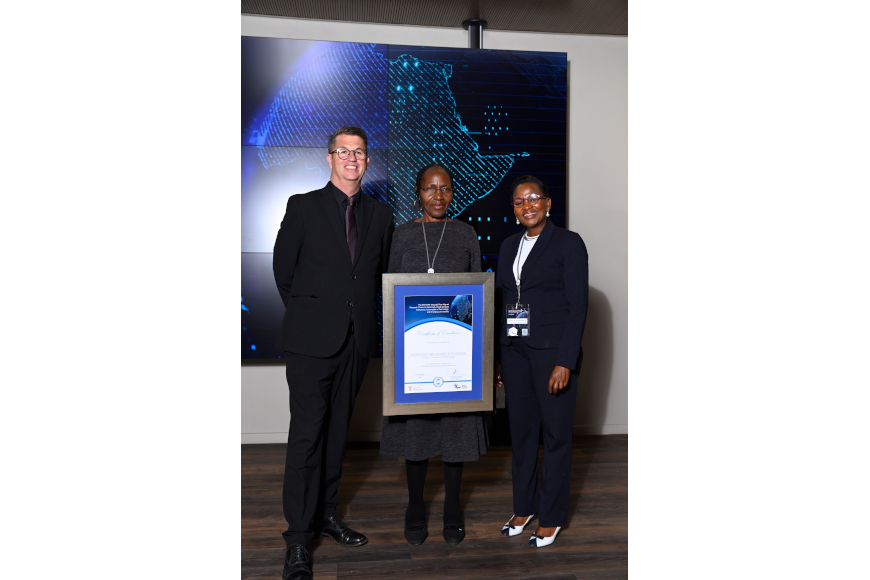
Pictured: Mr Thamsanqa Maqubela, Chief Executive Officer of the South African Council for Graduates (SACGRA) presenting the DUT award to Dr Zena Richards, Director in the Office of the Deputy Vice-Chancellor: Teaching and Learning and Mr Zwakele Ngubane, Director of the Advancement and Alumni Relations Unit.


Photographer: S’bonelo Dlamini

Simangele Zuma


https://www.dut.ac.za/world-of-work-gala-dinner-strengthens-collaboration-between-academia-and-industry/


HIGHER EDUCATION INSTITUTIONS PLAY A PIVOTAL ROLE IN PREPARING GRADUATES FOR A RAPIDLY EVOLVING WORLD OF WORK


DUT Connect Magazine Editor and Alumni Relations Coordinator at the Durban University of Technology (DUT), Ms Ronelle Lyson, says higher education institutions play a pivotal role in preparing graduates for a rapidly evolving world of work, particularly as Artificial Intelligence (AI) continues to reshape teaching, learning, research, innovation, and industry.


She was speaking on the theme, Artificial Intelligence and the Future of Higher Education, which stems from the growing influence of AI across all aspects of society.


She believes that this inaugural theme presents an exciting opportunity to position DUT as a thought leader in conversations surrounding innovation and the future of higher education.


She added that the edition she is currently working on is not only about technology but about people. It focuses on how students, academics, researchers, alumni, and industry partners can work together to ensure that technological advancement remains inclusive, ethical, sustainable, and impactful.


For the first edition of 2026 of DUT Connect Magazine, Ms Lyson shared the thinking behind the feature titled Artificial Intelligence and the Future of Higher Education and why it is important to explore this relationship between human intelligence and artificial intelligence.


“As a University of Technology, DUT has a responsibility to remain at the forefront of technological advancement while ensuring that innovation serves humanity and societal development,” she said.


The feature seeks to explore the relationship between human intelligence and artificial intelligence, recognising that technology is most effective when it enhances rather than replaces human creativity, critical thinking, ethics, and problem-solving capabilities. She explained that higher education institutions play a pivotal role in preparing graduates for a rapidly evolving world of work and that understanding this relationship is essential in producing future-ready graduates who can use technology responsibly and effectively. She added that the theme also provides an opportunity for meaningful dialogue among students, academics, researchers, alumni, and industry partners on how Artificial Intelligence can be harnessed to advance education, research, and societal impact.


The feature aligns strongly with DUT’s ENVISION2030 strategy, particularly in advancing innovation, digital transformation, research excellence, and societal impact.


Ms Lyson said ENVISION2030 positions DUT as a people-centred and engaged university that embraces innovation to address local and global challenges. She added that artificial intelligence is rapidly becoming a transformative force across industries and that exploring its role within higher education supports DUT’s commitment to producing graduates who are adaptable, technologically proficient, and responsive to future workforce demands.


She further noted that the theme supports DUT’s aspiration of becoming a globally recognised university of technology by showcasing how the institution can leverage emerging technologies to enhance teaching, learning, research, entrepreneurship, and community engagement while maintaining a strong ethical and human-centred approach.


Ms Lyson highlighted that the magazine serves as a platform for knowledge sharing, thought leadership, and collaboration.


For students, she said it raises awareness about emerging technologies and encourages the development of digital competencies and critical thinking skills required in the future workplace. It also highlights opportunities for innovation, entrepreneurship, and interdisciplinary learning.


For academic and professional staff, the publication provides insights into best practices, emerging trends, and opportunities to integrate AI enhanced approaches into teaching, administration, and student support services. For researchers, the feature creates visibility for ongoing work, encourages collaboration across disciplines, and stimulates discussion around new research opportunities where AI can be used to solve complex societal and industry challenges. She said the magazine ultimately fosters a culture of innovation and lifelong learning across the DUT community.


She also discussed how artificial intelligence is growing rapidly, particularly the use of tools such as ChatGPT.


“Artificial intelligence tools such as ChatGPT have significantly transformed the research landscape. When used responsibly and ethically, these tools can assist researchers by improving efficiency in literature discovery, data organisation, language refinement, idea generation, and administrative research tasks. However, Artificial Intelligence should not be viewed as a replacement for scholarly rigour, critical analysis, originality, or ethical research practices. Researchers remain responsible for validating information, ensuring academic integrity, and applying disciplinary expertise,” she said.


Ms Lyson emphasised that the challenge for higher education institutions is not whether Artificial Intelligence should be used, but how it should be used responsibly. She said this presents an opportunity for universities to develop clear guidelines, policies, and training that empower staff and students to use AI as an enabler of research excellence while maintaining academic standards and integrity.


While this edition seeks to initiate dialogue, Ms Lyson said it also opens opportunities for future projects and collaborations. Potential initiatives may include Artificial Intelligence focused research showcases and symposiums, industry engagement forums exploring the future of work and digital transformation, alumni thought leadership series featuring graduates working in Artificial Intelligence related fields, student innovation competitions centred on Artificial Intelligence driven solutions for societal challenges, capacity building workshops on responsible Artificial Intelligence usage in teaching, learning and research, collaborative projects between academia, industry, government and communities to address real world challenges through technology, and the development of digital literacy programmes that equip students and staff with future ready skills.


She emphasised that these initiatives align with DUT’s commitment to innovation, entrepreneurship, and engaged scholarship.


Ms Lyson added that the information gathered through this initiative will provide valuable insights into how the DUT community perceives and engages with artificial intelligence. Beyond the publication itself, the contributions can inform future discussions, research collaborations, strategic planning, and innovation initiatives across the university.


She explained that the magazine will serve as both a knowledge sharing platform and a historical record of DUT’s engagement with one of the most significant technological shifts of our time.


She further noted that it can also help identify areas of expertise within the institution, facilitate interdisciplinary partnerships, and contribute to the broader conversation on the future of higher education in South Africa and beyond.


Ms Lyson concluded that the future will not be shaped by artificial intelligence alone.


“It will be shaped by how human intelligence chooses to harness it. Through this edition of DUT Connect Magazine, we hope to inspire meaningful conversations that contribute to building a future ready university and society in alignment with the vision and aspirations of ENVISION2030,” she said.


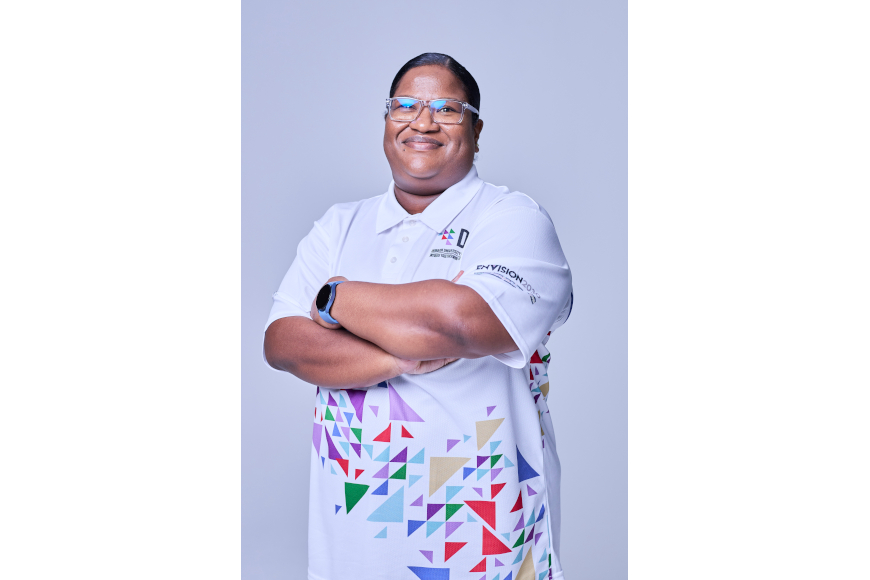
Pictured: Ms Ronelle Lyson
Waheeda Peters


https://www.dut.ac.za/higher-education-institutions-play-a-pivotal-role-in-preparing-graduates-for-a-rapidly-evolving-world-of-work/


DUT AND SAMSUNG AFRICA STRENGTHEN DIGITAL SKILLS DEVELOPMENT THROUGH INNOVATION CAMPUS PROGRAMME LAUNCH


The Durban University of Technology (DUT), through the DUT Business School, has officially signed a Memorandum of Agreement (MOA) with Samsung Africa Electronics and launched the Samsung Innovation Campus during a ceremony held at the Coastlands Musgrave Hotel and Conference Centre on Thursday, 4 June 2026.


DUT students who are part of the Samsung Innovation Campus programme.

The landmark partnership marks a significant step towards advancing digital skills development, innovation, entrepreneurship and youth empowerment. Through the Samsung Innovation Campus programme, 60 selected students will gain access to world-class learning opportunities designed to enhance employability and prepare future leaders for an increasingly technology-driven world.


Welcoming guests to the event, Interim Executive Dean of the Faculty of Management Sciences, Professor Matthys Swanepoel, highlighted the importance of partnerships between academia, industry, government and communities in addressing societal challenges. He emphasised that universities must play an active role in solving real-world problems through innovation and skills development.


Providing an overview of the Samsung Innovation Campus programme, Director of the DUT Business School, Professor Pfano Mashau, described the initiative as a practical response to South Africa’s unemployment challenges. He revealed that the programme attracted 846 applications within just one week, despite only 60 spaces being available.


“The level of interest demonstrates the demand for digital and AI-related skills among young people. This programme is not only about technical training, it is about creating opportunities for graduates to become employable, start businesses and contribute meaningfully to the economy,” said Prof Mashau.


Delivering remarks on behalf of Samsung Africa Electronics Chief Executive Officer, Corporate Social Responsibility Manager Ms Lefa Makgato reaffirmed Samsung’s commitment to youth development and digital transformation. She noted that Samsung Innovation Campus forms part of the company’s global initiative aimed at preparing young people for the Fourth Industrial Revolution (4IR).


Ms Makgato announced that Samsung will invest approximately R3.6 million in the programme over the next three years. She explained that the initiative seeks to bridge the gap between academic learning and industry requirements while addressing South Africa’s growing digital skills shortage.


“We believe innovation must be inclusive and that technology should empower people and unlock opportunities. Through this partnership, we are investing in South Africa’s digital future and helping to create work-ready graduates equipped with coding, programming and artificial intelligence skills,” she said.


A major highlight of the event was the official signing of the Memorandum of Agreement between Samsung Africa Electronics and DUT. The agreement was signed by Samsung Electronics Africa’s Head of Public Affairs, Mr YunSon Yoo, and DUT’s Director of Financial Accounting, Ms Ntombomzi Cenga. The signing formalised the partnership and reaffirmed both institutions’ commitment to empowering young people through technology-driven education and training opportunities.


One of the programme participants, DUT graduate Sisanda Mazibuko, expressed her gratitude for being selected to participate in the Samsung Innovation Campus programme and welcomed the opportunity to gain valuable skills in coding and artificial intelligence.


Closing the event, Head: Research and Innovation at the DUT Business School, Professor Simpiwe Nojiyela, expressed appreciation to Samsung Africa Electronics, university leadership, academic staff, students and international partners for their support. He congratulated the 60 students selected for the programme and acknowledged the collective effort required to make the initiative a success.


The launch of the Samsung Innovation Campus and the signing of the Memorandum of Agreement reinforce DUT’s ENVISION2030 strategy of fostering innovation, collaboration and sustainable socio-economic development. The partnership is expected to create valuable opportunities for students while contributing to the development of future-ready graduates capable of thriving in the digital economy.


Pictured: Samsung Electronics Africa’s Head of Public Affairs, Mr YunSon Yoo and DUT’s Director of Financial Accounting, Ms Ntombomzi Cenga shaking hands after signing the MOA.


Photographer: Khulasande Tshayile

Sinamile Sithole


https://www.dut.ac.za/dut-and-samsung-africa-strengthen-digital-skills-development-through-innovation-campus-programme-launch/


RESEARCH NEWS: PROFESSOR MUKEREDZI TO ADVANCE SOCIAL JUSTICE AND INCLUSIVE EDUCATION IN RURAL SCHOOLS


The Durban University of Technology (DUT) has strengthened its commitment to socially responsive research and educational transformation through the appointment of Professor Tabitha Grace Mukeredzi as the South African Research Chairs Initiative (SARChI) Chair in Social Justice, Education and Society: Inclusive Education in Rural Schools.


Prof Mukeredzi, in the School of Education under the Faculty of Arts and Design is among eight South African Research Chairs Initiative (SARChI) Chairs awarded to DUT by the NRF under the Department of Science, Technology and Innovation (DSTI) Decadal Plan Aligned Research Chairs for Historically Disadvantaged Universities, Universities of Technology, and Emerging Universities.


She is a respected scholar whose academic journey spans more than four decades. She has dedicated her career to advancing teacher education, inclusive education, rural schooling, teacher professional development, and socially responsive pedagogies.


Reflecting on her research journey, Prof Mukeredzi explained that her scholarly focus was shaped by years of engagement with teachers and schools located in under-resourced and socially unequal communities.


“My journey into this research focus emerged from years of engagement with teachers and schools located in under-resourced and socially unequal contexts, particularly rural communities. Through this work, I became increasingly aware that educational inequality is not merely about access to schooling, but also about whose knowledge, identities, languages, and learning needs are recognised and accommodated within educational systems,” she said.


At DUT, her work has evolved into a sustained research engagement examining teacher learning, mentoring, inclusion, rurality, and context-responsive pedagogy. Her scholarship also draws significantly on educational psychology, diversity, and inclusive education.


Beyond research outputs, Prof Mukeredzi has played a critical role in developing future scholars and researchers through postgraduate supervision, co-supervision, research mentorship, cohort sessions, and academic workshops. Her efforts have contributed to the successful graduation of close to two dozen Doctoral students in DUT.


Speaking about her appointment as a SARChI Chair, Prof Mukeredzi described the position as both an honour and a profound responsibility.


“Professionally, this appointment affirms the value and relevance of socially responsive educational research, particularly research that foregrounds rurality, inclusion, and equity within the South African context. Personally, the appointment is deeply evocative because it provides an opportunity to contribute meaningfully towards transforming educational experiences for learners and teachers who have historically been marginalised,” said Prof Mukeredzi.


According to Prof Mukeredzi, the Chair’s research agenda is grounded in social justice and inclusive education, with a strong emphasis on understanding how teachers conceptualise and enact inclusion within rural and unequal schooling contexts.


Its core priorities include teacher understandings of diversity and inclusion, inclusive pedagogical practices in rural schools, teacher professional learning and development, rural education, mentoring, equity and social justice in education systems, and the schooling experiences of learners with behavioural, cognitive, physical, and social diversities.


Prof Mukeredzi explained that the Chair also prioritises generating contextually situated knowledge that can inform educational policy, teacher education programmes, and professional practice within South Africa and comparable global contexts.


The work of the Chair aligns closely with South Africa’s Decadal Plan for Science, Technology and Innovation by contributing to human capital development, social innovation, and knowledge production aimed at addressing educational inequality and exclusion.


“Our research addresses systemic barriers affecting rural communities and seeks to produce evidence-based interventions that improve educational participation, teacher capacity, and learner support,” she noted.


Over the next five years, Prof Mukeredzi envisions the Chair contributing significantly towards transforming educational spaces into more inclusive, equitable, and socially just environments where all learners are able to participate meaningfully and succeed.


Prof Mukeredzi also highlighted the importance of strengthening university-school partnerships and developing contextually relevant teacher education models grounded in reflective practice and micro-teaching.


Additionally, Prof Mukeredzi said the Chair’s work is particularly relevant within KwaZulu-Natal, where many schools continue to experience challenges linked to poverty, rurality, language diversity, infrastructure limitations, and unequal access to educational resources.


“Our work focuses on understanding the lived experiences of teachers, learners, and communities, particularly in under-resourced schools. We aim to strengthen teachers’ abilities to enact inclusive pedagogies that respond meaningfully to learner diversity and contextual constraints,” she explained.


Capacity development forms a central pillar of the Chair’s vision. Prof Mukeredzi emphasised that postgraduate students, postdoctoral fellows, early-career researchers, rural teachers, and teacher educators will all benefit from structured mentorship and collaborative research opportunities. She further indicated that the Chair will support emerging scholars through research methodology development, academic writing support, conference participation, collaborative projects, scholarly networking, and opportunities for co-authorship and co-supervision.


Prof Mukeredzi also underscored the importance of creating supportive and intellectually stimulating environments that attract and retain young scholars in the field of education research.


“Importantly, the Chair seeks to cultivate scholars who view research not only as an academic activity, but also as a vehicle for social transformation and educational justice,” she said.


While the Chair is primarily socially and educationally oriented, Prof Mukeredzi believes its innovation lies in developing transformative and contextually responsive approaches to inclusive education and teacher professional development.


“The Chair aims to innovate through new models of inclusive pedagogy for rural contexts, teacher professional learning frameworks, community-engaged educational interventions, and digital teacher support platforms. It also holds significant potential to contribute to educational consultancy, mentoring programmes, and strategic partnerships with organisations such as the ETDP SETA,” she added.


Looking ahead to 2030, Prof Mukeredzi sees DUT strengthening its position as a leading University of Technology that produces socially responsive, community-engaged, and globally recognised research.


“Through initiatives such as the SARChI Chair, DUT has the potential to become a significant contributor to educational transformation research within South Africa, the African continent, and the Global South,” she said.


For Prof Mukeredzi, success at the end of her tenure would mean establishing a sustainable and internationally recognised research programme that contributes meaningfully to inclusive education, teacher development, rural education, postgraduate growth, and social justice scholarship.


Ultimately, she hopes the Chair will contribute towards transforming education systems into spaces where dignity, participation, equity, inclusion, and meaningful educational opportunities are realised for all learners and teachers.


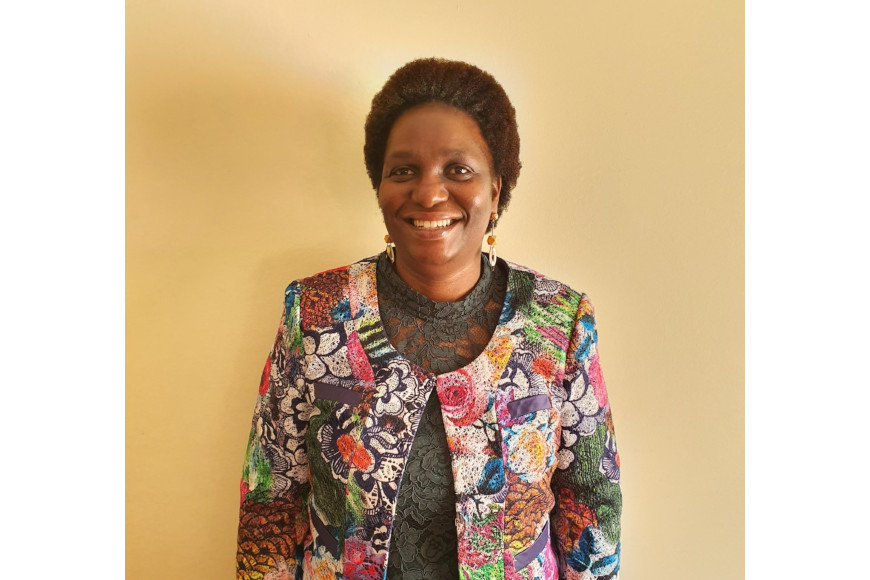
Pictured: Professor Tabitha Grace Mukeredzi, the SARChI Chair in Social Justice, Education and Society: Inclusive Education in Rural Schools.


Simangele Zuma

https://www.dut.ac.za/research-news-professor-mukeredzi-to-advance-social-justice-and-inclusive-education-in-rural-schools/


DUT OPEN WEEK CONTINUES TO ATTRACT THOUSANDS OF LEARNERS


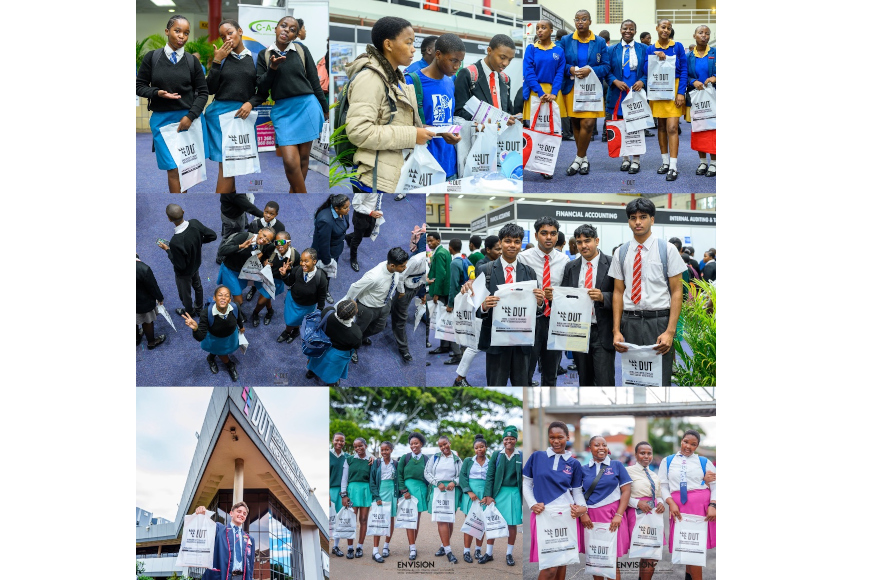
The Durban University of Technology (DUT) officially opened its campus for the 2026 Open Week on Wednesday, 06 May 2026, at the Fred Crookes Sports Centre on the Steve Biko Campus in Durban. This ongoing three-day annual event, led by the Student Recruitment Unit, is scheduled to conclude on Friday, 08 May 2026.


The DUT Open Week is designed to provide high school learners from Grade 9 to Grade 12 with valuable insights into the university’s programmes, faculties, and departments.


Among the schools in attendance on the first day were Durban North College, Amanzimtoti High School, Grosvenor Girls High, Hillgrove Secondary School, Ogwini High School, Protec Tongaat, Risecliff Secondary, Seatides Combined School, Rossburgh High School, Durban Girls’ Secondary School, Velabahleke Secondary School, Sompukwane Secondary School, Poqabulungu High School, Mandlethu High School, King Bhekuzulu High School, and Nondanisa Secondary School.


On the opening day, thousands of learners engaged with various DUT departments and units, receiving detailed information and answers to their questions.


Mr Alex Mdletshe, DUT’s Student Recruitment Manager, expressed his satisfaction with the first day’s turnout, which saw 25 schools and more than 2 708 learners in attendance.


“This year’s opening was quite impressive. Normally we are not this busy on the first day, so to see such a turnout is quite amazing. It was a very successful day today,” he said.


He also expressed appreciation for the strong turnout of academics and various departments. He commended the way they engaged with both learners and teachers.


This year’s Open Week included lab tours, giving schools the opportunity to explore the institution’s facilities and gain a deeper understanding of its laboratories.


Siphokazi Mtshali, a representative from the Medical Orthotics and Prosthetics Department, shared how students were eager and showed great interest in learning more about the course. She also noted that most learners who showed interest were female.


“Their questions are quite impressive. They want to know more about the course and the requirements of the programme,” she explained.


Ms Siyabonga Msane, a Lab Technician from the Medical Laboratory Science (Biomedical) Department, said although learners know about the course, they do not fully understand what it entails. She further explained that initiatives such as Open Week help bridge that gap by bringing information directly to learners.


“The interest in our course is very positive, although learners do not have enough knowledge about our field. Such opportunities are important not only for learners, but for the department as well, as they allow us to share information about our courses,” she explained.


Ms Nokukhanya Manzini, a teacher from Poqabulungu Secondary School in Mandeni, said such initiatives are important as they ensure that learners make informed decisions when choosing careers.


“On behalf of our learners, we are very appreciative of this opportunity. This is important for our learners as they get exposed to various careers, which will help them after matric when they decide which path they want to take,” she said.


A Grade 12 learner from Durban Girls’ Secondary School who aspires to be an entrepreneur, Surprise Dhlamini, described the experience as eye opening. She shared that she discovered many courses within Business Administration that she had not previously known about.


“I have learnt a lot here. I discovered that there are many careers in the business field, including accounting and business marketing. I would also like to encourage my fellow learners to attend DUT Open Week,” she said.


Ayanda Ngcongo from Mkhumbi High School, a Grade 9 learner driven by her passion for helping others, said she wants to become a nurse. She was amazed to discover the many career opportunities at DUT that she did not previously know about.


“I would not lie, I am amazed by what I have learnt here. There are many courses that interested me which I did not know about. I also got an opportunity to ask directly about nursing, which is what I am interested in, and I never had this opportunity before. It was my first time,” she expressed.


Mandy Msomi, a Grade 9 learner from Sompukwane Secondary School who is interested in medicine, said she now understands the steps she needs to take to fulfil her dream of becoming an Otolaryngologist one day.


“As I am in Grade 9, I now know which subjects I need to choose in Grade 10 and what the requirements are. I have also discovered that there are many careers in medicine. I can venture into nursing or dentistry,” she explained.


The DUT Open Week continues, with the institution expecting thousands more learners from various schools to attend and explore the wide range of courses on offer.


Pictured: Learners at the DUT Open Week.

Vukani Langa

https://www.dut.ac.za/dut-open-week-continues-to-attract-thousands-of-learners/


RESEARCH NEWS: DUT LECTURERS FEATURE IN EDHE’S FIRST OPEN ACCESS BOOK ON ENTREPRENEURSHIP EDUCATION


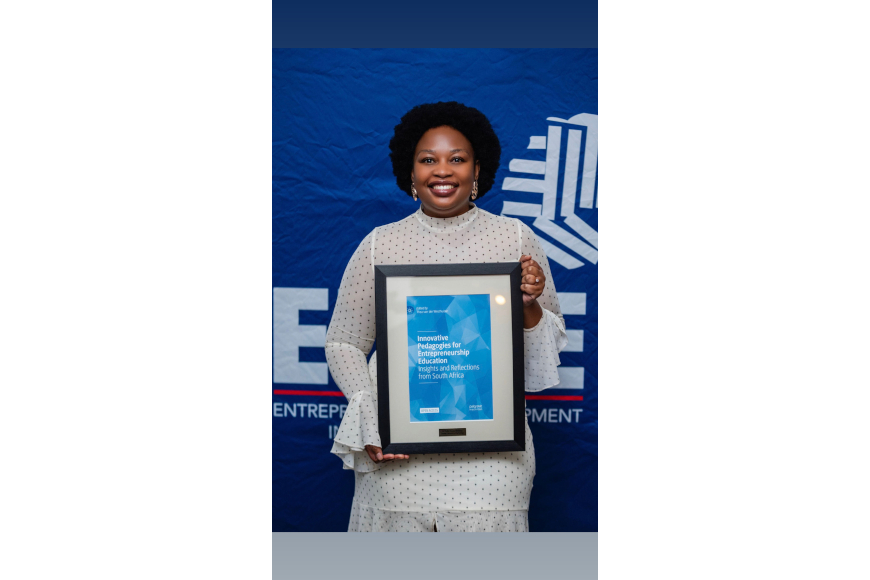
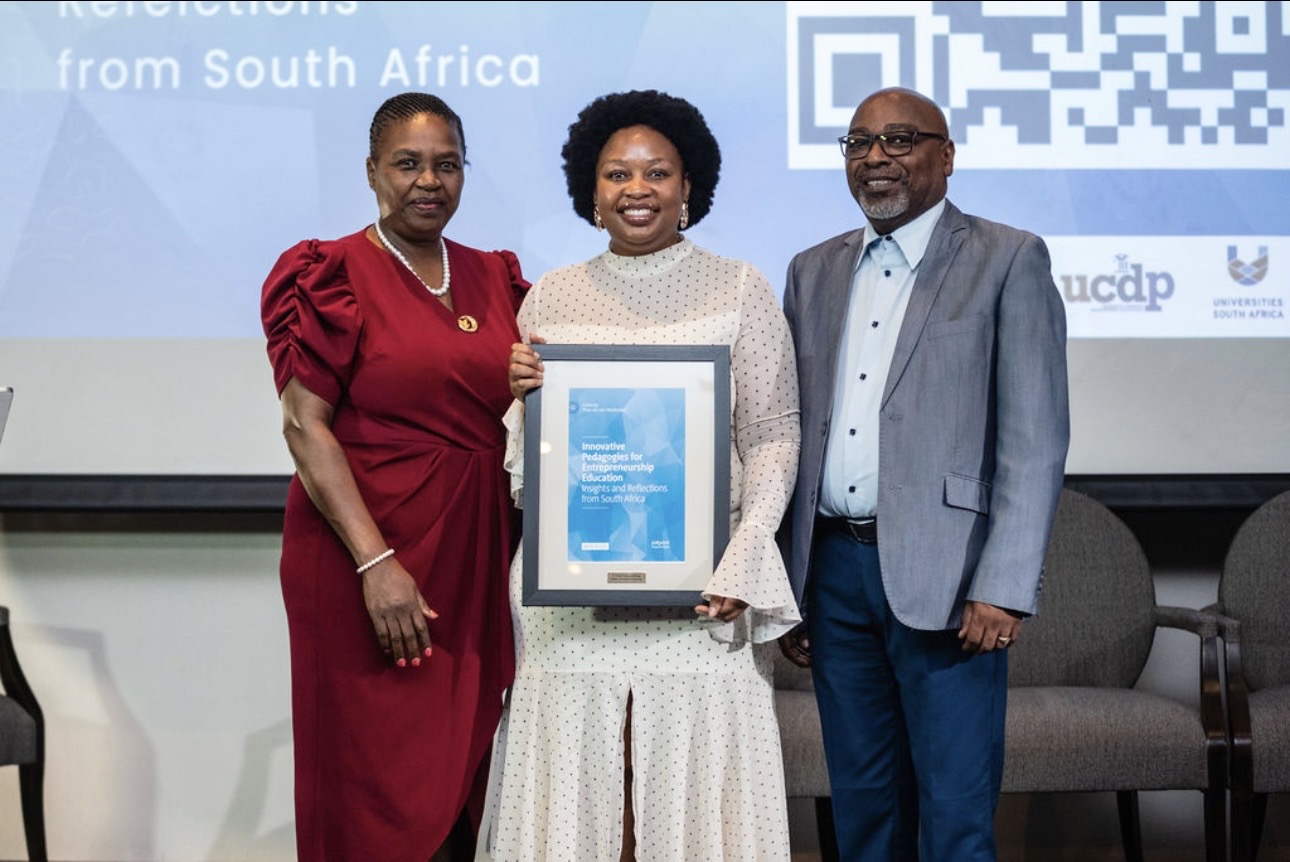
Dr Thulile Mofokeng, a charismatic lecturer in the Department of Entrepreneurial Studies and Management at the Durban University of Technology (DUT) and Mr Nyane Mofokeng, a lecturer in the Department of Applied Management, excitedly shared their remarkable achievement of contributing to EDHE’s first open access book, Innovative Pedagogies for Entrepreneurship Education: Insights from South Africa.


Together, they contributed a chapter that presented a living case study of multidisciplinary teaching and purposeful external engagement. What began as innovative classroom practice and deep industry collaboration evolved into a recognised research output. They documented their impact, theorised it, and transformed it into a permanent contribution to the body of knowledge in entrepreneurship education.


Dr Mofokeng, who has more than 13 years of experience in higher education, specialises in sustainable development, ecotourism, tourism, work-integrated learning, curriculum innovation, and entrepreneurship education.


Her research focuses on advancing entrepreneurship within the service sector, with a particular emphasis on ecotourism as a catalyst for inclusive economic development. She has published in DHET-accredited journals, with contributions spanning community-based tourism, sustainable enterprise development, and innovative pedagogies in entrepreneurship education. She now co-authored a chapter in EDHE’s first open access book, published by Springer in 2026.


The research is centred on context-responsive entrepreneurship pedagogy, exploring how innovative teaching methods can bridge the gap between theory and practice in environments shaped by inequality and limited opportunities. Together with Mr Mofokeng, they transformed their winning case study, which ranked first at the 2023 EDHE Entrepreneurship Teaching and Learning Excellence Awards among 26 universities, into a publishable research output. This recognition validated the impact of their work and provided a platform to elevate it into scholarly discourse. Having the chapter published by Springer, one of the world’s most prestigious academic publishers, is a milestone achievement. Springer’s open access model ensures that their insights are accessible not only to academics but also to educators, policymakers, and practitioners across Africa, the Global South, and beyond.


The contribution was born out of the DUT Ngodini Bunduz Entrepreneurship Advancement Project, a collaborative initiative across multiple departments, including the Department of Applied Management, Ecotourism, Entrepreneurial Studies and Management, the Faculty of Management Sciences and Horticulture, and the Faculty of Applied Sciences.


Pictured: The initiative scoops first position for Excellence in Entrepreneurship Teaching and Learning at the 2023 EDHE Awards.

Dr Mofokeng emphasised that the contribution came to fruition through dedication, collaboration, and the belief that entrepreneurship education must extend beyond the classroom to create meaningful, sustainable change in communities. The project provided entrepreneurship training and capacity-building workshops that equipped local entrepreneurs with the skills and capabilities to grow their businesses. Its impact was nationally recognised when the initiative scooped first position for Excellence in Entrepreneurship Teaching and Learning at the 2023 EDHE Awards.


This award-winning case study became the foundation for their chapter in EDHE’s first open access book. Transforming the project into a scholarly output ensured that their insights were not only celebrated nationally but also disseminated globally, accessible to educators, policymakers, and practitioners across Africa and beyond.


Dr Mofokeng said that it was important as project leaders to ensure that all contributors were appropriately recognised. She highlighted that the chapter demonstrates how entrepreneurship education can serve as a bridge between potential and prosperity, showing how DUT can empower students to become job creators. This strengthens sustainability by nurturing resilient livelihoods and contributes to economic development by embedding entrepreneurial thinking into higher education.


The research aligns with the objectives outlined in the DUT ENVISION2030 strategy. ENVISION2030 emphasises innovation, inclusivity, and sustainability. The research promotes pedagogies that empower students to innovate, engage inclusively with diverse communities, and contribute to sustainable economic growth. It positions DUT as a leader in entrepreneurship education within the Global South.


Collaboration has been central to the work, with industry partners providing real-world context for students, while fellow researchers offered theoretical and methodological insights. The EDHE Community of Practice created a national platform for sharing and refining ideas, ensuring the work was not siloed but part of a broader movement to transform entrepreneurship education.


Looking ahead, Dr Mofokeng intends to deepen the exploration of inclusive entrepreneurship education, particularly in under-resourced communities. She aims to expand collaborations across institutions and industries to create scalable models of pedagogy that can be replicated nationally. This will further align with DUT’s vision of being a people-centred and engaged university contributing to sustainable development.


Dr Mofokeng expressed pride in representing DUT and the Faculty of Management Sciences on this national stage. The open access publication ensures that their insights reach educators, policymakers, and practitioners across Africa and beyond. She emphasised that this milestone belongs not only to the authors but to every lecturer, student, and industry partner who believes in the transformative power of entrepreneurship education.


Pictured: Dr Thulile Mofokeng
Waheeda Peters

https://www.dut.ac.za/research-news-dut-lecturers-feature-in-edhes-first-open-access-book-on-entrepreneurship-education/


DUT BUSINESS SCHOOL APPOINTS GERMAN ACADEMIC AS HONORARY RESEARCH PROFESSOR


The Durban University of Technology (DUT) Business School has strengthened its global research footprint, with the appointment of Professor Wibke Heidig from Albstadt-Sigmaringen University in Germany as an Honorary Research Professor.


This appointment recognises more than a decade of impactful collaboration between Prof Heidig and DUT scholars, with joint research spanning critical and contemporary areas such as food waste, technology acceptance and the role of artificial intelligence within cross-cultural contexts. These impactful focus areas speak directly to global sustainability challenges and the evolving digital landscape shaping societies and economies.


The partnership also reflects DUT’s expanding research network within Germany’s Baden-Württemberg region, which is a globally recognised hub for innovation, industry and applied research. A key contributor to this relationship has been Professor Thomas Dobbelstein of the Baden-Württemberg Cooperative State University (DHBW), who serves both as an Honorary Research Professor at DUT and Chairman of the DUT Business School Board.


Director of the DUT Business School, Professor Pfano Mashau, emphasised that the appointment signals more than academic recognition, it represents a strategic step in deepening international collaboration and knowledge exchange. This partnership enhances DUT’s ability to contribute meaningfully to global research conversations while ensuring that the research remains locally relevant and socially responsive.


In April, Prof Mashau will further solidify these ties with an academic visit to Albstadt-Sigmaringen University and DHBW in Ravensburg, Germany, aimed at advancing joint research initiatives and expanding opportunities for collaboration.

 

Prof Heidig’s appointment is expected to catalyse new joint publications, research projects and academic exchanges, contributing to DUT’s Philosophy of Education, where creativity and innovation shapes adaptive graduates who transform society.


This growing collaboration also reinforces the long-standing relationship between the sister provinces of KwaZulu-Natal and Baden-Württemberg, demonstrating how academic partnerships can serve as powerful bridges between regions, institutions and communities.


Pictured: Professor Wibke Heidig from Albstadt-Sigmaringen University in Germany.

Alan Khan/Professor Thomas Dobbelstein


https://www.dut.ac.za/dut-business-school-appoints-german-academic-as-honorary-research-professor


DUT TO CELEBRATIONAL MOTHER LANGUAGE DAY 2026 WITH FOCUS ON MULTILINGUALISM IN HIGHER EDUCATION


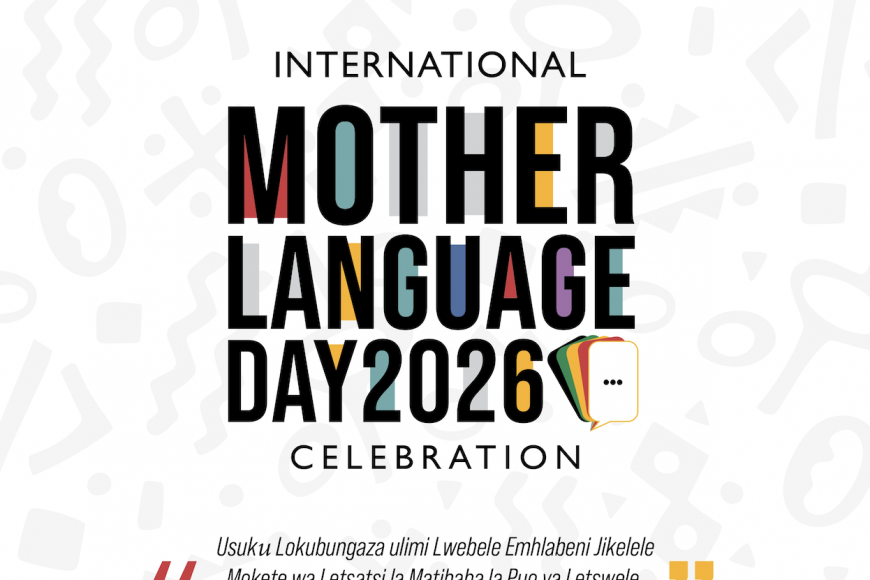
The Department of Media Language and Communication at the Durban University of Technology (DUT) will celebrate International Mother Language Day 2026, under the theme “Multilingualism for inclusive education: recognising linguistic diversity in higher education.” The event will take place on Friday, 13 March 2026, from 12:00 to 14:00 on MS Teams.


The observance of International Mother Language Day at DUT serves as a strong affirmation of the institution’s commitment to fostering inclusive, equitable, and socially responsive higher education. Recognising that language is fundamental to identity, access, and learning, this celebration encourages reflection on how linguistic diversity is acknowledged and supported within academic environments.


Professor Maleshoane Rapeane-Mathonsi, Acting Head of the Language and Communication Department, explained the theme and its significance in depth.


“The theme, ‘Multilingualism for inclusive education: recognising linguistic diversity in higher education,’ speaks directly to the realities of our students, many of whom navigate university life through multiple languages. By foregrounding isiZulu, isiXhosa, Xitsonga, Sesotho, and South African Sign Language, this year’s programme acknowledges that knowledge is not monolingual and that meaningful learning is enhanced when students’ linguistic repertoires are valued rather than marginalised,” said Prof Rapeane-Mathonsi.


“These languages represent not only demographic realities but also distinct ways of knowing, communicating, and making meaning. By foregrounding them, DUT affirms that multilingualism is not a barrier to academic excellence but a resource that enhances learning and supports student success.”


This celebration aligns with DUT’s transformation agenda by encouraging the community to move beyond symbolic recognition and adopt multilingual pedagogies, inclusive curricula, and accessible teaching practices. International Mother Language Day therefore serves not only as a commemoration but also as a call to action, urging the DUT community to embed linguistic diversity at the heart of teaching, learning, and knowledge production.


Pictured: A poster depicting International Mother Language Day 2026.

DUT CELEBRATES MCHITHEKI HIGH SCHOOL’S OUTSTANDING ACHIEVEMENTS AT THE NYALA AWARDS IN NONGOMA


The Durban University of Technology proudly participated in the Nyala Awards Ceremony recently held at Mchitheki High School in Nongoma, celebrating outstanding academic achievement and the school’s exceptional 100 percent matric pass rate.


The prestigious event honoured learners from Grade eight to Grade 12, recognising the Top 10 achievers in each grade and applauding the Top 10 Matric Class of 2025 learners who passed with distinctions and are now pursuing higher education. The atmosphere was filled with pride, celebration and hope for an even brighter future.


Mr Samkelo Nkosi, the event organiser and Nyala Regional Community Development Specialist for KwaZulu-Natal, highlighted the organisation’s strong commitment to empowering rural schools and giving back to the communities they serve. He said they came to the school because they care about the future and success of learners and believe that ensuring a brighter future for them can change the world.


Nkosi noted that this was not their first visit to Mchitheki High School. In September last year, during Heritage month, they hosted a cultural competition encouraging learners to showcase their heritage, with prizes awarded to the winners.


Towards the end of the year, during study camps, they also provided support by donating essential items such as instant porridge and past examination papers to help learners prepare for their final examinations.


He further emphasised that the awards ceremony was aimed to boost learners’ confidence, academic achievement and overall wellbeing. In addition to their academic recognition, a special category acknowledged learners who demonstrated resilience, strength and confidence, regardless of their marks or background.


The school principal, Mr Xolani Mthethwa, expressed his sincere gratitude to Nyala and DUT for investing time and their resources in their learners. He said exposure to institutions like DUT motivates learners to dream bigger and work harder and that the programme had made a lasting impact on them.


The keynote address was delivered by DUT alumna Dr Thabile Mwandla, whose journey from humble beginnings to becoming part of the team, contributed to the breakthrough of the HIV prevention injection, inspiring many. She emphasised the importance of education and perseverance, encouraging learners never to give up on their dreams and reminding them that education can change their lives.


She urged learners to take full advantage of opportunities when institutions such as DUT visited their schools and to listen carefully to guidance provided about career choices and academic programmes.


Dr Mwandla also shared how a visit from DUT’s Student Recruitment team during her own high school years helped to shape her future. After learning more about Clinical Technology, she worked hard to achieve strong results and was later enrolled at DUT, a decision that ultimately shaped her successful career.


Mr Michael Zulu from the Student Recruitment Unit shared valuable information about the programmes offered at the university, the specific entry requirements for different faculties and the importance of making informed career choices. He encouraged learners to take their studies seriously, particularly highlighting the importance of strong academic performance in their Grade 11 results and their June results in Grade 12, as these marks are often used by universities when considering applications.


He explained that the Grade 11 results and June Grade 12 results determine whether learners meet the minimum requirements for their chosen courses and whether they can secure a space at the university. He encouraged them to start preparing early, remain focused and be consistent in their work.


One of the Grade 12 learners who achieved position one shared how deeply she was inspired by the programme. She said Dr Mwandla’s story gave her hope and motivated her to believe that she could also succeed. She added that having DUT representatives at the school helped her gain a clearer understanding of what she needs to study at university and the requirements she must meet.


In closing, the school principal expressed his heartfelt gratitude to everyone who contributed to the success of the event, including the School Governing Body, teachers, Nyala members, DUT representatives, parents and learners. He highlighted the importance of education and urged the learners to apply their insights gained to their studies and their future.


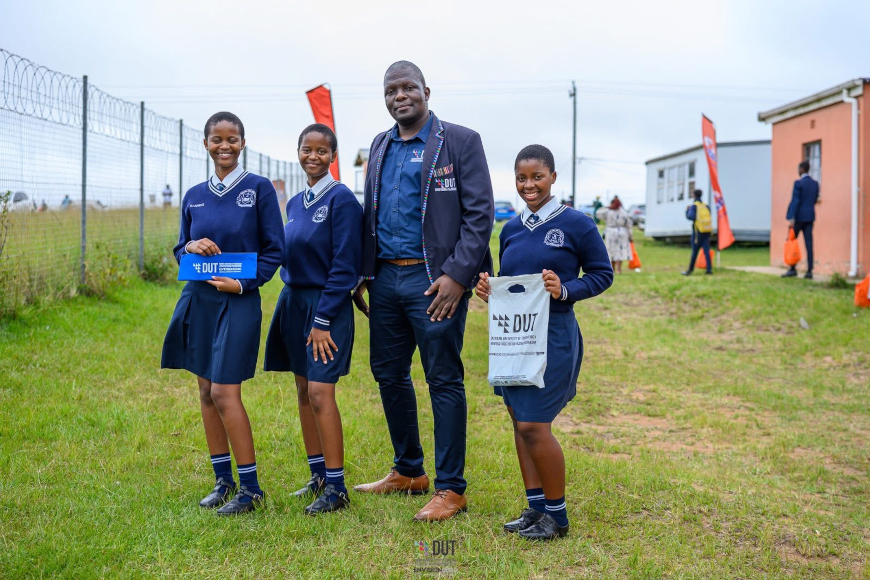
Pictured: Mr Michael Zulu from the Student Recruitment Unit with learners at the Nyala Awards ceremony.

Sinamile Sithole

https://www.dut.ac.za/dut-celebrates-mchitheki-high-schools-outstanding-achievements-at-the-nyala-awards-in-nongoma/


DUT 2025 TOP FEEDER SIBUSISIWE HIGH SCHOOL CELEBRATED 100% MATRIC PASS RATE FOR THREE CONSECUTIVE YEARS


Sibusisiwe Comprehensive Technical School High in Umbumbulu has once again proven that excellence knows no boundaries. The school proudly etched its name into history by achieving a 100% matric pass rate for three consecutive years (2023,2024, 2025), a remarkable milestone that has positioned it as one of the top feeder schools to the Durban University of Technology (DUT).


In recognition of this outstanding achievement, on Tuesday, 13 January 2026, the Student Recruitment unit at DUT paid a special visit to the school to celebrate alongside learners, educators, parents, and the broader community.


Sibusisiwe teachers and learners excited to celebrate with DUT.

The atmosphere was filled with excitement, smiles, and an overwhelming sense of pride as success was celebrated not just as a result, but as a collective success.


One of the most touching moments of the day was when the 2026 matric class formed a guard of honour for the outgoing Class of 2025, symbolising respect, gratitude, and inspiration. It was a powerful reminder that excellence at Sibusisiwe is a culture passed from one generation to the next.


Out of 267 learners, five (5) achieved 100% with eight distinctions, six (6) obtained seven distinctions and 236 achieved Bachelor’s passes while nine (9) earned diploma passes.


School principal, Mr Emmanuel Duma congratulated learners, teachers, and parents for working hand in hand to maintain the school’s impressive record.


“I urge everyone to continue supporting and protecting this school. It is a beacon of hope for future generations. Credit must go to our hardworking teachers and supportive parents, this achievement belongs to all of us,” he said.


The celebration was further honoured by the presence of the former Deputy Minister of Health and former MEC for Health in KwaZulu-Natal, Mr Sibongiseni Dhlomo who applauded the school’s leadership and learners for their success.


“Excellence has become the norm here. Other schools are learning from your example. What you are doing is opening doors not only for your learners, but for many others,” he remarked.


DUT’s Mr Michael Zulu speaking at Sibusisiwe Comprehensive Technical High School in Umbumbulu.

Representing DUT, Mr Michael Zulu from the Student Recruitment unit explained that celebrating with Sibusisiwe High aligned with the university’s mission to attract top performing students. He also highlighted that they have been working closely with lot of schools including Sibusiswe in providing support and guidance.


“We went to celebrate with them because for the year 2025, they were the top feeder for DUT. It is for that reason that we saw the need to celebrate with them on their remarkable achievement. Congratulations to them, obtaining 100% three times consecutively was not easy, especially noting that the school is from the underprivileged background,’’ he explained.


English teacher, Ms Mnguni Mkhize, who has been with the school since 2018, expressed disbelief and pride at the consistency of the results.


“Our learners are disciplined, respectful, and proactive. That is what makes this possible year after year,” she said.


Among the shining stars was Sandile Mhlongo, the Learner Representative Council (LRC) President, who made history by becoming the first learner at the school to achieve 100% in the History subject. He encouraged his peers to believe in themselves.


“Discipline and resilience pushed me to excel. If I did it, you can do it too,” he said.


Another top achiever, Alwande Ngcobo (18), shared her joy after obtaining a 100% pass. “It was not easy, but making my parents proud is one of the best moments of my life. I am excited and I cannot wait to pursue my dream,” she said.


The top achievers with eight distinctions (100%) were:


Nhlalwenhle Khuzwayo, Siphokazi Mahaye, Alwande Ngcobo, Lungani Ngcongo and Sandile Mhlongo.


Those who achieved seven distinctions were: Wendy Cele, Lulama Hlengwa, Siphesihle Khomo, Aphiwe Ngidi, Anele Ntobela and Akhona Shishane.


Sibusisiwe High has not only achieved results, but it has also inspired hope, proven resilience, and shown that with unity and dedication, greatness is inevitable.


Photographer: S’bonelo Dlamini.

Vukani Langa

https://www.dut.ac.za/dut-2025-top-feeder-sibusisiwe-high-school-celebrated-100-matric-pass-rate-for-three-consecutive-years/


WOMEN OF DUT: PROF GUGU MCHUNU ON LEADERSHIP, RESILIENCE AND CREATING OPPORTUNITIES FOR OTHERS


For Professor Gugu Mchunu, leadership has never been about the title attached to her name. It is about people, purpose and what happens to others because of the opportunities a leader creates.


As Executive Dean of the Faculty of Health Sciences at the Durban University of Technology (DUT), Prof Mchunu draws on a career that has taken her from nursing and clinical practice to academia, research, mentorship and university leadership.


Her journey began in KwaMaphumulo, Emthandeni (KwaQwabe), where she grew up in a community that shaped her understanding of people and their relationship with the world around them.


“I was always curious and asking questions about people and their connectedness with their environment,” she recalls.


That curiosity was accompanied by a natural desire to help others. Surrounded by mainly women headed families while growing up, she found herself fascinated by their lives and wellbeing. At one point, she wanted to become a social worker. Instead, she entered nursing, a profession that provided another avenue to work with people and make a difference.


“I was the one who always wanted to lend a hand, and grew up in a close-knit community with families who didn’t have much but bound by love, support and passion. I was fascinated by  how we cared for each other as a community and made other people’s wellbeing my business. I actually wanted to be a social worker.”


Her career has since developed across clinical, private-sector and academic environments. She became a lecturer, nurse leader and nurse researcher before taking on the responsibility of leading a faculty.


Although she has not worked primarily in bedside nursing, her interest has always centred on wellbeing and how people can live healthier lives within their natural environments.


That people-centred approach remains visible in her leadership at DUT.


“Even in my current position staff and student wellbeing is my priority. I just love working with people!”


Her academic journey has brought significant milestones. Earning her PhD remains one of the achievements she is most proud of, remembering how the qualification opened doors and created new possibilities.


“Earning my PhD was a huge milestone for me. Although this was many years ago, thinking of it still warms my heart, as it opened many opportunities for me.”


But academic achievement, for Prof Mchunu, is not only about personal milestones. Seeing the people she has mentored succeed has become just as rewarding.


“Seeing my first PhD student graduate was a big deal for me.”


This is closely linked to the legacy she wants to leave at DUT. She wants to see a stronger research culture in which academic staff and students support one another, and more people reach the highest levels of academic achievement.


“Everyone must strive towards getting that red gown. Each one mentor one, instead of pulling each other down.”


Her commitment to developing others is rooted partly in her own experience of being mentored.


Two women, in particular, have shaped the leader she has become.


The first is her mother, who was a young widow, sugar cane farmer and self-made entrepreneur. Prof Mchunu describes her as a natural leader whose resilience and ability to work with people left a lasting impression.


“She was a born leader, and a self-made entrepreneur.”


From her mother, she learnt to love people unconditionally, forgive others and understand that women can succeed and lead on their own terms.


The second was Professor Leana Uys, a nurse leader who became her mentor.


Prof Uys taught her that leadership must be grounded in integrity, even when nobody is watching.


“She taught me that if you are a leader you must lead with integrity at all times even if no one is watching.”


That lesson continues to influence Prof Mchunu’s approach to leadership. She believes leaders should empower others, give their best and remain willing to learn, even from people with whom they may not always agree.


Some of her most profound lessons about leadership, however, have come from motherhood.


Prof Mchunu is a mother of three, an achievement she describes with both pride and amazement.


“Personally, becoming a mother was the best thing that ever happened to me. I always marvel at how I have managed to raise three human beings!”


Raising a child with special needs brought another dimension to her understanding of resilience and compassion. When her son was diagnosed with Autism, she had to adjust her routine while continuing with her studies and professional responsibilities.


“It was a big challenge when he was first diagnosed, but I also saw it as a blessing to me and my family.”


The experience taught her to listen before judging and to recognise that people often carry circumstances that are not immediately visible to others.


“I learnt not to judge others without listening to their life stories. It taught me patience and compassion.”


Those lessons have proved valuable in leadership, where kindness and empathy must sometimes be balanced with difficult decisions and responsibilities.


Her experiences also led her to engage with other parents and eventually put their stories and experiences into writing. A book inspired by those engagements is soon to be published.


The perspective she gained through adversity is reflected in words by Maya Angelou that she holds close: “You may not control all the events that happen to you, but you can decide not to be reduced by them.”


Her own journey has also strengthened her determination to see people from disadvantaged and rural communities succeed.


“I am outcomes driven. When I see people from rural communities succeeding, I get motivated, and work even harder since I know the hardships they get through in order to succeed.”


Her own rural upbringing gives that commitment a personal meaning. She understands that talent and ambition are not always enough when people have limited access to opportunities.


As a faculty leader, she therefore sees her role as part of a much bigger institutional responsibility.


Her decisions must help move the Faculty of Health Sciences in the right direction while contrib

uting to the University’s ENVISION2030. She also believes that leaders have a responsibility to represent DUT positively and strengthen the trust and support of its stakeholders.


Women’s Month provides another opportunity for Prof Mchunu to reflect on the experiences of women, but she believes it should be about more than celebrating professional achievements.


“It means celebrating my feminine side and meeting other women to discuss women’s issues.”


For her, it is also about creating space to hear the stories of women outside academia and recognising the diversity of women’s experiences.


“It is about listening to stories of other women outside academia in a relaxed environment.”


Away from her role at DUT, her faith remains an important part of her life. She is a member of the Anglican Church Mothers Union and sings in her church choir.


“My faith keeps me grounded and helps me to deal with any challenges at work.”


Her experiences as a mother to a child with special needs have also given her a particular sensitivity towards differently abled people.


For young women who aspire to leadership, Prof Mchunu has a message that combines ambition with solidarity.


“They must be hungry for success but be kind to each other. As women, we are the strongest when we cheer each other.”


She encourages young women to be fearless, pursue their dreams even when they appear impossible and, above all, understand their worth.


“Only they can write their story and nobody else.”


From KwaQwabe to the leadership of a university faculty, Prof Mchunu’s story demonstrates that leadership can grow from the simplest of beginnings: curiosity, a willingness to help others and the determination to keep moving forward.


Her ambition is not simply to be remembered for the position she held, but for the people she inspired, the research culture she helped strengthen and the opportunities she created for others.


And perhaps that is the leadership legacy she wants to leave most: to rise, to bring others with you and to make sure that the next person has a better chance to succeed.


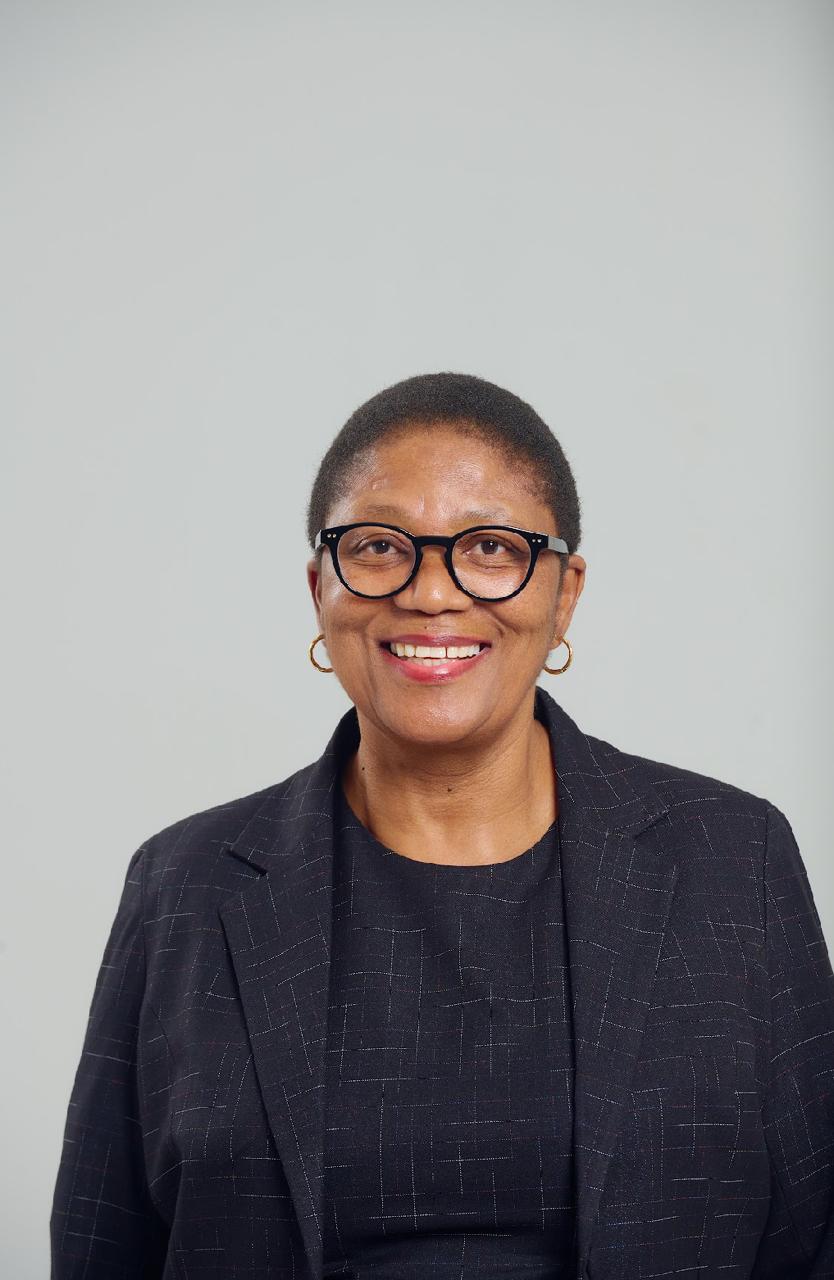
Pictured: Prof Gugu Mchunu, Executive Dean of the Faculty of Health Sciences at DUT.


Photo: Supplied.

Tiyani Mboweni

https://www.dut.ac.za/women-of-dut-prof-gugu-mchunu-on-leadership-resilience-and-creating-opportunities-for-others/


DUT FACULTY OF ENGINEERING AND THE BUILT ENVIRONMENT PROMOTES CAREER OPPORTUNITIES AT YOUTH EMPOWERMENT EXPO


The Durban University of Technology’s (DUT) Faculty of Engineering and the Built Environment participated in the Career Expo held on the final day of the third annual Care Enough Youth Empowerment Winter School 2026 on 3 July 2026 at the University of KwaZulu-Natal’s Westville Campus.


The five-day programme was organised by Care Enough To Do Something (TDS) in partnership with the Council for the Built Environment (CBE) and the University of KwaZulu-Natal (UKZN). The initiative aims to empower high-achieving learners from township and rural schools through academic support, mentorship, career guidance, mental health awareness, life skills development and gender-based violence education.


The closing Career Expo brought together universities, colleges and industry stakeholders to expose learners to higher education opportunities and career pathways. The Faculty of Engineering and the Built Environment was among the exhibitors, providing learners with information about programmes offered at DUT and career opportunities within the engineering and built environment professions.


The faculty’s exhibition featured representatives from the Department of Architecture, Department of Chemical Engineering, Department of Construction Management and Quantity Surveying (CMQS), and the Department of Civil Engineering and Geomatics. Academic staff and representatives engaged directly with learners, offering guidance on admission requirements, programme offerings, career prospects and the role each discipline plays in addressing real-world challenges.


Learners from schools including Dr J.L. Dube High School, Amandlethu High School, Mzuvele High School, Inanda Newtown Comprehensive School and Enaleni High School attended the expo, representing top-performing learners from the communities of Inanda, Umlazi and KwaMashu.


Speaking about the initiative, Care Enough TDS Chief Executive Officer and Founder, Hlengiwe Ngwenya, emphasised the importance of preparing young people for the future.


“Part of what we do is to channel young people towards the careers and skills that the country needs. We are addressing unemployment and poverty, while at the same time contributing to the development of the skills required to help South Africa grow and prosper,” said Ngwenya.


Throughout the exhibition, DUT representatives interacted with learners, answered questions about studying at DUT and showcased the programmes available within the Faculty of Engineering and the Built Environment. The engagement encouraged learners to consider careers in engineering and the built environment while demonstrating how these professions contribute to sustainable development and community transformation.


The faculty’s participation in the Career Expo reflects its ongoing commitment to community engagement, student recruitment and inspiring the next generation of engineers and built environment professionals who will help shape South Africa’s future.


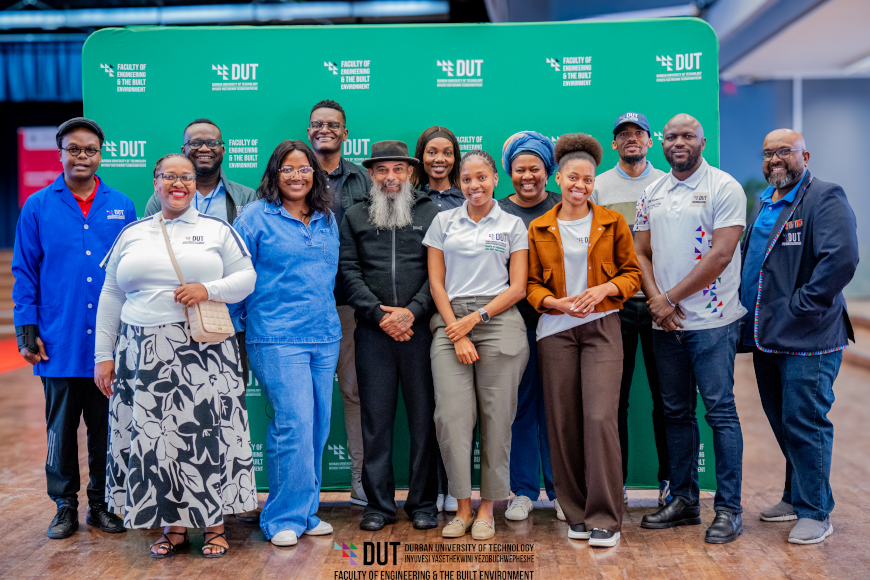
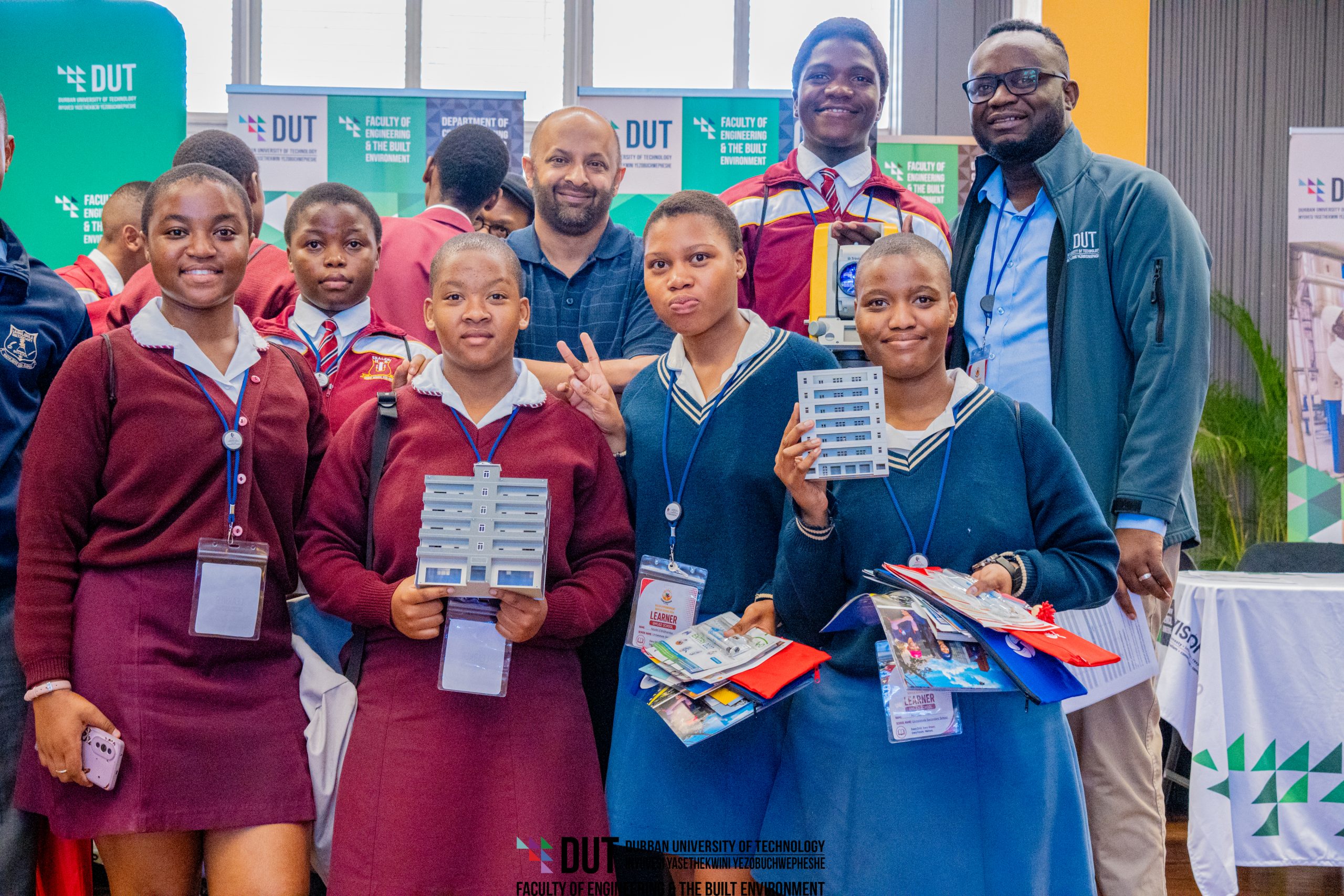
Pictured: Career Expo attendees at the exhibition.


Photography: Zamani Mathe

Sibonisile Mdlozini/Asanda Dzelwa

https://www.dut.ac.za/dut-faculty-of-engineering-and-the-built-environment-promotes-career-opportunities-at-youth-empowerment-expo/


DUT HOSTS FIRST-YEAR ORIENTATION FOR BIOTECHNOLOGY & FOOD SCIENCE STUDENTS


The Department of Biotechnology & Food Science at the Durban University of Technology (DUT) recently hosted an orientation programme for its first-year students. The aim of the event was to support students in transitioning smoothly from high school into university life. It also provided an opportunity for new students to familiarise themselves with the academic environment, departmental expectations, and the support available to them throughout their studies.


The orientation was held at Ritson Hall on Thursday, 9 April 2026. It brought together faculty members, staff, and students in a welcoming and engaging atmosphere. During the session, students were introduced to the structure of their academic programmes, key departmental resources, and the essential skills required to succeed at university level.


Professor Feroz Swalaha, Head of the Department of Biotechnology & Food Science.

Professor Feroz Swalaha, Head of the Department of Biotechnology & Food Science, delivered the opening remarks and warmly welcomed the first-year students, acknowledging their commitment to their academic journey. He emphasised the importance of using the remaining weeks before examinations effectively and assured students of the department’s continued support through revision sessions, focused teaching, and academic guidance.


He encouraged students to develop disciplined study habits, remain consistent, and seek help when needed. He also stressed the importance of personal responsibility, urging students to take ownership of their learning and approach their studies with determination and integrity. Beyond academic achievement, he reminded students of their broader role in society and encouraged them to contribute positively to building a responsible and cohesive community.


Swalaha said, “I want you to take the responsibility of getting an education seriously. You need to understand that education is not just about learning science, but about developing your intellectual abilities and enabling you to engage with society in a way that promotes cohesion. This starts with understanding why you are here. Be clear about the goals you want to achieve and the path you will take to succeed in your chosen industry.”


Professor Suren Singh, Executive Dean of the Faculty of Applied Sciences, also addressed the students, welcoming them to what he described as a dynamic and forward-thinking faculty. He congratulated them on reaching this important milestone and wished them success in their studies over the next three years.


Professor Suren Singh, Executive Dean of the Faculty of Applied Sciences.

He encouraged students to approach their academic journey with curiosity and active engagement. Singh said, “On behalf of the Faculty of Applied Sciences and the Durban University of Technology, it is a great pleasure to welcome you to a vibrant, passionate, and research-driven faculty. You have chosen a dynamic field of study that focuses on technology, health, sustainability, and innovation. Whether your interest lies in science, microbiology, genetic engineering, or bioprocessing, you have made an excellent choice, and I am confident your studies will open many opportunities for you.”


Representatives from various student support service units also addressed the students, providing guidance on resources available to support their academic and personal well-being. These included the Financial Aid Office, the Library, Student Counselling, the Centre for Excellence in Learning and Teaching (CELT), and Protection Services. Each speaker emphasised the importance of making use of these services and encouraged students to seek support whenever needed.


Students were further provided with a comprehensive overview of the academic programme for the year to ensure they fully understood their course structure and curriculum. The overview included the programme structure, module outlines, general education requirements, graduate attributes, and the First Year Student Experience (FYSE) programme.


The session aimed to equip students with the knowledge needed to plan effectively, succeed academically, and make the most of their university experience.


Pictured: First year students under the Department of Biotechnology & Food Science during their orientation.


Photographer: DUT Multimedia

Thubelihle Dumakude

https://www.dut.ac.za/dut-hosts-first-year-orientation-for-biotechnology-food-science-students/


RESEARCH NEWS: AALIYAH KHAN WINS SECOND PLACE FOR ORAL PRESENTATION AT THE FIRST AFRICAN METABOLOMICS CONFERENCE


Aaliyah Khan, a Master’s student in Biotechnology at the Durban University of Technology DUT, has earned second place for her oral presentation at the first African Metabolomics Conference, marking an impressive achievement in her growing academic journey.


She expressed her honour at being part of the conference, which brought together high quality scientific work from across the continent.


Being creative, innovative and adaptive is what Khan espouses, not only in her academic studies but also in her social life. The dynamic student is currently pursuing her Master’s degree with a strong focus on computational drug discovery and bioinformatics.


She recently delivered an oral presentation as part of the first African Metabolomics Conference MSA, which sought to gather researchers in the field of metabolomics to share their research and discoveries.


“My presentation was titled Machine learning driven bioprospection of South African plants for modulators of SGLT 2 for interventive diabetes care. I presented my findings in which I compiled a library of compounds derived from South African medicinal plants, and using computational and machine learning approaches, screened the compounds for the identification of potential modulators of SGLT 2, a key target in diabetes management,” she shared.


Khan further discussed the subsequent metabolic analysis the compounds underwent for the assessment of their binding affinity to the target, drug likeness, and stability over time. She concluded by discussing the implications of the findings and how the machine learning approach would greatly aid in accelerating the identification of novel therapeutic candidates.


“I feel both exceptionally grateful and humbled by placing second at such a remarkable conference. Above all, I am deeply appreciative of the opportunity to have presented alongside such distinguished fellow researchers. The experience as a whole was both inspiring and insightful, and I am truly honoured to have been part of a platform that brings together such high quality scientific work,” she said.


Khan indicated that she is particularly interested in integrating bioinformatics with natural product research for the discovery of novel therapeutic candidates. “My research centres around the identification of potential antidiabetic compounds targeting SGLT 2 and aldose reductase using molecular modelling techniques and machine learning approaches,” she shared.


Khan, who heard about the conference through the university’s call for submissions, was eager to participate primarily for the opportunity to witness firsthand the innovative ideas and approaches being explored by others working in similar areas of research.


“Additionally, I aimed to network with fellow researchers and gain exposure to potential collaborations within the field,” she said.


In terms of role models, the first person that came to mind was Kary Mullis, whose invention of the polymerase chain reaction PCR has immensely contributed to the development of molecular biology and biotechnology. “His invention was so profoundly important that, despite having been created in 1983, it still represents a key tool for many research endeavours today,” she said.


Going forward, Khan is contemplating pursuing her doctoral studies, where she hopes to discover therapeutic compounds to treat diseases affecting the central nervous system CNS.


Imparting her advice to fellow students wanting to follow in her footsteps, Khan said they should not hesitate to take any opportunity that presents itself.


“Even more so than being an attendee at such events, go out of your comfort zone. Aim to surpass your own internal limits by reaching beyond what you believe is possible for yourself. Never be afraid to seek knowledge and the advice of your peers, for they are there to support you and provide constructive criticism and recommendations that would help you achieve much more than you could as an individual,” she said.


Khan relayed that she personally attributes much of her success at this conference to both her supervisor Professor Sabiu Saheed and her co supervisor Dr Gideon Gyebi for their continuous support and efforts in aiding her understanding of complex techniques that she has recently been introduced to.


“A very important lesson that I have learnt during the course of this conference was that as a scientific community, we truly do travel further together,” she said.


Pictured: Aaliyah Khan, a Master’s student in Biotechnology at DUT.


Waheeda Peters

https://www.dut.ac.za/research-news-aaliyah-khan-wins-second-place-for-oral-presentation-at-the-first-african-metabolomics-conference/


DUT CHEMICAL ENGINEERING MASTER’S STUDENTS SELECTED FOR PRESTIGIOUS ERASMUS+ PROGRAMME IN SPAIN


Two Chemical Engineering Master’s students at the Durban University of Technology (DUT) have been selected to participate in the Erasmus+ Programme in Spain for a period of five months. Ms Winnie Nota and Mr Sydney Khanyile are currently conducting their research at the University of Valladolid in Spain under the Volatile Organic Compound (VOC) and Microalgae Research Group in the Department of Chemical Engineering and Environmental Technology.


The two students are fortunate to be part of the Erasmus+ Programme, one of the largest education exchange programmes globally funded by the European Union. It supports international academic exchange, collaboration and skills development between universities, institutions and organisations across Europe and partner countries worldwide. During this time, they will engage in academic learning, research related activities and collaboration with students and researchers at the host institution.


Nota and Khanyile are both supervised by Dr Emmanuel Tetteh, Senior Lecturer in the Department of Chemical Engineering and a lead researcher championing the Green Engineering Research Group (GERG). They are both members of GERG, which operates as a crucial research arm within DUT to advance sustainable, innovative and environmentally friendly technologies. The group conducts research on green chemical engineering, energy, environmental sustainability and wastewater treatment.


Nota’s research focuses on the valorisation of dark fermentation effluents into high value added products. She is excited about being selected for this programme and feels it is truly an honour and a valuable opportunity for her academic growth.


Khanyile’s research focuses on biogas production and upgrading using microalgae cultures to promote sustainable energy solutions. He has contributed to several conference proceedings, including works on wastewater valorisation and biogas recovery from industrial wastewater presented at conferences in Midrand, Cape Town and Durban between 2024 and 2025.


“Being selected for the Erasmus+ Programme is an incredible honour and one of the most meaningful milestones in my academic journey. I feel grateful, excited and deeply motivated. Coming from a background where opportunities like this can truly change one’s life trajectory, the experience reminds me that dedication and hard work can open doors to the global academic community. It is a proud moment for me to represent DUT and my country while learning in a new environment,” shared Khanyile.


During the programme, Khanyile’s academic focus includes environmental biotechnology and wastewater treatment technologies. These subjects align closely with his research interests, particularly anaerobic digestion and sustainable approaches to wastewater treatment while recovering valuable resources such as energy and nutrients.


Sharing one of the main challenges she is currently facing in Spain, Nota said it has been the language barrier, since Spanish is the primary language used in daily communication.


“In some situations, such as when I go shopping at malls, I often use a translator to communicate. However, the systems here are very advanced, which makes it easy to navigate and manage daily activities. In terms of food, the transition has been smooth because many of the foods available here are similar to what we have in South Africa, so it has not been difficult to adjust,” said Nota.


Sharing similar sentiments, Khanyile said although the language barrier is sometimes challenging, it also encourages him to learn and adapt while appreciating linguistic diversity.


Through this programme, Nota hopes to expand her research knowledge and develop new perspectives on environmental technologies and sustainability practices. She hopes to apply the knowledge gained to contribute to environmental solutions in South Africa.


Khanyile hopes to broaden his academic knowledge, strengthen his research skills and gain exposure to different scientific approaches to environmental challenges. He aims to build meaningful connections with students and researchers from around the world, as he believes collaboration is essential when addressing global issues such as environmental sustainability.


Sharing his congratulatory remarks, their supervisor, Dr Emmanuel Tetteh, stated: “Congratulations to Ms Winnie Nota and Mr Sydney Khanyile on your outstanding achievement and the excellent progress you are making during your research stay at the University of Valladolid in Spain. As an Erasmus scholar from the same institution, I am proud to observe your engagement with this valuable international exposure within the VOC and Microalgae Research Group. Your dedication and professionalism exemplify the high standards of DUT and GERG. Continue to excel and represent us with distinction. Wishing you sustained success in Spain.”


Pictured: Mr Sydney Khanyile  and Ms Winnie Nota who are currently conducting their research at the University of Valladolid in Spain.


Simangele Zuma

https://www.dut.ac.za/dut-chemical-engineering-masters-students-selected-for-prestigious-erasmus-programme-in-spain/


CONGRATULATIONS TO DUT’S INCREDIBLE TOP 100 GRADSTARS!


Four of the Durban University of Technology’s (DUT’s) graduates and student are amongst GradStar’s Top 100 tertiary students in South Africa. They are  Yuveshni Juggadesan, Nevesan Naidoo, Ashley Van Der Merwe and Hlengiwe Ngubane.


According to the media release by BlackBark Productions, the GradStar Awards shine a spotlight on the exceptional talent emerging from universities and tertiary institutions. The programme is committed to identifying the future leaders, innovators and change makers who will contribute meaningfully to South Africa’s future.


The achievements of the DUT students who have reached the Top 100, showcase the immense potential of the next generation of South African talent to make a lasting impact in their communities, industries and the broader economy.


Yuveshni Juggadesan was excited and proud when she found out that she had been selected as one of the Top 100 for GradStar. The 26 year-old systems consultant, who currently resides in Cape Town, studied ICT Applications Development at DUT and graduated in 2022.


“It was a really special moment because it felt like recognition of the hard work and growth I have experienced throughout my academic and professional journey. It also reminded me that putting yourself out there and taking opportunities can lead to something meaningful,” she shared excitedly.


Although she graduated from DUT in 2022, she still feels very connected to the institution and the role it played in her development.


“Being part of GradStar gives me an opportunity to remain connected to DUT while representing the institution and encouraging current students to make the most of the opportunities available to them. I believe the experience will also help me develop my communication, networking, leadership and interpersonal skills, which are all important for my future career,” she explained.


Her main objective is to develop a career that allows her to combine technology, problem-solving and working with people.


“In the long term, I would like to bridge the gap between technology and people, understanding technical solutions while also making sure that customers and stakeholders understand them and receive real value from them. I also hope to further my studies in Project Management, as I believe this will complement my ICT background and help me progress into more senior roles in the future,” she said.


For Nevesan Naidoo, hearing that he had been selected as one of the GradStar Top 100 was an incredibly proud and exciting moment.


“Being one of only four candidates from DUT made the achievement even more meaningful. This is also my third GradStar Top 100 recognition, following my selections in 2022 and 2024. Each experience has represented a different stage of my academic and professional development. Being selected again in 2026 reminded me of how far I have come and motivated me to continue growing, learning and creating opportunities for others,” he said.


The DUT graduate who completed his Bachelor of Engineering Technology (BEng Tech) in Electronic Engineering; currently works at Vodacom as a Discover Graduate Trainee. His work is focused within the telecommunications environment which has allowed him to gain experience in areas involving electromagnetic fields, radio networks and telecommunications infrastructure.


“Competitions such as GradStar help students recognise that their potential extends beyond their academic qualification. They provide exposure to employers, industry leaders and other ambitious young people from across the country. They also encourage students to reflect on their values, strengths, achievements and long-term career goals,” he said.


“Participating in these competitions,” Nevesan said, “can help students build confidence, strengthen their communication skills and become more comfortable in professional environments.


“Even if a student is not selected as a finalist, the application and interview process can still provide a valuable learning experience. Students should view these opportunities as an investment in their personal and professional development, rather than focusing solely on the final outcome.”


“Being one of the Top 100 GradStar students is an exciting opportunity, especially as I approach the end of my journey at DUT. I will be able to represent my university beyond the classroom, share my experiences and encourage other students to explore opportunities that could help them grow,” expressed Ashley Van Der Merwe.


She found out about GradStar through an email sent by DUT on Outlook. “At the time, I did not really know what GradStar was, but I decided to apply. Looking back, I am grateful that DUT shared the opportunity with us because it led me to an experience I might otherwise have missed,” she said.


The 21-year-old lass is currently completing her Bachelor of Information and Communication Technology in Internet of Things at DUT. Throughout her studies, she has been exposed to different areas of technology, including programming, databases, data analysis and IoT.


“My time at DUT has also shaped me as a person. My journey has taught me the importance of consistency, perseverance and being willing to learn. I am proud of the progress I have made and how much I have grown since starting at DUT, and I am grateful to DUT for the opportunities and experiences it has given me,” she said.


For Hlengiwe Ngubane, being selected among the Top 100 is a meaningful recognition of the work she has put into her academic journey, leadership, entrepreneurship and personal development.


“It was also encouraging to see that the different aspects of my journey are being recognised beyond the university environment. More than anything, it reminded me that consistency and commitment can create opportunities, even when the journey is challenging,” she said.


Hlengiwe sees the GradStar platform as an extension of her journey at DUT rather than something separate from it. DUT has given her opportunities to grow academically, professionally and as an entrepreneur.


“Being part of the Top 100 allows me to represent those values while continuing my studies and engaging with other students and young professionals. I hope to use the platform to encourage other DUT students to recognise their own potential and actively pursue opportunities beyond the research spaces and lecture rooms,” she relayed.

Her journey at DUT has been one of continuous growth, from being a student to becoming an academic, researcher and entrepreneur. She is currently pursuing a Doctor of Philosophy (PhD) in Architecture at DUT. Beyond her studies, she has also been involved in teaching, entrepreneurship, innovation and student development. Through the DUT Innobiz Entrepreneurship Centre, she has been able to develop her entrepreneurial interests and work on solutions within the construction and built-environment sector.


“Competitions such as GradStar, Hlengiwe emphasised, are important because they provide students with an opportunity to have their achievements recognised beyond the traditional academic environment. They expose students to professional networks, mentorship, potential employers and opportunities that they may not otherwise encounter. They also challenge students to articulate their value, recognise their strengths and think more intentionally about their career direction. I believe recognition is particularly important because talented students often underestimate themselves. Sometimes, an external platform is needed to remind them that their work, achievements and journey have value,” she said.

Her objective is not simply to build a successful career, but to build a career that creates knowledge, develops people and produces solutions with lasting social and economic impact.


The GradStar Awards ceremony will take place on 02 December 2026, and through these interactions, employers can scout top talent and secure their next key hires and ultimately select ten outstanding students who demonstrate the qualities, potential and employability skills required to stand out in the workplace.


Pictured: DUT’s four GradStar’s Top 100 students in South Africa.


Waheeda Peters

https://www.dut.ac.za/congratulations-to-duts-incredible-top-100-gradstars/


DUT CHOIRS DOMINATE THE PRESTIGIOUS LECMA ANNUAL CHORAL MUSIC FESTIVAL


The Durban University of Technology  (DUT) are in ‘musical awe’ of the melodious DUT Midlands Choir  and the DUT Durban Choir who were both victorious with their  perfected choral synergy at the recent 2026 Lengau Choral Music Association (LECMA) Choral Eisteddfod.


Held in the first week of October 2026, the event hosts annual provincial choral eisteddfods in partnership with the Free State Department of Sport, Arts, Culture and Recreation (DSACR) to promote South African choral music and foster social cohesion. DUT Midlands Choir sang their way to victory winning firs position overall in the competition, whilst DUT Durban Choir clinched second position in the same competition.


Chairperson of the DUT Midlands Choir, Sanele Mathe described how ecstatic the chorale was upon hearing the exhilarating news of their win.


“The mood was electric as both choirs burst into a joyous celebration. We were confident that we had done the best that we could do, leaving the rest to the judges,” he happily highlighted.


Emphasising which song was instrumental in securing first place victory, the two choir leaders say the African song, Koze kube nini, which at the end of their preparations was the piece that they had given most of their time to.


The choir leaders related that their rehearsal venues were not as large as the competition venue so the acoustics were a bit of a challenge, however the prowess of both their conductors eliminated any negative effects as they guided the choirs through their renditions.


Preparing for this specific winning repertoire,  according to the choir executives, took approximately 30 hours in total, including cross nights and long rehearsals of four hours each at a time during weekends.


“We must thank the SRC for their helping hand in ensuring that the DUT choirs attended the competition and indeed came back victorious,” they relayed.


For the two choirs, their participation intertwines with ENVISION2030 mostly at the levels of stewardship and society.  “Furthermore, the values and principles that resonate are those of commitment, excellence, transparency and professionalism – from both the staff and the choristers,” they said.


The leaders spoke of how the conductors emphasised the importance of enjoying the music and putting the competition factor at the back of their minds.  “Their confidence in the choirs, carrying themselves like victors already infused us with unimaginable motivation and high levels of energy. For both the choirs, key take aways are that you do not fail to try and that through teamwork and dedication, anything is possible. In terms of our music, we aim to continue and enjoy it,” they shared.


Sharing her sentiments on their second win (after the Bulose Foundation Competition), was DUT Durban Choir Chairperson, Ovayo Dick, who jubilantly indicated that they were overwhelmed and surprised at their achievement.


“The competition was tight, and all the competing choirs were excellent; we did not see it coming. The joy of a chorister is shown through singing. We were happy; some were crying, seeing the pressure and hard work paying off and creating history in such a short space of time. So you can imagine the excitement and joy we were feeling,” he explained.


Ovayo indicated that the chorale was optimistic and motivated by their conductor to enjoy the song more than treating it as a competition.


DUT Registrar, Dr Maditsane Nkonoane shared his congratulatory message on both choirs’ sterling achievements.


“The DUT tagline, Creative, Distinctive, Impactful, is not just a slogan; it is a lived identity. This phenomenal first place victory by our Midlands Choir, with our Durban Choir taking a very close second place at the 2026 LECMA Choral Eisteddfod, embodies this perfectly. They were Creative in their interpretation, arrangement and performance — showcasing originality and artistic excellence that is uniquely DUT. They were Distinctive, competing on a highly contested national stage, they stood out for their discipline, vocal precision, and unity. To take both first and second overall positions is a distinctive mark of dominance. And they were Impactful-their music moved the adjudicators and the audience and has brought immense pride back to our campuses. They have put DUT’s name on the national map, not only as a university of technology, but as a home for holistic talent,” he said.


One of the central tenets of DUT’s Living Values Framework, highlighted Dr Nkonoane, is to nurture a people-centred culture where every student and staff member feels seen, valued and part of one DUT family.


“A win of this magnitude does exactly that. Music is a universal language that transcends faculties, campuses and hierarchies,” he added.


As registrar, Dr Nkonoane’s role is to ensure that DUT’s systems and student support create an enabling environment for the whole student to thrive.


“Participating in an award-winning ensemble like our choirs is integral to producing the kind of graduate envisioned in ENVISION2030, a graduate who is well-rounded, responsible, and entrepreneurial. In a choir, our students learn discipline, time management, teamwork, leadership, listening, and resilience, they must juggle rehearsals with academics and still deliver excellence,” he emphasised.


Both the choirs wish to celebrate their victories together and appreciate choristers by awarding them with certificates of participation in the DUT choirs and enjoying their milestone achievements,” he said.


For both choirs, the dream is to host a choral extravaganza before the year ends.


“The advice to those students wishing to be part of the chorale is to push and to dedicate themselves whenever they want to achieve something.  Through hard work, nothing is impossible,” concluded Sanele.


Pictured: The two victorious DUT Choirs.


Waheeda Peters

https://www.dut.ac.za/dut-choirs-dominate-the-prestigious-lecma-annual-choral-music-festival/


DUT STUDENT TAKES CHINESE BRIDGE NATIONAL TITLE TO GLOBAL STAGE


A Durban University of Technology (DUT) student has represented South Africa at the global finals of the “Chinese Bridge” Chinese Proficiency Competition in China after emerging as the country’s national champion earlier this year.


Sixolise Tshobonga, known to her Mandarin teachers as Li Jinghe (李静和), began learning Mandarin at the Confucius Institute at DUT in August 2024. Less than two years later, she would go on to compete on an international stage against Mandarin learners from around the world.


Tshobonga was among three students from the Confucius Institute at DUT who represented the university at the national Chinese Bridge competition in Cape Town in May 2026. She emerged as the national champion after competing against 21 other contestants.


Her achievement marked a significant milestone for the Confucius Institute at DUT, securing the university’s first national Chinese Bridge title in more than a decade.


The national competition consisted of a written test, speech and talent show. In preparation, Tshobonga spent considerable time refining her speech and talent performance while preparing for the written component.


Her success followed a strong academic performance in Mandarin. In 2025, she achieved a perfect score in the HSK 2 test, demonstrating her commitment to developing her language proficiency.


Tshobonga said her decision to learn Mandarin initially came as a surprise because she was unaware that the language was offered at DUT.


“It came as a complete surprise, but it turned out to be one of the best things I could have ever done for myself,” she says.


Her involvement with the Confucius Institute extended beyond the classroom. She participated in several cultural activities, including performing during the Spring Festival and winning first place at International Chinese Language Day.


“Learning Mandarin has long stopped being about the opportunities and things I could get, but about the love of the language, culture, history and China,” she says.


Following her national victory, Tshobonga travelled to China on 4 August 2026 to represent South Africa at the global


Sixolise Tshobonga was awarded the title of Ambassador for Chunlun Jasmine Tea in South Africa.

During the programme, she joined contestants from around the world and visited several Chinese cities, including Beijing, Fuzhou, Pingtan, Zhangzhou and Xiamen. The programme included visits to historic and cultural sites such as the Great Wall, the Forbidden City, Nanjing Tulou and Gulangyu Island.


She also participated in tea-picking and tea-making activities at the Chunlun Ecological Tea Garden and was selected as an ambassador for Chunlun Jasmine Tea in South Africa.


At the global finals, Tshobonga achieved an overall score of 87% across the written test, talent show and oral presentation.


Her performance was further recognised with a semester-long scholarship to study Chinese in China, awarded by the Centre for Language Education and Cooperation.


For Tshobonga, the experience has reinforced her belief in the value of persistence and the opportunities that come with embracing something new.


“Through learning Chinese and participating in Chinese Bridge, I was able to make friends from all over the world, get opportunities, experience Chinese culture, language and history, and realise that I am capable,” she says.


“Only if I work hard will I achieve great things. Some may come faster and some later, but only if I don’t give up.”


She believes the experience marks the beginning of a longer journey with the Chinese language.


“I believe this is only the beginning of my Chinese journey and amazing things to come,” she says.


Mr Lin Wu, Director of the Confucius Institute at DUT, said Tshobonga’s achievement demonstrated the impact of dedication and institutional support.


“We are immensely proud of Ms Sixolise Tshobonga’s achievements. Her story shows that with dedication and the right support, language learning can change lives,” he says.


“I sincerely hope that her example will encourage more students to embrace Mandarin, not only as a language, but as a bridge to broader horizons and brighter futures. We look forward to seeing many more young learners rise, dream and succeed.”


Tshobonga’s achievement highlights the opportunities available to DUT students through the Confucius Institute, demonstrating how language learning can open pathways to international competition, cultural exchange, further study and global exposure.


Pictured: Sixolise Tshobonga who was recognised as the national champion of the Chinese Bridge competition in Cape Town.


Photos: Supplied.

Yuxin Zhang

https://www.dut.ac.za/dut-student-takes-chinese-bridge-national-title-to-global-stage/


JOURNALISM STUDENTS RECOGNISED FOR ACADEMIC EXCELLENCE AT ANNUAL AWARDS


The Durban University of Technology’s (DUT) Journalism Programme celebrated the academic achievements of its students at the annual Journalism Students’ Achievement Awards, held at the DUT Hotel School at Ritson Campus on Wednesday, 26 August 2026.


Students from first year through to Bachelor of Journalism (Honours) level were recognised for their outstanding academic performance during the ceremony, which also provided an opportunity to reflect on the changing media landscape and the future of journalism.


The programme opened with a screening of student documentaries and videos, showcasing the journalism, storytelling and videography skills developed by students throughout their studies.


As South Africa marks 50 years since the introduction of television, the event also featured a panel discussion titled “50 Years of Television and the Future of News and Content”.


The panel brought together DUT Journalism alumnus Pinky Radebe, Head of Communications and Public Relations at the KwaZulu-Natal Tourism and Film Authority; Deputy Chairperson of the South African National Editors’ Forum (SANEF), Slindile Khanyile; DUT Media, Language and Communication alumnus and eThekwini Municipality Communications Manager Mdu Ncalane; and recent DUT graduate and financial journalist Enzokuhle Sabela.


The panellists reflected on the changing media environment and the continued importance of journalism at a time when audiences are increasingly exposed to disinformation on social media and content generated through artificial intelligence (AI).


They emphasised that while technology and media platforms continue to evolve, the fundamental principles of journalism remain important.


“If your job is to be known, go be an actor. It’s about the story. It’s about the facts,” Sabela told the student journalists.


Following the panel discussion, Executive Dean of the Faculty of Arts and Design, Professor Pholoho Morojele, delivered the opening remarks and encouraged students to remain focused on their individual journeys.


“Not winning an award today doesn’t define who you are, your life and the rest of your career,” said Prof Morojele.


The awards ceremony then recognised the academic achievements of students from the second semester of 2025 and the first semester of 2026.


Among the recipients was Sompisi Ntuli, who received an award for Television Journalism 3B. Ntuli, who is currently completing his Bachelor of Journalism (Honours) at DUT, said the recognition came as a surprise but reflected the effort he had put into the module.


“Television was one of my favourite modules due to the practical nature of it,” said Ntuli.


Janelle Govender was recognised as the top achiever in the Journalism Programme for 2025. While pursuing her Bachelor of Journalism (Honours), Govender also received awards for Media and Society and Multimedia and Journalism for 2026.


She described the recognition as a proud moment and acknowledged the support she received throughout her academic journey.


“I feel so grateful to be receiving this award because I was recognised for the work I put in,” said Govender.


Students who made significant contributions to Credible Source by DUT Journalism, the department’s online publication, were also recognised with certificates for their contribution, hard work and dedication to producing journalism content.


The event highlighted the importance of recognising academic achievement while encouraging students to continue developing their skills and pursuing opportunities in journalism.


Journalism lecturers Professor Theodora Adjin-Tettey and Dr Tarryn Frankish also encouraged students to consider postgraduate study and apply for the Honours and Master of Journalism programmes at DUT.


Pictured: Some of the Journalism students who were honoured for academic excellence.


Photographer: S’bonelo Dlamini.

Luyanda Mlaba

https://www.dut.ac.za/journalism-students-recognised-for-academic-excellence-at-annual-awards/


PROF FERINA MARIMUTHU RECOGNISED FOR LEADERSHIP AND ADVANCING THE FUTURE OF ACCOUNTANCY


The Head of Department of Financial Accounting in the Faculty of Accounting and Informatics at the Durban University of Technology (DUT), Professor Ferina Marimuthu, was recently recognised for her leadership and contribution to the accountancy profession after receiving the SAIPA Mastery Circle Award in the Leadership category at the SAIPA Accounting iNdaba.


The recognition was accompanied by another achievement for DUT, which received the SAIPA Mastery Circle Partner Award in recognition of its collaborative partnership with the South African Institute of Professional Accountants (SAIPA). SAIPA has described Prof Marimuthu’s recognition as reflecting a career built on professional excellence, ethical leadership and a commitment to empowering others.


The recognition came during Women’s Month, providing an opportunity to highlight the contribution of women who continue to lead, mentor, develop others and shape their professions. For Prof Marimuthu, the award represents both a personal and professional milestone and reflects her commitment to leadership, continuous learning, service and the development of competent, ethical and future ready accounting professionals.


She believes leadership extends beyond a position or title and is instead about creating opportunities, developing people and leaving an environment stronger than she found it.


Prof Ferina Marimuthu.

Reflecting on her professional journey, Prof Marimuthu said one of her greatest achievements has been contributing to the development of people and creating opportunities for them to progress academically and professionally. She takes particular pride in seeing former students grow into successful accounting professionals, academics and leaders.


Her contribution to accounting education has included supporting the development and transformation of accounting programmes, strengthening professional accreditation and building partnerships between higher education institutions and professional bodies. Among these initiatives is the collaboration between DUT and SAIPA, as well as the implementation of a 20 week Work Integrated Learning simulation aimed at strengthening student development and professional readiness.


The recognition of DUT with the Partner Award made the achievement even more meaningful for Prof Marimuthu. She views the two awards as closely connected and believes they demonstrate what can be achieved when higher education institutions and professional bodies work towards a shared purpose.


“Leadership achieves its greatest impact through collaboration, and the Partner Award reflects what can be achieved when academia and the profession work together with a shared purpose,” she said.


Her approach to leadership is guided by integrity, accountability, excellence, service and a genuine commitment to developing others. She believes leaders should lead by example, remain accountable for their decisions and create an environment where people are encouraged to grow and contribute.


For Prof Marimuthu, success should not end with an individual. Knowledge, experience and opportunities should be shared to ensure that others are also able to progress and reach their potential.


As the accountancy profession continues to evolve, Prof Marimuthu believes universities cannot prepare future accounting professionals in isolation. Meaningful collaboration with professional bodies, industry and other stakeholders is essential to ensuring that curricula, teaching practices and graduate development initiatives remain relevant to the changing needs of the profession.


Her future focus includes future ready accounting education, Work Integrated Learning, technology, sustainability and the development of emerging professionals and academics. She said the recognition encourages her to continue contributing, collaborating and creating opportunities for others.


She encourages young professionals to focus on becoming people of value rather than seeking recognition. Building competence, protecting integrity, remaining open to learning and developing the ability to adapt to technological changes are, in her view, essential qualities for the future of the profession.


She also encourages emerging professionals to contribute beyond their formal job descriptions by mentoring others, serving their profession, supporting their communities and identifying problems they can help solve.


“Recognition often follows meaningful work, but meaningful work should always come first,” she said.


At this stage of her career, Prof Marimuthu says she is increasingly thinking about legacy not in terms of titles or personal achievements, but in terms of people, programmes and partnerships that can continue making an impact beyond her direct involvement.


She hopes her journey will inspire the next generation of accountancy professionals to understand that leadership is not confined to a particular position or title. It can be demonstrated in a classroom, professional practice, the community or through supporting another person’s development.


“Success becomes more meaningful when it creates opportunities for others,” she said.


As DUT celebrates Women’s Month, Prof Marimuthu’s recognition serves as an example of the impact women can make through academic leadership, professional service, mentorship and the development of others. Her achievement also highlights the importance of creating spaces where women can lead, contribute and shape the future of their professions.


For DUT, the recognition of Prof Marimuthu, alongside the SAIPA Mastery Circle Partner Award, highlights the value of strong partnerships between higher education and professional bodies in strengthening the accountancy profession and preparing graduates for an evolving world of work.


The awards therefore represent more than individual recognition. They reflect a continued commitment to leadership, collaboration, professional excellence and the development of the next generation of accounting professionals.


Pictured: Prof Ferina Marimuthu was recently awarded the SAIPA Mastery Circle Award in the Leadership category.


Photos: Supplied.

Sinamile Sithole

https://www.dut.ac.za/prof-ferina-marimuthu-recognised-for-leadership-and-advancing-the-future-of-accountancy/


DUT DESIGNERS CLINCH FIRST AND THIRD POSITIONS AT YOUNG DESIGNER AWARD


There were scenes of jubilation, emotional embraces and tears of happiness as Mlungisi Ndlovu and Thato Selekane from the Durban University of Technology (DUT) secured first and third places respectively at this year’s Young Designer Award, sponsored by Metro FM, during the Hollywoodbets Durban July on Saturday, 4 July 2026.


Mlungisi captivated the judges, claiming first place with an exceptional Nguni-inspired design. Drawing inspiration from the colours of the iconic Nguni cow, the winning garment interpreted the official ‘Country Allure’ theme through contemporary couture. Showcasing exceptional craftsmanship, intricate detailing and confident storytelling, the design beautifully reflected this year’s theme.


“I can’t believe it. It feels unreal. I am happy, but I can’t believe this is happening. I really didn’t think I had a chance,” said Mlungisi, who used coffee to stain the fabric and achieve the garment’s distinctive finish.


For Mlungisi, his passion for fashion began in 2016 when his late mother encouraged him to learn the basics of sewing. A self-taught designer herself, she believed that regardless of what he chose to pursue after matric, he should always have a practical skill.


“These competitions are vital for DUT students because they expose you to the realities of the industry. You may think you are the best at university, but competitions like these humble you. They encourage you to go back to the drawing board, reassess, learn, evolve, try again and continue growing.


“My main inspirations are Yohji Yamamoto and Alexander McQueen. I love their rebellious spirit and the freedom with which they express themselves because I believe true art happens when you are at peace. In South Africa, I admire Thebe Magugu, Maxhosa, Tshepo Jeans and Ifuku, who are making our culture fashionable while producing premium-quality designs.”


He currently designs adaptive apparel for people living with disabilities and hopes to establish a partnership with the DUT Disability Unit, together with the Prosthetics and Orthotics units, to help shape the brand.


“The aim is not only to create beautiful statement dresses, but to make a meaningful difference through inclusive fashion and solve existing challenges. As an entrepreneur, I want to grow while contributing to a stronger economy,” he added.


As the overall winner, Ndlovu received a fashion travel package to Johannesburg to attend SA Fashion Week 2026, courtesy of Race Coast and SA Fashion Week, a R70 000 bursary from the Hollywood Foundation towards his current or future studies, R10 000 in cash courtesy of Race Coast and Schweppes, and a Kryolan Professional Make-Up voucher valued at R2 500.


Claiming third place was Thato Selekane. For this year’s ‘Country Allure’ theme, she sought to challenge stereotypes surrounding traditional Pedi spiritual practices. She explained that she used heavy fabric to blend luxury with hard work, demonstrating that high fashion can also celebrate practicality.


“I also used cowrie shells as accessories to represent the blessings of a successful and abundant harvest. The outfit is about celebrating natural wealth.


“Placing third in this prestigious competition is incredibly validating and overwhelming in the best possible way. As a third-year DUT student, standing on that stage alongside such immense talent felt like a defining milestone. It is proof that the long hours have paid off, and it has given me tremendous confidence as an emerging designer,” she said.


She noted that every designer brought exceptional craftsmanship and unique storytelling to the runway.


“Competing alongside them was an invaluable learning experience. While many focused on traditional glamour, my approach was rooted in technical design and creating bold, distinctive shapes. Bringing that highly structured, academic perspective to a major commercial platform felt unique, and it was fascinating to see my structural style alongside so many different creative ideas,” Thato explained.


She expressed her gratitude to her family, lecturers and peers at DUT for their unwavering support throughout the journey.


“This design is just the beginning of how I intend to merge traditional African textiles with high-end structural design. I’m excited to continue pushing these boundaries in my future work,” she said.


Thato received a R30 000 bursary from the Hollywood Foundation, R2 000 in cash courtesy of Race Coast and Schweppes, and a R1 000 Gateway Theatre of Shopping gift card.


Sharing her congratulatory message, Ms Nomonde Peter, a Fashion and Textiles lecturer expressed  said the Fashion and Textiles Department at the Durban University of Technology is immensely proud and excited by this outstanding achievement. Having one of DUT’s students crowned the overall winner and another securing third place is a remarkable testament to the creativity, dedication, resilience, and technical excellence that DUT students consistently demonstrate.


She highlighted that the standard of the competition was exceptionally high, with students presenting innovative concepts, outstanding craftsmanship, and strong storytelling through fashion.


“Our students demonstrated a remarkable ability to interpret the Durban July Country Allure theme while balancing creativity with technical precision and commercial awareness. We are grateful to the organisers of the Hollywoodbets Durban July Young Designer competition for providing emerging designers with an opportunity to showcase their talent to the fashion industry. We also acknowledge the dedication of our lecturers, industry partners, and support staff, who play a vital role in developing the next generation of South African fashion designers,” she said ecstatically.


The Hollywoodbets Young Designer Award, sponsored by Metro FM, has established itself as one of South Africa’s premier platforms for discovering tomorrow’s fashion leaders. Each year, it challenges students to transform a theme into wearable works of art, and this year’s ‘Country Allure’ brief inspired a spectacular showcase of garments celebrating pastoral beauty, heritage, artisanal craftsmanship and contemporary elegance.


Pictured: Mlungisi Ndlovu and Thato Selekane with their winning designs at the prestigious Young Designer Award.


Photography: Hollywoodbets Durban July

Story: Waheeda Peters/https://www.hollywoodbetsdurbanjuly.co.za/uncategorized/young-designer-captures-the-spirit-of-country-allure/

https://www.dut.ac.za/dut-designers-clinch-first-and-third-positions-at-young-designer-award/


DUT HOSTS REGIONAL BOOKATHON TO SHAPE LITERATE YOUNG LEADERS


To create a platform for young minds to showcase their reading, writing, and public speaking skills, the Durban University of Technology (DUT) Community Engagement Office, in partnership with the DUT Library Services, the International Centre of Nonviolence (ICON), and Ikusasalentsha, proudly hosted the inaugural DUT Regional Bookathon 2026. The event took place at the BM Patel Library, on the ML Sultan Campus in Durban, on Wednesday, 23 June 2026.


The winners from Gezange Primary School.

This inspiring literacy competition brought together learners from Bambanani Primary School in the Bergville area and Gezangane Primary School in Mariannhill, providing them with an opportunity to demonstrate their talents and engage in meaningful educational activities.


Directing the programme was Mr Romeo Matumba, Marketing and Communication Librarian at DUT. He emphasized the importance of promoting a culture of reading and lifelong learning, highlighting how initiatives like the Bookathon can inspire young people, to engage more actively with books and knowledge.


Delivering the welcome remarks, Ms Phumzile Xulu, Engagement Practitioner shared that the Bookathon forms part of the broader DUT Literacy Programme, an initiative dedicated to nurturing a love for reading, strengthening communication skills, and building learner confidence through book clubs and literacy-focused activities. She further mentioned that through initiatives such as the Bookathon, DUT continues to play a vital role in advancing literacy and empowering young learners to reach their full potential.


Ms Xulu also introduced the three distinguished judges; Dr Anusha Moonasar, a Metadata Librarian at DUT, Dr Zimkhitha Mahlungulu, a Postdoctoral Fellow at the DUT ICON and Mr Zamani Mayeza, a Community Engagement Coordinator for the Faculty of Health Sciences at DUT.


Sharing similar sentiments, Mr Nhlanhla Nhleko, DUT Library Manager said as DUT Library Services they firmly believe that reading is the foundation of learning and lifelong success.


“Libraries are not merely repositories f books; they are spaces that open doors to imagination, discovery, innovation and opportunity. Every child who learns to read confidently gains access to a world of possibilities and is empowered to shape their own future. In support of this the library also has a vibrant book club that is run by young people in an effort to encourage the culture of reading, innovation and writing, not only at DUT but also externally,” said Nhleko.


Messages of support were delivered by Professor Ndumiso Ngidi, Director of DUT’s International Centre of Nonviolence (ICON), and Ms Sinothando Ndaba, Communications Director at Ikusasalentsha. Ikusasalentsha is an independent, Bergville-based non-profit organisation focused on advancing education, youth development, and literacy in rural communities.


Professor Ngidi highlighted the role of initiatives such as the Bookathon in fostering a culture of peace, critical thinking, and social awareness among learners. He emphasized that literacy is not only a fundamental academic skill but also a powerful tool for personal development and community transformation.


Echoing these sentiments, Ms Ndaba spoke about Ikusasalentsha’s ongoing commitment to uplifting rural communities through educational programmes and youth development initiatives. She noted that platforms like the Bookathon provide learners with valuable opportunities to build confidence, express themselves, and unlock their potential.


Learners competed in four categories: debating, spelling bee, poetry, and read-aloud, each designed to test different aspects of literacy and communication skills.


The debating category challenged participants to think critically, articulate their ideas clearly, and engage respectfully with opposing viewpoints. The two topics of debate were; Social media does more harm than good to community spirits and relationships as well as Does it take an entire village to raise a child.


In the spelling bee, learners showcased their mastery of language, spelling accuracy, and quick thinking under pressure. The poetry segment provided a creative platform for self-expression, allowing learners to explore rhythm, emotion, and storytelling through verse. Meanwhile, the read-aloud category focused on pronunciation, fluency, and confidence, as learners brought texts to life through expressive and engaging reading. Together, these categories created a well-rounded competition that celebrated both the technical and creative dimensions of literacy.


The guest speaker was Mr T. Garey Davis, Associate Director in the Centre for Leadership and Intercultural Engagement at George Mason University in the United States. He also serves as a lecturer in both Public Health and Integrative Studies. His work focuses on leadership development, social justice, diversity and inclusion, student success, and global health.


He began his address by posing a thought-provoking question to the learners, asking whether they had ever considered how powerful their words are.


“Your words can make someone smile. Your words can encourage someone who feels like giving up. Your words can even change someone’s future. Through your reading, your poetry, and your debates, you are learning how to use that power. When I was younger, I didn’t always feel confident speaking in front of people. There were times I felt nervous, times I thought, ‘What if I say the wrong thing? What if people don’t listen to me?’ But one day, I had the chance to speak, just like you are doing in your debates and poetry. Something amazing happened. I realised that it wasn’t about being perfect; it was about being brave enough to use my voice,” shared Mr Davis.


Teachers from both schools also shared messages of appreciation to DUT for creating a platform that nurtures the learners’ academic and personal growth. They commended the university for its commitment to promoting literacy and providing learners with opportunities to develop essential skills such as reading, writing, and public speaking.


Announcing the winners Ms Xulu announced thanked all the participants for their outstanding performances, each taking home certificates of participation.


The spelling bee winners were; Lethokuhle Ncayiyana from Gezangane Primary School (third place), followed by Siyathemba Gumbi from Bambanani Primary School (second place) and Sibahle Khuzwayo from Gezangane Primary School (first place).


The poetry winners were; Kuhlekonke Mtshali from Gezangane Primary School (third place), Elihle Zikode from Bambanani Primary School (second place) and Hlelokuhle Maphalala from Bambanani Primary School (first place).


The read aloud winners were; Yolanda Maphumulo from Gezangane Primary School (third place), also in third place, Sinenhlanhla Sibisi from Bambanani Primary School, Thando Mbambo (second place) and Esihle Luthuli from Gezangane Primary School (first place).


The debate champions was the Bambanani Primary School team. Esihle Luthuli was also awarded the Best Learner in Literature. The Champion of Debate award went to Esihle Mthembu from Gezangane Primary School. Hlelokuhle Maphalala was also recognised as the most promising learner. Bambanani Primary School was the overall winner after producing top winners.


In closing, Dr Prim-Rose Shabane, lecturer at DUT ICON expressed appreciation to all partners, organisers, teachers, and learners who contributed to the success of the event. She commended the collaborative effort behind the Bookathon and reaffirmed the importance of continued initiatives that promote literacy, empower young voices, and inspire a lifelong love for learning.


Pictured: The winning school, Bambanani Primary School with the judges and the event organisers.


Photographer: Sibonelo Dlamini.

Simangele Zuma

https://www.dut.ac.za/dut-hosts-regional-bookathon-to-shape-literate-young-leaders/


DUT CONFUCIUS INSTITUTE HOSTS EXPANDED CHINESE BRIDGE FINALS CELEBRATING 25 YEARS OF GLOBAL LANGUAGE EXCELLENCE


The Durban University of Technology (DUT) Confucius Institute successfully hosted the South African Finals of the prestigious Chinese Bridge Chinese Proficiency Competition at the Coastlands Hotel Umhlanga, marking a significant milestone in the 25th anniversary celebrations of the global Mandarin language competition.


This year’s event brought together outstanding primary and secondary school learners from across South Africa, representing a wide network of participating institutions and Confucius Institute teaching stations. Among the participating centres were the teaching stations of the University of Cape Town, the University of the Western Cape, the University of Venda, Rhodes University, and Stellenbosch University, as well as the Pretoria Chinese School and the Confucius Classroom at the Chinese Culture and International Education Exchange Centre. These institutions played a key role in preparing learners and promoting Mandarin language education across the country.


The competition created a dynamic platform for learners to demonstrate Mandarin proficiency, cultural understanding, and artistic expression. Participants impressed judges and audiences through structured speeches, written assessments, and vibrant talent performances that included singing, dancing, painting, and traditional Chinese cultural presentations.


The finals followed DUT Confucius Institute’s continued academic success, where its university students recently achieved first and second place in the national Chinese Bridge university category. The winning learners will represent South Africa at the international finals in China, competing against top Mandarin learners from around the world.


Speaking at the event, Dr Lavern Samuels, Director of International Education Partnerships at DUT, reflected on the long-standing value of the Confucius Institute within the university. He stated, “It is a very important part of the fabric of our university to have this Confucius Institute.” He further highlighted education as a transformative force, quoting Nelson Mandela: “Education is the great engine of personal and social development.” Dr Samuels also reinforced the importance of unity and collaboration, adding, “If you want to go far, go together.”


Representing the Department of Basic Education, Hleki Mabunda described the competition as a symbolic and practical bridge between cultures. He noted, “We have a bridge so that when we walk across to the other side, we do not struggle,” emphasising that the initiative connects young South Africans to global opportunities in education, culture, and future careers.


Acting Consul General of the People’s Republic of China in Durban, Miao Miao, described the Chinese Bridge as far more than a language competition, stating, “The Chinese Bridge is more than a language competition. It is a bridge of friendship, understanding, and cultural exchange.” She encouraged learners to continue engaging with Mandarin as a pathway to deeper cultural appreciation and international cooperation.


Additional remarks highlighted that 2026 marks a key year for China Africa people to people exchanges, as well as a decade since Chinese language education was formally integrated into South Africa’s national education system. This reflects the growing interest among South African learners in Mandarin and the strengthening of educational ties between the two countries.


The competition followed a rigorous three-part evaluation process, consisting of a written Chinese knowledge test, a Chinese speech component, and a talent showcase. Judges applied a standardised scoring system, ensuring fairness before calculating final results.


Learners delivered powerful and creative performances that showcased both linguistic ability and cultural appreciation. Many participants wore traditional Chinese attire, while others integrated storytelling, visual art, and stage performances that reflected their understanding of Chinese culture and global communication.


Mr Wu Lin, Director of the Confucius Institute at DUT, delivered the closing remarks, thanking learners, educators, parents, judges, and partners for their contribution to the success of the event. He encouraged students to view the competition as a starting point for continued growth, stating that their journey in Mandarin learning should extend beyond the stage and into future academic and professional opportunities.


He further emphasised that collaboration between South African institutions and Chinese educational partners remains central to the success of the programme, recognising the shared effort behind every stage of planning, training, and execution.


The competition concluded with the announcement of winners. In the secondary school category, first place was awarded to Awethu Malusi (15) from Cape Academy of Maths, Science and Technology. In the primary school category, first place was awarded to Aleah Ramouthar (9) from Virginia Preparatory School.


Organisers commended all participants for their dedication and courage, noting that every learner who participated had already succeeded by embracing cross-cultural learning and stepping confidently onto the stage. The event ended on a celebratory note, reinforcing the Chinese Bridge as a powerful symbol of friendship, education, and global connection.


Pictured: DUT Confucius Institute staff member and secondary school learners who participated on the competition.


Photographer: S’bonelo Dlamini.

Sinamile Sithole

https://www.dut.ac.za/dut-confucius-institute-hosts-expanded-chinese-bridge-finals-celebrating-25-years-of-global-language-excellence/


RESEARCH NEWS: DUT’S POSTGRADUATE ORIENTATION PROGRAMME SERVES AS A PLATFORM FOR STUDENT ENGAGEMENT AND ACADEMIC DEVELOPMENT


The Research and Postgraduate Support team hosted its much-anticipated Postgraduate Orientation Programme at the BM Patel Library, MLS Campus on Tuesday, 9 June 2026.


The programme director, Mr Zenande Ndakisa, indicated that the orientation was designed to welcome both new and returning postgraduate students, equipping them with the knowledge and tools needed to successfully navigate their academic journeys.


He introduced the Interim Director: Research and Postgraduate Support, Dr Nomcebo Mthombeni, who welcomed postgraduate students and highlighted their role as innovators within the university community. She emphasised that the session provided an opportunity for students to develop solutions to complex challenges.

“Here at DUT, research, innovation and engagement form a critical part of our institutional vision, and we are committed to creating an environment that supports your success through quality supervision, research development opportunities, ethics support, and funding opportunities,” she said.


Dr Mthombeni encouraged students to build networks, noting that collaboration plays a vital role in academic and professional development. She also emphasised the importance of understanding the academic calendar to ensure effective planning throughout the research journey.


Dr Pinkie Ntola, Interim Director of Technology Transfer and Innovation (TTI), highlighted the role of TTI in supporting innovation, including facilitating funding opportunities, protecting intellectual property, and enabling the development of spin-off companies and startups. She also spoke about the TTI Incubation Programme, which supports innovators from early-stage development through to commercialisation.

Professor Pfano Mashau, Chair of the Institutional Research Ethics Committee, outlined the research ethics clearance process and explained the role of Research Ethics Committees in ensuring compliance and integrity in research.


Writing support services were presented by Prof Nereshnee Govender from the Writing Centre, who explained the role of tutors in assisting students with reading, referencing, proposal writing, dissertations, and other academic writing needs.


Dr Vaneshree Govender, Section Head for Research Capacity Development, shared insights into key institutional initiatives aimed at strengthening postgraduate research skills. She highlighted funding opportunities such as mobility grants, women in research grants, seed funding, and qualification completion support. She also noted the impact of the Doctoral Mentoring Programme, which has contributed to an increase in PhD-qualified academic staff from 23% in 2015 to 36% in 2025, aligning with the national target of 75% by 2030.


The Alumni Relations Coordinator, Ronelle Lyson, emphasised the importance of maintaining lifelong connections between graduates and the university. She encouraged postgraduate students to engage with alumni platforms and initiatives that support DUT’s ENVISION2030 strategy.


A highlight of the programme was the introduction of the Postgraduate Forum by the President of the Postgraduate Association, Moses Bariki. He described the forum as a platform for collaboration, research exchange, and student empowerment. He also outlined plans to strengthen postgraduate engagement and institutional participation, with targets including increased student involvement and the implementation of key strategic projects aligned with ENVISION2030.


The programme concluded with closing remarks from Themba Zitha of the Research and Postgraduate Support Unit, who thanked participants for attending and acknowledged the organising team for delivering a successful and impactful event.


Pictured: Dr Nomcebo Mthombeni, Interim Director: Research and Postgraduate Support, addressing attendees at the orientation.


Waheeda Peters

https://www.dut.ac.za/research-news-duts-postgraduate-orientation-programme-serves-as-a-platform-for-student-engagement-and-academic-development/


THREE SABC JOURNALISTS GRADUATE TOGETHER WITH BACHELOR OF JOURNALISM HONOURS


From sharing newsroom stories and chasing deadlines together to celebrating a major academic milestone side by side, Tracy Valaydham, Nothando Ndlovu and Nonhlakanipho Magwaza, South African Broadcasting Corporation (SABC) journalists, experienced a once-in-a-lifetime moment when they graduated together with a Bachelor of Journalism Honours at the Durban University of Technology (DUT) Autumn Graduation Ceremony held at the Olive Convention Centre in Durban.


These three women represent excellence and the power of education while balancing demanding careers with academic responsibilities. Their achievements are not only a personal victory but also an inspiration to working professionals, especially women who aspire to further their studies while building successful careers.


Despite the pressures of the newsroom and the demands of postgraduate studies, the three graduates remained committed to their goals. Their journeys highlight the importance of lifelong learning and the courage to pursue personal growth regardless of age or circumstance.


Tracy Valaydham, a news reader from Lotus FM based in Reservoir Hills, Durban, described the moment as immeasurable. Having first graduated in 2010 with a National Diploma in Journalism, returning to university while working full-time was both challenging and rewarding.


“It was truly an honour to graduate in 2026 with my Bachelor of Journalism Honours. There are so many things to juggle when you are an employee, wife, sister and daughter. When challenges arise, you need to take them head-on and come out stronger on the other side,” she said.


For Nothando Ndlovu, a producer for Ukhozi FM Current Affairs for Abasiki Bebunda and Ezangempelasonto, graduating was the fulfilment of a long-held dream. She explained that finding time to study while working traditional office hours at a previous employer had delayed her academic journey.


“Being part of the DUT 2026 Autumn Graduation means a lot to me because I have been trying to further my studies for the longest time,” she said.


She added that comp

leting postgraduate studies while working full-time required discipline and sacrifice.


“It was not a walk in the park. I had to balance work, school and family time carefully. My family became my biggest support system and encouraged me whenever I wanted to give up,” she said.


Nonhlakanipho Magwaza, a senior reporter from Lamontville, said walking across the graduation stage brought back memories of her previous graduation in 2005.


“It felt great. I had forgotten the feeling of walking on that graduation stage,” she reflected.


She explained that returning to full-time studies after many years was challenging, especially while balancing motherhood, work responsibilities and academic deadlines.


“Studying again after so many years was a challenge on its own. As a reporter, I am always out on stories, sometimes travelling long distances. After work, I still had to complete assignments and prepare presentations,” she said.


As they celebrate this significant milestone together, they continue to inspire aspiring journalists and working professionals across South Africa.


Pictured: SABC journalists Tracy Valaydham, Nothando Ndlovu and Nonhlakanipho Magwaza.


Pictures supplied.
Vukani Langa


DUT TO GRADUATE 7963 STUDENTS AT THE 2026 AUTUMN GRADUATION CEREMONIES


For thousands of students and their loved ones, graduation is more than a ceremony, it’s a deeply personal moment of pride, relief and celebration after years of hard work. This May, the Durban University of Technology (DUT) will share in that joy as it celebrates 7963 adaptive graduates for the 2026 Autumn Graduation season in the Midlands and Durban. The celebrations commence at the Indumiso Campus Hall in Pietermaritzburg from Monday, 11 May to Wednesday, 13 May 2026, before moving to the Olive Convention Centre in Durban from Monday, 18 May to Wednesday, 27 May 2026.


A total of 4973 women and 3031 men will be graduating during the 32 individual ceremonies. Once again, women constitute the majority of graduands, with over 62 percent being women.


The 2026 DUT Autumn Graduation season follows the university’s recent achievements, including the awarding of eight South African Research Chairs Initiative (SARChI) Chairs by the National Research Foundation (NFR). DUT also secured a 15-month contract with Universities South Africa (USAf) to lead a strategic national project aimed at strengthening and harmonising entrepreneurship across South Africa’s 26 public universities. The project will be led by a multidisciplinary team under the leadership of Professor Fulufhelo Nemavhola, Deputy Vice-Chancellor for Research, Innovation and Engagement. These milestones reinforce DUT’s commitment to academic excellence, innovation, engagement, entrepreneurship and impactful research that addresses societal challenges.


A total of 6940 graduands will receive undergraduate qualifications, while 1023 will graduate with postgraduate qualifications. The Faculty of Management Sciences leads with 2889 graduands, followed by the Faculty of Accounting and Informatics with 2264, the Faculty of Engineering and the Built Environment with 865, the Faculty of Applied Sciences with 737, the Faculty of Arts and Design with 664 and the Faculty of Health Sciences, with 544 graduands.


The graduation schedule with full details of the ceremonies is available on the DUT website at www.dut.ac.za.


There will be a maximum of three graduation sessions per day, with Session 1 at 09h00, Session 2 at 14h00 and Session 3 at 18h00. All graduands are advised to confirm their allocated session and arrive early at the venue. All 32 ceremonies will be livestreamed via the DUT website and once the ceremonies have commenced, no late admission will be permitted.


DUT congratulates all adaptive graduates from the Class of 2025 and wishes them well as they contribute meaningfully to the economy and transform society.


The 2026 Autumn Graduation Ceremonies will be conducted in accordance with university protocols to ensure a safe and memorable experience for all graduates and attendees.


Pictured: DUT adaptive graduates during the 2025 Autumn Graduation.


Photographer: Khulasande Tshayile.

Simangele Zuma

https://www.dut.ac.za/dut-to-graduate-7963-students-at-the-2026-autumn-graduation-ceremonies/


DUT TEAM GAINS FUTURE-READY INSIGHTS AT STRATEGIC COMMUNICATION CONFERENCE


A team of marketing and communications professionals from the Durban University of Technology (DUT) recently attended the Strategic Communication Conference 2026 in Johannesburg to gain insights into future-focused communication strategies and strengthen their commitment to impactful storytelling and meaningful engagement.


The conference, held under the theme “Vision, Voice, Impact: Crafting Communication for the Future,” provided insights into emerging trends, innovative strategies, and the evolving role of communication in shaping institutional reputation and stakeholder engagement. It brought together communication professionals, thought leaders, and industry experts from higher education, the motor industry, tourism, and insurance to discuss the strategic communication landscape in a rapidly changing digital environment.


Key topics included crisis management essentials, measuring the impact of internal communications, gaining attention in a fragmented media landscape, communication as a catalyst for employee wellbeing, strengthening internal identity through brand consistency, designing a human-centred internal communications strategy in the AI era, and AI in marketing and digital strategy. Facilitators included public relations, marketing, and communications specialists Ms Mathabo Sekhonyana, Mr Sonwabile Mkize, Mr Conrad David, and DUT alumnus Mr Melusi Makhoba.


Ms Sekhonyana shared practical ways to align communication strategies with an organisation’s evolving purpose to drive deeper engagement, credibility, and performance. She also provided insights on real-world approaches to managing both predictable and unexpected crises in a fast-moving digital environment. Sekhonyana highlighted the importance of evaluating internal communication strategies, noting that efforts should be linked to employee engagement and behaviour to promote positive Employee Generated Content.


Mr Mkize discussed how empathetic and transparent communication supports mental health initiatives, strengthens trust, and enhances employee engagement. He emphasised communication approaches that promote psychological safety and wellbeing, fostering a culture of openness, empathy, and inclusion while reducing stigma.


Mr David of Hashtag South Africa spoke about how communicators need to rethink how stories are discovered and shared. The session explored expanding beyond traditional media by building owned channels and engaging directly with audiences.


DUT alumnus Mr Makhoba highlighted how communication professionals can adopt AI effectively, enhancing outcomes while managing ethical, legal, and reputational risks. He noted that once AI is embedded in communication workflows, the priority is to enhance rather than replace human connection. He emphasised blending technology with empathy, authenticity, and strategic intent.


The DUT team included staff from three units: Corporate Affairs, Advancement and Alumni, and the Business School. The team participated in interactive sessions, gaining insights into innovative communication strategies and tools. They also engaged with peers and experts, fostering collaborations and exchanging ideas to enhance DUT’s communication practices.


Speaking on the conference’s significance, Mr Zwakele Ngubane, Director of Advancement and Alumni Relations at DUT, said, “Attending the Strategic Communication Conference has provided valuable perspectives on refining communication and stakeholder engagement strategies. It reinforced the importance of scenario planning, innovation, and adaptability while maintaining a strong, authentic voice.”


Ms Zinhle Rashee, Marketing and Communications Practitioner at the DUT Business School, added, “The discussions on digital innovation and AI, audience engagement, and purposeful storytelling were particularly valuable. These insights will enhance how we position the Business School and connect more effectively with stakeholders in a competitive and dynamic environment.”


Pictured: The DUT team at the Strategic Communication Conference 2026 in Johannesburg.


Simangele Zuma

https://www.dut.ac.za/dut-team-gains-future-ready-insights-at-strategic-communication-conference/


DUT LIBRARY CELEBRATES LIBRARY WEEK WITH INSIGHTFUL PUBLIC LECTURE BY PROFESSOR ARCHIE LEONARD DICK


The Durban University of Technology (DUT) commemorated South African Library Week by hosting a public lecture on 19 March 2026 at the BM Patel Library Conference Centre, under the theme ‘Reclaiming Knowledge, Empowering Futures.’ The event formed part of the wider celebration of South African Library Week, observed from 16 to 22 March across the country. The lecture reflected the university’s ongoing commitment to advancing knowledge, promoting research engagement, and fostering academic dialogue.


Delivering the lecture, Emeritus Professor Archie Leonard Dick from the University of Pretoria, Department of Information Science, provided thought-provoking insights into the philosophical dimensions of library and information studies. His discussion also touched on reading cultures and the historical development of knowledge production.


The programme was steered by the Marketing and Communication Librarian, Mr Romeo Matumba, who highlighted that South African Library Week is a nationwide initiative led by the Library and Information Association of South Africa (LIASA), aimed at recognising and celebrating the role of libraries in community development.


Executive Dean of the Faculty of Accounting and Informatics, Professor Oludayo  Olugbara, delivered the opening welcome address, where he highlighted the significant role that libraries play in supporting academic success, research development, and facilitating access to knowledge.


 “Today, we congregate to celebrate intellectual freedom in the preservation of our heritage, cultural and indigenous knowledge. I like the significant roles of libraries in fostering, promoting background learning and contributing to community development by fostering public access to tangible and intangible library resources,” said Prof Olugbara.


Director of Library Services, Dr Malefetjane Phaladi, emphasised the importance of the event within the university calendar. He noted that the theme calls on libraries to safeguard accurate information, promote knowledge growth, and drive social change, particularly in an era marked by artificial intelligence, misinformation, disinformation, and knowledge inequalities. To address these issues, it is essential to empower communities with the necessary skills and capabilities to effectively sanitise such forms of misleading information.


“Reclaiming knowledge and empowering futures calls upon us to reflect very deeply in terms of the responsibility of libraries to restore, preserve, and elevate indigenous knowledge systems, promote African languages, and ensure knowledge remains accessible and relevant to our communities,” explained Dr Phaladi.


Delivering the keynote address, Professor Archie Leonard Dick explored the theme in depth, highlighting the importance of protecting information freedom. He referenced the 2019 Declaration of Principles on Freedom of Expression and Access to Information in Africa, adopted in  Banjul, The Gambia, by the African Commission on Human and Peoples’ Rights, which underscores the universal right to access information.


Professor Dick further explained the relationship between knowledge and information, noting that knowledge exists as a personal mental state, while information is the communication of that knowledge through spoken, written, or published forms. He stressed the crucial role librarians and information professionals play in collecting, organising, and making information accessible to all.


“Knowledge and information are key terms in our profession and in its discipline. They connect with each other in important ways. Knowledge is a personal mental state of what is known, and when that knowledge is communicated, either as spoken, written, printed, or published, it becomes information. As librarians and information professionals, we collect, arrange, and make all of that information accessible to all of those who ask for it,” said Prof. Dick.


Following a series of entertaining and engaging discussions, the Executive Dean of the Faculty of Arts and Design, Professor Pholoho Morojele, delivered a vote of thanks, expressing appreciation to all attendees and extending gratitude to Professor Dick for sharing his knowledge and insights.


Pictured: Professor Archie Leonard Dick delivering the public lecture at DUT


Photographer: S’bonelo Dlamini

Thubelihle Dumakude

https://www.dut.ac.za/dut-celebrates-library-week-with-insightful-public-lecture-by-professor-archie-leonard-dick/


DUT HOSTS GUEST LECTURE BY PROF BERCHTENBREITER FROM GERMANY’S MUNICH UNIVERSITY OF APPLIED SCIENCES


The Department of Hospitality and Tourism, within the Faculty of Management Sciences at the Durban University of Technology (DUT), hosted an enriching guest lecture by Dr. Professor Ralph Berchtenbreiter from the Munich University of Applied Sciences (Hochschule München) in Germany on Tuesday, 3 March 2026.


The session was held at the DUT Hotel School Conference Centre and attracted third-year, Advanced Diploma, and postgraduate students eager to engage with global perspectives shaping the hospitality and tourism industry.


The guest lecture formed part of the Department’s ongoing commitment to internationalisation and academic excellence, in alignment with DUT’s ENVISION2030 strategy. By engaging distinguished international scholars, the Department creates meaningful platforms that expose students to emerging global trends, innovative research, and cross-cultural academic dialogue in a rapidly evolving, digitally driven world.


Dr. Prof Berchtenbreiter delivered a compelling presentation on digital marketing in hospitality and tourism, emphasising how digital transformation is reshaping customer engagement, brand communication, and revenue generation in the post-pandemic era. He highlighted the strategic use of social media marketing, content creation, and influencer partnerships in destination promotion and hotel branding.


The lecture also explored the growing importance of Search Engine Optimisation, Pay-Per-Click advertising, and data analytics in driving direct bookings and strengthening tourism competitiveness. Students were encouraged to reflect on consumer behaviour in the digital age and consider how technology influences traveller decision-making and booking patterns. Emerging innovations such as Artificial Intelligence, personalised marketing, and virtual reality applications were discussed as transformative tools shaping the future of tourism marketing.


Tourism student Raeesah Jamal described the lecture as both informative and inspiring. “Dr. Prof Berchtenbreiter was an amazing guest who spoke about his university and the different tourism courses offered at the German institution. We also learned about the culture in Germany, including cultural highlights, cuisine, and traditions. It was an amazing experience, and I am really happy to have attended,” she said.


Lindokuhle Mazibuko expressed excitement about the international study opportunities presented. “I was very happy to hear about the dual degree and study abroad options. In Germany, students can register at two universities and complete modules at both institutions to earn a dual qualification. This gave me valuable insight into global study pathways and how DUT students might explore similar opportunities in the future,” he said.


The interactive session concluded with robust discussions and case study analyses, challenging students to contextualise global digital marketing strategies within the South African hospitality environment. The engagement broadened academic horizons and highlighted tangible pathways for international exposure, collaborative research, and enhanced global employability.


Pictured: DUT Hospitality and tourism industry students in attendance at the guest lecture.

Skhumbuzo Mdunge

https://www.dut.ac.za/dut-hosts-guest-lecture-by-prof-berchtenbreiter-from-germanys-munich-university-of-applied-sciences/


DR BONGA NGCOBO ENCOURAGES EMERGING RESEARCHERS TO REMAIN RESILIENT AND CONSISTENT


Dr Bonga Ngcobo’s research journey is an example of dedication and academic excellence. Just two years after joining the Durban University of Technology, he received the prestigious Gold Award for Emerging Researcher at the 2025 ENVISION2030 Awards Ceremony, marking a remarkable milestone in his career.


A Senior Lecturer in the Department of Horticulture, Dr Ngcobo began his path in 2018 during his PhD at the University of KwaZulu-Natal, where he earned recognition at both national and international conferences for best presentations.


“It is especially meaningful for me to receive this prestigious award two years after joining DUT and being promoted to senior lecturer, as it reflects both personal growth and institutional support,” he said.


Since joining DUT in November 2022, Dr Ngcobo has acquired more than R1 million in research funding from the university and external partners. He has also attended three international conferences and more than five national conferences.


He praised DUT for allowing him to grow both personally and professionally and said that joining the institution remains one of the best decisions he has made. He remains confident that through collaboration, inclusivity, and a shared commitment to excellence, DUT will continue to grow as a leading university of technology with a strong response to national and global challenges.


Receiving the institutional award at the ENVISION2030 Awards Ceremony was deeply humbling for Dr Ngcobo. It validates the passion and commitment he has invested in his work despite various challenges. It also recognises the impact of his research and community engagement and motivates him to continue contributing meaningfully to the university’s vision while striving for excellence and innovation.


Balancing multiple academic responsibilities with limited resources, navigating institutional and administrative constraints, and managing a heavy teaching load were the most challenging aspects of his journey. These demands required resilience and effective time management.


“I overcame some of these challenges by staying focused on my goals, seeking strategic collaborations and maintaining a strong commitment to delivering quality teaching and research, which gradually built confidence and professional trust,” he said.


Dr Ngcobo encouraged emerging researchers to remain resilient and consistent, even when the environment is not enabling. He also advised them to welcome constructive criticism, as it fosters growth, and to prioritise working as part of a team rather than in isolation.


“As an emerging researcher, collaboration was challenging because trust and credibility often come only after recognition,” he added.


Most importantly, he urged emerging researchers not to be discouraged by limited resources, high workloads or lack of recognition in the early stages. He advised them to focus on producing quality work, seek mentorship and collaborations where possible, and trust that sustained effort, integrity, and passion will eventually be recognised.


Pictured: Dr Bonga Ngcobo with Professor Fulufhelo Nemavhola, Deputy Vice-Chancellor: Research, Innovation and Engagement.


Vukani Langa

https://www.dut.ac.za/dr-bonga-ngcobo-encourages-emerging-researchers-to-remain-resilient-and-consistent/


PURPOSE-DRIVEN AND ACCOUNTABLE ZUZIWE MTSHALI LEADS WITH VISION AS SRC ACADEMIC OFFICER


From the heart of Ixopo to the forefront of student leadership, Ms Zuziwe Mtshali has stepped into her new role as the SRC Academic Officer at the Durban University of Technology (DUT).


A young leader driven by purpose, compassion and a deep commitment to uplifting others, Mtshali represents a new generation of student leaders grounded in service, integrity and academic excellence.


Born and raised in Ofafa Location in Ixopo, 20-year-old Mtshali has consistently demonstrated natural leadership qualities. Her journey began at Little Flower Combined School, where she completed her matric with a Bachelor pass. In Grade 11, she served as a class representative, and in Grade 12 she took on the role of discipline monitor. These early responsibilities strengthened her confidence, shaped her character and revealed her ability to guide, motivate and inspire her peers. It was during this time that her passion for leadership first took root a passion that continues to grow stronger.


Now in her third year pursuing a Diploma in Marketing, Mtshali continues to excel academically while dedicating herself to serving her fellow students. During her time at university, she built a reputation for her kindness, dedication and strong work ethic. As a class representative, she consistently advocated for her classmates, ensuring their academic concerns were heard and addressed with care and urgency. Her genuine desire to help others, combined with her commitment to excellence, has made her a trusted and respected voice within the student community.


Like many young leaders, Mtshali has encountered challenges. Balancing academic demands, personal responsibilities and leadership duties has not always been easy. However, these experiences have strengthened her resilience and deepened her understanding of the realities students face. They have shaped her into a leader who is determined to make the academic journey smoother and more supportive for others.


Speaking about her plans for 2026, Mtshali shared a clear and ambitious vision for academics at the university. “As the SRC Academic Officer at Durban University of Technology, my plans for 2026 academics are focused on strengthening student academic support, improving communication between students and faculties, and promoting a culture of accountability, excellence and producing employable graduates at DUT,” she said. She further emphasised the need for structured academic engagement platforms where students can openly raise concerns and receive timely feedback.


“In 2026, I would like to see improved turnaround times on academic queries, clearer communication from departments, a huge increase in the throughput of the institution and stronger collaboration between the SRC and academic units to ensure that students’ voices are heard and addressed effectively,” she added.


Since the transition from physical classes to online learning, Mtshali has prioritised supporting students, particularly first-year students who often feel overwhelmed during the adjustment period. “I assist students with finding their lecturers, accessing Microsoft Teams, navigating Moodle and locating their online classes so they can attend without unnecessary stress, many students struggle with understanding how online platforms work, and I ensure they receive guidance, so they do not fall behind academically,” she explained. She also continuously engages with faculties regarding students who experience connectivity challenges or difficulties adapting to virtual learning, ensuring that no student is left behind.


When asked which DUT Living Value she resonates with most, Mtshali highlighted accountability. “I believe leadership means taking responsibility, being transparent and responding promptly to student concerns. Students place their trust in us to represent them, and I carry that responsibility with integrity,” she said.


Sharing advice with her fellow students, she encouraged discipline and resilience. “My advice to DUT students is to stay disciplined, proactive and resilient. Online learning requires self-motivation and consistency. Communicate early when you face challenges, make use of institutional resources, and never underestimate the power of asking for help. Your academic success starts with your commitment and determination.”


Mtshali’s journey is a powerful reminder that leadership begins with service and the courage to stand for something greater than oneself. Her story is not only about achievement, but about meaningful impact and her leadership promises to leave a lasting mark on the student community.


Tiyani Mboweni

https://www.dut.ac.za/purpose-driven-and-accountable-zuziwe-mtshali-leads-with-vision-as-src-academic-officer/


PROFESSOR MTHEMBU WELCOMES DUT’S CREAM OF THE CROP


The Vice-Chancellor and Principal of the Durban University of Technology (DUT), Professor Thandwa Mthembu, officially welcomed first-year students at the opening of ADAPT@DUT First-Year Orientation Week at Curries Fountain Stadium in Durban on Tuesday, 3 February 2026.


The week-long programme will conclude on Saturday, 7 February 2026.


On behalf of Prof Mthembu, Deputy Vice-Chancellor: Teaching and Learning, Professor Vusi Gumede, extended a warm welcome to first-year students attending the orientation at the Indumiso Campus Sports Centre in Pietermaritzburg, which opened on Wednesday, 4 February, and will also conclude at the end of the week.


In his welcome remarks, Dean of Students, Dr Clement Moreku, shared DUT’s philosophy of education, summarised in a ten-word statement:


“Our creativity and innovation shapes adaptive graduates who transform society.”


“This philosophy transcends words on a page; it is a living ethos, purposefully embedded in our teaching, research, student support services and developmental initiatives. These initiatives are designed to foster intellectual growth, resilience and innovation throughout your academic journey. Our commitment is to equip you with the knowledge, skills and ethical grounding necessary to navigate complex situations, adapt to change and contribute thoughtfully and responsibly to society,” said Dr Moreku.


He added that during orientation, students will be introduced to a comprehensive range of services, programmes and interventions designed to support and enrich their university experience, ensuring a smooth and empowering transition into higher education.


DUT Vice-Chancellor and Principal, Professor Thandwa Mthembu addressing first year students.

DUT Vice-Chancellor and Principal, Prof Thandwa Mthembu, began his welcome address by congratulating the students on their admission. Out of 231,503 applicants, 9,416 were selected for registration in 2026, representing just 4 per cent of all applicants.


“You are exceptional. You are the cream of the crop! By choosing this university, you have chosen a ‘Creative. Distinctive. Impactful’ university. DUT stands for Durban University of Technology, but it also stands for Different, Upended, Transformed. To the parents, guardians, funders and sponsors, thank you for trusting us with these young people. We look forward to partnering with you as they grow, discover who they are and learn to make a meaningful contribution to society,” said Prof Mthembu.


Highlighting DUT’s achievements, Prof Mthembu noted that the university leads all six Universities of Technology in South Africa, a position confirmed by international rankings such as the Times Higher Education World University Rankings since 2020. He emphasised that DUT competes favourably with traditional universities, some over 60 years old, despite DUT being just 21 years old.


Prof Mthembu, celebrating ten years as Vice-Chancellor and Principal this year, urged students to aim for impact by the end of their academic journey, not just for themselves, but for their cohort and future generations.


He also introduced DUT’s ENVISION2030 strategy, describing it as a one-page map defining DUT’s vision for transformation by 2030 and beyond. The strategy reflects DUT’s values, principles, DNA, people, systems, resources, infrastructure, sustainability and societal impact.


“Innovation and entrepreneurship are not optional at DUT; they are at the core of what our Philosophy of Education demands. Our aim is to produce graduates who are not only ready to work but capable of creating work — employers rather than job seekers,” said Prof Mthembu.


Dr Moreku then led students in the DUT ENVISION2030 Student Pledge, committing them to uphold DUT’s values and strategy. Students pledged to strive for academic excellence, embrace an entrepreneurial mindset and develop skills to become adaptive graduates capable of improving lives and livelihoods.


SRC President, Sihle Nkosi, congratulated first-year students and described the moment as the start of a powerful new chapter:


“Being here today means you have overcome many challenges to earn your place at this institution. You may feel excited, nervous, uncertain or even afraid, and that is completely normal. University is not only about academics, but also about discovering who you are, learning to think critically, managing your time, working with others and finding the strength to rise even when things get difficult,” he said.


He encouraged students toa, attend classes regularly, engage in lectures and tutorials, ask questions and seek support when needed. Nkosi also reminded students to utilise DUT’s many support services, including academic advising, tutoring, counselling, residence support and student governance structures, reassuring them that they are not alone on this journey.


In closing, Institutional Registrar Dr Maditsane Nkonoane described the 2026 first-year cohort as special, joining DUT at the concluding phase of the ENVISION2030 strategy:


“You are a fortunate cohort because by the time you complete your studies, you will be graduating from a fully transformed institution,” he said.


Dr Nkonoane emphasised that this marks not only an academic beginning, but a powerful opportunity to grow, lead and thrive. He thanked parents, guardians and sponsors for trusting DUT with their children’s futures and acknowledged the SRC under Sihle Nkosi’s leadership for their commitment to student development.


Pictured: DUT Vice-Chancellor and Principal, Professor Thandwa Mthembu during the opening ceremony of ADAPT@DUT First-Year Orientation Week.


Photographer: Khulasande Tshayile.

Simangele Zuma/Vukani Langa

https://www.dut.ac.za/professor-mthembu-welcomes-duts-cream-of-the-crop/


DUT VICE-CHANCELLOR AND PRINCIPAL TO SET THE TONE FOR FIRST YEAR STUDENTS


To officially welcome all first-time entering students and solidify the university’s commitment to student success, the Durban University of Technology (DUT), through a collaboration between the Centre for Excellence in Learning and Teaching (CELT) and Student Services will be hosting the Vice-Chancellor and Principal’s Welcome Address and Parents Day at the Curries Fountain Stadium on Tuesday, 03 February 2026.


The DUT Vice-Chancellor and Principal, Professor Thandwa Mthembu will be addressing new students and parents as part of the ADAPT@DUT First-Year Student Orientation Week, set to commence in Durban on Tuesday, 03 February 2026 to Saturday, 07 February 2026. The Midlands Orientation Week will start on Wednesday, 04 February 2026 to Saturday, 07 February 2026 at the Indumiso Sport Centre in Pietermaritzburg.


The Welcome Address will be the new students’ first formal encounter with the DUT leadership. Prof Mthembu is expected to articulate DUT’s ENVISION2030 strategy, culture, and living values, unpacking how these translates into opportunities for the students.


Dr Mzwandile Khumalo, Coordinator of the Student Academic Support and Development unit said this initiative reflects the university’s commitment to enhancing student transition, success, and holistic development through evidence-informed and cross-unit collaboration.


“Grounded in contemporary student transition and engagement theories, the ADAPT@DUT programme is strategically designed to facilitate a seamless academic and social integration of first-time entering students into the university environment. It seeks to promote student success, persistence, and retention by positioning students as active participants and co-creators in shaping their own educational and developmental experiences,” explained Dr Khumalo.


He further clarified that the ADAPT@DUT First-Year Student Orientation Programme is a semester-long initiative, structured into three distinct segments, each designed to scaffold students’ transition, engagement, and academic success. The three segments include a two-day online Pre-Orientation which will take place Saturday, 31 January 2026 and Sunday, 01 February 2026. It is aimed at equipping students with essential information and address common questions related to travelling to the university and navigating residence entry. The second segment is the Orientation Week and the Post Orientation ADAPT@DUT student success campaign, which is a year-long programme facilitated through the First-Year Student Experience and Residence-Life initiatives, working collaboratively to strengthen students’ sense of belonging, enhance academic performance, and cultivate a supportive and enriching campus culture for first-year students.


According to Dr Khumalo, the overarching goal of the ADAPT@DUT Programme is to enhance the first-year student experience by providing intentional, facilitative, and experiential learning interventions.


Some of the first-year students have completed their registration and are looking forward to Orientation Week. Nokuphila Ndebele who has enrolled for a Diploma in Business Information and Management, expressed pride and excitement at becoming a DUT student. “I am very excited and proud to be finally enrolled at DUT. This is a new chapter in my life, and I am looking forward to learning more about my course and developing skills that will prepare me for the business world. I am also excited to attend orientation next week, where I hope to learn more about campus life and meet new people,” she said.


Asanda Mazibuko, a first-year student registered for a Bachelor of Engineering Technology in Electronic Engineering, described his enrolment as a dream come true. “Being enrolled at DUT feels like a dream come true. I am excited about starting my studies in Electronic Engineering. I am hoping to gain both theoretical and practical knowledge. I am really looking forward to orientation, as it will help me understand what is expected of me and give me a chance to meet the university management and connect with fellow students,” he explained.


Pictured: DUT Vice-Chancellor and Principal, Professor Thandwa Mthembu during the 2025 Orientation Week.


Simangele Zuma/Sinamile Sithole

https://www.dut.ac.za/dut-vice-chancellor-and-principal-to-set-the-tone-for-first-year-students/


DUT INSPIRES FUTURE ENGINEERS THROUGH STEM ENGAGEMENT AT THOLOKUHLE HIGH SCHOOL


The Durban University of Technology (DUT) is encouraging school learners to explore careers in Science, Technology, Engineering and Mathematics (STEM) through an outreach initiative that combined career guidance, practical demonstrations and donations of school shoes and sanitary towels.


The initiative, led by DUT’s Department of Civil Engineering and Geomatics, with support from the Community Engagement Office, took place at Tholokuhle High School in Richards Bay on 9 October 2026. It provided Grade 9 and 10 learners with an opportunity to learn about careers in Civil Engineering and Geomatics, the importance of subject choices and what to expect from university life.


Ms Xoliswa Feikie, a lecturer in the Department of Civil Engineering, explained the significance of the visit, highlighting the connection between DUT and the school through Dr Smiso Ntuli, a DUT lecturer and former learner at Tholokuhle High School. She encouraged learners to draw inspiration from his journey and remain focused on their academic aspirations.


“We regard this school as home, as one of our colleagues, Dr Ntuli, is an alumnus of this institution. We are here to motivate and guide you, and to remind you that success is possible regardless of where you come from,” said Feikie.


DUT students also shared their experiences of university life and discussed the academic pathways and career opportunities available in Civil Engineering and Geomatics.


Among them was Amanda Khumalo, a final-year Civil Engineering student and president of DUT’s South African Institution of Civil Engineering (SAICE) student chapter. She highlighted the value of engaging directly with school learners and helping them better understand the engineering profession.


“Today went really well. We had the opportunity to engage with the learners, share our knowledge and answer their questions about Civil Engineering. I am here representing SAICE, and it was encouraging to interact with the learners and help them better understand the field,” said Khumalo.


A key highlight was a practical demonstration of equipment used in Civil Engineering and Geomatics. With guidance from DUT students, learners interacted with the equipment and observed how engineering and surveying techniques are applied in real-world settings. The demonstrations brought classroom concepts to life and gave learners a clearer understanding of how these disciplines work in practice.


Mr Albert Muhrewa, Head of the Science Department at Tholokuhle High School, welcomed the visit, noting its relevance to the school’s technical and science curriculum.


“We are proud and humbled to welcome DUT to our school, particularly because we have our own alumnus, Dr Smiso Ntuli, who is now a lecturer at the university. We are excited to have DUT here, as our school offers technical and science subjects that are important foundations for many programmes offered at the university. We would like to thank DUT for recognising our school and investing in our learners,” said Muhrewa.


The outreach also addressed some of the practical challenges learners face by providing donations of school shoes and sanitary towels. This contribution complemented the academic engagement, recognising the importance of supporting learners’ well-being alongside their educational development.


Grade 11 learner Casey Ndwandwe welcomed the opportunity to learn more about the two disciplines and interact with the DUT delegation.


“Today, DUT visited our school, and we learnt in depth about Civil Engineering and Geomatics. We are grateful to DUT for such an informative day and for sharing valuable knowledge with us,” said Ndwandwe.


For Dr Ntuli, the visit was also an opportunity to give back to the school that helped shape his educational journey. Returning as a university lecturer allowed him to share his experiences with learners who are beginning to consider their own career paths.


“Today, we are at Tholokuhle High School to give back to the community and, in particular, to engage with the science learners. I feel honoured to return to my former school and share my knowledge and experience with learners who represent the next generation of professionals and leaders,” said Ntuli.


The school’s principal, Mrs Bongi Xulu, expressed appreciation for the engagement and welcomed the possibility of establishing a lasting relationship between the school and DUT.


“We are excited that DUT has visited our school, and we hope this marks the beginning of a fruitful journey and partnership. We believe that the learners who engaged with the DUT delegation today will be encouraged to consider DUT as their institution of choice for further studies. Our school has been recognised as a leading feeder school in the area for several years, and we hope this initiative will motivate our learners even further,” said Xulu.


The visit highlighted the value of connecting university expertise with school education to help learners make informed decisions about their futures. Through career guidance, practical exposure, student mentorship and support for learners’ immediate needs, DUT created an opportunity for meaningful engagement with the Tholokuhle High School community.


It also demonstrated how alumni can help strengthen relationships between universities and their former schools, inspiring young people to pursue higher education and consider careers in engineering and related fields.


Pictured: DUT team members and learners from Tholokuhle High School.


Photographer: Iketlo Tsotetsi

Phumeza Msongelwa

https://www.dut.ac.za/dut-inspires-future-engineers-through-stem-engagement-at-tholokuhle-high-school/


DUT EMPOWERS STUDENTS TO TRANSFORM COMMUNITY PRACTICE INTO SCHOLARLY KNOWLEDGE


The Durban University of Technology (DUT) Community Engagement Office recently hosted a capacity-building workshop as part of the Practitioner-to-Scholar Programme, held from 7 to 8 August 2026.


Held under the theme, “From Community Practice to Scholarly Knowledge”, the workshop equipped participants with practical knowledge and skills to strengthen their community organisations, transform community-based experiences into scholarly knowledge and begin their journey from practitioner to scholar.


The programme covered key areas including organisational governance and sustainability, engaged scholarship, research development, ethical research practice, data collection and reflective practice.


Welcoming participants to the first capacity-building workshop, Ms Phumzile Xulu, Engagement Practitioner at DUT, acknowledged the significant community-based work already being undertaken by students and emphasised the importance of recognising, documenting and sharing the knowledge emerging from these experiences.


She noted that students are involved in initiatives responding to a range of societal challenges, including health and wellness, youth development, environmental sustainability, entrepreneurship, food security, gender-based violence, disability inclusion and social justice.


“We know that you have the information. We know that you are producing knowledge, but that knowledge sits with you,” said Xulu.


She challenged participants to recognise that their community-based work not only creates social impact, but also generates valuable knowledge that can contribute to scholarship and inform wider practice.


Xulu explained that the Practitioner-to-Scholar Programme aims to support students in moving beyond implementing community initiatives to becoming reflective practitioner-scholars who learn with and from communities, critically examine their experiences, generate evidence and translate their practice into knowledge that can be shared and applied more broadly.


She further emphasised that the programme is grounded in collaborative learning and knowledge co-creation, with students, academics and communities contributing to the learning process.


“As you are learning, we are learning. We are learning together, and that is called co-creation,” she said.


The two-day workshop featured practical and research-focused sessions designed to support participants in making the transition from practitioner to scholar.


Dr Thulile Mofokeng, Lecturer in the Department of Entrepreneurial Studies and Management, facilitated the “From Practitioner to Scholar” session, encouraging participants to reflect on their community experiences and consider how their practice can contribute to knowledge and social impact.


Dr Vaneshree Govender, from Research Capacity Development within Research and Postgraduate Support (RPS), facilitated the “Research Fundamentals and Engaged Scholarship” session, introducing participants to key research principles and the importance of connecting scholarly inquiry with community realities.


Dr Govender, together with Dr Yâchal du Plessis, Lecturer in the Department of Applied Management at DUT’s Pietermaritzburg (PMB) Campus, also facilitated sessions on “Research Design, Data Collection and Ethical Research Practice”. These sessions provided participants with a foundation for developing responsible, ethical and evidence-based research.


A key practical component of the workshop was the Proposal Writing Session, where participants delivered two-minute lightning presentations on their proposed research ideas. The presentations were followed by a plenary feedback session, during which facilitators highlighted common strengths and challenges and provided guidance to help participants refine their proposals for submission.


For Mohau Kabini, an Advanced Diploma in Accounting student, the workshop offered a new perspective on the relationship between community engagement and research.


“The Practitioner-to-Scholar workshop changed how I view the community work we do. I realised that community engagement is not only about implementing programmes and creating impact, but can also be a source of knowledge and research. It challenged me to reflect more intentionally on our work, document what we learn, and use evidence to guide the solutions we develop.”


Kabini said one of his key lessons was the importance of developing interventions based on evidence and the actual needs of communities, rather than assumptions.


“We need to engage communities, understand their actual needs and generate evidence that can inform our programmes. For me, this means becoming both a practitioner and a knowledge contributor, using research to strengthen our work and ultimately create more sustainable impact through well-governed organisations.”


The workshop concluded with a Practitioner-to-Scholar Pledge, through which participants affirmed their commitment to ethical community engagement, scholarship and leadership.


The pledge reinforced the programme’s central message: that community practitioners can transform their experiences into knowledge that strengthens interventions, informs practice and contributes to positive social change.


The Practitioner-to-Scholar Programme represents an important step in strengthening the connection between DUT’s academic mission and its commitment to social responsiveness. By supporting students to reflect on, document and research their community experiences, the programme is helping to develop a new generation of reflective practitioners and emerging scholars who can use knowledge to contribute to more sustainable community impact.


Pictured: Attendees at the Practitioner-to-Scholar Workshop.


Photo: Supplied.

Phumeza Msongelwa

https://www.dut.ac.za/dut-empowers-students-to-transform-community-practice-into-scholarly-knowledge/